Saturday, January 25, 2014

How to Safely Browse the Web
Privacy Tools
by Julia Angwin, ProPublica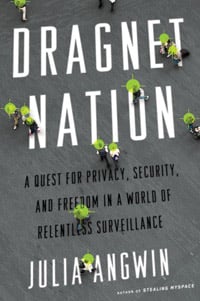 In the course of writing her book, Dragnet Nation, ProPublica reporter Julia Angwin tried various strategies to protect her privacy. In this blog post, she distills the lessons from her privacy experiments into useful tips for readers.
One of the easiest and simplest things you can do to protect your privacy is to be a smarter Web browser.
This is surprisingly difficult because most popular Web browsing software is set up to allow users to be tracked by default. The reason is simple economics 2013 you don't pay for Web browsing software, so the companies that make it have to find other ways to make money.
The most egregious example of this conflict came in 2008 when Microsoft's advertising executives helped quash a plan by the engineers to build better privacy protections into the Internet Explorer 8 Web browser. Microsoft has since added additional protections 2013 but they are not turned on by default.
The situation is no better at Google, whose Chrome Web browser has "buried and discouraged" the "Do Not Track" button, and is pioneering the use of new tracking technology that cannot be blocked. And it's worth noting that the other big Web browser maker, Mozilla Corp., receives 85 percent of its revenues (PDF) from its agreement to make Google the default search engine on Firefox.


How Red Lobster, Olive Garden, Capital Grille boost their profits
A Great Place for Wage Theft
By
Phil Mattera in Dirt Diggers Digest
 Restaurant giant Darden, which is being pressured by hedge funds
to sell off both its Red Lobster and Olive Garden chains, got some good news
recently when it appeared once again on Fortune magazine’s
list of the 100 companies that are supposedly the best places to work.
Restaurant giant Darden, which is being pressured by hedge funds
to sell off both its Red Lobster and Olive Garden chains, got some good news
recently when it appeared once again on Fortune magazine’s
list of the 100 companies that are supposedly the best places to work.
That designation, for a company that has been the subject of
numerous allegations of labor abuse, is even more puzzling than the idea that
Darden would be better off without the outlets through which it grew into an $8
billion industry powerhouse.
For more than a decade, Darden has been accused by groups such
as ROC United of using various means to shortchange its workers on their
paychecks, a practice known as wage theft.
Absolutely true
Ticks,
Lyme Disease Remain a Concern in Winter
By TIM
FAULKNER/ecoRI.org News staff
 |
| URI tick specialist Thomas Mather handed out live deer ticks to senators at a Jan. 22 Statehouse hearing. |
In fact, after a recent warm spell in early January Mather found dozens of ticks at one of his test sites.
If you look at one of his maps of the country, Rhode Island is at the heart of deer tick density, and it’s getting worse, he said. Last year was a record year for deer ticks in Rhode Island, and 2012 set the previous record. “The problem is there’s more ticks in more places than ever before,” Mather said.
The
causes of this tick population outbreak and spread of Lyme disease are not
fully known, but a combination of climate, deer population growth and
development of rural land are the prime suspects, according to James McDonald,
chief administrative officer at the Rhode Island Department of Health (DOH).
PART ONE: Erosion Happens: Can We Deal With It?
Rising seas and more intense storms are challenging southern New England’s shoreline, coastal homes and infrastructure
By FRANK
CARINI/ecoRI.org News staff
 |
| A rock wall intended to protect this Plum Island home has been heavily damaged by an unrelenting sea. (Rachel Playe/ecoRI News) |
Southern
New England’s coastline — the region’s economic engine — is under siege, and this
relentless enemy is gaining force. It can’t be subdued by 20-foot-high seawalls
or controlled by old-school hay bales. It’s allies include parking lots,
beachfront development and climate change.
Coastal communities here are increasingly experiencing the impacts of an encroaching ocean. Storm waves are eroding beaches and flooding developed areas. Rising sea levels are taking land. The ocean’s power even when it’s seemingly tranquil is unmatched, but when it’s angry our continued disrespect proves costly.
State and local officials are now asking how they can protect people, property and vital infrastructure such as drinking water supplies, utilities and roads from the advancing sea. There are no simple solutions, but there’s also no reason to panic. The sky isn’t falling, but the ocean is creeping in; our coastline is changing, and smart decisions must be made.
Friday, January 24, 2014
Stop wasting food
Walsh proposes statewide food-waste
collection
 |
| NeoEnergy's food digester, soon to be at Quonset. It will be the first on the East Coast. (graphic from NeoEnergy via ecoRI.org) Get more details on this process by clicking here. |
STATE HOUSE news release – Legislation introduced by Rep. Donna M.Walsh would sow the seeds for more widespread composting and reduction of
food-scrap waste in Rhode Island.
The legislation is aimed at extending the limited life
of the state’s Central Landfill by reducing the waste dumped there, harnessing
the waste’s potential for production of energy and organic fertilizer and
giving a boost to Rhode Island’s green economy.

Astronomy Picture of the Day
Bright Supernova in M82

From NASA’s Astronomy Picture of the
Day
Astronomers really don't
find supernovae by looking for the arrows. But in this
image taken January 23rd, an arrow does point to an exciting,
new supernova, now cataloged as SN 2014J, in nearby bright galaxy M82.
Located near the Big
Dipper in planet Earth's sky, M82 is also known as the Cigar
Galaxy, a popular target for telescopes in the northern hemisphere. In
fact, SN 2014J was first
spotted as an unfamiliar source in the otherwise familiar galaxy by
teaching fellow Steve Fossey and astronomy workshop students Ben Cooke, Tom
Wright, Matthew Wilde and Guy Pollack at the University College London
Observatory on the evening of January 21.
M82 is a mere 12 million
light-years away (so the supernova explosion did happen 12
million years ago, that light just now reaching Earth), making supernova SN
2014J one of the closest to be seen in recent decades.
Spectra indicate it is a Type Ia supernova caused
by the explosion of a white dwarf accreting matter from a
companion star. By some estimates two weeks away from its maximum brightness,
SN 2014J is already the brightest part of M82 and visible in small telescopes
in the evening sky.
DEM wants to expand effort to identify and protect vulnerable wild life
Over 450 species on the list already

PROVIDENCE - The Department of Environmental Management's
Division of Fish and Wildlife announces a new community liaison for Rhode
Island's Wildlife Action Plan and the development of a list of vulnerable fish
and wildlife species in Rhode Island.
This effort to identify the Species in
Greatest Need of Conservation in Rhode Island was accomplished through a series
of workshops with scientific experts and stakeholders over the last year to
meet the requirements of the 2015 Wildlife Action Plan (WAP) revision and be
eligible for Federal State Wildlife Action Grant funding over the next 10
years. There is no regulatory component to the WAP and its implementation is
voluntary.
The Rhode Island WAP guides wildlife conservation across the state by identifying priority actions for agencies, conservation groups, towns and citizens alike to all do their part to help wildlife.
The Rhode Island WAP guides wildlife conservation across the state by identifying priority actions for agencies, conservation groups, towns and citizens alike to all do their part to help wildlife.
Conserving wildlife and its habitat helps provide clean water and air
and protect the quality of life for the humans and wildlife that share Rhode
Island's environment. It also ensures that our children will be able to enjoy
these special animals and places in a healthy environment.
Incomplete
Obamacare: A Midterm Report Card
by Charles Ornstein, ProPublica
The first half of the Obamacare open enrollment period is over, and yesterday, federal health officials announced sign-up figures from the first three months.
After a disastrous start, HealthCare.gov (which handles enrollment for 36 states) began functioning properly. It, along with state-run insurance exchanges, netted more than 2.1 million signups between Oct. 1 and Dec. 28.
But are sign-ups on pace to meet the Congressional Budget Office's projection of 7 million this year? And is there an adequate balance between young and old, sick and healthy, to keep costs in line? That's harder to say.
Here's what we know:
Tomorrow - community meeting with our Charlestown legislators
 Rep. Donna Walsh and Senator Catherine Cool Rumsey will host January 25 forum for voters in South County
On January 25, 2014, Rep. Donna Walsh (D-District 36, Block Island, Charlestown, South Kingstown, Westerly) and Senator Cathie Cool Rumsey (D-District 39, Charlestown, Exeter, Hopkinton, Richmond) will host a forum at the Cross’ Mills Public Library, 4417 Old Post Rd in Charlestown from 10 AM to 11 AM.

Rep. Walsh and Senator Cool Rumsey welcome all residents living or working in her district for coffee and snacks.
Thursday, January 23, 2014
Charlestown Tapas
- Good news - No bloodshed at Chariho meeting
- New neighbor – Manda Panda?
- Frank Maher as a campaign manager?
- NRA-RI takes another hit
- “Got Smarties®?
- How the other side lives
By
Will Collette
Chariho omnibus
meeting ends without arrests or serious injury
 Representatives
from Charlestown, Richmond and Hopkinton managed to get together in one room on
January 15 to discuss their “differences” about the funding and operations ofthe Chariho School District without shots being fired.
Representatives
from Charlestown, Richmond and Hopkinton managed to get together in one room on
January 15 to discuss their “differences” about the funding and operations ofthe Chariho School District without shots being fired.
Charlestown Town
Councilor Dan Slattery (CCA Party) managed to restrain himself to simply making
snarling remarks about Richmond Town Council President Joe Reddish’s effort to
get the towns to discuss changes to the Chariho Act.
I had heard some rumors about minor injuries to people sitting near Slattery when bristles flew off his brush-cut during some of the more heated exchanges.
I had heard some rumors about minor injuries to people sitting near Slattery when bristles flew off his brush-cut during some of the more heated exchanges.
Astronomy Picture of the Day
Spiral Galaxies in Collision
From NASA’s Astronomy
Picture of the Day
Billions of years from now, only one
of these two galaxies will remain. Until then, spiral galaxies NGC
2207 and IC 2163 will slowly pull each other apart, creating tides of matter, sheets of shocked
gas, lanes of dark dust, bursts of star
formation, and streams of cast-away
stars.
Astronomers predict that NGC 2207, the
larger galaxy on the left, will eventually incorporate IC 2163, the
smaller galaxy on the right.
In the most recent encounter that about peaked 40
million years ago, the smaller galaxy is swinging around counter-clockwise, and
is now slightly behind the larger galaxy. The space between stars is so vast
that when galaxies collide, the stars in them usually do not collide.
Not very good news for men
BPA exposure linked to prostate cancer
By Brian Bienkowski, Environmental Health News
 |
| Bisphenol A is used to make polycarbonate plastic and is found in the linings of some food and drink cans and thermal paper receipts |
Exposure to low levels
of bisphenol A during development may make men more susceptible to prostate
cancer later in life, according to a new study published on January 7.
The study, which uses a
new model of implanting human stem cells into mice, is the first to link
early-life BPA exposure to human prostate cancer. It adds to a growing body of
research that suggests exposure to low doses of the chemical alters cells and
can lead to diseases later in life.
“Overall I think this is
some of the strongest and most convincing evidence to date linking early-life
BPA exposure and cancer,” said Heather Patisaul, a researcher at North Carolina
State University who was not involved in the study. “They were careful to make
the exposures human relevant, used cells derived from healthy humans and
replicated physiological conditions seen in aging men.”
Prostate cancer is the
second leading cause of cancer-related death in U.S. men. About 15 percent of
men will be diagnosed with prostate cancer in their lifetime, according to the
National Cancer Institute.
BPA is used to make
polycarbonate plastics and is found in in some paper receipts, liners of some
food cans and dental sealants. More than 90 percent of Americans have traces in
their bodies and previous studies suggest there is "universal
fetal exposure."
Researchers led by a
team from the University of Illinois at Chicago implanted prostate stem cells
from deceased young men into mice. When the mice were fed BPA by mouth for the
first two weeks of life, 33 percent of the stem cells had cancerous or
precancerous lesions later in life.
Forty-five percent of the cells that were
exposed to BPA before and after mice implantation developed precancerous or
cancerous lesions later. In comparison, only 12 percent of the mice not exposed
to BPA during development had cancer or precancerous lesions later in life.
BPA acts as an estrogen
and previous research has linked elevated estrogen levels during pregnancy to
increased risk of prostate cancer in males.
Subscribe to:
Posts (Atom)