Menu Bar

Home           Calendar           Topics          Just Charlestown          About Us

Saturday, April 27, 2019

Trump and rising gas prices

Trump's crackdown on Iran's oil exports could backfire badly – with serious risks to global economy
Nafis Alam, University of Reading
Image result for rising gas pricesThe US has unnerved the world oil market by ramping up the pressure in its long-running dispute with Iran.

It has announced that, after May 1, it won’t renew the exemptions given to eight countries that enable them to buy Iranian oil.

Those affected, which include China, India, Japan, Italy and South Korea, will face sanctions from Washington if they don’t comply.

The move will likely squeeze global oil supply at a time when it is already struggling from disruptions in Venezuela, Libya and Nigeria.

Indeed, the Brent crude price has already risen on the back of the announcement to US$74 (£57) per barrel, the highest since last November.

President Donald Trump has said he is confident that a supply crunch can be avoided thanks to extra output from Saudi Arabia and the United Arab Emirates, but traders and Asian petrochemical firms are skeptical that these countries will fully comply.

In recent months, Saudi Arabia and other OPEC members have cut supply dramatically to redress their fears that hefty US shale oil output and declining global energy demand could cause a supply glut that would batter prices.


Friday, April 26, 2019

VIDEO: David Cicilline takes on Trump's stonewall


To watch this video on YouTube: https://www.youtube.com/watch?v=fWzpBsx083c

Always on the job

Pic of the Moment

How to make a good first impression

Researchers outline how humans reduce uncertainty in social situations

work review GIFDo my friends find me funny? Am I making a good impression during this job interview? For most, such questions and concerns are a routine part of life. 

A new perspective paper from Brown University scientists establishes a framework to apply rigorous mathematical models of uncertainty originally developed for non-social situations, such as whether or not to purchase a lottery ticket, to social scenarios such as determining an interviewer’s opinion of an interviewee.


Brown comes up with Band-aid® for the heart

Heart patch could limit muscle damage in heart attack aftermath

Image result for heart bandaidResearchers have designed a new type of adhesive patch that can be placed directly on the heart and may one day help to reduce the stretching of heart muscle that often occurs after a heart attack.

The patch, made from a water-based hydrogel material, was developed using computer simulations of heart function in order to fine tune the material’s mechanical properties. 

A study in rats showed that the patch was effective in preventing left ventricle remodeling — a stretching of the heart muscle that’s common after a heart attack and can reduce the function of the heart’s main pumping chamber. 

The research also showed that the computer-optimized patch outperformed patches whose mechanical properties had been selected on an ad hoc basis.

The research, published in Nature Biomedical Engineering, was a collaboration between computer modeling and mechanics researchers in Brown University’s School of Engineering, cardiology researchers from Fudan University and material scientists from Soochow University.


Trump Tower Russiagate deal was deeper and broader than originally reported

Mueller Went Looking for a Conspiracy, What He Found Was Conflict and a Cover-Up
By Katie Zavadski and Heather Vogell for ProPublica
Related imageThe ProPublica “Trump, Inc.” team gathered with laptops, pizza and Post-its to disconnect — and to read special counsel Robert Mueller’s report.

What we found was page after page of jaw-dropping details about the inner workings of the administration of President Donald Trump, meetings with foreign officials and plots to affect our elections. 

But we also found rich details on how Trump ran his business dealings in Russia, itself the subject of our recent episode on his Moscow business partners.

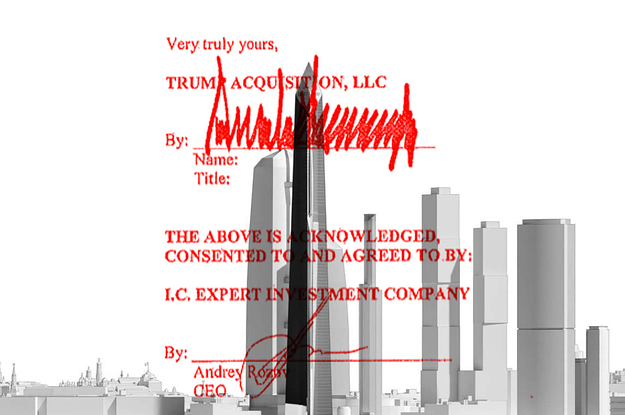
It backed up a lot of our earlier reporting: The deal with Andrey Rozov, a relatively unknown developer whose claim to international prominence was the purchase of a building in Manhattan’s garment district, did go further than agreements with other developers. 

The type of development they were hoping for would need signoff from Russia’s powers that be — namely, President Vladimir Putin — potentially putting Trump in the position of owing favors to a hostile foreign power. 

And the deal went on longer than the Trump campaign wanted the public to know, with the then-candidate rebuffing Michael Cohen’s concerns about the accuracy of his portrayal of his relationships with Russia.

Here are a few of our takeaways:

Thursday, April 25, 2019

Reveal Trump’s moral loathsomeness

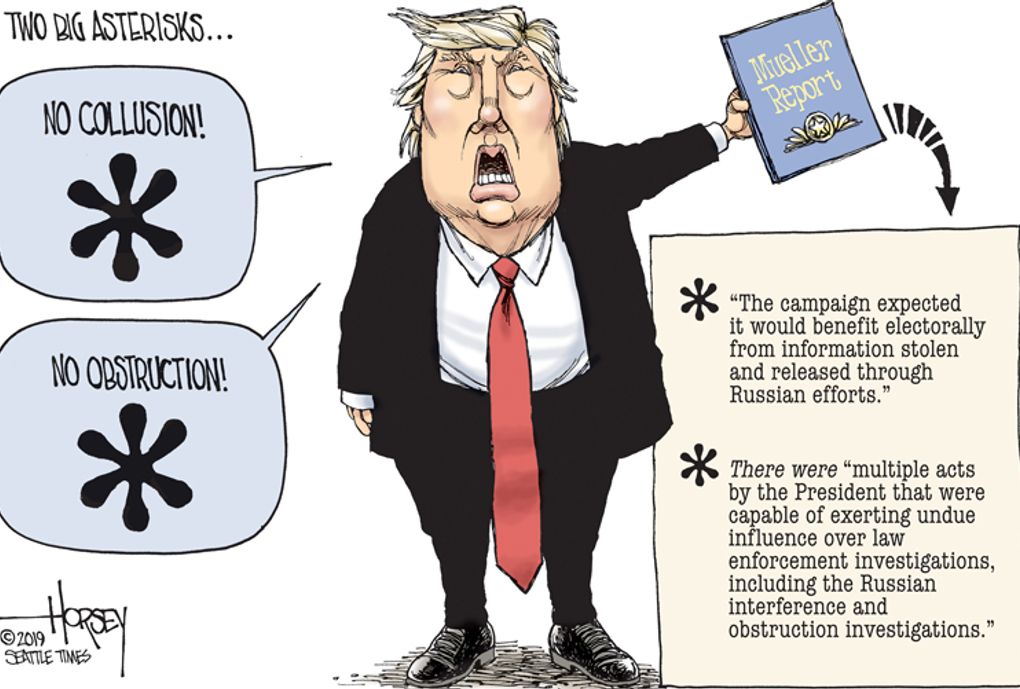
Related imageDemocrats in Congress and talking heads on television will be consumed in the coming weeks by whether the evidence in the Mueller report, especially of obstruction of justice, merits impeachment.  

In addition, the question of “wink-wink” cooperation with Russia still looms. Mueller’s quote of Trump, when first learning a special counsel had been appointed – “Oh my God. This is terrible. This is the end of my presidency. I’m fucked” – has already become a national tagline. 

Why, Americans wonder, would Trump be “fucked” if he hadn’t done something so awful as to cause its revelation to “fuck” him?

We’ll also have Mueller’s own testimony before Congress, and Congress’s own investigations of Trump.

But let’s be real. Trump will not be removed by impeachment. No president has been. With a Republican Senate controlled by the most irresponsible political hack ever to be majority leader, the chances are nil.

Which means Trump will have to be removed the old-fashioned way – by voters in an election 19 months away.


The Special Counsel of Oz


For more cartoons by Ruben Bolling, CLICK HERE.

South County air the worst in state for ozone

The American Lung Association's annual report on air quality has been released with bad news for Charlestown.


We score an "A" when it comes to soot and particles in the air


Realistic and effective approaches to plastics

What Laws Work Best to Cut Plastic Pollution?

Related imageEvery minute an estimated 2 million single-use plastic bags are handed out at checkout counters across the world. 

They contribute to the 300 million tons of plastic waste generated each year, much of which ends up in the environment where it threatens wildlife, endangers public health and costs billions to clean up.

How do you solve a problem this big?

According to legal analysts who advised Congress at a briefing in January, the United States could reduce its contribution to the global plastic pollution crisis by implementing sweeping federal policies that restrict plastic use and hold manufacturers accountable for responsibly handling waste.

The expert group, composed of members from Frank G. Wells Environmental Law Clinic at UCLA and ocean conservation organization Surfrider Foundation, specifically recommended that Congress craft federal legislation banning single-use plastic products such as bags, straws and expanded polystyrene foam food containers. 

They also called for establishing “extended producer responsibility” schemes, which hold plastic manufacturers responsible for the waste they create.


How superstitions spread

Even seemingly irrational beliefs can become ensconced in the social norms of a society
University of Pennsylvania

black cat GIFAncient Roman leaders once made decisions about important events, such as when to hold elections or where to build new cities, based on the presence or flight patterns of birds. 

Builders often omit the thirteenth floor from their floor plans, and many pedestrians go well out of their way to avoid walking under a ladder.

While it's widely recognized that superstitions like these are not rational, many persist, guiding the behavior of large groups of people even today.

In a new analysis driven by game theory, two theoretical biologists devised a model that shows how superstitious beliefs can become established in a society's social norms. 


What Mueller REALLY Knows About Trump

Mueller's Congressional testimony may shed light on information not included in the report
By David Cay Johnston, DCReport Editor-in-Chief

Image result for mueller reportRobert Mueller knows a great deal more than he put in his richly detailed 448-page report.

He says so again and again right in the report. 

Two crucial words he put into the report at least eight times are messages to our Congress and the rest of us about how his investigation was hamstrung by rules from telling all that he and his team learned.

Those two words: “admissible evidence.”

In testimony to Congress, Mueller will be free to tell what evidence he had, but that did not meet the standards of his charter, the Justice Department or federal court rules.

The federal courts have developed ever more detailed rules about what evidence is admissible and what is not. The Justice Department has expanded its manual for prosecutors to adapt to these rules.

Only one group has benefited more from these rules than white-collar criminals, who have lawyers like Roy Cohn and Michael Cohen to advise them on how to lie, cheat and steal without much risk of being indicted and much less risk of being convicted.

Our federal government makes only a minimalist attempt to pursue white-collar criminals. For example, during tax season in February only 71 criminal tax cases were filed in the whole country. 

Most of them involved drug dealers or bribe-taking politicians, not flat out tax cheats. And there were just 52 convictions, half of the level of five years ago. The one group that benefits more than white-collar crooks from court rules on admissible evidence are foreign agents and spies. 

That’s because they are beyond the reach of American law enforcement in most cases, Russian spy Maria Butina being a notable exception.

Mueller indicted 25 Russians, half of them military officers, and three Russian companies, but he has no way to bring them to trial unless they do something incredibly stupid like set foot on American soil. 

Capturing just one of them, and making him flip, would terrify Trump—and for good reason, based on the Mueller report findings. Congress, however, is not burdened by the evidence rules that constrained Team Mueller.

Our Congress can go wherever the facts point. That freedom can be abused, which Trump is sure to continually complain is the case. But the freedom to look for the truth also means that Congress can see past the smoke and spot the fires causing it.

Mueller, in closed-door sessions and in public testimony, will be free to tell what evidence he had, but that did not meet the standards of his charter, of the Justice Department manual governing its prosecutors or federal court rules.


Wednesday, April 24, 2019

Why they want to come to America that tries to block them

Migrants' stories: Why they flee
Anthony W. Fontes, American University School of International Service


Central American migrants wait for food in El Paso, Texas, Wednesday, March 27, 2019, in a pen erected by U.S. Customs and Border Protection to process a surge of migrant families and unaccompanied minors. Earlier, Customs and Border Protection Commissioner Kevin McAleenan, center, announced the the Trump administration will temporarily reassign several hundred border inspectors, during a news conference at the border in El Paso. (AP Photo/Cedar Attanasio)
They come, even though we do THIS to them.
Massive influxes of Central American families seeking asylum in the United States are overwhelming U.S. immigration facilities.

The crisis along the U.S. southern border led directly to the forced resignation on April 7 of Homeland Security Secretary Kirstjen Nielsen, whom President Donald Trump believed ineffectively managed the situation.

As Trump promises to “shut down the border” and “punish” the governments of Honduras, Guatemala and El Salvador for failing to stem the exodus from their countries, the question of why so many families are making the difficult and dangerous journey north appears more urgent than ever.

I have spent much of the last decade conducting on-the-ground fieldwork in this region, and along the migration paths through Mexico, seeking answers to this question.

The region’s extreme poverty and violent impunity are central factors driving this migration.

Yet every migrant’s story is unique. Some simply seek the chance to earn enough money to ensure a better future for themselves or their children. Others flee persecution at the hands of gangs, organized crime or corrupt state officials. For others, insecurity and poverty are so intertwined that drawing them apart becomes impossible.

New York to Trump

May 13, Women's luncheon with Rep. David Cicilline

Womens Luncheon