Menu Bar

Home           Calendar           Topics          Just Charlestown          About Us

Friday, July 29, 2022

Cooperation among strangers has increased since the 1950s

Findings offer hope for efforts to address global challenges

American Psychological Association

Despite common concerns that the social fabric is fraying, cooperation among strangers has gradually increased in the U.S. since the 1950s, according to research published by the American Psychological Association.

"We were surprised by our findings that Americans became more cooperative over the last six decades because many people believe U.S. society is becoming less socially connected, less trusting and less committed to the common good," said lead researcher Yu Kou, PhD, a professor of social psychology at Beijing Normal University. 

"Greater cooperation within and between societies may help us tackle global challenges, such as responses to pandemics, climate change and immigrant crises."

6 Popular Medical Myths That Are Totally Untrue

Still unknown: are you to blame for your mother's back pain for stepping on a crack?

By SCITECHDAILY.COM  

Hope you don't live in Texas
Even in our hyper-connected world where reliable medical knowledge is ridiculously accessible, many health-related myths still carry on through the years. 

When discovered, these long-held false beliefs often leave the former believer at a loss to explain where the questionable information came from in the first place.

The list below contains six medical myths that have been around for a long time. See if you find anything that surprises you. 

1. You can’t get pregnant if you’re on your period.

According to the American Pregnancy Association, this is not true.

The Association website explains that while this is a rare occurrence, if the woman has a shorter than typical cycle and ovulates early, a pregnancy can definitely happen.

The science behind this is all about the timing. Surprisingly, sperm can remain viable in a woman’s reproduction system for up to five days. Therefore, if the woman has sex near the end of her period, and if ovulation happens within five days after the encounter, it’s possible that those little swimmers are still there waiting to fertilize that egg. 

What makes people willing to risk their lives to save others?

What makes a hero?

Frank T. McAndrew, Knox College

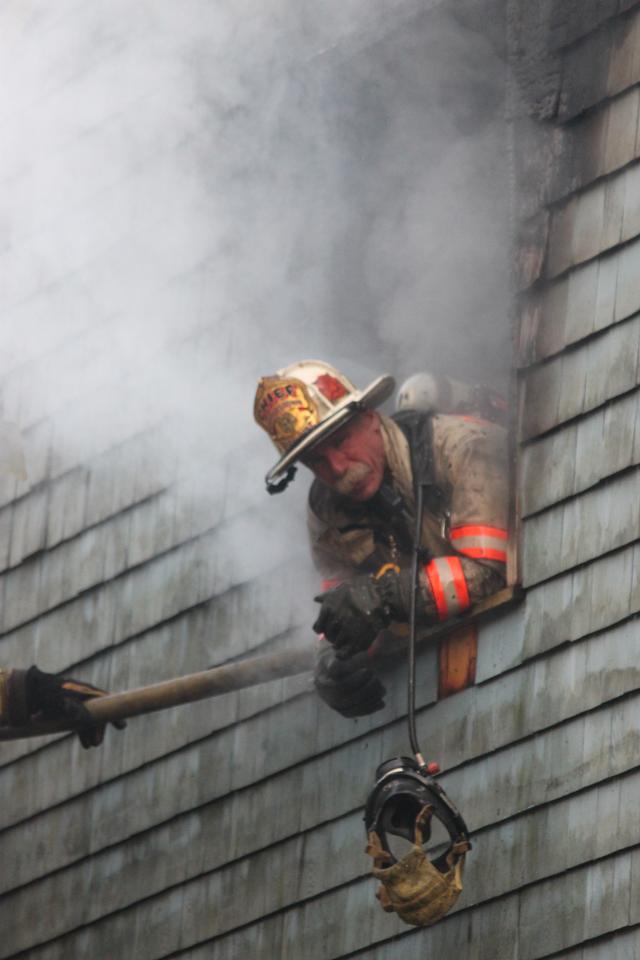
Dunn's Corner Fire District photo
After an 18-year-old shooter murdered 19 elementary school students and two teachers in Uvalde, Texas, distraught parents directed their rage at the multiple police officers who failed to enter the classroom where children were being shot. A teacher who survived his wounds derided the officers as “cowards.”

It’s possible that a broken chain of command was more consequential than a lack of courage. But the actions – or inaction – of these officers stand in stark contrast to the heroism displayed by others under similar circumstances.

For example, in August 2015, three young American men were on a crowded train heading from Paris to Amsterdam when they encountered a heavily armed terrorist. 

With little regard for their personal safety, they rushed the terrorist and subdued him. No one disputes that these men deserve to be called heroes.

Only some people seem capable of this split-second form of heroism. What separates them from everyone else?

Psychology researchers like myself have explored this question through the lens of evolutionary and personality psychology. Study after study has shown that men tend to be more willing to put themselves at physical risk to help others.

Charlestown Fire District photo
Why some men rise to the occasion – and others don’t – has been a bit trickier to pin down.

A ‘guy thing’?

The Carnegie Medal is an award given to individuals in the United States or Canada who have valiantly risked their lives in attempts to save others. In 2022, 15 of the 16 Carnegie Medal winners were men.

In my view, this is no coincidence.

Of course, heroism and courage can appear in many forms, and men and women alike risk their reputations, health and social standing to do what they think is right. There is no shortage of courageous women. Meta whistleblower Frances Haugen and the testimony by 26-year-old Cassidy Hutchinson before the House Select Committee to Investigate the January 6 Attack on the United States Capitol are just two recent profiles in female courage.

Thursday, July 28, 2022

Senator Elaine Morgan caught and fined for ripping off her campaign fund

Board of Elections fines Morgan $1,200 for diverting funds for personal use

By Will Collette
Wait till you see her excuse
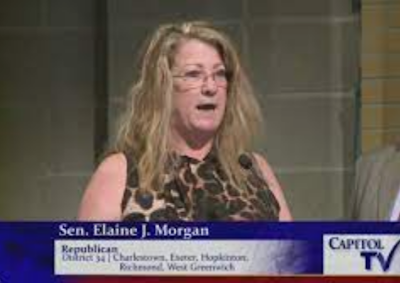
State Senator Elaine Morgan (Trumplican-Senate District 35) was busted by the state Board of Elections for dipping into her campaign account to pay for personal expenses. She was fined $1,200. Diverting cash for “personal use” is a criminal offense and has led to prosecutions for many legislators over the years.

Morgan represents the northern half of Charlestown as well as Richmond, her hometown of Hopkinton, Exeter and a part of West Greenwich. She took that position as part of the Right-Wing Class of 2014 by beating well-respected Sen. Cathy Cool Rumsey. Morgan faces a rematch with Charlestown Democrat Jennifer Douglas in the November 8 General Election.

The Board of Elections on its own conducted audits of the campaign accounts of several candidates for public office. In Morgan’s case, they found two major problems. One was the repeated offense of reporting large sums as “aggregated” donations, meaning they did not identify the donor or required details such as address and occupation.

The more serious violation was the taking of campaign cash on multiple occasions totaling $2,603.

In my mind, the most offensive thing Morgan did was to lie about the crime. In a statement on Monday, Morgan claims the money was used for a trip to Florida to receive an award from the Trumplican Conservative Political Action Conference (C-PAC) and blamed her late husband for her bookkeeping mistakes. He died in April 2021.

Always classy.

Here’s what she said, as reported by the Boston Globe:

·         Morgan issued a statement, saying, “First and most importantly, I take full responsibility for the mistakes that I made in my 2021-2022 campaign finance filings.”

·         She said she was nominated to receive an award at the Conservative Political Action Conference in Florida and “lumped the total expense of travel into aggregate.” She said she did not break down all of the expenses separately. as she should have, and corrected it as soon as she was cited.

·         “I did not do anything in a deliberate attempt to deceive the public,” Morgan said. “While it is not an excuse or deflection, when my husband died in April 2021, I realized I not only lost my best friend and confidante but also the one person who was most organized in my life.”

·         She said she has been in elected office now for eight years and always complied with campaign finance laws.

·         “The outstanding issues with the Board of Elections have been adjusted to their satisfaction and I will pay a fine,” Morgan said. “I now have all the controls in place to ensure this does not happen again.”

Except this is far from the whole truth. That prompted the Board of Elections to release full detail the following day. Nothing showed up in the audit related to Morgan’s C-PAC Florida trip although it could be $2,749 of un-itemized “aggregate” expenses. 

As for how Morgan spent the money flagged in the Board of Election audit, the Boston Globe included these:

· In January and February 2020, Morgan spent $1,227 from her campaign account for personal use, including a $500 cash withdrawal; $584 in expenses for food, beverages, and meals; and $142 in miscellaneous expenses.

· In April 2020, she used her campaign account to pay for $73 in groceries from Aldi.

· In April 2021, she used her campaign account to pay $320 at a Chelo’s restaurant.

· In February 2022, she used her campaign account to pay $108 for “grooming expense” at V Nails and Spa By Han.

· In February 2022, she used her campaign account to pay $875 to Patriot Coins.

You can read the full audit by clicking HERE.

The audit shows an additional $2,749 of un-itemized “aggregate” expenses. This might be the expenses for the Florida trip that Morgan mentioned in her statement.

At the end of the BOE audit, you will see that Morgan accepted the findings and waived all further proceedings. Thus, these are not “alleged” crimes since Morgan has copped to all the charges. In my opinion, she got off lightly with only a $1,200 fine and no criminal referral and probably ONLY because she made a deal.

Obviously Morgan’s claim that in her eight years as a state Senator, she has always complied with state election finance laws is a lie, especially when this audit only looked at the period from January 1, 2020 to March 31, 2022. That's only two and a half out of the almost eight years she has been in office.

She also lied when she threw her dead husband under the bus, blaming him for her financial misdeeds while also claiming she "takes full responsibility." Fully half of the time period covered by the audit was before his death including her grocery shopping at Aldi. Around the time he died, she spent $320 at Chelos.

Using campaign account money for personal expenses is a crime. She might think those funds are her money, but they aren't. And just because her icon Donald Trump did it doesn't make it legal.

Morgan was sworn into office in January 2015. This kind of cavalier thievery doesn’t just happen out of the blue. Indeed, you might almost expect a new legislator unfamiliar with campaign finance law to commit these violations. But she's now a veteran of eight years and should know better. I hope the BOE goes back and looks at the earlier five years.

Morgan does not have a Republican opponent in the September 13 primary but she does face a rematch with Democrat Jennifer Douglas in the November 8 General Election.

Holy hats


Yes


Do racial inequities hamper caregiver resources, health outcomes?

URI Nursing Professor Susan Desanto-Madeya’s major federally-funded study aims to find path over barriers to equitable care

Patrick Luce

About 12 million adults in the United States are living with serious illness that carries a high risk of mortality and puts great strain on family caregivers. 

That strain is exacerbated in cultural-minority families facing inequities of care that are ingrained in society, limiting the ability for family caregivers to receive palliative care or access the health care system at all.

Structural inequity and racial or ethnic residential segregation may affect serious illness outcomes by limiting access to palliative care and limiting the capacity of family caregivers to engage with the healthcare system. Few studies have been done to highlight racism’s impact on family caregivers. 

To address this gap, University of Rhode Island College of Nursing Professor Susan Desanto-Madeya aims to disentangle the relationships between segregation, neighborhood deprivation and healthcare utilization to determine whether racial inequities, not patient mistrust, are the primary barriers to equitable palliative care and health outcomes.

Texas researchers hack into fruit fly brains to remotely control them.

Defense Department DARPA funds paid for the project

By Jeff Falk and Jade Boyd

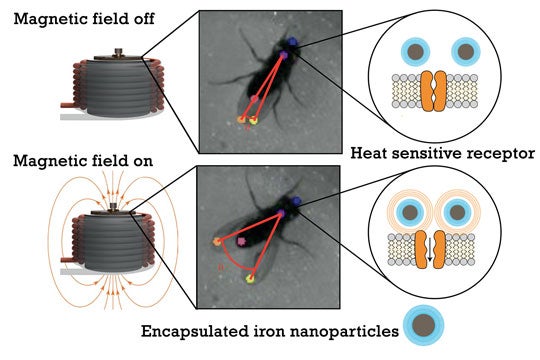
A research team led by Rice University neuroengineers has created wireless technology to remotely activate specific brain circuits in fruit flies in under one second.

In a published demonstration in Nature Materials, researchers from Rice, Duke University, Brown University and Baylor College of Medicine used magnetic signals to activate targeted neurons that controlled the body position of freely moving fruit flies in an enclosure.

“To study the brain or to treat neurological disorders the scientific community is searching for tools that are both incredibly precise, but also minimally invasive,” said study author Jacob Robinson , an associate professor in electrical and computer engineering at Rice and a member of Rice's Neuroengineering Initiative . 

“Remote control of select neural circuits with magnetic fields is somewhat of a holy grail for neurotechnologies. Our work takes an important step toward that goal because it increases the speed of remote magnetic control, making it closer to the natural speed of the brain.”

Kids and sports in the heat

Climate considerations for youth sport during the hottest years on record

Jessica R. Murfree, Texas A&M University and Natasha Brison, Texas A&M University

Many young athletes spend hours in the hot sun every day. 
Nancy Lane/MediaNews Group/Boston Herald via Getty Images
At least 50 high school football players in the U.S. have died from heat stroke after falling ill on the field in the past 25 years. And high school athletes in other sports are not immune from the risks – female cross-country athletes are twice as likely to suffer from heat-related illnesses as athletes in any other high school sport.

The numbers are especially shocking when you consider that heat-related illnesses and deaths are entirely preventable.

While sports equipment has improved over time to protect against concussions, young players and college athletes are facing increasing risks from rising heat.

We study sport ecology and legal aspects of sport. With summer temperatures rising, we believe many youth sports leagues and school districts will need to aggressively update their practice rules and heat policies to keep their players safe. We suggest particular attention be paid to low-income, minority neighborhoods and regions that can get excessively hot.

Wednesday, July 27, 2022

Gotta know a guy to get the right number


Right

That looks like "Faith's Folly" in the background


How Does Melatonin Help With Sleep?

Does It Make You Drowsy in the Morning?

By SCITECHDAILY.COM 


Melatonin is a popular over-the-counter remedy for addressing difficulties with falling asleep. Taking melatonin may be helpful in the treatment of some sleep-related challenges-in particular, jetlag. 


However, there’s less evidence supporting the benefits of melatonin as a long-term sleep aid. Some people who take melatonin experience side effects. 


One of the most common and challenging side effects of melatonin use is drowsiness in the morning.

What Is Melatonin?

Melatonin is a hormone. It’s produced in the pineal gland, a small endocrine gland located near the center of the brain.

Research hasn’t yet provided a full understanding of melatonin’s roles in the human body. However, it’s known to be a powerful antioxidant. Melatonin also interacts with the immune system and has an anti-inflammatory effect.

Melatonin is best known for its role in sleep-wake-cycle regulation. The body produces melatonin in response to evening darkness. Production peaks in the early morning hours and declines during the daytime.

Bees boost crops and could steady food prices

Yields of crops visited by insect pollinators found to be more stable

University of Reading

Supporting and enhancing pollinators could help stabilise the production of important crops like oilseeds and fruit, reducing the sort of uncertainty that causes food price spikes, new research has shown.

Scientists at the University of Reading analysed years of data on the poorly understood effect of pollinators on crop yield stability. They found there was 32% less variation in the yields of plants visited by bees and other pollinators than those grown in absence of pollinators.

The study, published in the journal Ecology Letters, suggests that pollinators can help to mitigate supply issues and market shocks that cause global price spikes, like those being seen this year, by holding food supplies steady.

The publication marks the start of Bees' Needs Week (18-24 July), a UK Government-led initiative championing pollinators and their benefits, and this year encouraging people to take five simple actions to support pollinators.

Dr Jake Bishop, a crop science researcher at the University of Reading, who led the study, said: "Our findings suggest that preserving pollinators provides a double benefit, reducing fluctuations in food supplies as well as boosting supplies in the first place.


Boost Now or Wait?

Many Wonder How Best to Ride Out Covid’s Next Wave


Gwyneth Paige didn’t want to get vaccinated against covid-19 at first. With her health issues — hypertension, fibromyalgia, asthma — she wanted to see how other people fared after the shots. Then her mother got colon cancer.

“At that point, I didn’t care if the vaccine killed me,” she said. “To be with my mother throughout her journey, I had to have the vaccination.”

Paige, who is 56 and lives in Detroit, has received three doses. That leaves her one booster short of federal health recommendations.

Like Paige, who said she doesn’t currently plan to get another booster, some Americans seem comfortable with the protection of three shots. But others may wonder what to do: Boost again now with one of the original vaccines, or wait months for promised new formulations tailored to the latest, highly contagious omicron subvariants, BA.4 and BA.5?

The rapidly mutating virus has created a conundrum for the public and a communications challenge for health officials.

Tuesday, July 26, 2022

Why Food Prices Are Rising Even More

Monopolists control nearly every part of the food production process

RobertReich.org

Monopolies are slowly killing rural America—and driving up the price you pay for food.

Just four firms control 85% of all beef, 66% of all pork, and 54% of all poultry. This degree of monopolization is hurting farmers—and you.Monopolists control nearly every part of the food production process, from selling feed to farmers, to packaging the meat and poultry for supermarkets. Half of all chicken farmers report having just one or two processors to sell to.

Farmers are essentially forced to buy from and sell to monopolies at whatever price the corporation wants – often taking on crushing debt to do so. They are trapped in long-term binding contracts, with no way out but losing their livelihood altogether.

[Either I sign it or I ain't got no chickens. Without any chickens, I can't pay any bills.]

Meatpackers used to compete at cattle auctions for what ranchers produced – which helped ranchers get a reasonable return on their investment. Now, with so few buyers, ranchers have no choice but to sign contracts with meatpackers, and sell their cattle for a lower price than if the market were truly competitive.

In 1980, 62 cents of every dollar consumers spent on beef went to ranchers. Today, only 37 cents do. Most of the profits are going into the pockets of the monopolists. 

And here's the kicker: Even though farmers are getting squeezed, the ag monopolists are also charging you higher prices. During the pandemic, beef prices rose nearly 16%—and the four biggest beef companies' profits rose more than 300 percent.