Menu Bar

Home           Calendar           Topics          Just Charlestown          About Us

Tuesday, December 19, 2023

Doctors With Histories of Big Malpractice Settlements Work for Insurers, Deciding If They’ll Pay for Care

Dubious doctors making dubious decisions

By Patrick Rucker, The Capitol Forum, and David Armstrong and Doris Burke, ProPublica

Health insurers reject millions of claims for treatment every year in America. Corporate insiders, recordings and internal emails expose the system and its harm.

When Shawn Murphy’s wife died in 2009 after a botched gallbladder surgery, he presumed the doctor who performed the operation would be forced out of medicine for good.

Dr. Pachavit Kasemsap, a former Air Force surgeon, had cut Loretta Murphy’s aorta during that common procedure, according to a database of malpractice payments kept by Florida insurance regulators. She never left the hospital and died just shy of her 40th birthday. Shawn Murphy was left to raise their two daughters, then 13 and 17, on his own.

During the weeks that Murphy prayed for his wife to recover and the months that he fought Kasemsap in circuit court in Brevard County, Florida, he didn’t know that other families had complained that their loved ones had suffered under the same doctor’s care.

Kasemsap has settled five malpractice cases for a total of $3 million, according to the Florida malpractice payment database. That includes $1 million paid to the Murphy family. 

In one of the cases Kasemsap settled, a patient said the doctor negligently stapled and stitched her rectum to her vagina. Kasemsap denied doing that, and in legal filings in all five cases, the doctor denied that he was negligent.

The doctor’s LinkedIn profile says his last job as a surgeon ended in December 2012, months before he settled the last of those five cases. But there was one industry ready to welcome him regardless: health insurance.

Kasemsap got a job as an insurance company medical director, where suddenly he had the power to impact the lives of far more patients than he would ever have seen in the operating room.

For most policyholders, the inner workings of their health insurer are a black box: Requests to cover treatment or pay claims go in, and approvals or rejections are spit out.

The pivotal gatekeepers inside the box are medical directors like Kasemsap. They can, without ever seeing a patient, overrule the judgment of the doctor who did and deny payment for a recommended procedure, test or medicine.

Insurers say medical directors steer patients away from unnecessary or risky care and expensive treatments for which there are less costly, equally effective alternatives. Patients and their physicians complain that insurance company doctors routinely, and wrongly, deny payment for critical lifesaving treatments because they are expensive.

100 years ago, the KKK planted bombs at a U.S. university

Klan hate includes American Catholics

 William Trollinger, University of Dayton

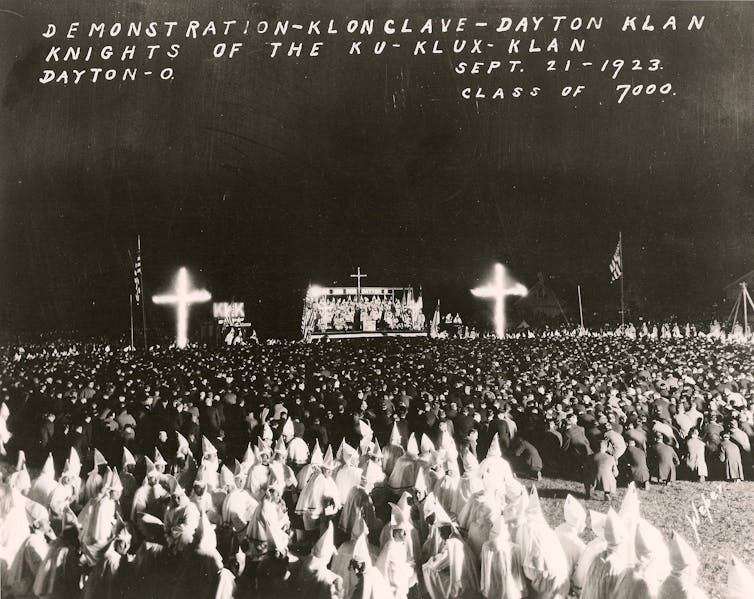
A KKK rally in Dayton, Ohio, on Sept. 21, 1923. 
Dayton Metro Library

It was Dec. 19, 1923 – 100 years ago. The first day of Christmas break at the University of Dayton, with fewer than 40 students still on campus.

At 10:30 p.m., the quiet was shattered by a series of explosions, as 12 bombs went off throughout campus. 

Frightened students discovered that, while damage was minimal, there was an eight-foot burning cross on the edge of campus. 

Running to tear it down, they were confronted by several hundred Klansmen screaming threats from 40 to 50 cars.

It wasn’t the first time Dayton’s residents had endured terror from the Ku Klux Klan. Hundreds of neighbors poured out of their houses and charged at the hooded invaders. The Klansmen sped away, and the students and others extinguished the fire and tore down the cross.

The KKK is most infamous for violently terrorizing African Americans. But in the 1920s its hatred also had other targets, especially outside the South. 

This version of the KKK, known as the Second Ku Klux Klan, harassed Catholics, Jews and immigrants – including students and staff at Catholic universities like Dayton, where I am a historian of American religion. All of this is the focus of my 2013 article, “Hearing the Silence.”

Monday, December 18, 2023

False Prophets

How Zuckerberg and Musk Mislead the Digital Economy

By UNIVERSITY OF BASEL 

How significantly do the ideas of Mark Zuckerberg and Elon Musk shape today’s digital economy? A study by an economic sociologist at the University of Basel has analyzed speeches, book contributions and articles from Silicon Valley from Silicon Valley, demonstrating the emergence of a new spirit of digital capitalism.

What justification is there for earning a lot of money? Nineteenth-century Calvinists interpreted economic prosperity as a sign that one was counted among God’s chosen. This manner of thinking, centered in Geneva, influenced liberal capitalism.

Today’s justifications for economic activity sound different. They focus on themes of flexibility or efficiency. In particular digital capitalists claim that they improve the world. Their credo: for every societal problem, from climate change to inequity, there is a technical solution that also offers the opportunity to make plenty of profit. This approach is known as solutionism.

In your hat

Don't forget


Why you need the booster

Study shows diminishing efficacy of COVID-19 vaccines over time

By SAGE 

The risk of death from COVID-19 decreases significantly after vaccination but this protection diminishes after six months, providing evidence for continued booster doses, a new study has found.

Researchers from the UK Health Security Agency (UKHSA) analyzed more than 10 million cases of COVID-19 in adults between May 2020 and February 2022. Their findings are published in the Journal of the Royal Society of Medicine (JRSM).

‘Financial Ruin Is Baked Into the System’

Costs of Long-Term Care destroy families


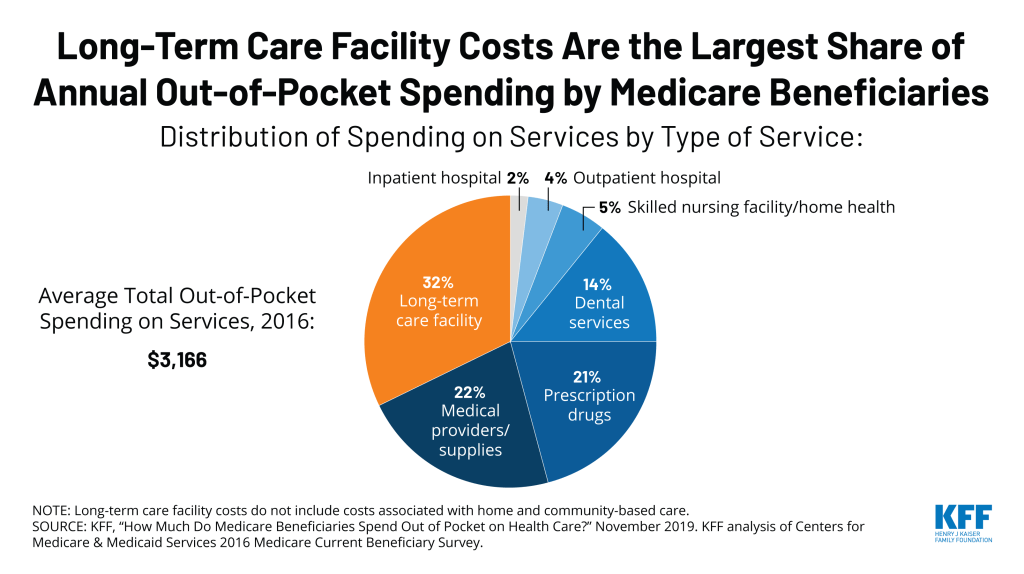
Thousands of readers reacted to the articles in the “Dying Broke” series about the financial burden of long-term care in the United States. They offered their assessments for the government and market failures that have drained the lifetime savings of so many American families. And some offered possible solutions.

In more than 4,200 comments, readers shared their struggles in caring for spouses, older parents, and grandparents. They expressed anxieties about getting older themselves and needing help to stay at home or in institutions like nursing homes or assisted living facilities.

Many suggested changes to U.S. policy, like expanding the government’s payments for care and allowing more immigrants to stay in the country to help meet the demand for workers. Some even said they would rather end their lives than become a financial burden to their children.

Many readers blamed the predominantly for-profit nature of American medicine and the long-term care industry for depleting the financial resources of older people, leaving the federal-state Medicaid programs to take care of them once they were destitute.

Sunday, December 17, 2023

Highway closure gave Gov. McKee a chance to shine. He still needs a moment.

McKee holds master class in bumbling and incompetence

By Nancy Lavin, Rhode Island Current

Longtime residents fondly remember the calm and reassuring authority with which a flannel shirt-wearing Gov. J. Joseph Garrahy appeared on TV in the wake of the historic 1978 blizzard.

It’s a stark contrast with how Gov. Dan McKee has handled the emergency closure of the Washington Bridge due to safety concerns, first missing the initial Dec. 11 press conference to visit a Providence pizza shop. That was mistake one, according to Mike Raia, a public relations consultant and former communications adviser to then-Gov. Gina M. Raimondo.

“Communication is as important to any crisis response as actual operational response,” Raia said. “In these moments, everything you do at the podium, on a radio interview, on your social media matters.”

Making matters worse: McKee’s testy response to a reporter’s questions two days later about potential leadership changes in the wake of the catastrophe.

“By getting emotional and getting defensive, it undermines the confidence you’re trying to build, it undermines the empathetic connection you’re trying to show to people that are actually impacted,” Raia said.

The blistering rebuke is hardly the first time Rhode Island’s otherwise mild-mannered head of state has bristled at pointed questions from the press, or turned disagreements with fellow officials into headline-making feuds. 

And some warn McKee’s thin skin may prove his downfall.

What a great time-saver!

By Mike Luckovich

The record they're running on in 2024


Trees are in trouble

Scientists flip the script, revealing trees in wetter regions are more sensitive to drought

Harrison Tasoff

This holiday season brings surprising news about your Christmas tree. Scientists just discovered that globally, trees growing in wetter regions are more sensitive to drought. That means if your tree hails from a more humid clime, it’s likely been spoiled for generations.

Scientists have long debated whether arid conditions make trees more or less resilient to drought. It seems intuitive that trees living at their biological limits will be most vulnerable to climate change, since even just a little extra stress could tip them past the brink. On the other hand, these populations have adapted to a harsher setting, so they might be more capable of withstanding a drought.

According to a new study in the journal Science by researchers at UC Santa Barbara and UC Davis, greater water availability could “spoil” trees by reducing their adaptations to drought. “And that’s really critical to understand when we’re thinking about the global vulnerability of forest carbon stocks and forest health,” said ecologist Joan Dudney, an assistant professor at UCSB’s Bren School of Environmental Science & Management and in the Environmental Studies Program. “You don’t want to be a ‘spoiled’ tree when facing a major drought.”

Winter brings more than just ugly sweaters

Here’s how the season can affect your mind and behavior

Michael Varnum, Arizona State University and Ian Hohm, University of British Columbia

What comes to mind when you think about winter? Snowflakes? Mittens? Reindeer? 

In much of the Northern Hemisphere, winter means colder temperatures, shorter days and year-end holidays.

Along with these changes, a growing body of research in psychology and related fields suggests that winter also brings some profound changes in how people think, feel and behave.

While it’s one thing to identify seasonal tendencies in the population, it’s much trickier to try to untangle why they exist. Some of winter’s effects have been tied to cultural norms and practices, while others likely reflect our bodies’ innate biological responses to changing meteorological and ecological conditions. 

The natural and cultural changes that come with winter often occur simultaneously, making it challenging to tease apart the causes underlying these seasonal swings.

With our colleagues Alexandra Wormley and Mark Schaller, we recently conducted an extensive survey of these findings.

Saturday, December 16, 2023

Rift Over When to Use N95s Puts Health Workers at Risk Again

Regulators snake-bit into inaction


Three years after more than 3,600 health workers died of covid-19, occupational safety experts warn that those on the front lines may once again be at risk if the Centers for Disease Control and Prevention takes its committee’s advice on infection control guidelines in health care settings, including hospitals, nursing homes, and jails. 

In early November, the committee released a controversial set of recommendations the CDC is considering, which would update those established some 16 years ago.

The pandemic illustrated how a rift between the CDC and workplace safety officials can have serious repercussions. Most recently, the giant hospital system Sutter Health in California appealed a citation from the state’s Division of Occupational Safety and Health, known as Cal/OSHA, by pointing to the CDC’s shifting advice on when and whether N95 masks were needed at the start of the pandemic. 

By contrast, Cal/OSHA requires employers in high-risk settings like hospitals to improve ventilation, use air filtration, and provide N95s to all staff exposed to diseases that are — or may be — airborne.

The agencies are once again at odds. The CDC’s advisory committee prescribes varying degrees of protection based on ill-defined categories, such as whether a virus or bacteria is considered common or how far it seems to travel in the air. As a result, occupational safety experts warn that choices on how to categorize covid, influenza, and other airborne diseases — and the corresponding levels of protection — may once again be left to administrators at hospitals, nursing homes, and jails or prisons.

Eric Berg, deputy chief of health at Cal/OSHA, warned the CDC in November that, if it accepted its committee’s recommendations, the guidelines would “create confusion and result in workers being not adequately protected.”

Business, not personal

Paul Noth 

Ill-suited