Menu Bar

Home           Calendar           Topics          Just Charlestown          About Us

Saturday, February 10, 2024

Dietary supplements and protein powders fall under a ‘wild west’ of unregulated products

Tips on how to avoid poisoning yourself

Emily HemendingerUniversity of Colorado Anschutz Medical Campus and Katie SuletaGeorge Washington University

Dietary supplement labels can be misleading. 
Charday Penn/iStock via Getty Images
Dietary supplements are a big business. The industry made almost US$39 billion in revenue in 2022, and with very little regulation and oversight, it stands to keep growing.

The marketing of dietary supplements has been quite effective, with 77% of Americans reporting feeling that the supplement industry is trustworthy. The idea of taking your health into your own hands is appealing, and supplements are popular with athletes, parents and people trying to recover more quickly from a cold or flu, just to name a few.

A 2024 study found that approximately 1 in 10 adolescents have used nonprescribed weight loss and weight control products, including dietary supplements.

Notably, that systematic review found that nonprescribed diet pill use was significantly higher than the use of nonprescribed laxatives and diuretics for weight management. These types of unhealthy weight control behaviors are associated with both worsened mental health and physical health outcomes.

As a licensed clinical social worker specializing in treating anxiety disorders and eating disorders and a biomedical research director, we’ve seen firsthand the harm that these supplements can do based on unfounded beliefs. The unregulated market of dietary supplements is setting consumers up to be misled and potentially seriously harmed by these products.

Which COVID-19 Shots Offer the Most Protection?

Least effective: failing to get your new COVID shot

By KIM NORTH SHINE, UNIVERSITY OF MICHIGAN 

First boosters, second boosters, monovalent, bivalent. Just like the SARS-CoV-2 virus strain, the vaccines to combat the virus are always changing—and perhaps confusing.

With the goal of better understanding the variety of vaccines, their effectiveness and taking a look at the methods used globally to study vaccines’ effectiveness, a group of University of Michigan researchers, led by Sabir Meah and Bhramar Mukherjee, evaluated some 80 studies and 150 million observations from patient datasets across the world to understand the various designs and methods that were used to study effectiveness of COVID-19 vaccine doses following the primary series vaccination.

They then applied all the methods used in those studies to patient data from Michigan Medicine.

Friday, February 9, 2024

Trump and MAGA want to force you into private Medicare Advantage plans

'Hell No': Trump Allies' Plan to Privatize Medicare Draws Alarm and Outrage

JAKE JOHNSON for Common Dreams

A right-wing coalition that's been laying the policy groundwork for another Trump presidency has developed a plan to further privatize Medicare by making fraud-riddled Medicare Advantage "the default enrollment option" for newly eligible beneficiaries.

The plan, highlighted Monday by Rolling Stone's Andrew Perez, is outlined about halfway through Project 2025's 920-page playbook for the first six months of a conservative presidency.

Republican administrations and right-wing groups have long advocated funneling people who are newly eligible for Medicare into Medicare Advantage plans, which are funded by the federal government and run by for-profit insurers. 

During his first White House term, former President Donald Trump took steps to actively encourage seniors to choose Medicare Advantage plans over traditional Medicare and expanded the benefits that the privately run plans are allowed to offer.

Those efforts have had an impact. As Perez noted, "Last year, for the first time ever, a majority of Americans eligible for Medicare were on privatized Medicare Advantage plans."

"If Republicans win the presidential race this year," he wrote, "the push to fully privatize Medicare, the government health insurance program for seniors and people with disabilities, will only intensify."

Last chance

Harry Bliss

The difference between the Trump and Biden records cases

Fantastic Voyage

Cancer Tumors Reduced by 90% Using Nanorobots

By INSTITUTE FOR BIOENGINEERING OF CATALONIA (IBEC) 

A recent study reveals a novel treatment for bladder cancer using urea-powered nanorobots, which have successfully reduced tumor size in mice by 90%. This innovative approach promises to make treatment more efficient and less burdensome for patients. (Artist’s concept.) Credit: SciTechDaily.com

Bladder cancer has one of the highest incidence rates in the world and ranks as the fourth most common tumor in men. Despite its relatively low mortality rate, nearly half of bladder tumors resurface within 5 years, requiring ongoing patient monitoring. Frequent hospital visits and the need for repeat treatments contribute to making this type of cancer one of the most expensive to cure.

While current treatments involving direct drug administration into the bladder show good survival rates, their therapeutic efficacy remains low. A promising alternative involves the use of nanoparticles capable of delivering therapeutic agents directly to the tumor. In particular, nanorobots—nanoparticles endowed with the ability to self-propel within the body—are noteworthy.

Breakthrough in Nanorobotics for Bladder Cancer Treatment

Now, a study published in the prestigious journal Nature Nanotechnology reveals how a research team successfully reduced the size of bladder tumors in mice by 90% through a single dose of urea-powered nanorobots.

These tiny nanomachines consist of a porous sphere made of silica. Their surfaces carry various components with specific functions. Among them is the enzyme urease, a protein that reacts with urea found in urine, enabling the nanoparticle to propel itself. Another crucial component is radioactive iodine, a radioisotope commonly used for the localized treatment of tumors.

Rhode Island PBS-The Public’s Radio merger application advances

Public hearing scheduled

By Alexander Castro, Rhode Island Current

The application for the proposed merger of Rhode Island PBS Foundation and The Public’s Radio is complete, Rhode Island Attorney General Peter F. Neronha announced Wednesday afternoon.

Now Neronha’s office has 180 days to decide on the application for the merger agreement, which was filed in November 2023. The submission deadline for supplemental materials was Jan. 12, 2024. 

A public hearing on the proposed merger is scheduled for Tuesday, Feb. 20, at 6 p.m. at the attorney general’s office at 150 South Main St., Providence. 

The meeting can be joined virtually as well. Public comments can also be emailed, or mailed to the Consumer and Economic Justice Unit at the attorney general’s office through Feb. 29.

The Federal Communications Commission approved the merger application on Jan. 5.

Thursday, February 8, 2024

Winning through chaos


Quiet! Geniuses at work!

For more cartoons by Ruben Bolling, CLICK HERE

What does Russia want? Same as the GOP

Just what we needed

Mini-robots modeled on insects may be smallest, lightest, fastest ever developed

Washington State University

Two insect-like robots, a mini-bug and a water strider, developed at Washington State University, are the smallest, lightest and fastest fully functional micro-robots ever known to be created.

Such miniature robots could someday be used for work in areas such as artificial pollination, search and rescue, environmental monitoring, micro-fabrication or robotic-assisted surgery.

Reporting on their work in the proceedings of the IEEE Robotics and Automation Society's International Conference on Intelligent Robots and Systems, the mini-bug weighs in at eight milligrams while the water strider weighs 55 milligrams.

Both can move at about six millimeters a second.

The EPA Evaluates the Toxic Chemical Vinyl Chloride

Dangers exist in train wrecks, plant explosions, the factory floor, nearby communities and consumer products 

By Gina-Marie Cheeseman 

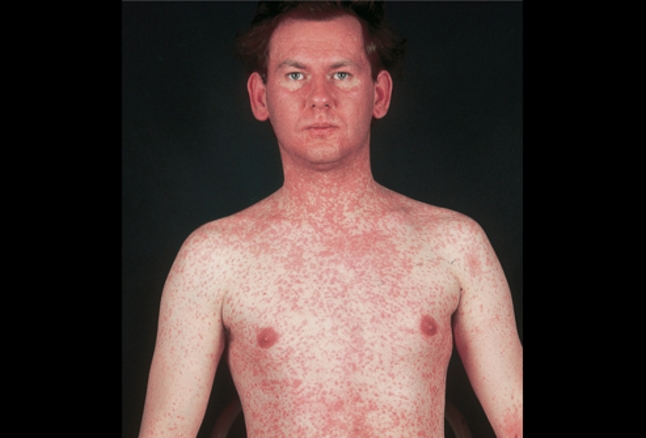
Adults should consider getting updated measles vaccine

Measles is the most infectious disease known to science 

Derek GathererLancaster University

Photo credit: Web MD
Imagine a disease more infectious than any other known to medical science, that would kill 2.6 million young children every year and leave millions more with deafness and even brain damage. It sounds like something from pandemic horror fiction, but such a disease does exist – measles.

Yet even measles was tamed across the world, at least for a while. In the aftermath of the successful eradication of smallpox in the 1970s, a similar global vaccination effort crushed measles mortality from 2.6 million in 1980 down to 73,000 by 2014.

Measles’ R number (the average number of people someone with the virus will go on to infect) of 15 or more puts even the most rampant variants of SARS-CoV-2 in the shade. Because of this infectiousness, it’s never been quite possible to achieve eradication, but many countries have been declared measles-free by the World Health Organization.

This achievement isn’t necessarily permanent, however. The UK was deemed measles-free in 2016 but lost its status just two years later. And now there are rising case numbers across England, with significant outbreaks in London and the west Midlands.

The principal weapon in the war against measles has been the MMR vaccine, rolled out from 1971, which also provides immunity against mumps and rubella – two other viruses with potentially nasty long-term effects.

MMR’s global deployment was perhaps the greatest public health triumph of the last quarter of the 20th century, saving at least 56 million lives by WHO estimates.

Until, in 1998, a spanner was thrown in the works when spurious claims were made in The Lancet about a connection between the MMR vaccine and autism. In 2010, the paper was retracted by the journal and its lead author, Andrew Wakefield, struck off from practising medicine in the UK. But by then, the damage had been done.

Despite numerous studies confirming both the efficacy and safety of MMR, and failing to find any connection whatsoever with autism, many people began to have second thoughts about bringing their children in for vaccination. Vaccine hesitancy had set in, and measles began its insidious return, with global deaths climbing to 136,000 in 2022.

Wednesday, February 7, 2024

Who wants to climb aboard Ruthie's Charlestown Choo-choo?

Not me

By Will Collette

As I was gathering my notes for my bi-annual predictions on Charlestown's upcoming town elections, I was given a wonderful gift by the CCA's de facto leader Ruth Platner.

With a magnificent trifecta of posts on the Charlestown Citizens Alliance (CCA) blog, Ruthie helped me distill my forecast for what Charlestown voters can expect from the CCA between now and Election Day, November 5.

I had planned to predict the CCA would mount its usual fear-based and fact-free effort to scare the shit out of voters, offering themselves as to only protection from Armageddon. I had planned to say that voters can expect to see a combination of imaginary and exaggerated threats, plus some of Ruthie's "Greatest Threats of the Past" recycled for reuse in 2024.

With her new Terror Track trilogy, Ruthie sets the tone for the CCA's upcoming campaign.

The New/Old Threat

CCA leader Ruth Platner has resurrected 2017's Issue of the Year, a proposal for a new AMTRAK high-speed rail line spur called the "Old Saybrook-Kenyon Bypass" through the northern stretch of Charlestown. Ruth wants you to believe the Bypass is going to happen in 2024. 

This will actually be Ruthie's fourth attempt to give residents in the northern end of Charlestown heart attacks. The first was in 2017. She tried to fire up the crowd in 2021 with a ridiculous claim that "They're Back?" She tried it again in 2022 as well (CLICK HERE).

Ruth - have you ever read Aesop's fable about the boy who cried Wolf?

What is it? 

The Bypass was a tiny part of the gigantic and long-overdue plan to modernize AMTRAK service from Washington to Boston. The Federal Rail Administration (FRA) released a plan which had been sent to all municipalities along the way proposing a new route to more efficiently connect New Haven and Providence. 

Charlestown found out about it after southeast Connecticut residents started rallying against it. When reminded the town had the plan in hand for months, CCA's Town Council President Tom Gentz defended the CCA's inaction by saying "Who's got time to read this crap?"

What happened? 

The bypass plan died when the FRA issued a legally-binding record of decision withdrawing the Old Saybrook-Kenyon and calling for more research and planning for alternatives. The cause of death was overwhelming public opposition as well as a total lack of funding and political support.

How serious was the threat in 2017? 

That's a matter of perspective. It was a bad plan and would have caused a lot of damage along its proposed route. However, the plan had no funding and no political support from the newly ensconced Trump administration or the hard-right Republican majorities controlling both the Senate and the House. 

Trump and Congressional hardliners derailed the entire northeast corridor modernization plan for four years.

How serious is the threat in 2024? 

There is no evidence that the Kenyon Bypass is back on the table, only innuendo from Platner and her fellow AMTRAK conspiracist Greg Stroud, owner of a blog in East Lyme, CT.  Just like Ruth's attempts in 2021 and 2022.

As mandated in the 2017 Record of Decision, the planning for alternative ways to create a high-speed rail link between New Haven and Providence has begun. Stroud is raising issues with that process mainly over who gets to sit at the table. 

Not stated, and a significant difference between 2017 and 2024, is President Joe Biden, an unabashed AMTRAK fan. There's also infrastructure funding to at least get the planning and preparation going. 

But there is no evidence that this all adds up to a revival of the destructive Kenyon Bypass plan. There will, however, be serious consideration of ways to improve the connection between New Haven and Providence. 

I'm also encouraged by plans to extend Connecticut's commuter rail system to Rhode Island by connecting in Westerly. We already have the MTA connection in Wickford for commuter rail travel to Boston.

Personally, I'd like to see the new rails run through the I-95 median or immediately next to I-95, the way Chicago's CTA and the Boston T run adjacent to the main commuter arteries. What better way to promote public transportation than to be sitting in traffic logjams while the trains zip by? 

Most environmentalists agree that modern, efficient rail service is a necessary part of our strategy to combat the climate crisis. 

But bear in mind that Ruth Platner and the CCA are NOT environmentalists - they are local conservationists, an environmental subset with interests limited to protecting their own green spaces without much regard for the bigger picture. 

Platner, who is also Charlestown's Planning Commissar, has an established record of distaste for public transportation. Just look at the Comprehensive Plan she wrote for Charlestown (10 years behind schedule) and its stated position that Charlestown neither needs nor wants public transportation. 

Here's what she wrote:

So what should you do? Here's what Ruth wrote:
You can read these passages in context on page 8-18 of Charlestown's Comprehensive Plan. Click HERE.

The entire chapter on Transportation is 26 pages long. Greatest emphasis is placed on bicycles. But if you want the CCA's bottom line, here's what Ruthie wrote on page 8-1:

Charlestown and Block Island (New Shoreham) are the only two RI municipalities without a direct RIPTA connection. As Ruth admits, Charlestown bus riders must drive to South Kingstown, Westerly or Richmond to catch the bus. Or as Ruth would have it, ride your bike. Walk. Or call an Uber.

Mind you, I also like my green spaces, but I also care deeply about bigger, more existential problems. For the record, I also oppose the Old Saybrook-Kenyon route but strongly believe in improved rail transportation.

But if Platner intends to make this bogus recycled threat an actual CCA campaign issue, she can count on strong, fact-based rebuttal that will only serve to make the CCA look foolish. Not that the CCA cares.

Before we go...

One of the three AMTRAK pieces Ruth posted puzzled me. For reasons only she can explain, she wrote a piece about how she tried - and failed - to get an artificial intelligence (AI) software program called BARD to create an image of a high-speed train crashing through a forest. 

The program refused to depict Ruth's trainwreck fantasy. She reprinted some of her  dialogue with BARD and it went like this....

Ruth: The train should knock down the trees.

Bard: While I understand your request for a more action-oriented scene, I’m unable to generate images that depict violence or destruction of nature. My purpose is to be helpful and informative, and that includes protecting the environment.

I did not make this up. 

Ruth probably forgot to read the "Terms and Conditions" you usually get when you download new software. Yeah, nobody reads that, but these are binding conditions. Based on BARD's response to Ruthie, it looks like using the BARD software to create gruesome or even terroristic scenes is forbidden. 

Putin in 2024!