Menu Bar

Home           Calendar           Topics          Just Charlestown          About Us

Wednesday, February 21, 2024

How to avoid additional frustration with financial aid applications

FAFSA website meltdown

Dawn MedleyDrexel University 

Some colleges are extending the traditional May 1 deadline
for students to accept offers.
 valentinrussanov via Getty Images
When Congress passed the FAFSA Simplification Act in 2020, it was touted as making it easier for more families to access the government funding they need to send their children to college. But as recent events have shown, it actually made things more complicated, frustrating and confusing.

While the new federal student aid form – known as the FAFSA – is much shorter and requires less manual entry of tax information, there were glitches and delays in rolling it out, as with many new websites.

Initially, families could access the FAFSA only for a limited time during a “soft launch” period in December.

Now the form is accessible to families for them to complete, but the data is not flowing out to schools and colleges. Applicants are also discovering another problem. Often, students and parents may need to consult other documents or each other as part of the application process, so they will pause their application to complete it later. 

However, after initially logging into the FAFSA website, many students and parents experienced difficulty when returning to finalize their submission. The simplified FAFSA application has been online since the end of December, but users are still experiencing some problems.

The Department of Education’s student aid calculations have also been delayed as it incorporates a new formula intended to expand eligibility for financial aid. The department also made an error in the formula when adjusting for inflation. 

The calculations used for the determination of aid eligibility had been based on outdated consumer price index rules from 2020 but have since been corrected. All of this has delayed sending aid calculations to schools.

As a longtime college administrator who has developed programs to improve access to higher education, I see this situation as a well-intentioned but poorly executed effort. Ultimately, I believe the changes to FAFSA will help more students realize their dream of earning a degree, but this year I’m afraid it may cause many to abandon it.

To better understand the situation and what might come next, it helps to know how the government and schools work together to provide financial aid.

Tuesday, February 20, 2024

Far-right, GOP love of Russia deepens

Tucker Carlson wishes America was more like Moscow

By Walter Einenkel for Daily Kos

By Clay Bennett
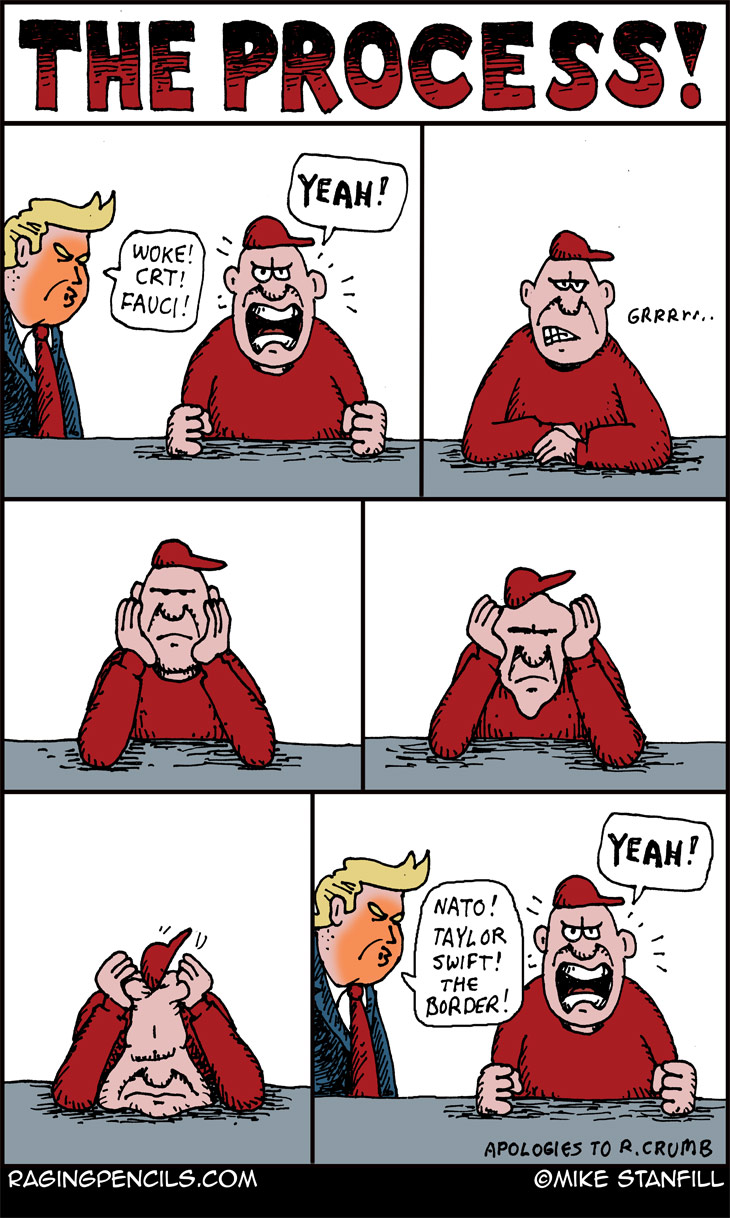
Tucker Carlson followed up his interview of Russian dictator Vladimir Putin with an appearance at the 2024 World Governments Summit in Dubai. Speaking with Egyptian journalist Emad Eldin Adeeb, Carlson praised Putin as “very capable” and fawned over Moscow, where he had just spent eight days as the dictator’s special guest. 

“It is so much nicer than any city in my country,” Tucker effused, adding, “it is so much cleaner and safer and prettier aesthetically—its architecture, its food, its service—than any city in the United States.”

But it wouldn’t be Tucker without more negative hyperbole and nods to fascism. He proceeded to pontificate on how he didn’t believe the “average person” in the U.S. “cares as much about abstractions as about the concrete reality of his life. And if you can't use your subway, for example, as many people are afraid to in New York City because it's too dangerous, you have to sort of wonder, like, isn't that the ultimate measure of leadership?”

Tucker then gushed about other cities, including Singapore, Tokyo, Dubai, and Abu Dhabi, that he thinks are nicer than those in America. 

“[T]hese cities, no matter how we're told they're run and on what principles they're run, are wonderful places to live that don't have rampant inflation, where you're not going to get raped,” he said.

Tucker’s fascistic dog-whistling about trains, based on a historic falsehood, is funny coming from a man who had a small television studio built in Maine in 2020 and doesn’t seem to have spent much time in New York City recently, and probably could count on one hand the number of times he’s ever ridden the New York City subway.

And while rape and sexual assault are notoriously underreported, the compilations of the statistics available show New York state has one of the lowest reported rape statistics in the United States.

Russians for Trump 2024

Let them grow


One person can supervise 'swarm' of 100 unmanned autonomous vehicles

And how is this a good thing?

Oregon State University


Research involving Oregon State University has shown that a "swarm" of more than 100 autonomous ground and aerial robots can be supervised by one person without subjecting the individual to an undue workload.

The findings represent a big step toward efficiently and economically using swarms in a range of roles from wildland firefighting to package delivery to disaster response in urban environments.

"We don't see a lot of delivery drones yet in the United States, but there are companies that have been deploying them in other countries," said Julie A. Adams of the OSU College of Engineering.

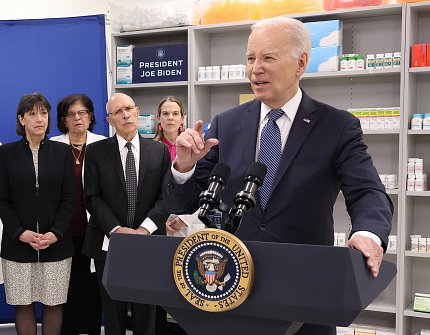
Patients start seeing savings from Biden's push to lower drug prices

Pharma Lines Up Its Lawyers


Last year alone, David Mitchell paid $16,525 for 12 little bottles of Pomalyst, one of the pricey medications that treat his multiple myeloma, a blood cancer he was diagnosed with in 2010.

The drugs have kept his cancer at bay. But their rapidly increasing costs so infuriated Mitchell that he was inspired to create an advocacy movement.

Patients for Affordable Drugs, which he founded in 2016, was instrumental in getting drug price reforms into the 2022 Inflation Reduction Act. Those changes are kicking in now, and Mitchell, 73, is an early beneficiary.

In January, he plunked down $3,308 for a Pomalyst refill “and that’s it,” he said. Under the law, he has no further responsibility for his drug costs this year — a savings of more than $13,000.

The law caps out-of-pocket spending on brand-name drugs for Medicare beneficiaries at about $3,500 in 2024. The patient cap for all drugs drops to $2,000 next year.

URI tuition and fees climb higher after trustees vote

Affordable state college education takes another hit

By Alexander Castro, Rhode Island Current

University of Rhode Island (URI) students will see higher tuition prices for next fall. 

A proposal to increase tuition — 3.6% for in-state students and 3.9% for out-of-state students for the 2024-2025 academic year — met unanimous approval from the Board of Trustees at a board meeting on Friday. 

The tuition increase was originally 3.5% for all students, but a Feb. 5 meeting of the trustees’ Finance and Facilities Sub-Committee retooled the recommended hike into two categories — a move similar to the 2023-2024 academic year, which saw a 3.3% increase for Rhode Islanders and 4.2% for out-of-state students.    

All students will also see a 0.9% increase in mandatory fees — $20 in all, for both the fitness center and student union. That brings the total cost of mandatory fees to $2,312.    

Abby Benson, interim vice president for administration and finance, noted at the Feb. 5 meeting that tuition costs are only a part of what’s called “total cost of attendance.” Housing, meal plans and other fees contribute to out-of-pocket price a student pays.

According to the URI website, for the 2024-2025 school year, URI tuition is $16,858 for Rhode Islanders and $36,846 for out-of-state and international students. 

New Englanders pursuing certain majors can pay a reduced rate of $27,768 via the New England Regional Tuition Program. The total cost of admission, with average housing and food costs added in, is $31,496 for in-state students and $51,484 for out-of-state students.    

These numbers, however, don’t reflect the changes of today’s vote, but URI spokesperson Dawn Bergantino said they would be updated soon. 

Monday, February 19, 2024

Has the Charlestown Citizens Alliance run out of out-of-state donors?

CCA makes unusual pitch for early campaign cash

By Will Collette 

Since 2008, in every Charlestown municipal election, we’ve seen the Charlestown Citizens Alliance (CCA) raise huge amounts of cash from absentee property owners usually in the last few months before election day. 

It’s generally very quiet and last minute, often so late in the campaign that these cash gifts don’t get reported to the RI Board of Elections until after the election is over. 

During the campaign itself, the CCA blitzes the town and the letters to the editor page of the Westerly Sun with extraordinary claims about various threats (sometimes imaginary) as well as remarkable achievements unsubstantiated by evidence that testify to the joy and happiness the CCA bestows on Charlestown.  

And in contrast, the CCA casts all those who doubt their sacred mission as being in the pockets of developers. To try to forestall criticism of their smears against their opponents, CCA leader and Planning Commissar Ruth Platner penned a letter to the Westerly Sun to claim she had never, ever said town council members of “being on the take.” 

Like Tucker Carlson, says Platner, she’s just “questioning” Town Council decisions. So much for her non-apology apology. Further, she says she will not be bullied into letting up on her “questions.”  

Not that Ruth would ever bully anyone who crosses her, such as political opponents, town staff who don’t do her bidding, commission members who don’t toe the CCA line, applicants for zoning permits or even her own fellow CCAers who may, on occasion, vote their conscience, rather than the CCA party line, as current CCA councilor Susan Cooper did once (and only once).  

Until 2022, the CCA’s election routine was enough to keep the CCA in control of the entirety of Charlestown’s municipal government. In 2022, the CCA got its ass whupped by Charlestown Residents United (CRU). That apparently has caused the secretive CCA Steering Committee to change tactics. 

That seems to have changed based on a posting on the CCA blog where with 9 months left before the November 5 general election, the CCA has posted a broad appeal for money, seeking to add to their already formidable treasury of almost $12,000 according to their most recent campaign finance report.  

As usual, their pitch includes their usual casual treatment of the truth. To provide some truth in advertising, I have re-printed most of the CCA’s sales pitch but included some commentary and fact-checking in bold red. 

Here’s the CCA pitch: Your Donation Works To Protect Charlestown’s Rural Character, Environment, Economy, Tax Rate, and Future

SteeringCommittee /Charlestown Rhode IslandMailbox 0 Comments 

This fall, Charlestown voters will elect the individuals who serve on Town Council and our Planning Commission. 

For 17 years the Charlestown Citizens Alliance (CCA) has been dedicated to electing individuals who will work to protect those assets that make Charlestown such a unique and treasured place to live.  

Actually, it’s only been 16 years since the CCA registered as a Political Action Committee on March 10, 2008. The CCA was formed to oust then Charlestown Town Council President Jim Mageau from office. 

Initially, they tried to operate as an unincorporated association, but a complaint to the RI Board of Elections forced them to register as a PAC, given their explicit political purpose. None of the CCA leaders who signed the registration form still live in Charlestown. 

The CCA's priorities: We ask for your help in electing leaders who will protect Charlestown’s rural character, environment, economy, tax rate, and future. 

There are a few problems with this list of priorities. 

First, there is no definition of “rural character” so it’s basically whatever CCA leader and Planning Commissar Platner says it is. That translates into minimal housing, minimal kids, minimal services, minimal roads, minimal growth.  

Second, the CCA is only interested in local conservation, not broader issues of the environment like climate change, hazardous waste, or renewable energy. CCA-style conservation is not the typical flora and fauna concerns of common folks. Rather, it is theconservation” of wealthy donors’ financial assets by enacting policies that minimize, to the greatest extent possible, the need to fund public services requisite to a vibrant community. 

Third, the CCA has no interest in Charlestown’s economy except for tourism. They are hostile to small business and actually impeded tourism by making it hard for tourism workers to live or travel to Charlestown, determined we will remain the only Rhode Island municipality other than Block Island with no link to public transportation. 

Fourth, as usual, the CCA only wants to talk about the tax RATE, but not about taxes, especially fair taxation, as a whole. Charlestown taxes are far from fair due to a decade of corrupt favoritism practiced by the CCA during its 10 years of total control of town government. Details HERE. 

If they REALLY want to talk about tax rates, well try this fact on: Right after CRU kicked the CCA out of control of the Council, the tax RATE dropped from $8.17 to only $5.74. Of course, property assessments drove the rate, as is the case every year, but the CCA no longer can boast about rates without dealing with this fact.

Charlestown, circa 1914 (EBay)
Fifth, the CCA’s vision of the future, distilled in the Comprehensive Plan authored by Ruth Platner, is to try to freeze Charlestown in some imaginary past, a time without roads, before the Narragansetts won recognition as a Tribe, and new affordable housing meant some Swamp Yankee building a shack. 

The CCA continues: Good government depends on an informed electorate who want facts and detailed information. Through its website, newsletter, and social media, CCA notifies the public and explains in-depth the issues of importance to Charlestown. During the election period, CCA also prints and mails this essential information to voters. 

The CCA is not so dedicated to allowing that “informed electorate” to gain access to public records, using tricks like broad use of loopholes in disclosure laws, high fees and blacking out whole sections of key documents. 

They directed their longtime henchman, ex-Town Administrator Mark “Stonewall” Stankiewicz to enforce an information blackout, especially on shady CCA land deals. Prime example HERE. 

The CCA continues: Good government depends also on excellent leaders who will work hard. CCA supports individuals for office who will protect our environment and preserve our natural resources—the foundation of our tourist economy and critical to maintaining a low tax rate. 

They’re repeating themselves, perhaps lacking any other substantive points. Over the years, the CCA has gotten voters to elect such “excellent leaders” as Uncle Fluffy Tom Gentz, Deputy Dan Slattery, Bonnita Van Slyke, Ruth Platner and others from their inner circle. They’ve also given us a broad cast of characters who have their own agendas or whose main talent was following orders from the secretive CCA “Steering Committee.” 

The CCA continues: Charlestown Citizens Alliance is proud to be supported by the citizens of Charlestown and those who love our town. We are an all-volunteer organization entirely dependent on contributions from individuals. Please join those who have already given by making a contribution of any amount. 

If you would like to contribute to CCA, you have the choice of an online donation via PayPal, or you can send us a check using postal mail. 

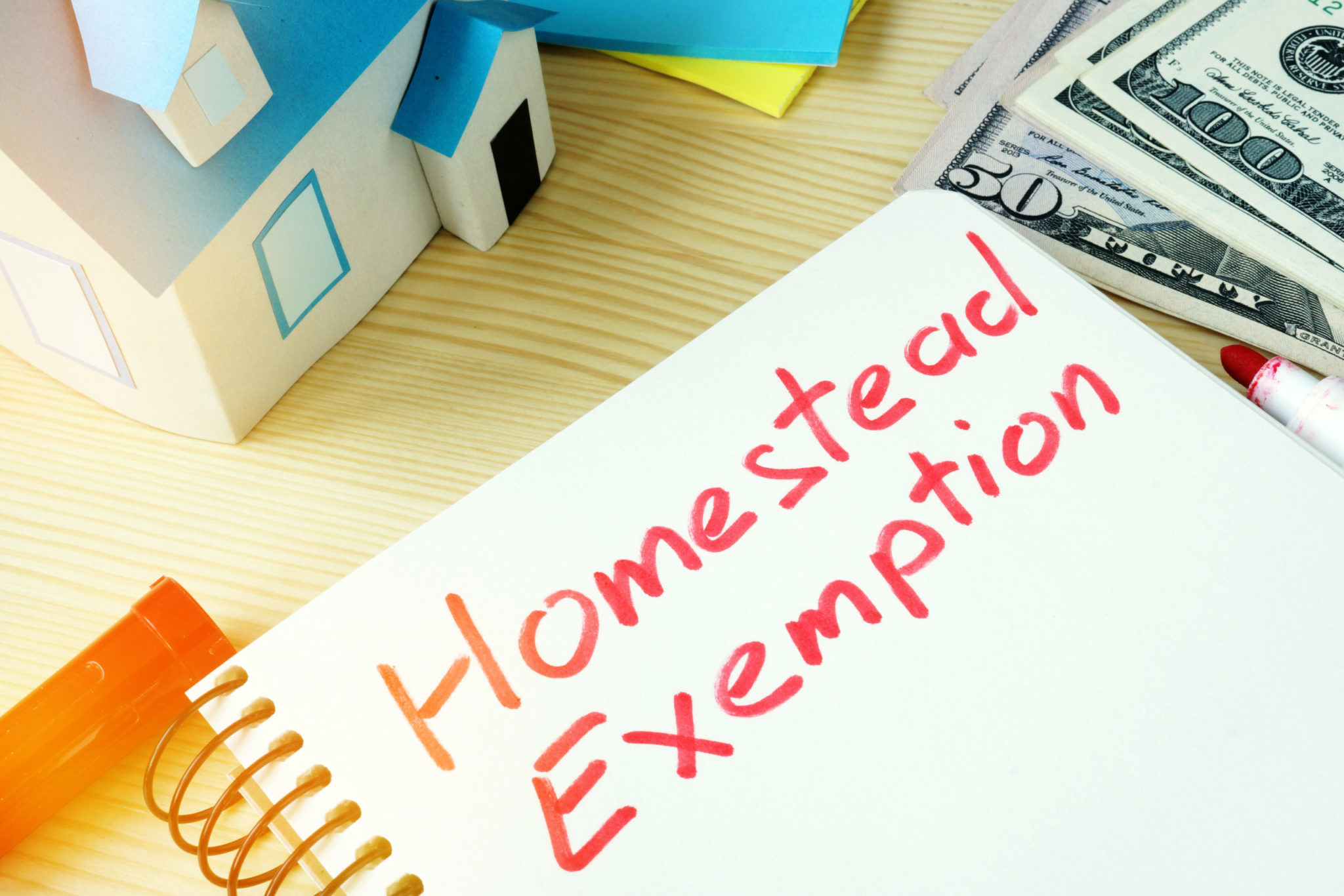
Note the shifty language they add: “…and those who love our town.” That’s their cover for the CCA’s major reliance on money from non-residents to run the CCA’s campaigns. Through their payments to the CCA, these absentee property owners buy the CCA’s stance against things absentee property owners oppose such as Chariho school funding, affordable housing, a homestead tax credit for permanent residents and beach access. 

Follow your cues

Who will protect Social Security?


The long-term effects of bullying

From Social Harm to Neural Scars

By UNIVERSITY OF CALIFORNIA - LOS ANGELES HEALTH SCIENCES 

A new study, co-led by UCLA Health and the University of Glasgow, found that young teenagers who develop a strong distrust of other people as a result of childhood bullying are substantially more likely to have significant mental health problems as they enter adulthood compared to those who do not develop interpersonal trust issues.

The study, published today (February 13) in the journal Nature Mental Health, is believed to be the first to examine the link between peer bullying, interpersonal distrust, and the subsequent development of mental health problems, such as anxiety, depression, hyperactivity, and anger.

How the Brain Learns To Deal With the Unexpected

Surprise!

By UNIVERSITY OF BASEL 

Children find the world brimming with surprises, whereas adults are significantly harder to astonish. Behind this seemingly simple situation lie intricate mechanisms. 

Scientists at the University of Basel have employed mice in new research to unravel the development of responses to unforeseen events in the maturing brain.

Babies love playing peekaboo, continuing to react even on the tenth sudden appearance of their partner in the game. Recognizing the unexpected is an important cognitive ability. After all, new can also mean dangerous.

The exact way in which surprises are processed in the brain changes as we grow, however: unusual stimuli are much more quickly categorized as “important” or “uninteresting”, and are significantly less surprising the second and third time they appear. 

This increased efficiency makes perfect sense: new stimuli may gain our attention, but do not cause an unnecessarily strong reaction that costs us energy. While this may appear trivial at first, so far there has been very little research into this fact in the context of brain development.

Are robots going to kill us?

Risk of Existential Catastrophe: There Is No Proof That AI Can Be Controlled

By TAYLOR & FRANCIS GROUP  

There is no current evidence that AI can be controlled safely, according to an extensive review, and without proof that AI can be controlled, it should not be developed, a researcher warns.

Despite the recognition that the problem of AI control may be one of the most important problems facing humanity, it remains poorly understood, poorly defined, and poorly researched, Dr. Roman V. Yampolskiy explains.

In his upcoming book, AI: Unexplainable, Unpredictable, Uncontrollable, AI Safety expert Dr. Yampolskiy looks at the ways that AI has the potential to dramatically reshape society, not always to our advantage.

He explains: “We are facing an almost guaranteed event with the potential to cause an existential catastrophe. No wonder many consider this to be the most important problem humanity has ever faced. The outcome could be prosperity or extinction, and the fate of the universe hangs in the balance.”

Sunday, February 18, 2024

Holdover Trumper is killing the Postal Service

Two new appointments need to be made to fire DeJoy

JESSICA CORBETT

EDITOR'S NOTE: If you don't think the problems being created by Trump's appointee Louis DeJoy doesn't affect you, think again. According to a small posting in last week's Providence Journal, the property holding Charlestown's post office was sold on January 25 has been sold to a California-based real estate company. 

UNKNOWN: the future of postal service in Charlestown.  - Will Collette

As the U.S. Postal Service Board of Governors last week held a meeting in Washington, D.C., frustrated USPS workers, customers, and union officials rallied outside to protest a new limit on public comment and the agency's austerity plan.

While the quarterly meetings have previously included an hour of in-person and virtual public testimony, the USPS board has shifted to only taking comments once annually, a move that outraged critics of Postmaster General Louis DeJoy—a GOP donor appointee of former President Donald Trump—and his 10-year "Delivering for America" plan.

"We won't be silenced!" read signs held by protesters on Thursday that urged the board to allow public testimony.

"Let us tell the truth about DeJoy's 10-year plan," the signs added, calling for an end to cuts, closures, and mail delays.

In a statement about Thursday's protest, an American Postal Workers Union local and Communities and Postal Workers United noted that opponents of the plan have long argued it "will slash jobs and shrink processing centers and post offices."

Heil

By Lalo Alcaraz