Menu Bar

Home           Calendar           Topics          Just Charlestown          About Us

Wednesday, March 27, 2024

Wealth of US Billionaires Hits $5.5 Trillion—Up 88% Since Pandemic Hit

The obscenely rich

CHUCK COLLINS and OMAR OCAMPO forInequality.Org


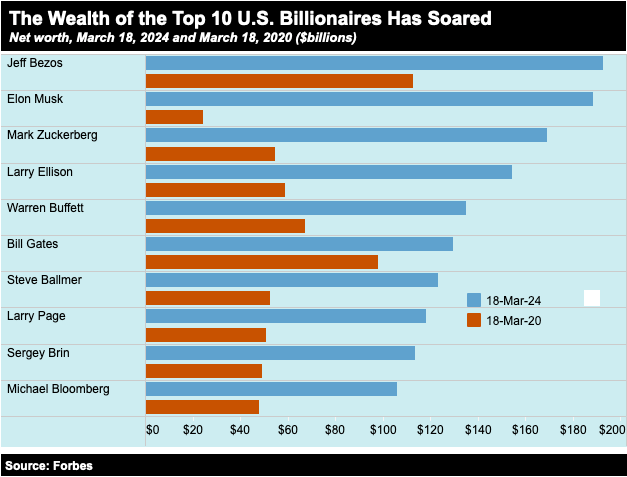
Four years ago, the United States entered the Covid-19 pandemic. Forbes published its 34th annual billionaire survey shortly after with data keyed to March 18, 2020. On that day, the United States had 614 billionaires who owned a combined wealth of $2.947 trillion.

Four years later, on March 18, 2024, the country has 737 billionaires with a combined wealth of $5.529 trillion, an 87.6 percent increase of $2.58 trillion, according to Institute for Policy Studies calculations of Forbes Real Time Billionaire Data. (Thank you, Forbes!)

The last four years have been great for particular billionaires:

Tuesday, March 26, 2024

What we would expect under a Trump dictatorship

We need to think about the unthinkable

ANDREA MAZZARINO in TomDispatch

We should already be talking about what it would be like, if Donald Trump wins the 2024 election, to live under a developing autocracy. 

Beyond the publicized plans of those around him to gut the federal civil service system and consolidate power in the hands of You Know Who, under Trump 2.0, so much else would change for the worse.

All too many of us who now argue about the Ukraine and Gaza wars and their ensuing humanitarian crises, about police violence and extremism in the military here at home, about all sorts of things, would no longer share a common language. 

Basics that once might have meant the same thing to you and me, like claiming someone won an election, might become unsafe to mention. In a Trump 2.0 world, more of our journalists would undoubtedly face repercussions and need to find roundabout ways to allude to all too many topics. 

A moving opinion column by the New York Times’s David French, who faced threats for his writing about Donald Trump, highlighted how some who voiced their views on him already need round-the-clock police protection to ensure their safety and that of their family.

I often think about the slippery slope we Americans could soon find ourselves on. After all, from the time Vladimir Putin became Russia’s president in 1999, I spent 20 years traveling to his country and back, working there first as an anthropology doctoral student and later as a human rights researcher. 

I’ve followed Russian politics closely, including as a therapist specializing in war-affected populations, asylum seekers, and refugees. Friends and colleagues of mine there have faced threats to their safety and their careers amid a Kremlin crackdown on public discussion after Putin’s invasion of Ukraine, and several fled the country with their families in search of safety and a better life.

To be sure, there are many differences between the United States, with its robust democratic tradition, and Russia, which only briefly had competitive elections and a free press. 

Nonetheless, my experiences there offer a warning about how a Trumpian version of top-down rule could someday stifle any possibility of calling out state-sponsored violence for what it is, and what it might feel like if that’s our situation here someday.

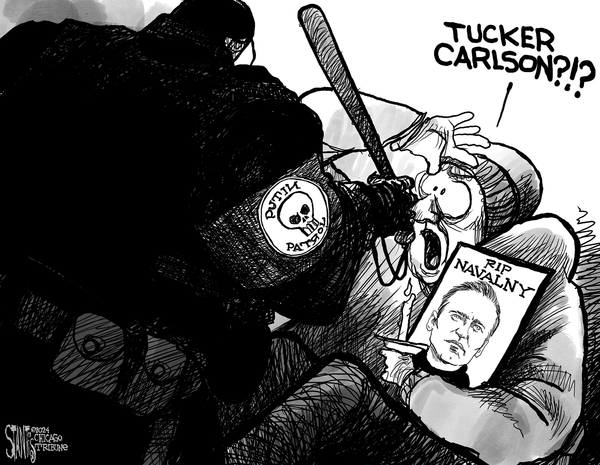
Tucker Carlson’s Moscow

On first look, far-right journalist Tucker Carlson’s recent visit to Moscow, covered exuberantly by Russia’s state media, might seem like an example of an American tourist’s naïve glorification of another country’s luxuries. 

Carlson marveled at the fancy tilework of the city’s subway system, visited the national ballet, and noted that you can buy caviar cheaply at the local grocery store. He also pointed out that Moscow’s pristine streets had no homeless people and no apparent poverty.

In the gilded halls of the Kremlin palace, he interviewed President Putin for more than two hours. Despite his guileless expression, Carlson occasionally appeared flummoxed as Putin lectured him endlessly on Russian history and the centuries-old claim he insisted Moscow has on Kyiv as its protector from aggressors near and far. 

Of course, he never challenged Putin on his rationale for invading that country (nor did he refer to it as an invasion) or any of the Russian leader’s other outrageous claims.

I’m of the school of thought that considers Putin’s Russia exactly the sort of anti-woke paradise the MAGA crowd craves. Anyone of Carlson’s age who grew up during the Cold War and turned on his or her television in that pivotal period when the Berlin Wall fell should certainly know that all of Russia doesn’t look anything like what he was shown. 

He should also have known about the recent history of economic “shock therapy” that drained Russian public services of funding and human resources, not to speak of the decades of corruption and unfair economic policies that enriched a choice few in Putin’s circle at the expense of so many.

Of course, something had to happen to turn the Moscow that Carlson saw into a sanitized moonscape. If you haven’t been following developments in Russia under Putin, let me summarize what I’ve noticed.

Protesters — even many going to opposition leader Alexei Navalny’s recent memorial service — have been arrested or at least intimidated when appearing to sympathize with anything that’s not part of the Kremlin’s official pro-Putin ideology. Many groups, from Asian migrants to the homeless, have either been rounded up by the police or at least relocated far out of the view of tourists of any sort. 

In fact, the imprisoned American journalist whom Carlson briefly gestured toward emancipating, Wall Street Journal reporter Evan Gershkovich, had written on the practice of zachistki, or mop-up operations by the Russian authorities that, for instance, relocated homeless services to the outskirts of Moscow, far from public view. 

Of course, Gershkovich is now imprisoned indefinitely in Russia on charges of espionage for simply reporting on the war in Ukraine, proving the very point Carlson so studiously avoided, that an endless string of lies underscore Putin’s latest war.

What’s more, amid sub-subsistence wages, housing shortages, and the thin walls of so many city apartments, ordinary Russians are not always able to engage in the “hard conversations” that conservatives like Alabama Senator Katie Britt boast of having in their well-furbished kitchens. After all, neighbors are now encouraged to denounce each other for decrying Russia’s war. (You could, it seems, even end up in prison if your child writes “no to war” on a drawing she did for school.)

There are very personal ramifications to living in an autocracy with which Tucker Carlson and, of course, the Orange Jesus himself are signaling their agreement when they entertain the views of leaders like Vladimir Putin or call Hungarian autocrat Viktor Orbán “fantastic.” They’re signaling what their end goal is to Americans and, sadly enough, it’s not particularly far-fetched anymore to suggest that, someday, we won’t even have the freedom to talk about all of this with each other.

The Thing That Cannot Be Named

Tucker Carlson at least did his homework. He clearly knew that you couldn’t describe the war in Ukraine as an unprovoked Russian invasion, given that country’s carefully crafted censorship laws.

Since his February 2022 invasion, Putin has referred to it as a “special military operation” focused on the defense of Russia from NATO and the “denazification” of Ukraine. 

During that first spring, the Russian president signed a law forbidding journalists from even calling the invasion a “war,” choosing instead to frame the killing, displacement, abduction, torture, and rape of Ukrainian citizens as a surgical rescue operation provoked by the victims themselves. 

Broader, vaguer censorship laws were then passed, further limiting what Russians of all stripes could say, including one against “discrediting the army,” which imposed stiff fines and prison sentences, and more recently, property confiscations on anyone deemed to have said anything negative about Russia’s armed forces. While the thousands of arrests made may seem modest, given Russia’s 146 million people, it’s still, in my opinion, thousands too many.

The Russian leader’s perverse framing of his unprovoked war is undoubtedly what also allows him to admit that hundreds of thousands of Russians have been killed or wounded so far, something he couldn’t otherwise say. In a country suffused with right-wing Christian nationalism, it also certainly helps his cause that most of Russia’s war dead come from remote, poor, and predominantly minority regions.

This is the sort of muddling of meaning and motives that autocratic leaders engage in to justify deaths of all kinds. American equivalents might be what the MAGA crowds do when they blame the January 6th far-right assault at the Capitol, aimed at police and lawmakers, on the “Antifa,” or extreme leftists, without disputing that people were hurt. 

Or consider then-President Donald Trump’s comment that far-right white supremacist Charlottesville rioters and counter-protesters included “very fine people on both sides” — no matter that one such fine person plowed down a counter-protester in his car, murdering her, or that certain of those “fine” white supremacists espoused anti-Semitic conspiracy theories considered by some an incitement to violence.

For their part, Russians of various political stripes enjoy an ancient tradition of using dark humor and irony to engage in the kinds of conversations they really want to have. Take as an example the way progressive journalists like those at the news stations TV Rain and Novaya Gazeta (since banned from operating) began discussing the war in Ukraine as “the thing that cannot be named.” Eventually, however, sweeping censorship laws prevented even workarounds like those.

It’s not a small thing to live in a place where you can’t say what you want to for fear of political persecution, especially when you’ve grown up in other circumstances. A good friend of mine who came of age after the fall of the Berlin Wall and led a prosperous, happy life in St. Petersburg, fled the country on the last train out of that city to Helsinki, Finland, her young child in tow. 

Her goal: to start life over from scratch and avoid having to raise her child in a place where he would be brainwashed into thinking Russia’s armed forces and police were infallible and beyond critique. I suspect that many of the hundreds of thousands of Russians who joined her in fleeing the country weren’t that different.

Imagine raising a child whose unquestioning mind you can’t recognize. (That goes for you, too, Trump supporters, because — count on it! — once in office again, he would undoubtedly move toward ending elections as we know them, not to speak of shutting down whatever institutions protect our speech!)

America and the Lie that Begot Other Lies

Events in recent years indicate that Americans — particularly those in the MAGA camp — have grown inured to the public mention of armed violence. Who could forget the moment in 2016 when candidate Trump boasted at a campaign rally before winning the presidency that “I could stand in the middle of 5th Avenue and shoot somebody and I wouldn’t lose voters”? As racially and politically motivated violence and threats have proliferated, so many of us seemed to grow ever less bothered by both the incidents themselves and the rationales of those who seek to encourage and justify them.

My own adult life began as Vladimir Putin consolidated power in Russia, while former President George W. Bush launched his — really, our — disastrous Global War on Terror, based on lies like that Iraqi leader Saddam Hussein possessed weapons of mass destruction. 

Unfortunately, we’ve spilled all too little ink here on the nearly one million people who died across our Middle Eastern, South Asian, and African war zones since 2001 (and the many millions more who lost their lives, even if less directly, or were turned into refugees thanks to those wars of ours). 

And don’t forget the more than 7,000 American troops (and more than 8,000 contractors!) who died in the process, essentially baptizing our national lies in pools of blood. And how could that not have helped normalize other lies to come like Trump’s giant one about the 2020 election?

Thankfully, in this country we can still say what we want (more or less). We can still, for instance, call out the Pentagon for underreporting the deaths its forces have caused. In other words, something like the Costs of War Project that I helped to found to put our lies in context can still exist. But how long before such things could become punishable, if not by law, then through vigilantism?

Yes, President Biden is arming Israel in its gruesome fight against Hamas while providing only the most modest aid to Gaza’s war-devastated population, but we can still hold him to account for that. If the 2024 election goes to Donald Trump, how long will that be true? 

If we don’t get to the point right now where all of us are calling out lies all the time, then every Trumpian lie about violence — from Republican members of Congress calling the January 6th rioters “peaceful patriots” to The Donald’s claim that he would only be a dictator on “day one” of his next presidency (a desire supported by a significant majority of Republicans) — will amount to lies as consequential as the 1933 burning of the Reichstag parliament building in Germany, which Hitler’s ascendant Nazi party attributed to communists, setting the stage for him to claim sweeping powers.

We are entering a new and perilous American world and it’s important to grasp that fact. In that context, let me mention a Russian moment when I did no such thing. 

I still feel guilty about a dinner I had with human-rights colleagues in 2014, including a Russian activist who had dedicated his career to documenting political violence and war crimes committed under successive Russian leaders from Joseph Stalin to Vladimir Putin. 

I was sitting at the far end of the table where I couldn’t catch much of the conversation and I joked that I was “out in Siberia.” Yes, my dinner companions graciously laughed, but with an undercurrent of discomfort and tension — and for good reason. 

They knew the dangerous world they were in and, in fact, that very activist has since been sent to a penal colony for his work discrediting the actions of the Russian armed forces. My joke is anything but a joke now and consider that a reminder of how quickly things can change — and not just in Russia, either.

In fact, oppression feels closer than ever in America today and verbal massaging, joking, or willful ignorance can only mask what another Trump presidency could mean for us all.

© 2023 TomDispatch.com

ANDREA MAZZARINO Andrea Mazzarino co-founded Brown University's Costs of War Project. She is an activist and social worker interested in the health impacts of war. She has held various clinical, research, and advocacy positions, including at a Veterans Affairs PTSD Outpatient Clinic, with Human Rights Watch, and at a community mental health agency. She is the co-editor of "War and Health: The Medical Consequences of the Wars in Iraq and Afghanistan" (2019).
Sure.

Nathan Cooper

Happy 90th birthday!

How to make solar power more ecologically beneficial to the land it sits on

Solar power occupies a lot of space 

Matthew Sturchio, Colorado State University

As societies look for ways to cut greenhouse gas emissions and slow climate change, large-scale solar power is playing a central role. Climate scientists view it as the tool with the greatest potential to reduce carbon dioxide emissions by 2030. 

In the U.S., the Department of Energy predicts that solar will account for nearly 60% of all new utility-scale electricity-generating capacity installed in 2024.

But ideal locations for solar development often overlap with croplands or grasslands used for livestock grazing. Typically, large-scale solar arrays are designed to maximize energy generation, without much consideration for the ecosystems in which they are placed.

For example, grading land and removing vegetation can cause erosion and send runoff into waterways. Solar developers have been fined for such environmental violations in Georgia, Massachusetts, Alabama, Idaho and Illinois.

There also are concerns about how large solar installations affect animal movement patterns. In the western U.S., removing native vegetation to make room for solar farms can threaten endangered animals and insects that rely on these plants as food and habitat. Native plant communities take a long time to reestablish themselves in these water-limited areas after they are disturbed.

I am an ecologist and a member of a research team led by Alan Knapp at Colorado State University. We investigate how solar development affects grassland ecosystem health – in particular, how plants’ growth and water use patterns and response to light change once solar panels are installed overhead. Through this work, we hope to inform a more sustainable future for solar energy.

'Dirty Dozen' Guide Shows 95% of These Fruits and Veggies Tested Positive for Pesticides

New guide to safer choices

OLIVIA ROSANE

The latest edition of an annual consumer's guide published Wednesday reveals that almost three-fourths of non-organic fruits and vegetables sampled contained traces of toxic pesticides while the "dirty dozen"—including strawberries and spinach—tested at levels closer to 95%.

Scientists with the Environmental Working Group (EWG) document in their new report, "2024 Shopper's Guide to Pesticides In Produce," that four out of five of the most frequently detected pesticides found on the twelve most-contaminated produce items were fungicides that could have serious health impacts.

"There's data to suggest that these fungicides can disrupt the hormone function in our body," EWG senior scientist Alexa Friedman told Common Dreams, adding that the chemicals had "been linked to things like worse health outcomes" and "impacts on the male reproductive system."

The four fungicides detected on the Dirty Dozen produce were fludioxonil, pyraclostrobin, boscalid, and pyrimethanil. Two of these—fludioxonil and pyrimethanil—were also found in the highest concentrations of any pesticide detected.

The annual Dirty Dozen and Clean Fifteen lists are based on a review of Department of Agriculture and Food and Drug Administration data. This year, EWG looked at results from 47,510 samples of 46 fruits and vegetables.

2024's Dirty Dozen list is similar to previous years, with strawberries, spinach, and a trio of hearty greens—kale, collard greens, and mustard greens—once again taking the top three spots. The full list is as follows:

Older people especially should get COVID vax this spring

CDC says people ages 65 and up should get a shot this spring 

Even if you got a COVID-19 shot last fall, the spring
shot is still essential for the 65 and up age group. 
whyframestudio/iStock via Getty Images Plus
In my mind, the spring season will always be associated with COVID-19.

In spring 2020, the federal government declared a nationwide emergency, and life drastically changed. Schools and businesses closed, and masks and social distancing were mandated across much of the nation.

In spring 2021, after the vaccine rollout, the Centers for Disease Control and Prevention said those who were fully vaccinated against COVID-19 could safely gather with others who were vaccinated without masks or social distancing.

In spring 2022, with the increased rates of vaccination across the U.S., the universal indoor mask mandate came to an end.

In spring 2023, the federal declaration of COVID-19 as a public health emergency ended.

Now, as spring 2024 fast approaches, the CDC reminds Americans that even though the public health emergency is over, the risks associated with COVID-19 are not. But those risks are higher in some groups than others. 

Therefore, the agency recommends that adults age 65 and older receive an additional COVID-19 vaccine, which is updated to protect against a recently dominant variant and is effective against the current dominant strain.

Monday, March 25, 2024

Trump Wants to Destroy Social Security, But Biden Plan Would Improve and Expand It

Biden will lift the cap and tax the rich

ROBERT REICH in Robertreich.Substack.Com

During a typically rambling and incoherent interview last week, Trump admitted he would cut Social Security and Medicare if reelected.

"There is a lot you can do in terms of entitlements, in terms of cutting and in terms of also the theft and the bad management of entitlements.”

Trump has tried to
walk back the remarks, saying that when he used the word “cutting” he didn’t actually mean “cutting,” and that Social Security has a lot of waste. 

In fact, Social Security is well managed, and theft or fraud is rare.

But there’s no question Trump and his Republican allies want to cut Social Security and Medicare.

Here’s why. At the heart of their economic agenda — at least the portion they’re sharing with their super-wealthy backers — is another giant tax cut for the super-wealthy and big corporations.

The problem is that this tax cut would cause the federal budget deficit to explode — as did their last tax cut for the wealthy — unless Social Security and Medicare are cut. (Remember that as president, Trump repeatedly included cuts to Social Security and Medicare in his official budget proposals.)

Brains


Get your daily dose

Rhode Islanders invited to join ‘Homegrown National Park’ effort in Rhode Island

URI insect experts say home gardeners can help stem insect slide

Kristen Curry 

Steven Alm and Casey Johnson in the University of Rhode Island Bee Lab would like you to think small. Alm and Johnson are working at scale, reminding us of the importance of, as E.O. Wilson said, “the little things that run the world.”

Though tiny, the issues they are examining are anything but trivial, bellwethers for larger issues and crises in our natural environment.

A professor at URI and keeper of its historic Insect Collection (which dates to the late 1800s), Alm is concerned about the insect loss he’s witnessed in the course of his career, never mind the species that now only exist in pinned specimen form, no longer in the wild.

“We’re in trouble with the insects,” he says. Birds, fish and other members of the food chain need insects — and their numbers are dwindling.

They will be sharing their expertise at a symposium on Transforming the Landscape sponsored by the Audubon Society this April.

Natural Ingredient Found in Coffee Could Keep Your Muscles Young

Another reason why coffee is good for you

By NATIONAL UNIVERSITY OF SINGAPORE, YONG LOO LIN SCHOOL OF MEDICINE 

A groundbreaking study found that trigonelline, found in coffee and fenugreek, boosts muscle health in aging by improving NAD+ levels and mitochondrial function, offering new strategies for healthy aging and disease prevention.

A research consortium led by Nestlé Research in Switzerland and the Yong Loo Lin School of Medicine, National University of Singapore (NUS Medicine) made a recent discovery that the natural molecule trigonelline present in coffee, fenugreek, and also in the human body, can help to improve muscle health and function.

In an international collaboration among the University of Southampton, University of Melbourne, University of Tehran, University of South Alabama, University of Toyama, and University of Copenhagen, the work builds on a previous collaborative study that described novel mechanisms of human sarcopenia.

Sarcopenia is a condition where cellular changes that happen during aging gradually weaken the muscles in the body and lead to accelerated loss of muscle mass, strength and reduced physical independence.

Tesla, Ford, Netflix, and T-Mobile are among scores of profitable U.S. firms that pay their top executives more than they pay in federal taxes.

Make a jillion dollars and pay no taxes

By Sarah Anderson, William Rice, Zachary Tashman | March 13, 2024

In his State of the Union address, President Biden called out “massive executive pay” and vowed to “make big corporations and the very wealthy finally pay their share” of taxes.

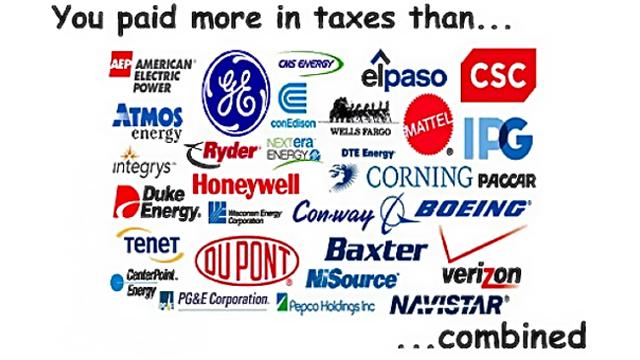
Corporate tax dodging and CEO pay have gotten so out of control that many major U.S. companies are paying their top executives more than they’re paying Uncle Sam.

Tesla is perhaps the most dramatic example. Over the period 2018-2022, the electric car maker raked in $4.4 billion in profits but paid no federal income taxes. Meanwhile, Tesla CEO Elon Musk became one of the world’s richest men.

When it comes to fleecing taxpayers while overpaying executives, Tesla is hardly alone. A new report we co-authored for the Institute for Policy Studies and Americans for Tax Fairness analyzes executive pay data for some of the country’s most notorious corporate tax dodgers.

What did we find? In addition to Tesla, 34 other large and profitable U.S. firms — including household names like Ford, Netflix, and T-Mobile — paid less in federal income taxes between 2018 and 2022 than they paid their top five executives.

Another 29 profitable corporations paid their top executives more than they paid Uncle Sam in at least two of the five years of the study period.

One company on our list stands out for the infamous role its executives played in the 2008 financial crisis: American International Group. Back then, the insurance giant ignited a firestorm by pocketing a $180 billion taxpayer bailout and then announcing plans to hand out $165 million in bonuses to the very same executives responsible for pushing the company — and the nation — to the brink of collapse.

Today, AIG is playing the same greedy game of overpaying its top brass and sticking taxpayers with the bill. Between 2018 and 2022, the company paid its top five executives more than it paid in federal income taxes, despite collecting $17.7 billion in U.S. profits. In 2022, CEO Peter Zaffino alone made $75 million.

Lavish executive compensation packages and skimpy corporate tax payments are not unrelated. Executives have a huge personal incentive to hire armies of lobbyists to push for corporate tax cuts because the windfalls from these cuts often wind up in their own pockets.

The 2017 Republican tax law slashed the corporate tax rate from 35 percent to 21 percent and failed to close loopholes that whittle down IRS bills even further. Many large, profitable corporations ended up paying no federal taxes at all.

Sunday, March 24, 2024

We're awake, thank you very much

The end of anti-woke politics?

By Jim Hightower 

Well, well, well — look who’s waking up and raring to go: Mr. and Ms. Woke!

We so-called “woke” people have been the target of far-right politicos and front groups that are frantically trying to ban us and our ideas from America’s political discourse. 

In the past few years, such thuggish gubernatorial demagogues as Ron DeSantis have perverted the power of Big Government to attack teachers, librarians, public agencies, and even beer. Beer!

Why? Because such people and organizations make educational efforts to reduce bigotry, hatred, and exclusiveness in our society. “That’s woke,” screech the ultra-rightists, demanding that any talk about racism, sexism, gender discrimination, or other ugly realities in America must be suppressed.

Like the witch hunters of old, today’s pious puritans of ideological conformity have demonized such basic values as diversity and equity, calling them “toxic.” 

Old and confused