Menu Bar

Home           Calendar           Topics          Just Charlestown          About Us

Sunday, April 28, 2024

East Coast Mussel Shells Are Becoming More Porous in Warming Waters

Another delectable under siege from warming waters 

American Museum of Natural History

Researchers at the American Museum of Natural History have found that over the last 120 years, the porosity—or small-scale holes—in mussel shells along the East Coast of the United States has increased, potentially due to warming waters. 

The study, which analyzed modern mussel shells in comparison to specimens in the Museum’s historic collection, was published today in the journal PLOS ONE. 

“Mussels are important on so many levels: they provide habitats on reefs, they filter water, they protect coasts during storms, and they are important commercially as well—I love mussels and I know many other people do, too,” said Leanne Melbourne, a Kathryn W. Davis postdoctoral fellow in the Museum’s Master of Arts in Teaching program and the lead author on the study. 

“Human-caused environmental changes are threatening the ability of mussels and other mollusks to form their shells, and we need to better understand what risks will come from this in the future.” 

Pell Center poll shows most American support traditional democratic values

Good news: Most Americans are NOT Christian nationalists

By Nancy Lavin, Rhode Island Current

There’s a glimmer of hope in what seems like an increasingly divisive national political atmosphere: Nearly two-thirds of Americans say they value the nation’s founding principles of equality and pursuit of happiness, according to a new survey out of Salve Regina University’s The Pell Center.

The results published through Pell Center’s democracy-focused research project, Nationhood Lab, are part of a larger initiative launched in March that aims to better understand the historic and evolving sense of American nationalism beginning with the Declaration of Independence. 

More than 1,500 voters nationwide interviewed from March 28 to April 2 were asked about their views on founding democratic values, along with their demographic details such as gender, political affiliation, race, religion, and age.

Among the most surprising findings: Twice as many survey takers favor a national narrative rooted in civic ideals of equality rather than one based in their ancestral or religious identity.

Saturday, April 27, 2024

GOP Confirms 2025 Tax Plan If Trump Wins: More Giveaways to the Rich

Not surprisingly, tax breaks for the rich are 2024 GOP mainstay

BRETT WILKINS for Common Dreams

As House Republicans prepare for Donald Trump's possible White House return by plotting to expand the billionaire and corporate tax cuts that were the cornerstone of the former president's first administration, congressional Democrats and advocates for working Americans warned Thursday that a second Trump term would bring more of the same inequality-exacerbating policies.

The GOP-controlled House Ways and Means Committee held a hearing on "expanding the success" of the 2017 Tax Cuts and Jobs Act (TCJA)—widely derided by opponents as the "GOP Tax Scam." 

Republican committee members couched a policy that the Center for Popular Democracy said "delivered big benefits to the rich and corporations but nearly none for working families" as "relief to help hardworking American families."

Presidential shield


Good safety tip

Senate OKs Sosnowski legislation to create Rhode Island Lake Management Program

Fighting off invaders 

Chapman Pond, Westerly (DEM)
The Senate passed legislation introduced by Sen. V. Susan Sosnowski (D-Dist. 37, South Kingstown) that would create the Rhode Island Lake Management Program.

The bill (2024-S 2153A) would create a restricted receipt account to aid with lake and pond management issues relating to the control of invasive aquatic plants.

“Local wetlands are being threatened by invasive aquatic weeds,” said Senator Sosnowski. “This bill would be a first step to start a program at the Department of Environmental Management. The situation is becoming worse with warming temperatures, and it’s creating biological imbalance in these freshwater bodies. We have to be proactive to protect our lakes, which provide us with recreation, flood mitigation and an important habitat to plants and animals.”

Conditions in many Rhode Island lakes, ponds and tributaries are threatened or degraded by the growth of aquatic invasive plants, harmful algal blooms, nutrient enrichment and other water pollution problems. Restoring conditions in the state’s freshwater resources is essential to sustaining the valuable ecosystem services they provide.

The measure now moves to the House, where similar legislation (2024-H 8093) has been introduced by House Minority Leader Michael W. Chippendale (R-Dist. 40, Foster, Glocester, Coventry).

Invasion of the (Water)Body Snatchers 

By Rob Smith / ecoRI News staff

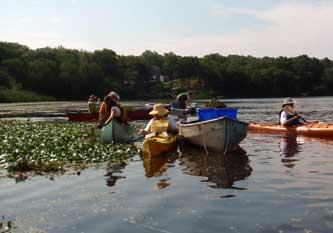
Indian Lake doesn’t look like the site of an alien invasion.

URI Launches Initiative to Study PFAS in R.I. Water Systems

Looking for solutions to pervasive problem

The state of Rhode Island mandated testing of public drinking water systems for per- and polyfluoroalkyl substances, better known as PFAS or “forever chemicals,” last year. 

To assistance with that effort, the University of Rhode Island has launched an initiative that will research the prevalence of PFAS in other sources, including ground and surface waters. 

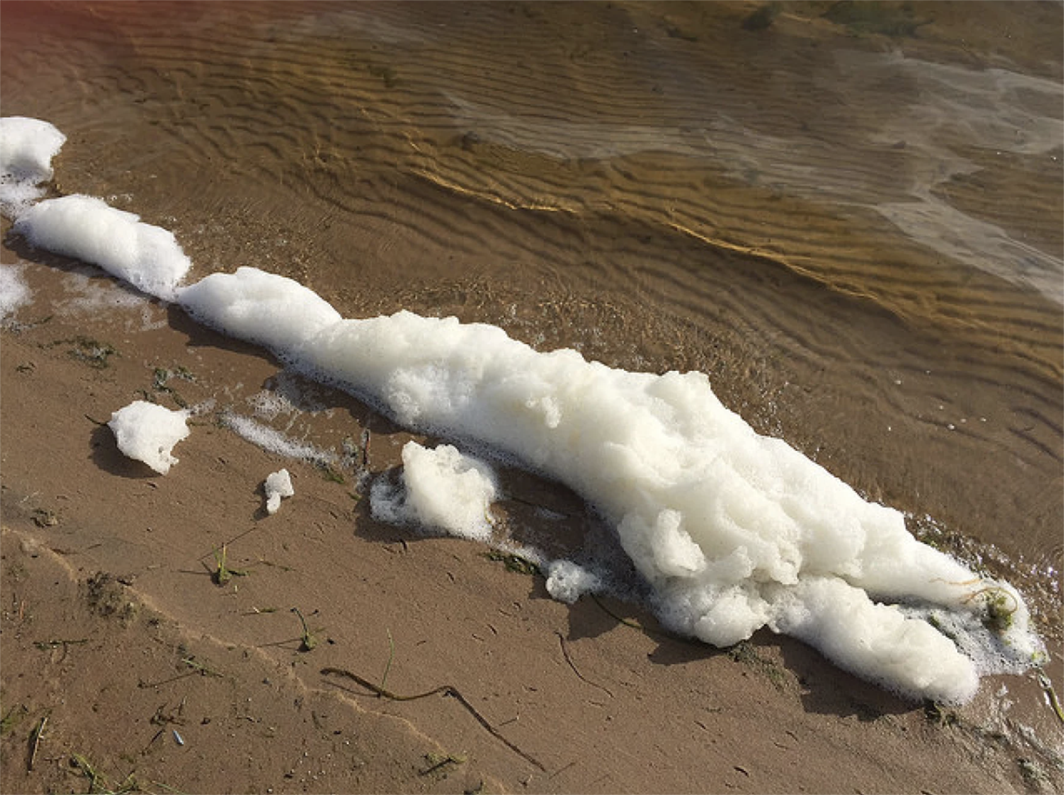
PFAS have been used for decades in consumer products such as coating on nonstick cookware, on clothing and carpets to prevent stains, and in firefighting foam. These forever chemicals degrade slowly in the environment. Human exposure is widespread and may lead to such health impacts as cancer and reproductive issues.

Caring for older Americans’ teeth and gums is essential, but Medicare generally doesn’t cover that cost

Essential but not covered

Frank Scannapieco, University at Buffalo and Ira Lamster, Stony Brook University (The State University of New York)

C. Everett Koop, the avuncular doctor with a fluffy white beard who served as the U.S. surgeon general during the Reagan administration, was famous for his work as an innovative pediatric surgeon and the attention he paid to the HIV-AIDS crisis.

As dentistry scholars, we believe Koop also deserves credit for something else. To help make the medical profession pay more attention to the importance of healthy teeth and gums, he’d often say: “You are not healthy without good oral health.”

Yet, more than three decades after Koop’s surgeon general stint ended in 1989, millions of Americans don’t get even the most basic dental services, such as checkups, tooth cleanings and fillings.

Americans who rely on the traditional Medicare program for their health insurance get no help from that program with paying their dental bills aside from some narrow exceptions. This group includes some 24 million people over 65 – about half of all the people who rely on Medicare for their health insurance.

Friday, April 26, 2024

Many of the officials in the Earth Day photo ops are, at best, stagnant when it comes to environmental initiatives

Earth Day Events in R.I. ‘Reek of Blatant Deception’

By Victor Martelle

Prime example
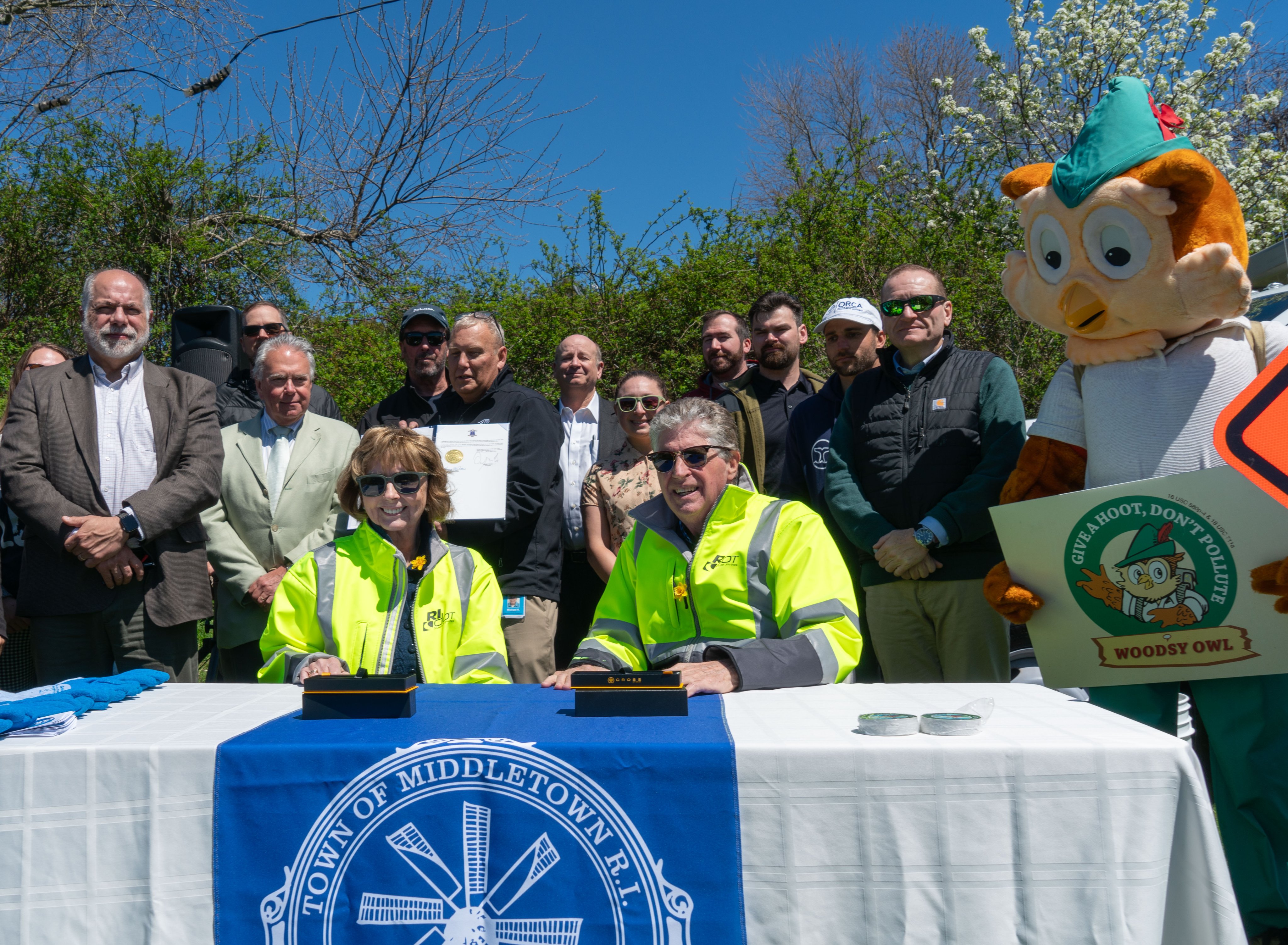
Rhode Island news has been abuzz with Earth Day activities, from tree planting and cleanups to cookout celebrations. 

While a lot of this is pushed by local groups, city officials have also taken hold of the spotlight. They’re often seen in photo-ops, posting on social media, or participating directly.

For Rhode Islanders at least, it feels like a kick in the teeth: many of these same officials, at best, are stagnant when it comes to environmental initiatives, while some take staunch anti-environmental actions the rest of the 364 days out of the year. 

Yet, when Earth Day rolls around, they all equally come out of the woodwork to show their support, likely for a piece of that sweet green media pie — yuck!

It’s been said that Rhode Island’s environmental track record is notoriously slow-moving, where laws and regulations are hardly enforced, its own DEM is inept, and the top officials hardly care. 

This extends down to the state’s municipalities, where we’ve seen recent backward peddling examples in Pawtucket, Providence, Lincoln, and nearly every other city and town should you look further. It doesn’t help that these mayors and council members prop this up, all the while, strutting their stuff on Earth Day, claiming that we need to be more environmentally conscious.

None of this feels right; in fact, it reeks of blatant deception. We don’t even need to look that far to notice either. 

The notion of having to volunteer highlights the fact that there are ongoing, unaddressed problems: Why do we need to clean up that area? Why does this street require the planting of trees and shrubbery? Why are we creating cutouts of animals and insects — shouldn’t we be able to see them regularly? 

Better yet, why do we continually let these things fall into these conditions, and why don’t we have adequate laws encouraging and enforcing even the most basic green initiatives?

Suffice it to say, there’s nothing wrong about taking time to focus on something, but we must examine why we need to do so in the first place and look at who is involved and what they’re doing. 

This extends to not just municipal officials either, but to businesses and leaders within our communities. Are they behaving like they genuinely care, or for a PR push or business bump? Additionally, as a side, what can we locals do to push them in a better direction?

Let’s not kid ourselves, either; if we want more permanent fixes, it won’t be easy. Given that we live on the coast, and with landscapes ranging from city to rural, long-term solutions will vary and may very well be complex. However, it doesn’t feel like we’ve taken the first steps. 

We need better oversight from the state, followed by initiatives, ordinances, and encouragement by the towns and cities therein. Until we attempt to crawl, we can’t even think about walking. With that, let’s stop kidding ourselves and hope that one day in the future, there won’t need to be an Earth Day.

About as clear as it gets

For more cartoons by Ruben Bolling, CLICK HERE.

I miss Dr. Fauci. Hope he's enjoying his retirement


Wild turkey numbers are falling in some parts of the US

Maybe we should stop shooting them

Photo by Will Collette
Marcus Lashley, University of Florida and William Gulsby, Auburn University

Birdsong is a welcome sign of spring, but robins and cardinals aren’t the only birds showing off for breeding season. In many parts of North America, you’re likely to encounter male wild turkeys, puffed up like beach balls and with their tails fanned out, aggressively strutting through woods and parks or stopping traffic on your street.

Wild turkeys were abundant across North America when European settlers arrived. But people killed them indiscriminately year-round – sometimes for their meat and feathers, but settlers also took turkey eggs from nests and poisoned adult turkeys to keep them from damaging crops. Thanks to this unregulated killing and habitat loss, by 1900 wild turkeys had disappeared from much of their historical range.

Turkey populations gradually recovered over the 20th century, aided by regulation, conservation funding and state restoration programs. By the early 2000s, they could be found in Mexico, Canada and every U.S. state except Alaska.

Healthy or high risk?

New analysis warns of pesticide residues on some fruits and veggies

CAREY GILLAM  

PHOTO: SARAH ANNE WARD

Several types of fruits and vegetables generally considered to be healthy can contain levels of pesticide residues potentially unsafe for consumption, according to an analysis conducted by Consumer Reports (CR) released on Thursday.

The report, which is based on seven years of data gathered by the US Department of Agriculture (USDA) as part of its annual pesticide residue reporting program, concluded that 20% of 59 different fruit and vegetable categories included in the analysis carried residue levels that posed “significant risks” to consumers of those foods.

Those high-risk foods included bell peppers, blueberries, green beans, potatoes and strawberries, according to CR. The group found that some green beans even had residues of an insecticide called acephate, which has been banned for use on green beans by US regulators since 2011. 

To understand the risks posed by AI, follow the money

"Cui bono" probably isn't you

Tim O'Reilly, UCL; Ilan Strauss, UCL; Mariana Mazzucato, UCL, and Rufus Rock, UCL

Shutterstock/Chaosamran_Studio
Time and again, leading scientists, technologists, and philosophers have made spectacularly terrible guesses about the direction of innovation. 

Even Einstein was not immune, claiming, “There is not the slightest indication that nuclear energy will ever be obtainable,” just ten years before Enrico Fermi completed construction of the first fission reactor in Chicago. Shortly thereafter, the consensus switched to fears of an imminent nuclear holocaust.

Similarly, today’s experts warn that an artificial general intelligence (AGI) doomsday is imminent. Others retort that large language models (LLMs) have already reached the peak of their powers.

It’s difficult to argue with David Collingridge’s influential thesis that attempting to predict the risks posed by new technologies is a fool’s errand. Given that our leading scientists and technologists are usually so mistaken about technological evolution, what chance do our policymakers have of effectively regulating the emerging technological risks from artificial intelligence (AI)?

We ought to heed Collingridge’s warning that technology evolves in uncertain ways. 

However, there is one class of AI risk that is generally knowable in advance. These are risks stemming from misalignment between a company’s economic incentives to profit from its proprietary AI model in a particular way and society’s interests in how the AI model should be monetized and deployed.

Albert Einstein sitting at his desk with pipe marking papers.
Photograph of Albert Einstein in his office at Princeton
University, New Jersey, taken by Roman Vishniac in 1942.
 Magnes Collection of Jewish Art and Life/Flickr, CC BY-NC-SA

The surest way to ignore such misalignment is by focusing exclusively on technical questions about AI model capabilities, divorced from the socio-economic environment in which these models will operate and be designed for profit.

Focusing on the economic risks from AI is not simply about preventing “monopoly,” “self-preferencing,” or “Big Tech dominance”. 

It’s about ensuring that the economic environment facilitating innovation is not incentivizing hard-to-predict technological risks as companies “move fast and break things” in a race for profit or market dominance.

It’s also about ensuring that value from AI is widely shared, by preventing premature consolidation. We’ll see more innovation if emerging AI tools are accessible to everyone, such that a dispersed ecosystem of new firms, start-ups, and AI tools can arise.

Thursday, April 25, 2024

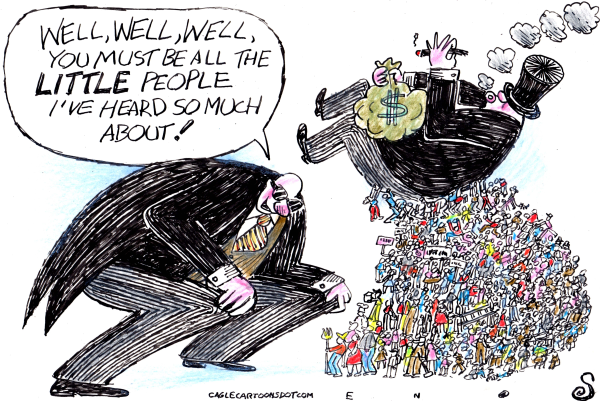
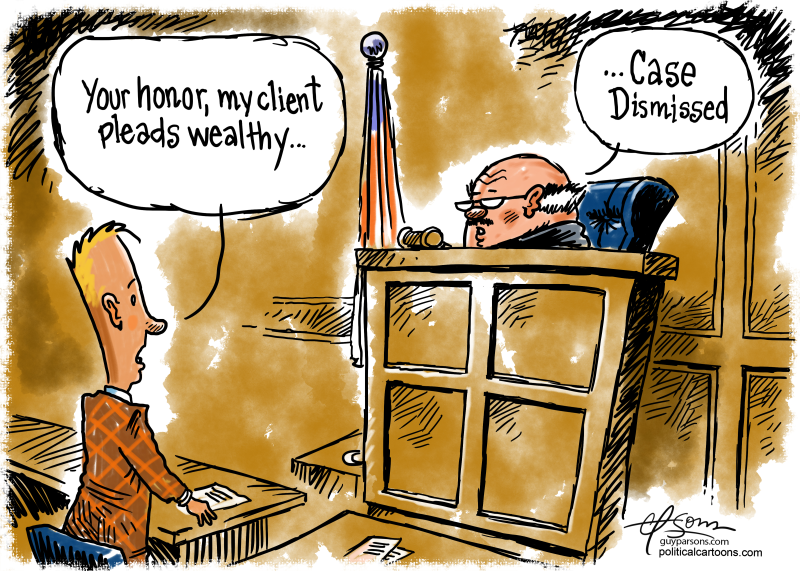
Billionaires are bad for democracy

Taxing them is good for it

By Omar Ocampo 

A new, disturbing milestone has been confirmed in the latest Forbes World Billionaires List. The U.S. billionaire class is now larger and richer than ever, with 813 ten-figure oligarchs together holding $5.7 trillion.

This is a $1.2 trillion increase from the year before — and a gargantuan $2.7 trillion increase since March 2020.

The staggering upsurge shows how our economy primarily benefits the wealthy, rather than the ordinary working people who produce their wealth. Even worse, those extremely wealthy individuals often use these assets to undermine our democracy.

Billionaires have enormous power to influence the political process. They spent $1.2 billion in the 2020 general election and more than $880 million in the 2022 midterms. Even when their preferred candidates aren’t in office, our institutions are still more likely to respond to their policy preferences than the average voter’s, especially when it comes to taxes.

The vast majority of Americans, including 63 percent of Republicans, support higher taxes on the wealthy. Yet our representatives consistently fail to deliver. A quintessential example was Donald Trump’s 2017 tax cuts for corporations and the rich — the most unpopular legislation signed into law in the past 25 years.