Menu Bar

Home           Calendar           Topics          Just Charlestown          About Us

Tuesday, August 26, 2025

The IRS Is Building a Vast System to Share Millions of Taxpayers’ Data With ICE

ICE gets to see your tax records to see if you should be deported

By William Turton, Christopher Bing and Avi Asher-Schapiro for ProPublica

The Internal Revenue Service is building a computer program that would give deportation officers unprecedented access to confidential tax data.

ProPublica has obtained a blueprint of the system, which would create an “on demand” process allowing Immigration and Customs Enforcement to obtain the home addresses of people it’s seeking to deport.

Last month, in a previously undisclosed dispute, the acting general counsel at the IRS, Andrew De Mello, refused to turn over the addresses of 7.3 million taxpayers sought by ICE. In an email obtained by ProPublica, De Mello said he had identified multiple legal “deficiencies” in the agency’s request.

Two days later, on June 27, De Mello was forced out of his job, people familiar with the dispute said. The addresses have not yet been released to ICE. De Mello did not respond to requests for comment, and the administration did not address questions sent by ProPublica about his departure.

The Department of Government Efficiency began pushing the IRS to provide taxpayer data to immigration agents soon after Donald Trump took office. The tax agency’s acting general counsel refused and was replaced by De Mello, who Trump administration officials viewed as more willing to carry out the president’s agenda. Soon after, the Department of Homeland Security, ICE’s parent agency, and the IRS negotiated a “memorandum of understanding” that included specific legal guardrails to safeguard taxpayers’ private information.

In his email, De Mello said ICE’s request for millions of records did not meet those requirements, which include having a written assurance that each taxpayer whose address is being sought was under active criminal investigation.

“There’s just no way ICE has 7 million real criminal investigations, that’s a fantasy,” said a former senior IRS official who had been advising the agency on this issue. The demands from the DHS were “unprecedented,” the official added, saying the agency was pressing the IRS to do what amounted to “a big data dump.”

It’s Almost Flu Season. Should You Still Get a Shot, and Will Insurance Cover It?

Yes and Probably


The Onion
For parents of school-aged children, the fall to-do list can seem ever-growing. Buy school supplies. Fill out endless school forms. Block off parent-teacher nights. Do the kids’ tennis shoes still fit?

Somewhere, at some point, you might remember flu shots. Get your flu shot. Get their flu shots. Or should you? Can you? Is that still a thing?

Amid political chatter about vaccines and the government entities that oversee them, it’s understandable to wonder where all this leaves the 2025-26 flu vaccine.

In short: Yes, the flu shot is still a thing. And four doctors we spoke to said they recommend you get your flu shot this year. (See the source list below this article.)

Here are some answers to common questions:

The Orwellian echoes in Trump’s push for ‘Americanism’ at the Smithsonian

Trump claims it's "Woke" for the Smithsonian describe "how bad slavery was"

Laura BeersAmerican University

When people use the term “Orwellian,” it’s not a good sign.

It usually characterizes an action, an individual or a society that is suppressing freedom, particularly the freedom of expression. It can also describe something perverted by tyrannical power.

It’s a term used primarily to describe the present, but whose implications inevitably connect to both the future and the past.

In his second term, Donald Trump has revealed his ambitions to rewrite America’s official history to, in the words of the Organization of American Historians, “reflect a glorified narrative … while suppressing the voices of historically excluded groups.”

This ambition was manifested in efforts by the Department of Education to eradicate a “DEI agenda” from school curricula. It also included a high-profile assault on what detractors saw as “woke” universities, which culminated in Columbia University’s agreement to submit to a review of the faculty and curriculum of its Middle Eastern Studies department, with the aim of eradicating alleged pro-Palestinian bias.

Now, the administration has shifted its sights from formal educational institutions to one of the key sites of public history-making: the Smithsonian, a collection of 21 museums, the National Zoo and associated research centers, principally centered on the National Mall in Washington, D.C.

On Aug. 12, 2025, the Smithsonian’s director, Lonnie Bunch III, received a letter from the White House announcing its intent to carry out a systematic review of the institution’s holdings and exhibitions in the advance of the nation’s 250th anniversary in 2026.

The review’s stated aim is to ensure that museum content adequately reflects “Americanism” through a commitment to “celebrate American exceptionalism, [and] remove divisive or partisan narratives.”

On Aug. 19, 2025, Trump escalated his attack on the Smithsonian. “The Smithsonian is OUT OF CONTROL, where everything discussed is how horrible our Country is, how bad Slavery was…” he wrote in a Truth Social post. “Nothing about Success, nothing about Brightness, nothing about the Future. We are not going to allow this to happen.”

Such ambitions may sound benign, but they are deeply Orwellian. Here’s how.

Monday, August 25, 2025

OSHA Just Reduced the Value of a Worker’s Life

Trump cuts inspections, notices of violations and fines for bosses 

The Department of Labor announced “updates to penalty guidelines” to improve worker safety on Monday that it said will support small businesses and eliminate workplace hazards. The announcement follows the release of the Occupational Safety and Health Administration’s budget for the next fiscal year, which includes a plan for nearly 10,000 fewer workplace hazard inspections amid an 8 percent funding cut and a more than 12 percent reduction in staffing.

The new guidelines reduce penalties for failing to comply with worker health and safety standards at small businesses and those of any size with no history of various serious violations. It also extends the time frame for quickly abating a hazard by redefining “immediately,” which used to mean during the inspection or on the day that it occurred, but now can take up to 15 days. 

These penalty reductions, combined with a drastic cut in the already rare inspections, will surely lead to more worker illnesses, injuries and deaths, experts say.

Penalties from OSHA for endangering workers’ health and lives are already “embarrassingly low” compared to those for other federal violations like harming wildlife, Jordan Barab, deputy assistant secretary of labor for the agency during President Barack Obama’s two terms, wrote on his blog about workplace health and safety. 

“We used to always say that you would get fined more for harassing a burro on federal land than for a serious OSHA violation,” Barab told Inside Climate News.

Trump's poll numbers are up!

If you're going to lose your Medicaid coverage, the Trump regime has an solution


Novel discoveries about Eastern Whip-poor-will nesting and chick growth

Our night time companions

 by Anna Gray

Known for their distinctive singing, Eastern
Whip-poor-wills’ nocturnal nature and expert camouflage
make them easier to hear than to see. (Megan Gray)

Known for their haunting, distinctive singing—a repetitive “whip-poor-will” call that echoes through summer nights—Eastern Whip-poor-wills have long inspired folklore, often seen as omens or symbols of mystery. 

Their elusive, nocturnal nature and expert camouflage make them far easier to hear than to see. 

Liam Corcoran ’18 M.S. ’25, a recent graduate of the University of Rhode Island’s interdisciplinary Biological and Environmental Sciences (BES) master’s program from Warwick, Rhode Island, is working to demystify this bird through science.

Liam Corcoran ’18 ’25 is contributing crucial new insights into
the breeding biology of the Eastern Whip-poor-will. Because
 of their
 nocturnal activity and cryptic nature, few researchers have 
focused on 
whip-poor-wills’ nesting habits. (Photos courtesy Liam Corcoran)

Wild populations have declined precipitously since 1970. Because of their nocturnal activity and cryptic nature, very few researchers have focused on whip-poor-wills’ nesting habits. 

New research from Corcoran published in The Wilson Journal of Ornithology offers the first published growth data for whip-poor-wills, contributing critical baseline information for future ecological and conservation research. 

Extensive video documentation captured and analyzed by Corcoran shows how males and females interact at the nest, regularly conducting a coordinated courtship-like display, and how adult birds engage in active nest defense from potential predators. 

While there have been past anecdotal reports of female whip-poor-wills potentially singing, Corcoran’s research provides the first video confirmation that females do indeed sing.

EDITOR'S NOTE: Since our first summer in Charlestown in 2001, we've been listening to the nightly call of a whip-poor-will in the woods behind our house. Have never seen one, but have always enjoyed their song.   - Will Collette

What scientists discovered about french fries and diabetes

Similar amounts of boiled, baked and mashed potatoes are not associated with a substantially increased risk

BMJ Group

French fries may be more than just a guilty pleasure—they could raise your risk of type 2 diabetes by 20% if eaten three times a week, while the same amount of boiled, baked, or mashed potatoes doesn’t appear to have the same effect.

Eating three servings of French fries a week is associated with a 20% increased risk of developing type 2 diabetes, but eating similar amounts of potatoes cooked in other ways -- boiled, baked or mashed -- does not substantially increase the risk, finds a study published by The BMJ on August 6.

What's more, replacing any form of potatoes with whole grains was associated with a lower type 2 diabetes risk, but swapping them for white rice was linked to an increased risk, the results show.

Potatoes contain several nutrients including fiber, vitamin C, and magnesium, but they also have a high starch content and therefore a high glycemic index, so have been linked to a higher risk of developing type 2 diabetes.

But neither the preparation method for potatoes nor specific foods that potatoes would replace have been considered, both of which are key to evaluating the overall health impact of potatoes.

To address this, researchers investigated the association between intake of potatoes prepared by different methods (boiled, baked, or mashed versus French fries) and risk of type 2 diabetes. They also looked at the impact on health of replacing potatoes with other major carbohydrates, such as whole grains and rice.

‘Alternative Facts’ Aren’t a Reason To Skip Vaccines

Health Secretary Bobby Junior promotes bad medicine

Donald Trump’s administrations have been notorious for an array of “alternative facts” — ranging from the relatively minor (the size of inaugural crowds) to threats to U.S. democracy, such as who really won the 2020 election.

And over the past six months, the stakes have been life or death: Trump’s health officials have been endorsing alternative facts in science to impose policies that contradict modern medical knowledge.

It is an undeniable fact — true science — that vaccines have been miraculous in preventing terrible diseases from polio to tetanus to measles. Numerous studies have shown they do not cause autism. That is accepted by the scientific community.

Yet Secretary of Health and Human Services Robert F. Kennedy Jr., who has no medical background or scientific training, doesn’t believe all that. The consequences of such misinformation have already been deadly.

For decades, the vast majority Americans willingly got their shots — even if a significant slice of parents had misgivings. A 2015 survey found that 25% of parents believed that the measles, mumps, and rubella (MMR) vaccine could cause autism. (A 1998 study that suggested the connection has been thoroughly discredited.) 

Despite that concern, just 2% of children entering kindergarten were exempted from vaccinations for religious or philosophical objections. Kids got their shots.

But more recently, poor government science communication and online purveyors of misinformation have tilled the soil for alternative facts to grow like weeds. In the 2024-25 school year, rates of full vaccination for those entering kindergarten dropped to just over 92%. In more than a dozen states, the rate was under 90%, and in Idaho it was under 80%. And now we have a stream of measles cases, more than 1,300 from a disease declared extinct in the U.S. a quarter-century ago.

It’s easy to see how both push and pull factors led to the acceptance of bad science on vaccines.

The number of recommended vaccines has ballooned this century, overwhelming patients and parents. That is, in large part, because the clinical science of vaccinology has boomed (that’s good). And in part because vaccines, which historically sold for pennies, now often sell for hundreds of dollars, becoming a source of big profits for drugmakers.

In 1986, a typical child was recommended to receive 11 vaccine doses — seven injections and four oral. Today, that number has risen to between 50 and 54 doses by age 18.

RFK Jr. is increasing your risk of dying from cancer

Kennedy bans funding for vaccines that show the most promise at stopping cancer

By Brian Moench, Utah News Dispatch

“It ain’t what you don’t know that gets you into trouble. It’s what you know for sure that just ain’t so.” Mark Twain’s quip perfectly describes the entire Trump Administration, but none more so than medical crackpot, Robert F. Kennedy, Jr.

Perched with his brain worm on top of Health and Human Services, Kennedy probably affects your health more than your family doctor. But unlike your doctor, Kennedy has no medical degree, no hospital privileges, never cared for a patient, never discovered a drug, never published a research paper, and wouldn’t know which end of a stethoscope to use if his life or yours depended on it. 

Nonetheless he has opinions, and he’s enforcing them on you, on all of us. This makes as much sense as pilots flying airplanes who have never seen a cockpit or placing the future of the United States in the hands of Donald “Windmills Cause Cancer” Trump.

Many actual medical experts believe vaccines have done more good for humanity than any other public health advance in history.  COVID vaccines saved nearly 20 million lives globally in their first year alone. They also reduced the risk of severe, debilitating outcomes and long COVID after infection.  But Kennedy knows “for sure” that decades of knowledge accumulated by the entire world’s medical community is wrong, and he’s eager to straighten us out.

Messenger RNA (mRNA) vaccines have been under development for 30 years. Compared to older technologies they are cheaper, can be mass produced faster, and can be changed more quickly to address inevitable virus mutations like with COVID. 

This technology also has great promise to treat cystic fibrosis, sickle cell anemia, and diabetes.  Two American scientists won the Nobel Prize for their mRNA discoveries.  To real scientists, mRNA vaccines are not controversial.  Without them COVID would probably still be spreading death and disability across the globe.

In May Kennedy yanked $590 million from developing pandemic flu vaccines such as bird flu.  Rick Bright, who led Health and Human Services Biomedical Advanced Research and Development Authority during Trump 1.0, said, "Disinvesting from mRNA strips us of one of the fastest tools we have to contain the next pandemic.”

Sunday, August 24, 2025

Trump is angry at banks but for the wrong reasons

Debunking Debanking

By Philip Mattera, director of the Corporate Research Project of Good Jobs First for the Dirt Diggers Digest

With his track record of failing to pay his debts, six
bankruptcies, and $354 million banking and tax fraud
judgment against him by the state of New York,
maybe banks have good reasons for not wanting
to do business with Trump. Shown here with
convicted child sex trafficker Ghislaine Maxwell.
There are plenty of reasons to be critical of the big banks. They hit customers with illegitimate fees. They misuse personal information. They pay meager interest on savings accounts. They do too little to help struggling mortgage holders. Some such as Wells Fargo have a history of creating bogus accounts to generate revenue. Many have been accused of manipulating foreign exchange markets, enabling tax evasion by the wealthy, and helping bring the U.S. economy to the brink of collapse in the late 2000s.

In Violation Tracker, Bank of America has by far the largest cumulative penalty total: $87 billion. JPMorgan Chase is second with $40 billion; Wells Fargo and Citigroup are also among the ten most penalized corporations.

Apparently oblivious to all this, Donald Trump recently launched a tirade against the banks that focused on a bizarre accusation: that they refuse to do business with people with right-wing political views, especially Trump himself.

His sons say Russia bailed him out
In an interview with CNBC, Trump claimed that JPMorgan Chase and Bank of America had refused to accept deposits from his company after his first term as president. “The Banks discriminated against me very badly,” he moaned.

Trump’s account may very well have been fictional. If not, it conveniently ignores the idea that the banks may have shunned him because he was a bad credit risk, and for a period of time after January 6 there was a chance he would end up in prison.

Aside from his personal grievances, Trump’s comments appear to be connected to a move by his administration to address what right-wingers claim is a practice of “debanking” – denying banking services to people based on their political views. There is, of course, no evidence that banks apply an ideological litmus test to potential customers.

Instead, the debanking assault seems to be an effort to undermine rules governing transactions with individuals who might be connected to illegal activities such as money laundering and the financing of terrorist activities. As part of their due diligence, banks are supposed to consult lists of people who may be tied to such activities.

Couldn't be better

It's all right there in front of us

Is There a Norovirus Vaccine on the Horizon?

Looking for prevention for this intestinal scourge

Kate Schweitzer1, JAMA Medical News

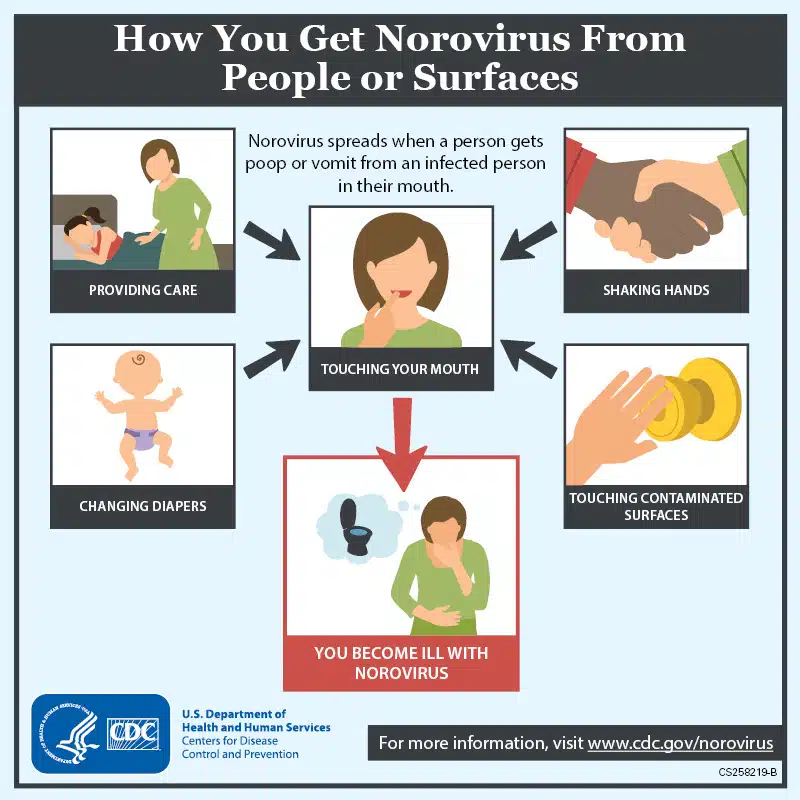
This past winter, cases of norovirus, a highly contagious stomach bug characterized by sudden vomiting and diarrhea, surged in the US. Nicknamed the “Ferrari of viruses” for how fast it spreads, it’s also known for racing through cruise ships, long-term care facilities, and school cafeterias. But, according to those who study it, the virus hasn’t gotten the attention it deserves.

The virus is a leading cause of acute gastroenteritis worldwide. In the US, it causes more than 50% of all foodborne illnesses. And each year it accounts for nearly half a million emergency department visits, mostly for young children, and roughly 900 deaths, predominantly in older adults, according to the US Centers for Disease Control and Prevention.

In well-resourced regions, norovirus symptoms commonly pass after a few extremely unpleasant days, but “there are other places on the planet where diarrhea really does threaten the health of populations, especially those already suffering from malnutrition, chronic starvation, or dehydration,” said C. Buddy Creech, MD, MPH, director of the Vanderbilt Vaccine Research Program at Vanderbilt University Medical Center. “It’s a significant driver of mortality around the globe.”

Norovirus contributes to nearly 1 in 5 episodes of diarrheal disease worldwide and causes about 200000 deaths annually. The most vulnerable populations include children younger than 5 years, older adults, and people who are immunocompromised. In developing countries, deaths from norovirus are common among childrenwho make up more than a third of the global death toll.

Preventive measures like improved water, sanitation, and hygiene have not proved effective enough to control the notably transmissible virus, which incurs a $60 billion cost to society—including $4.2 billion in health care costs—globally every year. 

Here is a good example of what all health and science research will look like under Donald Trump

“Surprising” Study – funded by the meat industry - finds meat may protect against cancer

By McMaster University

EDITOR’S NOTE: Since taking office in January, Donald Trump has made it clear that “facts” will now be molded to fit his view of reality. Whether it’s the economy, climate science, vaccinations, health, American history, foreign policy, etc., Trump’s opinions, not data or fact or science, will determine the outcome of research.

This week, we saw Trump go after the Smithsonian Institute for portraying the horrors of slavery and fire the Defense Intelligence Agency official who contradicted Trump’s claim that US air strikes completely destroyed Iran’s bomb-making capacity.

Trump fired the head of the US Bureau of Labor Statistics because he didn’t like their job numbers. He is threatening to “fire” the Mayor of Washington DC because he doesn’t believe DC’s crime statistics. He issued a stop-work order against the wind farm being built off the coast of Rhode Island because he believes “windmills” cause cancer. Hundreds more researchers have lost their jobs or their funding because their works doesn't fit with Trump's looney views.

In the future, expect research to look more like this study from the National Cattlemen’s Beef Association that in this case makes the “surprise” claim that beef can actually fight cancer. This is as believable as Trump’s belief that you should drink bleach to fight COVID.  – Will Collette

Eating foods that contain animal protein is not connected to a higher chance of death and may even provide some protection against cancer-related mortality, according to new research.

The findings, published in Applied Physiology, Nutrition, and Metabolism, are based on an analysis of data from nearly 16,000 adults aged 19 and older who participated in the National Health and Nutrition Examination Survey (NHAMES III).

Researchers looked at how much animal and plant protein participants consumed and compared those patterns with their risk of dying from cancer, heart disease, or any cause. The results revealed no elevated risk of death linked to greater animal protein intake. Instead, the data pointed to a small but meaningful decrease in cancer-related deaths among people who consumed more animal protein.

“There’s a lot of confusion around protein – how much to eat, what kind and what it means for long-term health. This study adds clarity, which is important for anyone trying to make informed, evidence-based decisions about what they eat,” explains Stuart Phillips, Professor and Chair of the Department of Kinesiology at McMaster University, who supervised the research.

Ensuring Reliable Results

To ensure reliable results, the team employed advanced statistical methods, including the National Cancer Institute (NCI) method and multivariate Markov Chain Monte Carlo (MCMC) modelling, to estimate long-term dietary intake and minimize measurement error.

“It was imperative that our analysis used the most rigorous, gold standard methods to assess usual intake and mortality risk. These methods allowed us to account for fluctuations in daily protein intake and provide a more accurate picture of long-term eating habits,” says Phillips.

The researchers found no associations between total protein, animal protein, or plant protein and risk of death from any cause, cardiovascular disease, or cancer. When both plant and animal protein were included in the analysis, the results remained consistent, suggesting that plant protein has a minimal impact on cancer mortality, while animal protein may offer a small protective effect.

Broader Implications

Observational studies like this one cannot prove cause and effect; however, they are valuable for identifying patterns and associations in large populations. Combined with decades of clinical trial evidence, the findings support the inclusion of animal proteins as part of a healthy dietary pattern.

“When both observational data like this and clinical research are considered, it’s clear both animal and plant protein foods promote health and longevity,” says lead researcher Yanni Papanikolaou, MPH, president, Nutritional Strategies.

Reference: “Animal and plant protein usual intakes are not adversely associated with all-cause, cardiovascular disease–, or cancer-related mortality risk: an NHANES III analysis” by Yanni Papanikolaou, Stuart M. Phillips and Victor L. Fulgoni III, 16 July 2025, Applied Physiology, Nutrition, and Metabolism.
DOI: 10.1139/apnm-2023-0594

This research was funded by the National Cattlemen’s Beef Association (NCBA), a contractor to the Beef Checkoff. NCBA was not involved in the study design, data collection and analysis or publication of the findings.