Menu Bar

Home           Calendar           Topics          Just Charlestown          About Us

Saturday, April 3, 2021

Neronha was right

Supreme Court Blocks Marina Expansion Agreement

By ecoRI News staff

The secret deal between Champlin’s Marina & Resort and the Coastal Resources Management Council would have expanded the facility’s footprint by 1.5 acres. (Committee for the Great Salt Pond)

Earlier this month Rhode Island Attorney General Peter Neronha asked the state Supreme Court to reject the agreement to expand Champlin’s Marina & Resort on Block Island.

The court responded March 26, rejecting, in an unsigned order, the proposed settlement to the controversial expansion that had been reached by the marina and the Coastal Resources Management Council (CRMC). 

The agreement was brokered by retired Supreme Court Chief Justice Frank J. Williams last December during an executive session of the CRMC board. CRMC has declined to comment on the action, and there is no public record of what occurred during the closed-door deliberations.

The surprise mediated settlement granted approval to build 170 feet into Great Salt Pond — a sensitive tidal lagoon under pressure from summer boaters in need of dock space in the crowded 800-acre body of water. 

The 1.5-acre expansion also called for extending the fuel dock 85 feet to a length of 314 feet, building a parallel 314-foot-long dock that would connect to the fuel dock with a 156-foot-long dock, and creating additional space for parking.

Neronha said he was pleased with the court’s decision “to refuse to ratify and enter as an order of the Court an agreement resulting from a private mediation outside the view and without the participation of concerned stakeholders who had long been parties to the underlying litigation.”

Pregnant women show robust immune response to COVID vaccines, pass antibodies to newborns

Great vaccine news: COVID shots OK for pregnant women AND their unborn children 

Massachusetts General Hospital

In the largest study of its kind to date, researchers at Massachusetts General Hospital, Brigham and Women's Hospital and the Ragon Institute of MGH, MIT and Harvard have found the new mRNA COVID-19 vaccines to be highly effective in producing antibodies against the SARS-CoV-2 virus in pregnant and lactating women. 

They also demonstrated the vaccines confer protective immunity to newborns through breastmilk and the placenta.

The study, published in the American Journal of Obstetrics and Gynecology (AJOG), looked at 131 women of reproductive age (84 pregnant, 31 lactating and 16 non-pregnant), all of whom received one of the two new mRNA vaccines: Pfizer/BioNTech or Moderna. 

The vaccine-induced titers -- or antibody levels -- were equivalent in all three groups. Reassuringly, side effects after vaccination were rare and comparable across the study participants.

"This news of excellent vaccine efficacy is very encouraging for pregnant and breastfeeding women, who were left out of the initial COVID-19 vaccine trials," says Andrea Edlow, MD, MSc, a maternal-fetal medicine specialist at MGH, director of the Edlow Lab in the Vincent Center for Reproductive Biology and co-senior author of the new study. 

Mass shootings leave emotional and mental scars on survivors, first responders and millions of others

You don't have to be shot to feel the pain 

Arash Javanbakht, Wayne State University

Police officers after the March 22 deadly shootings in Boulder, Colorado. 
AAron Ontiveroz/The Denver Post
The deadly shootings of eight people in Atlanta on March 16 and 10 people in Boulder, Colorado, on March 22 brought heartache and grief to the families and friends of the victims.

These events also take a toll on others, including those who witnessed the shooting, first responders, people who were nearby – and even those who heard about the shooting in the media.

I am a trauma and anxiety researcher and clinician, and I know that the effects of such violence reach millions. 

While the immediate survivors are most affected, the rest of society suffers, too.

Friday, April 2, 2021

Governor McKee: Sign the Act On Climate Into Law

Environmental community calls for urgent and decisive leadership on climate

Kai Salem, Environment Council of Rhode Island

McKee has already threatened to veto the bill. The
environment is NOT a McKee priority so he needs a push
The Environment Council of Rhode Island, on behalf of its 70 organizational and individual members representing over 50,000 Rhode Islanders, calls on Governor to sign the 2021 Act On Climate (H5445-sub A and S78-sub A) into law.

On March 23rd, the House of Representatives passed the Act On Climate with a bipartisan majority (53 – 22) after nearly four hours of debate. 

Supporters of the bill believe Rhode Island needs to take this critical step in planning for and addressing climate change with science, accountability, and enforceability.

The prior week the Rhode Island State Senate also passed the 2021 Act On Climate with overwhelming support, 33 – 4. It’s now Governor McKee’s turn to show Rhode Islanders that he can lead the Ocean State through the many crises we face, including the climate crisis.

The Act On Climate is the most important climate bill passed by the General Assembly in Rhode Island history, preceded only by the 2014 Resilient Rhode Island Act.

Make up your mind


Pollen is back

Pollen counts in Charlestown about to get high

By Will Collette

From Pollen.com

I love springtime in Charlestown, but pollen from all our trees, not so much. This year, there is the added factor of the similarity of many pollen allergy symptoms to COVID-19 that it bears checking out this article before you worry you may have the virus.

Anyway, with the sun and warmer temperatures, expect Charlestown's pollen count to rate "high" mostly from trees, especially maple, elm and juniper.

If you suffer from bad hay fever, you might want to use your facemask - it's ideal for catching pollen particles before you can inhale them.

Ruthie's going to HATE this!

McEntee bill would let restaurants continue to use COVID modifications without town penalty 

Bridge Restaurant in Westerly (South County Tourism)
House Small Business Committee Chairwoman Carol Hagan McEntee’s (D-Dist. 33, South Kingstown, Narragansett) legislation (2021-H 6119) which imposes a one year moratorium on enforcement of municipal ordinances or zoning requirements that penalizes owners of food service establishments for modifications and alternations to their premises in response to an emergency declaration was heard by the House Small Business Committee on March 26.

“Our restaurants are consistently ranked as one of our state’s best assets and this storied industry has been truly decimated by the COVID-19 pandemic.  While many businesses have sadly closed their doors for good, our hospitality industry has adapted and many restaurants and other businesses have invested great sums of money in order to continue operating in a safe manner for the public.  

"In particular, the ‘take it outside’ initiative proved to be a great success and the purpose of this legislation is to allow these businesses to continue ‘taking it outside,’ especially as the weather begins to turn more favorable once again.  

"Presently, many, if not all of these businesses, would be running afoul of their local zoning laws once our current emergency declaration is lifted and we cannot let that happen to these already struggling small businesses.  This bill will give our restaurants and other hospitality businesses the chance to earn back the significant losses they have all incurred over the past year, we owe them all that much,” said Chairwoman McEntee.

Are Artificial Sweeteners Healthier Than Sugar or No?

Here's What Experts Think

EVA HAMRUD, METAFACT

Saccharin – the first artificial sweetener - was discovered by accident when, in 1879, Professor Ira Remsen from Johns Hopkins University noticed a sweet substance on his hands after experimenting with different chemicals in the laboratory.

Saccharin quickly became extremely popular, mainly due to how cheap it was. It was particularly widespread during World War II, when real sugar was in short supply.

Today, artificial sweeteners are central to the huge market of diet- and sugar-free food and drinks. Their attraction today is not only how cheap they are, but their potential to combat the increasing threat of obesity and its associated health impacts.

Saccharin is over 200 times sweeter than sugar but has zero calories. Does this mean that we should replace all sugar with artificial sweeteners? Or are there more factors to consider?

We asked 8 experts "Are artificial sweeteners better for you than sugar?". The consensus was 63 percent 'likely'. Here is what we found out.

When can kids get the COVID-19 vaccine?

A pediatrician answers 5 questions parents are asking


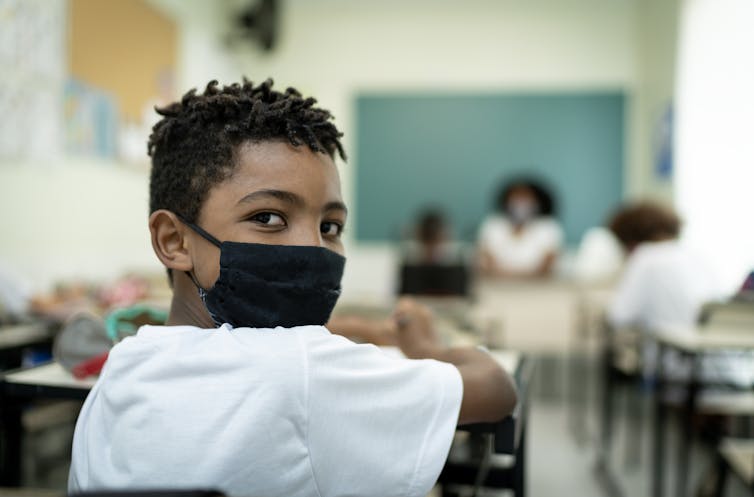
Vaccine trials are just getting started for younger children.
 FGTrade via Getty Images
A big question among parents and teachers right now is whether their kids will be vaccinated against COVID-19 in time for the fall school semester. Some have wondered whether the vaccine is even necessary for children. 

Dr. James Wood, a pediatrician and assistant professor of pediatric infectious diseases, explains what doctors know today about the risk children face of getting and spreading the coronavirus and when vaccines might be available.


Do kids really need to get the COVID-19 vaccine?

The short answer is yes. A lot of studies have shown that COVID-19 isn’t as severe in children, particularly younger kids – but that doesn’t mean kids aren’t at risk of getting infected and potentially spreading the virus.

Children under 12 who get COVID-19 do tend to have mild illnesses or no symptoms, while teenagers seem to have responses somewhere between what adults and younger kids have experienced. The Centers for Disease Control and Prevention found that teens were about twice as likely to be diagnosed with COVID-19 as children ages 5-11.

Researchers are still trying to understand why we’re seeing these differences between older and younger kids. 

Behavior probably plays a part. Teenagers are more likely to engage in social or group activities, and they and may or may not be wearing masks. 

Immune differences and biologic factors may also play a role. Non-SARS-CoV-2 coronaviruses are common in children, often resulting in upper respiratory infection. Is their frequent exposure to other coronaviruses helping protect them from severe COVID-19? That is one hypothesis. 

We know younger kids’ immune responses in general are different from adults, and likely play a role in protection.

Thursday, April 1, 2021

A bad bargain then, a bad bargain now

Let’s talk about education. McKee proposes $911 million for local public school aid, a 3% bump, but also proposes charter schools get a 9% bump

By Tom Sgouros

Tom Sgouros
It is budget season in Rhode Island, and the discussions at the state house are perhaps a little less panicked since the Biden administration has come through with some badly-needed aid. 

You can tell there is breathing room because we now hear how we don’t really need to revisit our tax policy. For the record, the state plans to spend $100 million on a tax cut this year, but only to people whose cars are worth over $4,000. 

And both the new Governor McKee and new Speaker Shekarchi seem interested in ignoring the issue of taxes, letting the car tax cut stand and resisting the call to restore income taxes on high incomes. 

Let’s talk about education. The Governor is proposing to spend $911 million on local public school aid. This is about a 3% bump up from last year, which is certainly not awful. Charter schools get a 9% bump, though. 

Time for some history. What $911 million actually means is that we may finally reach the education funding levels of… the Almond administration. The 2003 budget of Lincoln Almond, not exactly a profligate spender, gave $904 million (in 2020 dollars) to fund local public schools. After him, Governor Carcieri pretty much level-funded education until he slashed it mercilessly when the financial crisis hit in 2008. 

The story was not all bleak. Over his term, Carcieri managed to triple the state budget for charter schools. And between 2008 and 2011, when our traditional public schools were seeing a 20% cut in state aid (again, correcting for inflation), charter schools saw a 33% increase. 

Governors Chafee and Raimondo managed to restore some funding, but not nearly what was lost. (Though they did manage to triple charter school funding again.)  

Over the past two decades, we have cut a truly devastating amount from traditional public schools. Had we only kept pace with inflation since 2003, we would have spent more than $1.8 billion more on supporting our schools over that time. 

But we didn’t do that. We gave away money instead. Aside from the hugely expensive car tax cut. There was a capital gains tax cut in 2001, then the “flat” tax slashed tax rates (only for the rich) every year from 2007 until 2012. 

Thoughts and prayers

For more cartoons by Ruben Bolling, CLICK HERE.


NOT an April Fool's Joke


Sign up for a free tree next Monday

Free Trees Available, Just in Time for Spring Planting

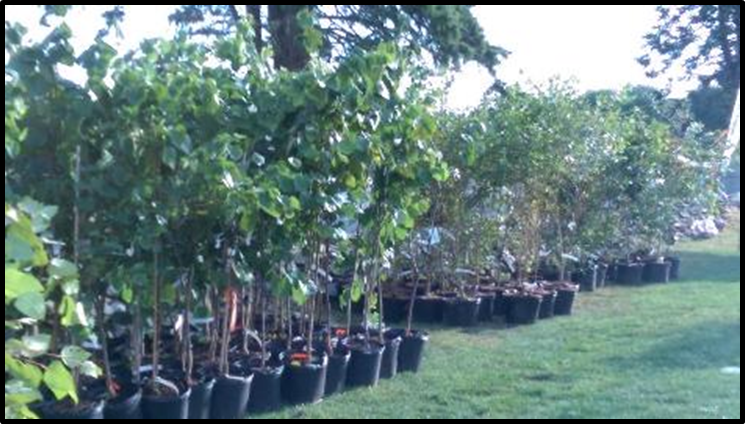
The Department of Environmental Management (DEM), in partnership with the RI Tree Council, RI Nursery and Landscape Association, and the Arbor Day Foundation, is providing 1,000 free trees to Rhode Island residents this spring. 

Now in its 12th season, the program helps Rhode Islanders save energy and lower their utility bills by strategically planting trees on their property.

"We're pleased to join with the Arbor Day Foundation and local partners again this spring to offer free trees to Rhode Islanders," said DEM Director Janet Coit. 

"Planting a tree in the right place is a tangible way for residents to stand up to climate change and can improve air quality, sequester carbon, and help manage stormwater runoff. Most trees are spoken for within days of registration opening, so be sure to register early!"

Planting the right tree in the right place is the key to maximizing the energy-saving benefits that trees provide. When planted properly, a single tree can save a homeowner money on energy costs by shading their home in the summer and blocking cold winds in the winter. 

This season, nine different tree species with variety of mature sizes will be distributed. Available species will include Allee elm, American hornbeam, black tupelo, eastern hophornbeam, eastern redbud, Exclamation! London planetree, 'Frontier' hybrid elm, Okame cherry, and white oak.

Registration opens on Monday, April 5, and is required to reserve a tree. Recipients must be Rhode Island residents. Supplies go fast, so early registration is recommended. 

Follow these steps to reserve your free tree:

One reason why vaccine program is a race against time

Study of coronavirus variants predicts virus evolving to escape current vaccines

Columbia University Irving Medical Center

A new study of the U.K. and South Africa variants of SARS-CoV-2 predicts that current vaccines and certain monoclonal antibodies may be less effective at neutralizing these variants and that the new variants raise the specter that reinfections could be more likely.

The study was published in Nature on March 8, 2021. A preprint of the study was first posted to BioRxiv on January 26, 2021.

The study's predictions are now being borne out with the first reported results of the Novavax vaccine, says the study's lead author David Ho, MD. The company reported on Jan. 28 that the vaccine was nearly 90% effective in the company's U.K. trial, but only 49.4% effective in its South Africa trial, where most cases of COVID-19 are caused by the B.1.351 variant.

You need this

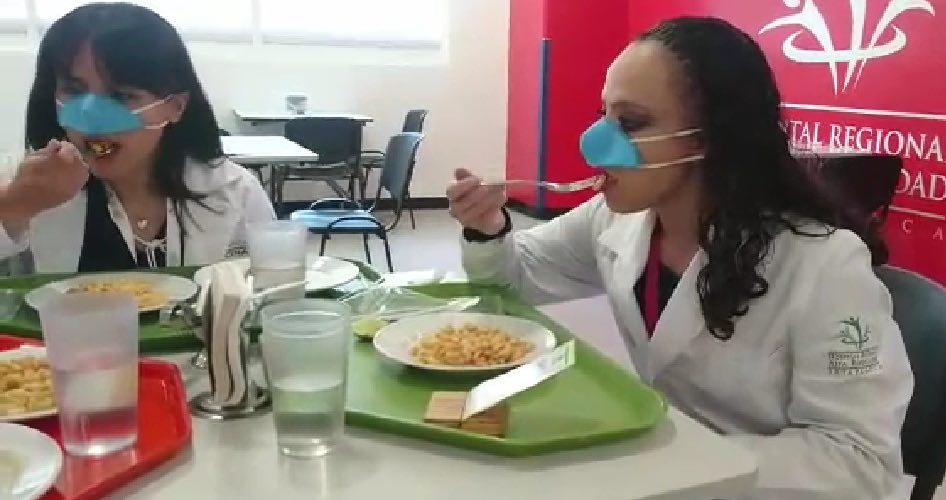
Researchers in Mexico solve the dilemma of how to eat and stay masked

This news release from the Instituto Politécnico Nacional, "La Técnica al Servicio de la Patria" describes a newly developed "nose mask" to reduce the risk of COVID transmission while sharing a meal with others.

The news release is in Spanish. It is not an April Fool's Day joke.