Menu Bar

Home           Calendar           Topics          Just Charlestown          About Us

Thursday, October 6, 2022

Low-paid workers are unionizing.

Corporations are spending a ton to stop them.
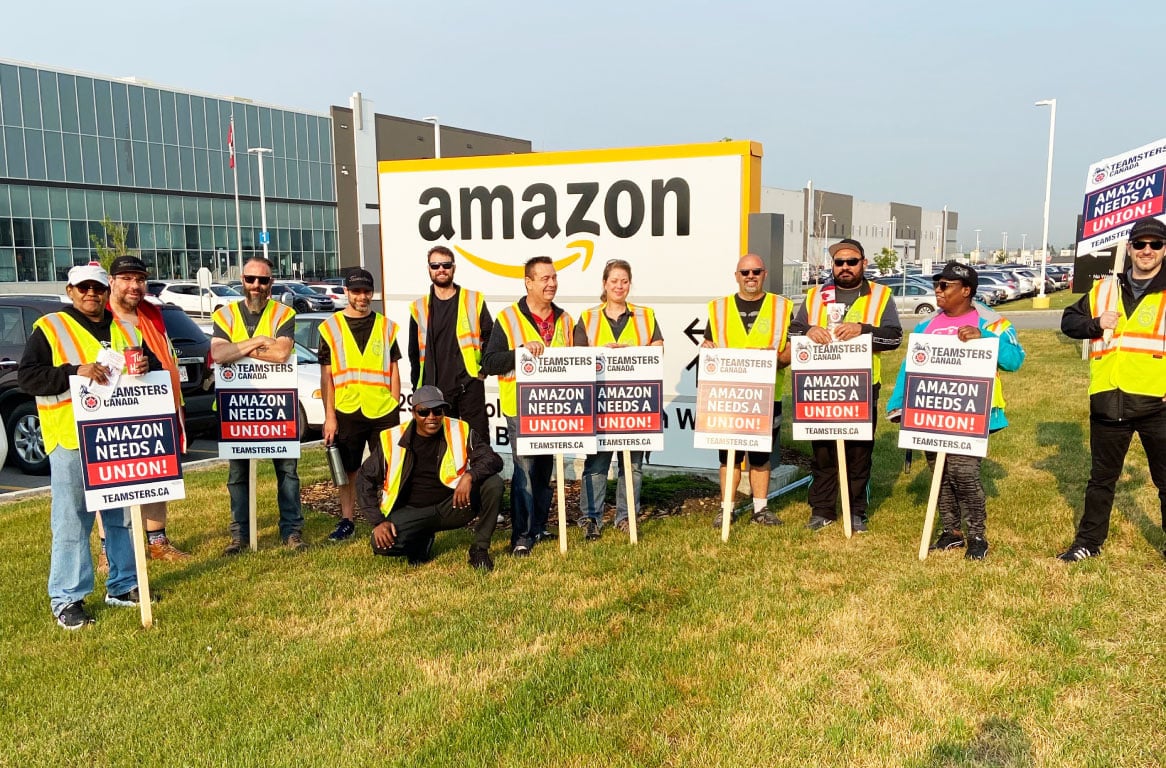
Thousands of workers across the country have been busy gathering signatures from their co-workers in the past year. Candy makers at a Hershey’s factory in Virginia. Cooks at a Chipotle restaurant in Michigan. Six employees at a Dollar General store in Connecticut.

Their goal: form a labor union to force their bosses to negotiate better pay and benefits after years of brutal working conditions during the COVID-19 pandemic. Many of them are low-paid service employees trying to establish the first unions at multibillion-dollar companies.

The recent spike in labor organizing is unusual, according to a Center for Public Integrity analysis of data published by the National Labor Relations Board, which enforces collective bargaining laws and oversees union elections.

Workers have filed more than 2,000 requests to hold elections to form labor unions since the start of the fiscal year, which began in October. That’s a jump of more than 62% from fiscal year 2021—the highest increase in at least a decade. These numbers don’t include unions created without formal elections, often because employers recognize them voluntarily.

The surge in requests for official elections has overwhelmed the NLRB. The agency said it’s understaffed and “handling unsustainable caseloads.” 

It has also alarmed corporate executives, who are paying thousands of dollars a day to break up organizing efforts. Amazon, Dollar General, Hershey’s, Pfizer, Walgreens and Chipotle are just a few major companies that have done so since the start of the pandemic, according to Public Integrity’s review of disclosures filed with the U.S. Department of Labor.

One of their go-to firms is the Labor Relations Institute, which prides itself in guiding companies to become “union free” and educating employees “about the disadvantages of unions.” 

In December and January, Dollar General paid the firm $83,488 for its services in stopping six workers at a store in Barkhamsted, Connecticut, from forming a union, according to the company’s disclosures. 

Wednesday, October 5, 2022

The Truth Behind “Self-Made” Billionaires


This is how it works


On the November ballot and deserving your support


What is a wetland?

Cradle of life

Jon SweetmanPenn State

A raccoon with a fish at the Corkscrew Swamp
Sanctuary in Naples, Fla.
 Michael Siluk/UCG/Universal Images Group via Getty Images
Wetlands are areas of land that are covered by water, or have flooded or waterlogged soils. They can have water on them either permanently or for just part of the year.

Whether it’s year-round or seasonal, this period of water saturation produces hydric soils, which contain little or no oxygen. But this doesn’t mean that they are lifeless: Wetlands are full of unique water-loving plants and wildlife that have adapted to wet environments.

Wetlands can take many different forms, depending on the local climate, water conditions and land forms and features. For example, swamps are dominated by woody trees or shrubs. Marshes often have more grasslike plants, such as cattails and bulrushes. Bogs and fens are areas that accumulate peat – deposits of dead and partly decomposed plant materials that form organic-rich soil.

Double down on whole grains to live longer

Which Grains You Eat Can Impact Your Risk of Premature Heart Disease

By AMERICAN COLLEGE OF CARDIOLOGY  

According to a new study, eating more whole grains was associated with a reduced risk of premature coronary artery disease.

Researchers found a higher intake of refined grain was associated with an increased risk of premature coronary artery disease in an Iranian population, while eating whole grains was associated with reduced risk. 

How to get away with torture, insurrection, you name it

The techniques of denial and distraction that politicians use to manage scandal

Jared Del RossoUniversity of Denver

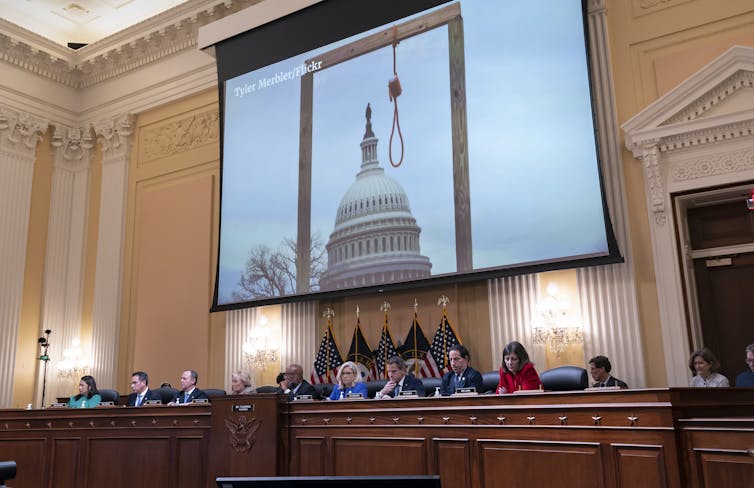
An image of a mock gallows on the grounds of the
Capitol on Jan. 6, 2021, is shown during a House
committee hearing. AP Photo/J. Scott Applewhite
On Sept. 28, 2022, the U.S. House select committee investigating the Jan. 6, 2021, insurrection will hold another public hearing – likely the last before it releases its official report.

Through earlier hearings this past summer, the committee has shown how former President Donald Trump and close associates spread the “big lie” of a stolen election. The hearings have also shown how Trump stoked the rage of protesters who marched to the U.S. Capitol and then refused to act when they breached the building.

The hearings have aired in prime time and dominated news cycles. Still, polling conducted in August by Monmouth University found that around 3 in 10 Americans still believe that Trump “did nothing wrong regarding January 6.”

As a sociologist who studies denial, I analyze how people ignore clear truths and use rhetoric to convince others to deny them, too. Politicians and their media allies have long used this rhetoric to manage scandals. Trump and his supporters’ responses to the Jan. 6 investigation are no exception.

Tuesday, October 4, 2022

The Fascists Have Arrived

We Have Seen This Movie Before

CHRIS HEDGES for Scheerpost

A pre-WWII cartoon by Dr. Seuse called out
the Nazis in America
Energy and food bills are soaring. Under the onslaught of inflation and prolonged wage stagnation, wages are in free fall. Billions of dollars are diverted by Western nations at a time of economic crisis and staggering income inequality to fund a proxy war in Ukraine. 

The liberal class, terrified by the rise of neo-fascism and demagogues such as Donald Trump, have thrown in their lot with discredited and reviled establishment politicians who slavishly do the bidding of the war industry, oligarchs, and corporations.

The bankruptcy of the liberal class means that those who decry the folly of permanent war and NATO expansion, mercenary trade deals, exploitation of workers by globalization, austerity and neoliberalism come increasingly from the far-right. 

This right-wing rage, dressed up in the United States as Christian fascism, has already made huge gains in HungaryPolandSwedenItalyBulgaria and France and may take power in the Czech Republic, where inflation and rising energy costs have seen the number of Czechs falling below the poverty line double.

By next spring, following a punishing winter of rolling blackouts and months when families struggle to pay for food and heat, what is left of our anemic western democracy could be largely extinguished.

Extremism is the political cost of pronounced social inequality and political stagnation. Demagogues, who promise moral and economic renewal, vengeance against phantom enemies and a return to lost glory, rise out of the morass. Hatred and violence, already at the boiling point, are legitimized. A reviled ruling class, and the supposed civility and democratic norms it espouses, are ridiculed.

Donald the magic boy

For more cartoons by Ruben Bolling, CLICK HERE.


So. Why, again?


Progressive Charlestown has never run a Kim Kardashian story....until now

Feds bust Kardashian Cryto scam

Security and Exchange Commission

The Securities and Exchange Commission announced on October 3 that charges against Kim Kardashian for touting on social media a crypto asset security offered and sold by EthereumMax without disclosing the payment she received for the promotion. 

Kardashian agreed to settle the charges, pay $1.26 million in penalties, disgorgement, and interest, and cooperate with the Commission’s ongoing investigation.

The SEC’s order finds that Kardashian failed to disclose that she was paid $250,000 to publish a post on her Instagram account about EMAX tokens, the crypto asset security being offered by EthereumMax. Kardashian’s post contained a link to the EthereumMax website, which provided instructions for potential investors to purchase EMAX tokens.

"This case is a reminder that, when celebrities or influencers endorse investment opportunities, including crypto asset securities, it doesn’t mean that those investment products are right for all investors," said SEC Chair Gary Gensler. "We encourage investors to consider an investment’s potential risks and opportunities in light of their own financial goals."

Sleep better

7 Tips to Improve Your Sleep Quality

By SCITECHDAILY.COM  

Life can move fast. It can be overwhelming, with stressors, distractions, and deadlines. There is one thing everyone can agree on: managing your sleep schedule is fundamental when it comes to physical and mental health alike. Check out seven tips to create a bedtime routine below.

Creating a Bedtime Routine

We’ve all been there. Tossing and turning, the crinkle of sheets deafeningly loud — sleep being the elusive creature it is. It doesn’t need to be this way. By following simple steps and creating a routine, you can master sleep and wake up feeling refreshed and ready to go the next day.

When the power grid goes out, could solar and batteries power your home?

You need storage cells to power up off the grid

Will GormanLawrence Berkeley National LaboratoryBentham PaulosLawrence Berkeley National Laboratory, and Galen BarboseLawrence Berkeley National Laboratory

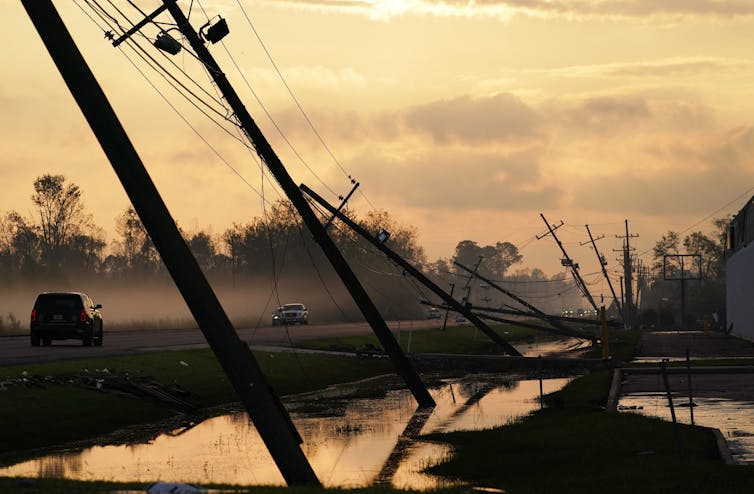
Downed powerlines can mean weeks without power. AP Photo/Matt Slocum
Hurricane Ian’s catastrophic winds and flooding are likely to bring long-lasting power outages to large parts of Florida. The storm is the latest in a line of hurricanes and extreme heat and cold events that have knocked out power to millions of Americans in recent years for days at a time.

In many disaster- and outage-prone areas, people are starting to ask whether investing in rooftop solar and battery storage systems can keep the lights on and the air conditioner running when the power grid can’t.

When the grid goes down, most solar systems that lack a battery will also shut down. But with batteries, a home can disconnect from the grid. Each day, the sun powers the home and charges up the batteries, which provide power through the night.

Our team at Berkeley Lab explored what it would take for homes and commercial buildings to ride out long power outages, of three days or more, with solar and batteries.