
Saturday, August 5, 2023
Year's first finding of West Nile Virus in RI in Westerly
It's that time again
By Kevin G. Andrade, Rhode Island Current

The sample was one of 199 collected from 36 traps, which were set on July 24.
Tests are conducted weekly from June through September by the Rhode Island Department of Environmental Management (DEM) and Rhode Island Department of Health (DOH).
The positive sample was not unexpected as mosquito-borne diseases become more prevalent in southern New England as the summer progresses. The first detection of WNV in Rhode Island each year typically occurs in early August.
WNV is the leading cause of mosquito-borne disease in the continental United States and is much more prevalent than Eastern Equine Encephalitis (EEE).
Most people infected with WNV do not feel sick. It can lead to a fever in about one of every five people infected.
Severe cases can lead to other symptoms, including abdominal pain, rash, diarrhea, vomiting, muscle aches, loss of appetite, and more. Only one of every 150 people infected can tend to develop severe symptoms or die from the illness.


20% of “Healthy” Individuals Actually Have the Metabolism of a Prediabetic
Are you one of them?
By KLICK APPLIED SCIENCES
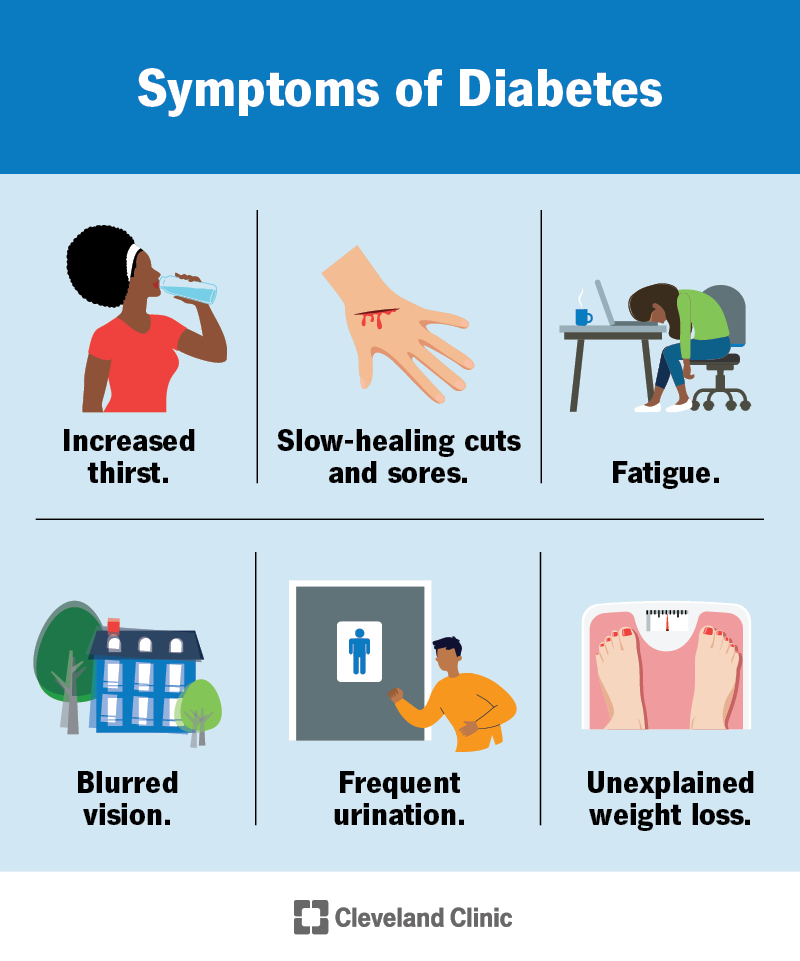
Remarkably, this technique identified 20% of study participants,
initially deemed healthy, as having glucose metabolism akin to prediabetes,
signifying a potential breakthrough in early detection and management of
diabetes.
Klick Labs develops for detecting the initial indications
of Type 2 diabetes by employing continuous glucose monitoring (CGM) data.
A team of researchers from Klick Labs has
formulated an innovative approach for identifying the initial indications of
the body’s inability to manage blood sugar levels before patients reach a
prediabetic state.
The details of their study, published in Mayo Clinic Proceedings: Digital Health, reveal a new analytical process that highlights a stage prior to prediabetes, known as impaired glucose homeostasis (IGH). The scientists utilized their proprietary mathematical model on data gathered from continuous glucose monitors (CGMs).
The findings showed that approximately 20% of the subjects, who were previously
deemed healthy according to medical standards, exhibited a glucose metabolism
pattern similar to individuals with prediabetes.
When telling the truth isn’t the whole truth
URI business professor studies lies by fashion brands about corporate social responsibility

But that pressure to reform has spawned another strategy:
The little-known use of paltering by fashion companies to promote marketing
claims about their commitment to act socially responsible.
“Paltering is the active use of truthful but misleading statements along with non-disclosures to create confusion and imply a corporate image that consumers want to see,” said Saheli Goswami, an assistant professor in Textiles, Fashion Merchandising and Design at the University of Rhode Island.
“It is this reliance on truth that makes the whole process and the
companies engaging in paltering very much immune to legal repercussions. It
also makes it very challenging for consumers to recognize it.”
Friday, August 4, 2023
House Republicans to Workers: Drop Dead
Plan Would Cut OSHA Funding By $95 Million
By
Joe
Biden once said “Don’t tell me what you value. Show me your budget — and I’ll
tell you what you value.”
Republicans new kick: bring back child labor
A
few days ago, Republicans told American workers what they value: More workplace
injury, illness and death, more child labor, and fewer unions.
House Appropriations Committee Republicans released the draft fiscal year 2024 Labor, Health and Human Services, Education, and Related Agencies funding bill yesterday, which will be considered in subcommittee today. The bill cuts OSHA funding by $95 million, a 15% cut that would bring the agency’s funding level down to $537 million.
OSHA’s budget hasn’t been at that low level since 2009 (aside from the
sequestration year of 2013 when OSHA’s budget was cut to $535 million). Even at
its current budget level, OSHA is a tiny agency with a paltry budget — and an
enormous mandate: the safety and health of 158 million workers at more
than 10.9 million workplaces.
The
Republican budget represents an unprecedented scorched-earth action that’s hard
to comprehend, even in these days of a MAGA-controlled House of
Representatives.
Republicans told American workers what they
value: More workplace injury, illness and death, more child labor, and fewer
unions.
Under OSHA’s current budget, most employers can depend on almost never seeing an OSHA inspector unless one of their workers is killed, hospitalized or unless a worker files a complaint.
The AFL-CIO estimates the it would take 190 years for
OSHA to inspect every workplace in the country just once. Republicans seem to
be striving to increase that number to 300 years.
To
put this in perspective, President Biden had proposed a 17% increase in
OSHA’s FY 2024 budget.
It’s unclear at this time where the specific cuts in the OSHA budget will come. All we know so far is that the budget line item for funding OSHA’s 27 state plans remains at the FY 2023 level of $120 million, so presumably most of the cuts would come out of enforcement and standards.
In addition, Republicans always
attempt to eliminate the Susan Harwood Worker Training Grant program when
they’re in control, so it’s highly likely they’ll try to kill the program this
year as well.
The
Mine Safety and Health Administration will face a 29% cut, replacing the
mythical “war on coal” with a very real “war on coal miners.”
The Mine Safety and Health Administration will
face a 29% cut, replacing the mythical “war on coal” with a very real “war on
coal miners.”
The
budget of the National Institute for Occupational Safety and Health, which
conducts workplace safety and health research, would be slashed by 32%. I guess
workers will just have to do their own research.
And
for good measure, the DOL Office of the Solicitor, which works on defending
enforcement actions and developing and defending DOL regulations, would be cut
by 25%. The budget of the already cash-starved National Labor Relations Board
would be cut by one-third.
So
we undermine OSHA’s ability to issue standard, hollow out their ability to
enforce current standards, and ensure that the agency doesn’t have the means to
defend any enforcement actions or standards in court.

Another charity scam by the uber-wealthy
How the Ultrawealthy Use Private Foundations to Bank Millions in Tax Deductions While Giving the Public Little in Return
By Jeff Ernsthausen for ProPublica
 |
| Nolan Pelletier, special to ProPublica |
A massive trove of tax information obtained by ProPublica, covering thousands of America’s wealthiest individuals, reveals what’s inside the billionaires’ bag of tricks for minimizing their personal tax bills — sometimes to nothing.
 |
| Carolands estate (Wikipedia) |
I was sitting just outside this splendor, idling in my rented Toyota Corolla, on a clear day last winter. Like the other people in the line of cars, I was about to enjoy a rare treat. Carolands is an architectural landmark, but it’s open only two hours a week. Would-be visitors apply a month in advance, hoping to win a lottery for tickets. Like most lotteries, this one has long odds.
I had applied unsuccessfully for the three tours scheduled for February. Finally, I resorted to my journalist’s privilege: I emailed and called the director of the foundation that owns the estate, explaining that I was a reporter planning to be in the area for a few days. Could she help? Eventually, she called back and offered me a place on a tour.
It wasn’t supposed to be this difficult. When billionaire Charles Johnson sought a tax break in 2013 for donating his mansion to his private foundation, the organization assured the Internal Revenue Service and state officials that the public would be welcome.
“The Foundation will fulfill its charitable and educational purpose by opening the Carolands Estate to the public,” it stated in its application for tax-exempt status, which included a pamphlet for a self-guided tour. The foundation later told a California tax regulator that the estate was open to the public every weekday from 9-5.
There was a lot of money at stake. Johnson, a Republican megadonor and part owner of the San Francisco Giants, had gotten an appraisal valuing the property at $130 million, a price higher than any publicly reported home sale in the U.S. up to that time, and five times the $26 million he and his wife, Ann, had reportedly paid 14 years earlier to buy and restore what then was a dilapidated property.
The plan worked. The IRS granted the foundation tax-exempt status. That allowed the Johnsons to collect more than $38 million in tax savings from the estate over five years, confidential tax records show.
But the Johnsons never opened Carolands to the public for 40 hours a week. Instead, the foundation bestows tickets on a few dozen lottery winners, who receive two-hour tours, led by docents, most Wednesdays at 1 p.m. Self-guided tours, like the ones described in the attachments to Johnson’s IRS application, are not offered.
Bye, bye summer flounder, lobster and other favorites
Effects of “unprecedented” marine heat waves may be irreversible
.webp)
July marked Earth’s hottest temperatures ever, and heat
waves are currently affecting over 44% of ocean area, making the current marine
heat wave the most widespread ever recorded. Scientists at the National Oceanic
and Atmospheric Administration (NOAA) expect that number to rise to over 50% by this
fall. Usually, about 10% of the world’s oceans experience a heatwave at any
given time.
The levels of marine heat waves this year are
“unprecedented,” said Dillon Amaya, a scientist who studies climate extremes at
the NOAA.
The marine heat wave could lead to a redistribution of
ocean species that may then also destabilize additional ecosystems, according
to Jenn Caselle, a research biologist at the University of California, Santa
Barbara’s Marine Science Institute.
“These marine communities that are reshuffling right now could stay in those reshuffled states and become our new normal,” said Caselle.
SouthCoast Wind files court challenge to R.I. regulators
Wind Farm developer challenges state roadblocks
By Nancy Lavin, Rhode Island Current

In a petition with Rhode Island Supreme Court on July 28, SouthCoast Wind Energy LLC contends that the Rhode Island Energy Facility Siting Board decision “is contrary to law and should be vacated.”
Last month, the board unanimously agreed to halt its review of the transmission lines for the project until the developer secures new agreements guaranteeing the project’s financing.
The 149-turbine wind farm, planned off the coast of Massachusetts, was originally intended to bring 1,200 megawatts of power to the Bay State. While centered in Massachusetts, the proposal also needed the signoff from Rhode Island regulators on plans to run a underwater transmission line from the wind farm up the Sakonnet River, over Portsmouth and out Mount Hope Bay to reach land in Somerset’s Brayton Point.
But after SouthCoast opted to renege on its existing power purchase agreements with Massachusetts utility companies in the hopes of getting a better deal, Rhode Island regulators agreed it was a waste of time and resources to continue their review when the project’s future is still uncertain.
Thursday, August 3, 2023
Feeling really guilty about actually using real quotes
Thom Cahir responds to a Letter from Bonnie Van Slyke
By Thom Cahir
 |
| CCA Sisterhood: Ruth Platner (left) calls the CCA shots and Bonnie Van Slyke (right) tries to explain them |
Guilty as charged! I did indeed
reference the Hayes case and Mr. Vanover’s own words about being “exhausted,”
and how he changed his vote, according to Ms. Van Slyke’s letter of July 26
(“Personal attack on Vanover was dishonest”). However, I’m not sure how
truthfully repeating someone’s words and multiple cases of the Zoning Board
trigger Ms. Van Slyke to such a degree.
Maybe Ms. Van Slyke was more upset that I
added that the Zoning Board hadn’t been guilty of running afoul of abusing the
process previously. However, she failed to mention it in her letter because it
didn’t fit her narrative.
In the 2019 Bruce Gardner and Charles A. Sweet
Revocable Trust case, Judge Taft-Carter wrote,
“The decision of the Zoning Board of Review is affected by clear error of law, clearly erroneous in light of the evidence of this case, arbitrary and capricious, and characterized by abuse or unwarranted exercise of discretion.”
Refer to WC-2019--0327 for full details.
Ms. Van Slyke and her Charlestown Citizens
Alliance cohorts must be feeling particularly minimized and desperate right
now.
Why would they want to defend Mr. Vanover when
he may have escaped being cited for his words, but the appearance led to this
footnote in a filing:
“Member Vanover could be praised for his candor. However, the message it sends to applicants and opponents appearing before the Zoning Board is stark: if you think your position is going down to defeat, keep the hearing going as long as possible, and maybe a board member will simply give up. That is not how zoning decisions should be made.”
 |
| Cliff Vanover, very exhausted perhaps from Lyme disease, was described by Rhode Island Monthly as "a veritable tick magnet. The Town Council has relieved Cliff of that onerous duty. |
It must be frustrating to have wielded power so ruthlessly and for so long with so little transparency and with no one to fact-check the gaslighting.
I plead guilty to being Ms. Van Slyke’s worst
nightmare since coming to town seven years ago, having experience as a
political organizer and messaging expert.
Let’s face it, Ms. Van Slyke has lost
standing in the town and is on video at a recent council meeting stating, “I
don’t mean to be argumentative … well I do mean to argue.” If writing letters
to The Sun is her only outlet, I’ll be here to fact-check her. I worked in a
newsroom for years and still freelance for numerous outlets, so I’ll just
consider it, my guilty pleasure.


Hail to the weekend warriors
People who exercise only on the weekend have similar heart-health benefits as those who exercise throughout the week
Exercise is good for your overall health and your heart in particular. Guidelines recommend that we should be doing 150 minutes of moderate-to-vigorous activity a week. But does it matter when you do this exercise? 
For maximum benefit, you have to break a sweat.
Diego Cervo/Shutterstock
Should you spread it out in the week or does it lose some of the benefit if you cram it in at the weekend?
A new study analysing data from the UK Biobank has attempted to answer this very question. Around 90,000 healthy, middle-aged people wore wrist bands (accelerometers) that tracked their activity. It recorded their activity levels for a week with particular attention to moderate-to-vigorous activity (more on that later).
The researchers found that in the six years after the accelerometer assessment, people who did regular moderate-to-vigorous activity had less stroke, heart attack, heart failure and atrial fibrillation (an irregular heart rhythm) compared with sedentary people.
The novel finding of this study was that there was no difference in outcomes in people who did more than half of their activity at the weekend compared with those who spread it out across the week. It didn’t matter when it was done, moderate-vigorous physical activity was associated with improved heart health.
The PFAS hits just keep on coming
New worries about risks PFAS and other chemicals pose for pregnancies

The researchers said their findings add to
a growing body of evidence showing that many chemicals people are routinely
exposed to are leading to subtle, but harmful, changes in health.
Subscribe to:
Posts (Atom)