 |
| For more cartoons by Tom Tomorrow, CLICK HERE |
Friday, September 22, 2023
Not surprising: Rhode Islanders increasingly like mail ballots, early voting
Forget waiting in line to vote. Early voting, mail ballots on rise in R.I.
by Nancy Lavin, Rhode Island Current

These days, not so much.
Nearly a third of the voters who participated in the Sept. 5. special congressional primaries cast ballots by mail or early, in-person voting, rather on the day of the primary itself, according to official results certified by the Rhode Island Board of Elections. And election administrators anticipate that number will swell in future election years as voters adjust to the expanded array of options.
“One reason you are seeing an uptick is because people are getting to experience it, and talking about it,” said Rhode Island Secretary of State Gregg Amore. “When these things were first implemented, I don’t think people realized it was available. I expect it to become a lot more popular in the next few election cycles.”
Early, in-person voting especially. The 2023 special primaries marked the third election cycle in which residents could show up for designated, in-person voting hours starting 20 days before the actual election day.
Originally termed “emergency in-person voting” under a 2020 law passed in the height of the COVID-19 pandemic, the option was enshrined and expanded ahead of the 2022 election cycle under a comprehensive voting reform bill known as the Let RI Vote Act.
The law also let voters request a mail-in ballot without having to give a reason, and offered the option to apply for a mail ballot electronically, the latter of which was implemented for the first time this year.
Proponents tout these expansions as ways to improve voter turnout and access while easing the pressure on election administrators on Election Day itself.
But getting voters to embrace those changes remains a work in progress.
Distrust of mail-in ballots continues, thanks in part to misinformation spread during the 2020 presidential election.


Special hazards
Certain common chemicals associated with higher odds of cancer in women

Using data collected by the Centers for Disease Control
and Prevention (CDC), a team of academic researchers found evidence that women
diagnosed with some “hormonally-driven” cancers had exposures to certain per- and polyfluoroalkyl
substances (PFAS), which are used in thousands of household and
industrial products, including in stain- and heat-resistant items.
They found similar links between women diagnosed with
cancer and high exposures to phenols, which are commonly used in food
packaging, dyes and personal care products.
The study, published late Sunday in the Journal
of Exposure Science and Environmental Epidemiology, did not find
similar associations between the chemicals and cancer diagnoses in men.
Not much will happen without teeth
New scientific integrity policy lacking teeth, critics warn

The draft issued
by the US Department of Health and Human Services (HHS) is the first to come
from a key federal agency in answer to a call by
President Joe Biden for federal agencies to strengthen policies meant to
protect the integrity of their research. HHS is expected to release its final
policy by February 2024.
The HHS oversees government entities that play
critical roles in evaluating harmful chemicals, tracking and analyzing data on
important public health threats, and conducting research into human health and
disease, including the Centers for Disease Control and Prevention, the Food and
Drug Administration, and the Agency for Toxic Substances and Disease Registry.
The HHS works to “enhance the health and
well-being of all Americans depends on the development and use of accurate,
complete, and timely scientific and technical information,” HHS states in the
draft policy.
But according to a letter sent to HHS this month by 11 advocacy organizations, the draft policy would do little to stem what has become a systemic problem in key federal agencies whose work is supposed to protect the public but too often is swayed by political and/or corporate interests.
“Under this proposed policy, every aspect
of enforcing scientific integrity principles would remain a captive of the
political process inside the agencies,” Jeff Ruch, the Pacific director of
Public Employees for Environmental Responsibility (PEER), said in a press
release.
Among the other signatories are the Center
for Reproductive Rights and the Union of Concerned Scientists.
Thursday, September 21, 2023
Why humans can’t trust AI
You don’t know how it works, what it’s going to do or whether it’ll serve your interests
 |
| Do you trust AI systems, like this driverless taxi, to behave the way you expect them to? AP Photo/Terry Chea |
These alien minds are artificial intelligence systems, the ghost in the machine that you encounter daily.
But AI systems have a significant limitation: Many of their inner workings are impenetrable, making them fundamentally unexplainable and unpredictable. Furthermore, constructing AI systems that behave in ways that people expect is a significant challenge.
If you fundamentally don’t understand something as unpredictable as AI, how can you trust it?


Where are the quahogs?
New commission plans to get to the bottom of that
by Christopher Shea, Rhode Island Current
A new joint legislative study commission looking into the reasons for the decline of Narragansett Bay’s quahog population is scheduled to hold its first meeting on Tuesday.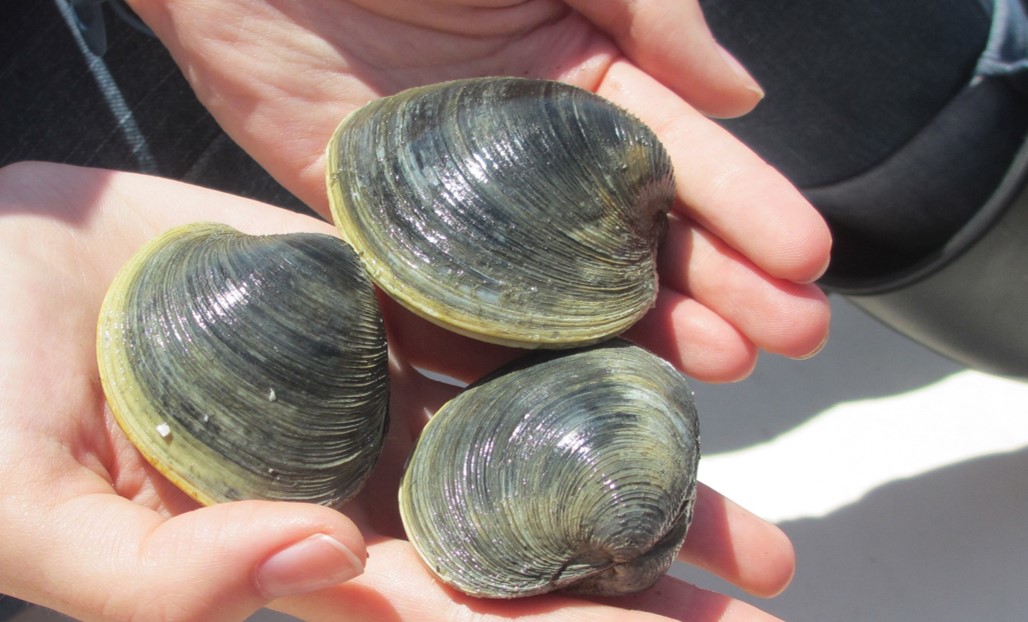
Credit: NOAA Fisheries/Julie Rose
In 2022, more than 17.7 million quahogs were harvested from the bay and the rest of the state’s coastal waters, according to an annual report from the Rhode Island Department of Environmental Management (DEM) — a 9% increase from the year prior.
To vax, or not to vax
CDC faces dilemma over new Covid booster for all
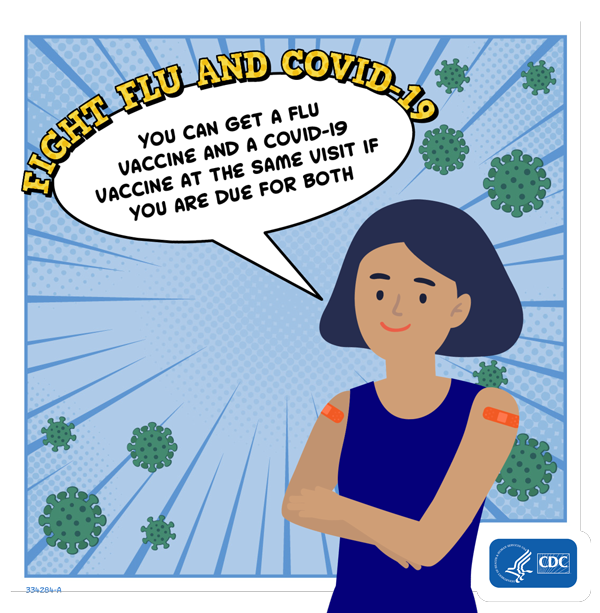
A small percentage of Americans got the most recent covid-19 booster shot, and even fewer probably realize the federal government is preparing to recommend yet another shot as early as Tuesday.
Until a week or two ago, William Schaffner read that indifference as a sign the Centers for Disease Control and Prevention should advocate vaccinating only those most at risk from the virus.
But then Schaffner, an infectious disease specialist at Vanderbilt University Medical Center, changed his mind.
Members of the CDC’s Advisory Committee on Immunization Practices won him over to the argument that the vaccine be recommended for all Americans above 6 months of age, he said in an interview.
Not all vaccine experts see it quite as Schaffner, a nonvoting liaison representative to the ACIP, does.
“I don’t plan to get it myself,” said Paul Offit, 72, the director of the Vaccine Education Center at Children’s Hospital of Philadelphia. He’s had two boosters and got covid last year.
Another vaccine might increase his protection against mild infection for a few months, but like most Americans’ immune systems, his is already familiar enough with the virus to protect him from serious disease, Offit believes.
Some of Schaffner’s scientific colleagues argue the government should be recommending the shot only for frail, older, sick, and immunocompromised people.
Over 95% of the U.S. population are already covid-immunized through vaccination, infection, or both, and the risks of serious illness for healthy younger people are not great.
Everyone is likely overexposed to BPA – EU
If you're using plastic, you're likely above acceptable health safety levels.
Douglas Fischer, Environmental Health News
 Our exposure to a common plastic additive
linked to breast cancer and obesity likely exceeds health thresholds set by
governments worldwide.
The European Environment Agency, citing updated research data,
said the new findings raise "significant health concerns" for the
entire European population – and, by extension, anyone who comes into frequent
contact with plastic.
The agency cited a study that found every
single participant of a biomonitoring study was likely exposed to the chemical
above safe health thresholds. The participants came from 11 European countries.
The chemical, bisphenol-a, or "BPA," makes plastics hard and is found in a variety of products, from reusable water bottles and plastic food containers to sports equipment.
It is also a key
ingredient in epoxies and resins, including canned food liners. And that
grittiness you feel when you rub a thermal paper sales receipt between your
fingers? That's BPA.
Wednesday, September 20, 2023
Seth takes on Tommy Tuberville
Magaziner condemns Sen. Tuberville for undermining US servicemembers and national security
 |
| For more cartoons by Nick Anderson, CLICK HERE |
“Since February, the Alabama Senator has blocked more than 300 qualified officers in the military from receiving the promotions that they have earned, and from assuming the posts that our country needs them in.
“No one is happier with the Senator from Alabama’s antics than Vladimir Putin, Kim Jong Un, and our nation’s other adversaries. By undermining our military, he is doing their dirty work for them.

Pizza this Saturday with CRU at the Breachway
|
|||||||||||||


Shoreline access foes get tossed out of federal court
Federal court judge dismisses challenge to RI shoreline access law
by Nancy Lavin, Rhode Island Current

So declared U.S. District Court Judge William Smith in his Sept. 19 opinion dismissing a legal challenge to the state’s newly inked shoreline access law. Smith ultimately sided with state Attorney General Peter Neronha, who sought to have the lawsuit thrown out.
Smith’s reasoning, as laid out in a nine-page opinion, was three-fold: the group of coastal taxpayers who filed the complaint failed to prove individual members had been harmed by the law; the state agencies named as defendants are the wrong group to sue; and federal court is not the right place to hear a challenge to the state’s constitution.
“Defendants move to dismiss the Complaint on two grounds, and both can be reduced to an argument that Plaintiff seeks the wrong relief from the wrong defendants before the wrong court,” Smith wrote.
Neronha applauded the opinion in a statement on Wednesday, reiterating his pledge to protect residents’ constitutional right to access the shore, as clarified by state lawmakers earlier this year.
The new law, signed by Gov. Dan McKee in June, attempted to resolve a decadeslong dispute over where to draw the line in the sand, allowing public access to the beach anywhere 10 feet landward from the high tide or “wrack” line.
Weeks later, a group of shoreline property owners known as the Rhode Island Association of Coastal Taxpayers (RIACT) sued Neronha and other state agencies, contending the law amounted to an unconstitutional “taking” of their property and asking for a judge to immediately stop them from enforcing the law.
Subscribe to:
Posts (Atom)