
Saturday, June 8, 2024
House approves Fogarty bill to criminalize false reports of shootings and other dangerous events
“Swatting” penalties strengthened
.webp)
The bill (2024-H 7972) would amend an existing law that
criminalizes false bomb threats that cause terror, anxiety, unrest or fear,
prompting an evacuation or lockdown of a location or other law enforcement
response.
“These false reports not only waste resources by
mobilizing law enforcement unnecessarily, but they can be extremely dangerous,”
said Representative Fogarty. “They can create risky situations at schools and
other public places and tie up first responders who may be needed at legitimate
emergencies.”
The phenomenon commonly known as “swatting” occurs
when a false report of an ongoing emergency or threat of violence is made to
law enforcement with the intention of prompting the mobilization of significant
law enforcement resources. These calls are becoming more and more prevalent
around the country.


Eleventh hour bottle bill reignites debate between environmental, business groups
Last minute bills often fail
By Nancy Lavin, Rhode Island Current

So it’s no surprise that controversy again clouded the bottle bill conversation Wednesday night.
Hours of debate unfolded in an airless second-floor State House hearing room as a parade of proponents and critics sat elbow to elbow, waiting to make their case to the House Committee on Environment and Natural Resources.
Their arguments, punctuated by the staccato of a cell phone alarm signaling the end of each two-minute speaking window, sounded nearly identical to years past. Environmental advocates backed the deposit-refund program as a means to reduce litter and incentivize recycling, while retail store owners and business groups railed against what they perceived as an unwelcome financial and administrative burden.
Yet the latest version of bottle bill legislation, introduced May 24 by Rep. Carol McEntee, a South Kingstown Democrat, is markedly different from prior iterations, leaving many of the most controversial components up to state regulators and beverage producers to decide.
“Blue-lining” joins the list of climate change problems
Insurers are pulling out of areas prone to climate risk

Bluelining is an insidious practice with similarities
to redlining —
the notorious government-sanctioned practice of financial institutions denying
mortgages and credit to Black and brown communities, which were often marked by
red lines on map.
These days, financial institutions are now drawing “blue
lines” around many of these same communities, restricting services like
insurance based on environmental risks. Even worse, many of those same
institutions are bankrolling those risks by funding and insuring the fossil
fuel industry.
Originally, bluelining referred to blue-water flood
risks, but it now includes other climate-related disasters like wildfires,
hurricanes, and severe thunderstorms, all of which are driving
private-sector decisions. (Severe thunderstorms, in fact, were responsible for
about 61 percent of insured natural catastrophe losses
in 2023.)
Friday, June 7, 2024
A century ago, anti-immigrant backlash almost closed America’s doors
Many of us wouldn't be here if the US embraced anti-immigrant bigotry
Matthew Smith, Miami University
 |
| Immigrant children at Ellis Island in New York, 1908. National Archives/Wikimedia Commons |
How the law did this, however, was somewhat subtle: a quota.
Lawmakers calculated how many immigrants from each European country were residing in the United States in 1890 and then took 2% of that number.
Only that many newcomers could be admitted from any particular country each year. Before the end of the 19th century, the number of immigrants from outside western and northern Europe was still relatively small – meaning their 2% quotas would be minuscule.
In short, the Immigration Act was unabashedly racist, seeking to roll back the demographic tide. One of its sponsors, U.S. Rep. Albert Johnson, warned the House Committee on Immigration that “a stream of alien blood” was poisoning the nation.
Torn between “the American dream” and fears of an ungovernable “melting pot,” Americans have always viewed immigrants ambivalently. In 1924, as is true today, many citizens thought in terms of “good” immigration versus “bad” immigration. In their minds, 1890 marked a dividing line between the two.
Looking back as a historian of immigration and religion, I’m struck by three changes in U.S. views of immigration over the course of the 19th century.


Assembly approves bill to educate buyers of shoreline property of the public’s right to access the shoreline
Victoria Gu bill goes to the Governor
The
General Assembly has approved legislation from Sen. Victoria Gu and Rep. Terri
Cortvriend to improve disclosure of shoreline access rights and related
conditions during the sale of oceanfront property.
Photo by Will Collette
The
legislation (2024-S
2185A, 2024-H
7376A) now
heads to the governor’s desk for his signature.
“This
legislation builds on the historic shoreline access law that we passed last
year,” said Senator Gu (D-Dist. 38, Westerly, Charlestown, South Kingstown). “A
lot of people in Rhode Island are now aware of the new law but a lot of people
coming in from other states to buy property aren’t necessarily aware of it.
This is an important consumer protection and education measure to ensure that
people buying ocean front real estate understand the public’s right to access
the shoreline.”
Mediterranean Diet Tied to 23% Lower Risk of Death in Landmark 25-Year Study
Approaches scientific consensus
By BRIGHAM AND WOMEN'S HOSPITAL

The health benefits of the Mediterranean diet
have been reported in multiple studies, but there is limited long-term data on
its effects on U.S. women and little understanding of why the diet may reduce
the risk of death.
In a new study that followed more than 25,000
initially healthy U.S. women for up to 25 years, researchers from Brigham and
Women’s Hospital, a founding member of the Mass General Brigham healthcare
system, found that participants who had greater Mediterranean diet intake had
up to 23% lower risk of all-cause mortality, with benefits for both cancer
mortality and cardiovascular mortality.
The researchers found evidence of biological
changes that may help explain why: they detected changes in biomarkers of
metabolism, inflammation, insulin resistance,
and more. Results are published in JAMA.
Multiple Trump Witnesses Have Received Significant Financial Benefits From His Businesses, Campaign
Witness tampering or just Trump biz as usual?
By Robert Faturechi, Justin Elliott and Alex Mierjeski for ProPublica
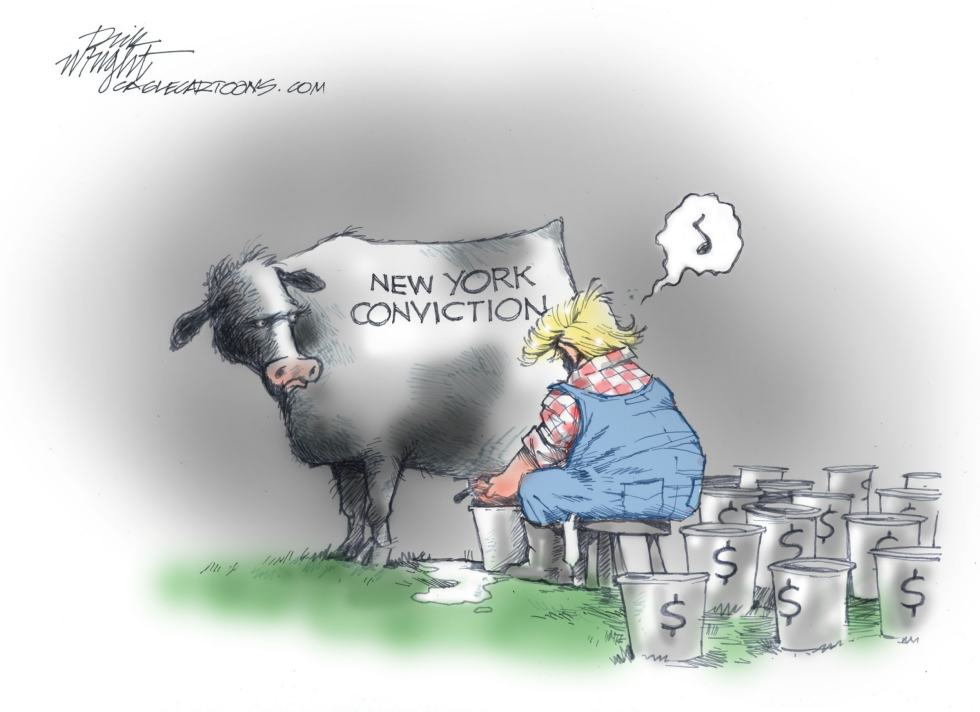
The benefits have flowed from Trump’s businesses and campaign committees, according to a ProPublica analysis of public disclosures, court records and securities filings.
One campaign aide had his average monthly pay double, from $26,000 to $53,500. Another employee got a $2 million severance package barring him from voluntarily cooperating with law enforcement. And one of the campaign’s top officials had her daughter hired onto the campaign staff, where she is now the fourth-highest-paid employee.
These pay increases and other benefits often came at delicate moments in the legal proceedings against Trump. One aide who was given a plum position on the board of Trump’s social media company, for example, got the seat after he was subpoenaed but before he testified.
Significant changes to a staffer’s work situation, such as bonuses, pay raises, firings or promotions, can be evidence of a crime if they come outside the normal course of business. To prove witness tampering, prosecutors would need to show that perks or punishments were intended to influence testimony.
White-collar defense lawyers say the situation Trump finds himself in — in the dual role of defendant and boss of many of the people who are the primary witnesses to his alleged crimes — is not uncommon.
Their standard advice is not to provide any unusual benefits or penalties to such employees. Ideally, decisions about employees slated to give evidence should be made by an independent body such as a board, not the boss who is under investigation.
Even if the perks were not intended to influence witnesses, they could prove troublesome for Trump in any future trials. Prosecutors could point to the benefits to undermine the credibility of those aides on the witness stand.
“It feels very shady, especially as you detect a pattern. … I would worry about it having a corrupt influence,” Barbara McQuade, a former U.S. attorney for the Eastern District of Michigan, said after hearing from ProPublica about benefits provided to potential Trump witnesses.
Thursday, June 6, 2024
What QAnon supporters, butthole sunners and New Age spiritualists have in common
Oh where to being?
Christopher T. Conner, University of Missouri-Columbia
 |
| Even though it’s been linked to cancer, butthole sunning is an alternative wellness practice that has become popularized. Nick Lehr, CC BY-SA |
Four years later, White accepted the endorsement of the Minnesota GOP in the state’s 2024 U.S. Senate race.
In the interim, White had appeared on the show of conspiracy theorist Alex Jones, where he decried the “establishment” and “corporatocracy.” While on Steve Bannon’s “War Room” podcast, he complained that women “had become too mouthy.” Elsewhere, he lambasted the LGBTQ+ movement as “Luciferian” and described Israel as the vanguard of a “new world order.”
White’s transition from an NBA player who advocated for progressive causes to an acolyte of Jones is more common than you might think.
Many people might associate conspiracy theories with certain demographics or political leanings. But the reality is far more nuanced, with emerging research finding that there is far more diversity among conspiracists than scholars previously thought.
Conspiracy theories are just as likely to be held by your MAGA-hat wearing uncle as they are your best friend who’s a fan of the band Phish and goes to CrossFit three times a week.


Exploring the mysterious alphabet of sperm whales
Who knew whales could spell?
Rachel Gordon | MIT CSAIL
The allure of whales has stoked human consciousness for millennia, casting these ocean giants as enigmatic residents of the deep seas.
From the biblical Leviathan to Herman Melville's formidable Moby Dick, whales
have been central to mythologies and folklore. And while cetology, or whale
science, has improved our knowledge of these marine mammals in the past century
in particular, studying whales has remained a formidable a challenge.
Now, thanks to machine learning, we're a little closer to understanding these gentle giants.
Researchers from the MIT Computer Science
and Artificial Intelligence Laboratory (CSAIL) and Project CETI (Cetacean
Translation Initiative) recently used algorithms to decode the “sperm whale
phonetic alphabet,” revealing sophisticated structures in sperm whale
communication akin to human phonetics and communication systems in other animal
species.
In a new open-access study published in Nature
Communications, the research shows that sperm whales codas, or
short bursts of clicks that they use to communicate, vary significantly in
structure depending on the conversational context, revealing a communication
system far more intricate than previously understood.
Many PFAS forever chemicals are toxic
How to avoid them
 |
| Vladimir Gjorgiev/Shutterstock |
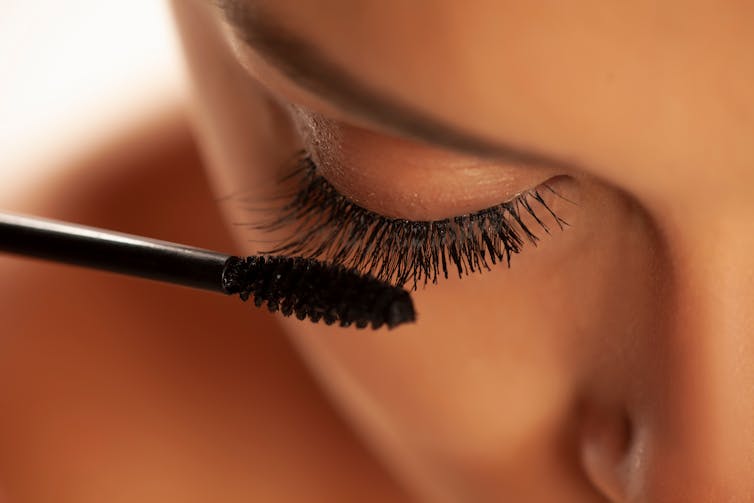
These “forever chemicals” – so-called because they don’t degrade – have been used in a variety of consumer and commercial applications since the 1950s. They can repel water and oil, resist high temperatures and act as “surfactants” by helping different types of liquids mix.
There are around 15,000 different PFAS chemicals. Each one has a slightly different chemical composition, but they all have at least two carbon-fluorine bonds. These extremely strong bonds mean that PFAS don’t readily break down. So the bond that affords PFAS some of its unique characteristics also causes them to build up and persist in our bodies and the environment for decades.
In 2020 alone, sales of fluoropolymers (a sub-group of PFAS) exceeded 39,000 metric tonnes in Europe alone. With enormous volumes of PFAS continually entering the world, these extremely persistent chemicals don’t get the chance to degrade before more are added. Unsurprisingly, it gets everywhere, from rainwater and snow through to soil and groundwater. As a result, PFAS has built up in the food chain and in humans.
It’s impossible to avoid PFAS exposure entirely – they are pretty much everywhere. But you can substantially reduce your exposure by avoiding contact with items directly treated with non-essential PFAS and opting for PFAS-free alternatives wherever possible. Here are four types of products to look out for.
Subscribe to:
Posts (Atom)