Menu Bar

Home           Calendar           Topics          Just Charlestown          About Us

Tuesday, February 22, 2022

Construction workers at risk of unintentionally exposing families to multiple toxic metals

Hazardous waste comes in on workers' clothes and shoes

Boston University School of Medicine

A range of work and home-related factors, such as not having a work locker or a place to launder work clothes, can impact the level of toxic metal concentrations that workers track from their worksites to their home.

Take-home exposures -- toxic contaminants that are unintentionally brought from the workplace into the home, exposing children and other family members -- are a documented public health hazard, but the majority of research and interventions have focused on take-home exposure to lead. Much less is known about take-home exposures to other harmful metals.

Now, a new study led by a Boston University School of Public Health (BUSPH) researcher provides evidence that construction workers, in particular, are at high risk of inadvertently tracking a host of other toxic metals into their homes. The study identifies and measures the highest number of metals -- 30 -- in construction workers' homes, to date.

Hackers are going to LOVE this

How a smart electric grid will power our future

DOE/Pacific Northwest National Laboratory

A novel plan that offers partnership in keeping the United States electric grid stable and reliable could be a win-win for consumers and utility operators.

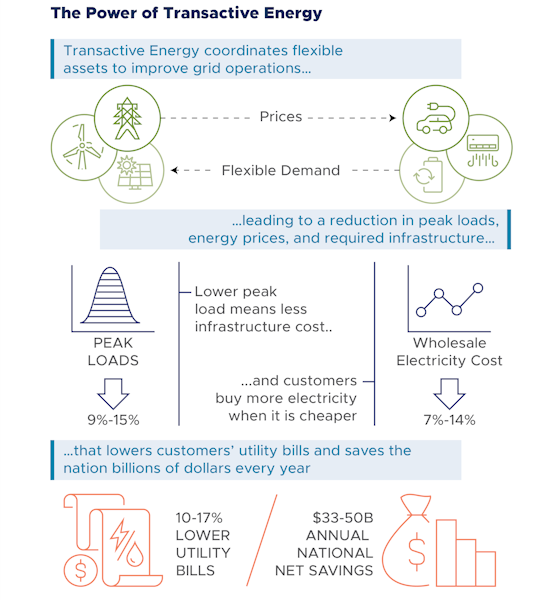
The largest ever simulation of its kind, modeled on the Texas power grid, concluded that consumers stand to save about 15 percent on their annual electric bill by partnering with utilities. 

In this system, consumers would coordinate with their electric utility operator to dynamically control big energy users, like heat pumps, water heaters and electric vehicle charging stations.

This kind of flexible control over energy supply and use patterns is called "transactive" because it relies on an agreement between consumers and utilities. 

Graphic by Cortland Johnson |
Pacific Northwest National Laboratory
But a transactive energy system has never been deployed on a large scale, and there are a lot of unknowns. That's why the Department of Energy's Office of Electricity called upon the transactive energy experts at Pacific Northwest National Laboratory to study how such a system might work in practice. 

Hayden Reeve, a PNNL transactive energy expert and technical advisor, led a team of engineers, economists and programmers who designed and executed the study.

"Because Texas's grid is quite representative of the nation's energy system, it not only enabled the modeling and simulation of transactive concepts but provided a reliable extrapolation of the results and potential economic impacts to the broader United States grid and customers," he said.

The simulation showed that if a transactive energy system were deployed on the Electric Reliability Council of Texas (ERCOT) grid, peak loads would be reduced by 9 to 15 percent. That savings could translate to economic benefits of up to $5 billion annually in Texas alone, or up to $50 billion annually if deployed across the entire continental United States. The savings would equal the annual output of 180 coal-fired power plants nationally.

U.S. coastline to see up to a foot of sea level rise by 2050

Report projects a century of sea level rise in 30 years

NOAA

The effects of sea level rise and storm surge on Charlestown from StormTools

The United States is expected to experience as much sea level rise by the year 2050 as it witnessed in the previous hundred years. That’s according to a NOAA-led report updating sea level rise decision-support information for the U.S. released today in partnership with half a dozen other federal agencies.

The Sea Level Rise Technical Report provides the most up-to-date sea level rise projections for all U.S. states and territories by decade for the next 100 years and beyond, based on a combination of tide gauge and satellite observations and all the model ensembles from the Sixth Assessment Report of the Intergovernmental Panel on Climate Change (IPCC). 

The report projects sea levels along the coastline will rise an additional 10-12 inches by 2050 with specific amounts varying regionally, mainly due to land height changes.

Monday, February 21, 2022

Our Right to the Shoreline is Not About “Passage!”

It’s about the Right to Fully Enjoy Our Shoreline.

By Regina DeAngelo

A version of this article appeared as a letter to the Westerly Sun.

If the House Special Commission on shoreline rights doesn’t change its wording, Rhode Islanders will soon say goodbye to their rights to the shoreline.  In the news and in current commission proposals, our rights to the shoreline are being mistakenly represented as “passage along the shoreline,” or “where you're allowed to walk on the beach.”   

Rhode Islanders are not asking permission to walk on the beach. What we are asking — demanding — is that our constitutional rights to “all the rights of fishery and privileges of the shore, to which we have been heretofore entitled, under the charter and usages of the state,” be upheld. Those are the words of the Rhode Island Constitution (Article 1, Section 17). 

Those are our rights. Not merely “passage,” but enjoying, sitting, sunbathing, playing ball, relaxing — all “the privileges of the shore.” At issue is where, not how, and not whether. That’s why the commission was formed — to clarify the boundary between public and private property at the shoreline.

Currently, the boundary is defined by an average of high-water heights measured across an 18.6-year cycle, as set forth in the Ibbison case of 1982. Agreeing that this attempt at definition clears up nothing, the commission is hearing testimony from all parties. 

But it has been led off course, it seems, by crafty attorneys hired by beachfront-property owners.   In its current proposals of a wrack-line boundary, the commission keeps wrongly using the word “passage” along the shore. 

The shoreline-rights commission must not have only the words “passage” or “walking along the shoreline” in its language; they must instead use the words that already define our rights: all the “privileges of the shore, to which we have been heretofore entitled, under the charter and usages of the state… Liberally construed.” 

These rights and privileges, according our Article 1, Section 17 of the state constitution, “include, but are not limited to” fishing from the shore, the gathering of seaweed, leaving the shore to swim in the sea, and passage along the shore. Importantly, according to the Section preceding that, these rights “shall be liberally construed.” Up until recently, they were.

Then private-property owners got greedy, deciding that their property rights somehow extend into the sea, hiring security guards to patrol their imagined boundaries.  Now, as they infiltrate our lawmaking process, private-interest attorneys are attempting to wiggle-word our rights out of existence. 

And with their current choice of words, Rhode Island commission comes dangerously close to letting this happen. Beware: any proposal putting forth the word “passage,” without explicit reiteration of “all the rights and privileges” of the shore, liberally construed, would be unconstitutional.
Best explanation of cryto yet

For more cartoons by Tom Tomorrow, CLICK HERE.


You're definitely protected


Dog feces and urine could be harming nature reserves

Does your dog shit in the woods?

British Ecological Society

New research finds that dogs being walked in nature reserves contribute a significant amount of nutrients to the environment through their faeces and urine, which researchers warn could negatively impact local biodiversity. The research is published in the British Ecological Society journal, Ecological Solutions and Evidence.

Significant levels of fertilisation

Researchers at Ghent University have estimated that each year dog faeces and urine add an average of 11kg of nitrogen and 5kg of phosphorus per hectare to nature reserves near the Belgian city of Ghent. The researchers say that the nutrients added through this neglected form of fertilisation are substantial and could be detrimental to biodiversity and ecosystem functioning.

When your job is a headache

Overlooked disease: Tens of thousands of people have problems at work

University of Copenhagen - The Faculty of Health and Medical Sciences

Imagine your head pounding. And when you try to move, a door slams, or curtains are drawn it gets much worse. Ideally, you would like to crawl under your blanket in a dark and quiet room.

This is how it may feel for people suffering from migraine or frequent tension headaches. Untreated, a migraine attack may last for 4-72 hours, and tension headaches may potentially last for a week. In Denmark, it is estimated that approximately 770,000 people suffer from migraine or frequent tension headaches.

Now, for the first time, a new study from the University of Copenhagen shows specifically how migraine or frequent tension headaches affect the ability to work.

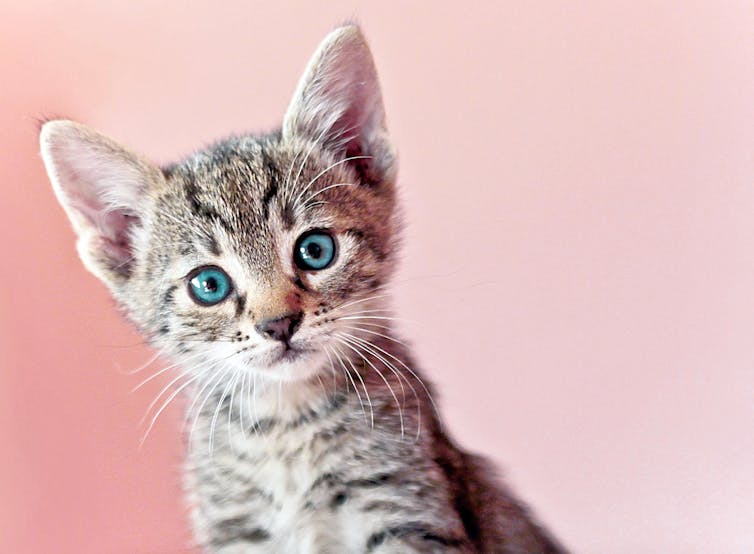
Physics and psychology of cats

An (improbable) conversation

Beth DaleyThe Conversation and Thalia PlataThe Conversation

According to researcher Marc-Antoine Fardin, under the right
circumstances, cats’ bodies can behave like liquids.
 
Nevena Uzurov/Moment via Getty Images
Have you wondered why cats are so nimble and seem to fit perfectly in cups, boxes and other small places? Or how cats communicate with humans?

Marc Abrahams, editor of the Annals of Improbable Research and master of ceremonies of the annual Ig Nobel Prize, Jean Berko Gleason, psycholinguist and professor emerita of Psychological and Brain Science at Boston University, and Marc-Antoine Fardin, rheology researcher at the University of Paris, discussed this and other cat science questions, probable and improbable, in a fascinating and humorous webinar co-hosted by The Conversation and the Annals of Improbable Research.

Physics and psychology of cats - an (improbable) conversation.

Fardin is the winner of the Ig Nobel Prize in physics in 2017 for exploring the use of fluid dynamics to probe the question “Can a cat be both solid and a liquid?”

Below are some highlights from the discussion. Please note that answers have been edited for brevity and clarity.

Sunday, February 20, 2022

Why do they come?


This means you, Flip


Brainy birds may fare better under climate change

Study is first to directly link cognitive power to a physical response to warming

By Talia Ogliore 


Among North American migratory birds, bigger-brained birds like the song sparrow did not change in size as much smaller-brained birds that experienced the same amount of warming, according to new research from Washington University in St. Louis. (Photo: Shutterstock)

Many North American migratory birds are shrinking in size as temperatures have warmed over the past 40 years. But those with very big brains, relative to their body size, did not shrink as much as smaller-brained birds, according to new research from Washington University in St. Louis. The study is the first to identify a direct link between cognition and animal response to human-made climate change.

The body size changes in songbirds are small but significant, affecting familiar species of sparrows, warblers and thrushes. In fact, the size changes are so pervasive that some scientists have suggested that reductions are a universal response to warming. But new research published in Ecology Letters shows that bigger-brained birds have been able to out-think shrink, at least to a certain extent.

Magaziner racks up early union endorsements

Magaziner’s Third Union Endorsement in Three Days

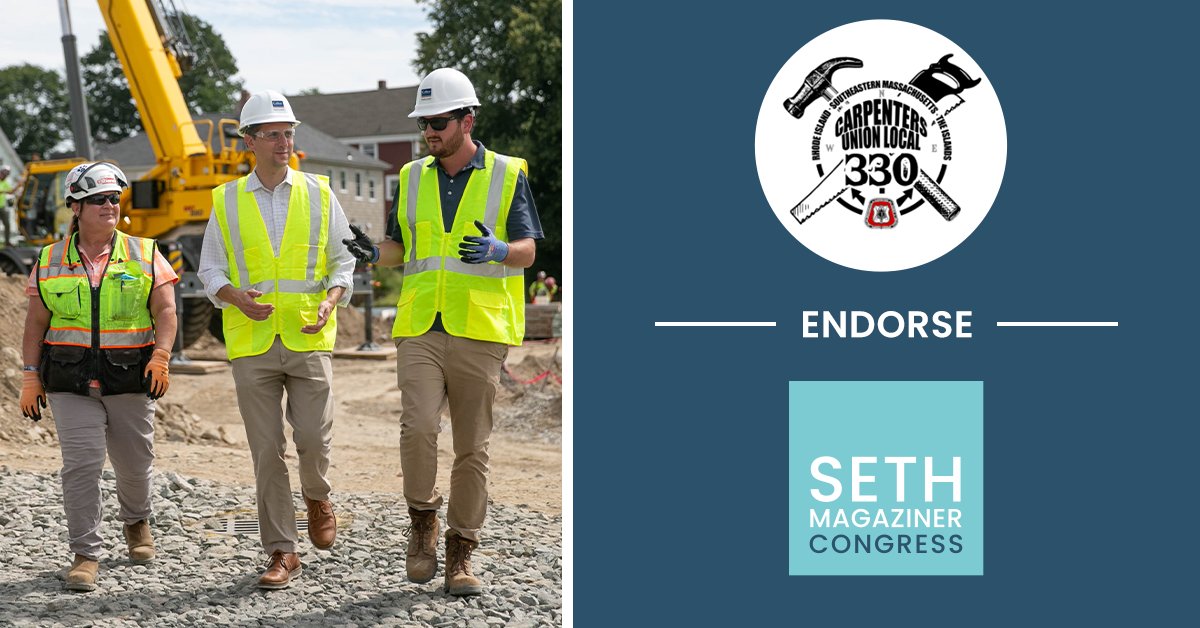
General Treasurer and congressional candidate Seth Magaziner was today endorsed by Carpenters Local 330, which represents over 1,000 Rhode Island workers.   

“Seth has put our people to work on construction projects all over the state and he understands that Carpenters and other tradesmen deserve good wages and safe working conditions,” said President for Carpenters Local 330 Michael Holmes. 

“Since taking office as Treasurer, he has created thousands of good-paying jobs across the state, supported our efforts to crack down on wage theft, and been a staunch advocate for expanding career and technical education and apprenticeship programs.  We are proud to endorse him.” 

Magaziner has used the Office of the General Treasurer in innovative ways to create jobs and improve Rhode Island’s schools. As the co-chair of the School Buildings Task Force, Magaziner led a $1.7 billion investment in repairing and replacing Rhode Island schools, creating spaces for a robust career and technical curriculum, and resulting in over 28,000 jobs statewide. In 2018, Magaziner also expanded the state’s Collegebound 529 Savings program to include apprenticeship programs. 

“I want to thank the Carpenters for their endorsement,” said General Treasurer and congressional candidate Seth Magaziner. “Carpenters build more than just structures- they are building the future of Rhode Island.  I have been honored to partner with them on building new schools and I will always have the backs of Rhode Island workers in Congress.”  

Earlier this week, Magaziner won the endorsement of Ironworkers Local 37 and Unite Here Local 26. Supporters are encouraged to visit sethmagaziner.com and to follow Magaziner’s campaign on Twitter, Facebook and Instagram.

Cool stuff

Futuristic coating for hospital fabrics and activewear kills COVID virus and E. coli

University of British Columbia

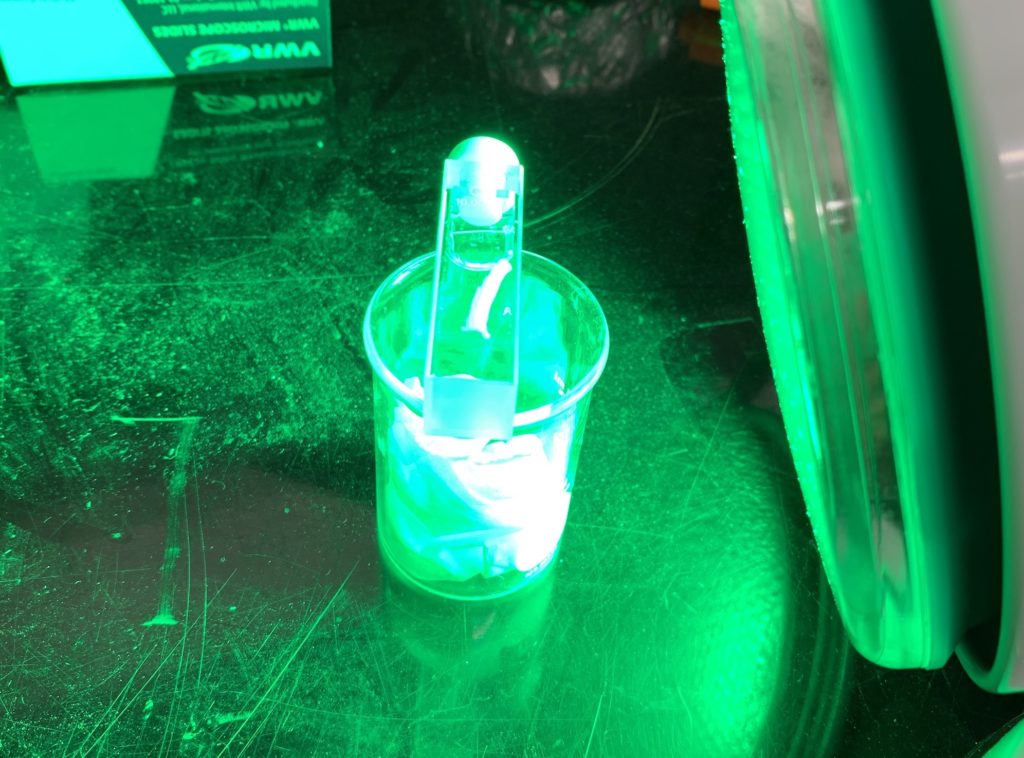
Material coated in polymer in small scale tests with a green lamp. Credit: Taylor Wright

UBC researchers have developed an inexpensive, non-toxic coating for almost any fabric that decreases the infectivity of the virus that causes COVID-19 by up to 90 per cent.

And in the future, you might be able to spray it on fabric yourself.

"When you're walking into a hospital, you want to know that pillow you're putting your head onto is clean," says lead author Taylor Wright, a doctoral student in the department of chemistry. "This coating could take a little bit of the worry off frontline workers to have Personal Protection Equipment with antimicrobial properties."

Lifetime of Knowledge Can Clutter Memories of Older Adults

Would "brain-washing" help?

By CELL PRESS 

When a person tries to access a memory, their brain quickly sifts through everything stored in it to find the relevant information. But as we age, many of us have difficulty retrieving memories. 

In a review publishing in the journal Trends in Cognitive Sciences today (February 11, 2022), researchers propose an explanation for why this might be happening: the brains of older adults allocate more space to accumulated knowledge and have more material to navigate when attempting to access memories. 

While this wealth of prior knowledge can make memory retrieval challenging, the researchers say it has its upsides—this life experience can aid with creativity and decision-making.