Toxic trash in our waterways
By Cynthia Drummond / ecoRI News contributor
 |
Quonochontaug Pond in Charlestown. Researchers at the University
of Rhode Island are assessing the extent of plastics pollution in
Narragansett Bay, as well as in fresh and saltwater ponds. |
Researchers from the University of Rhode Island are collecting
and analyzing microplastics in Narragansett Bay, coastal ponds,
Worden and Roger Williams Park freshwater ponds, and the Blackstone River, to
determine which types of plastics are most prevalent and where most of it can
be found.
At
an Aug. 15 presentation in Charlestown to members of the Salt Ponds Coalition, Ph.D. candidate Sarah
Davis said plastic debris, which is present in almost every waterbody, is an
environmental problem because so little plastic is recycled.
“It
is estimated that 13 million tons of plastic enter our oceans every year,” she
said. “You may have also heard the recent estimates that less than 10% of
plastic is actually recycled, when it does make its way into our global waste
systems. Also, our waste systems really just aren’t effective at handling
really small plastic debris.”
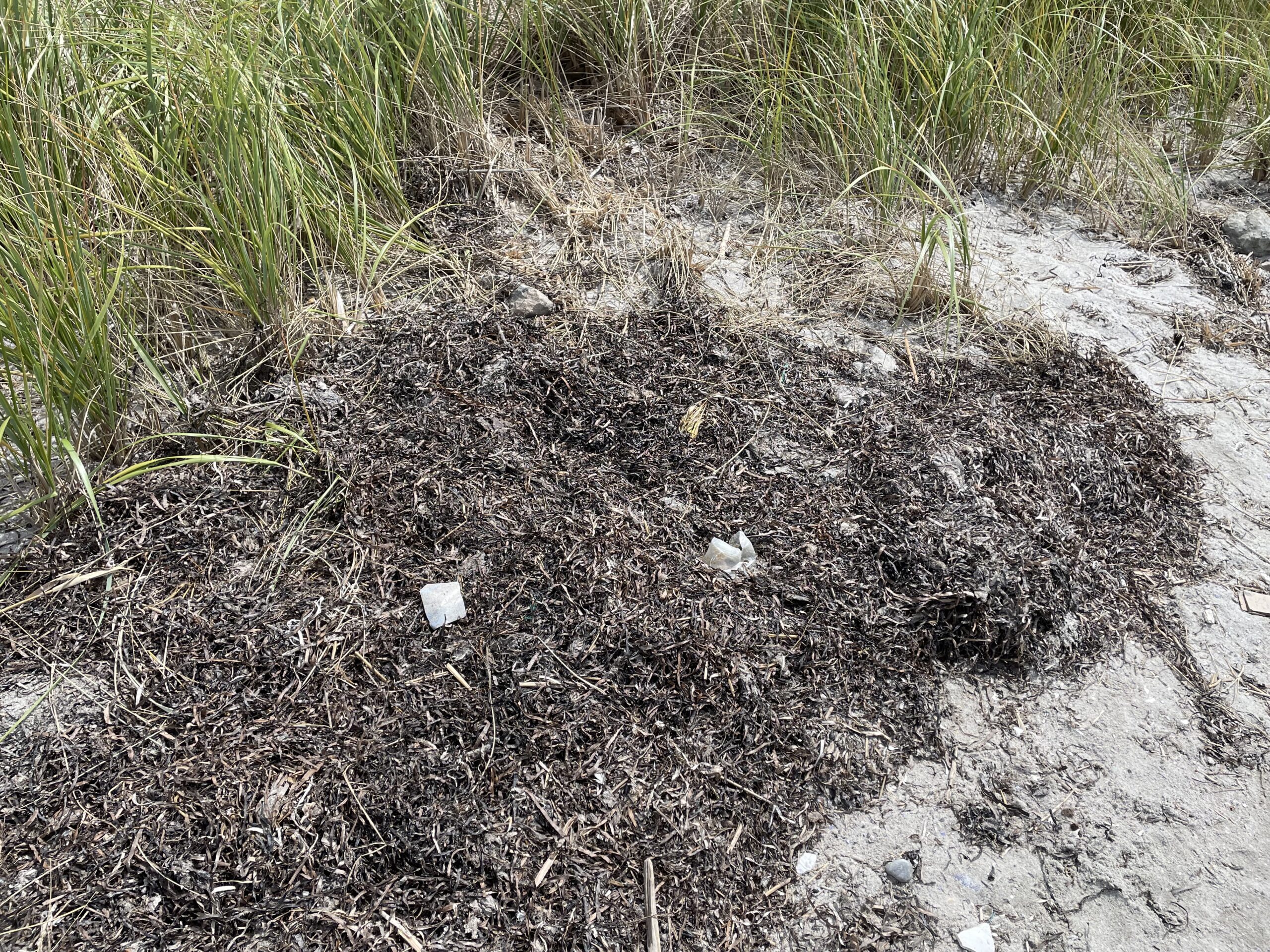 |
Plastic litter quickly breaks down into smaller pieces. These fragments,
called macroplastics because they are larger than 5 millimeters,
washed up in the seaweed at Quonochontaug Pond in Charlestown. |
Plastic
waste can be divided into two broad categories: macroplastics, such
as water bottles, that are larger than 5 millimeters, and microplastics, which measure from 5
millimeters to 1 micrometer.
Davis
described several sources of plastics entering Narragansett Bay and freshwater
bodies. One source, which might come as a surprise to many people, is clothing.
“Sewage-related
debris … is a major source of microplastic fibers from clothing and microbeads
from cosmetics,” she said.
“Much of our clothing is made of plastic. Polyester
is one of the main woven plastic materials that we use as a textile, and every
time we wash our clothes, we actually release thousands of fibers into the
wastewater that flows out of our washing machines, and if we’re attached to
local sewer systems, most wastewater treatment plants can’t filter out these
tiny fibers and they’re released at outflow points into our waterways.”