Menu Bar

Home           Calendar           Topics          Just Charlestown          About Us

Sunday, August 28, 2022

Wood River Health Services now has in-house pharmacy

Genoa Healthcare Opens New Pharmacy Within Wood River Health Services Hope Valley Location

Wood River Health Services and Genoa Healthcare leaders
celebrated the grand opening with a ribbon cutting and lunch.
On August 9, 2022, Genoa Healthcare held its grand opening of a new on-site pharmacy located within Wood River Health Services’ Hope Valley facility. The new pharmacy provides Wood River Health’s patients with a convenient option for filling prescriptions where they receive their medical, behavioral health and dental care.

Genoa Healthcare provides specialized pharmacy offerings to simplify the patient’s medication management, such as pre-filled pill organizers to help patients track their medications, convenient medication mailing options and assistance with authorizations and insurance plans.

URI Team Studying Microplastics in Local Waters

Toxic trash in our waterways

By Cynthia Drummond / ecoRI News contributor

Quonochontaug Pond in Charlestown. Researchers at the University
of Rhode Island are assessing the extent of plastics pollution in
Narragansett Bay, as well as in fresh and saltwater ponds.
Researchers from the University of Rhode Island are collecting and analyzing microplastics in Narragansett Bay, coastal ponds, Worden and Roger Williams Park freshwater ponds, and the Blackstone River, to determine which types of plastics are most prevalent and where most of it can be found.

At an Aug. 15 presentation in Charlestown to members of the Salt Ponds Coalition, Ph.D. candidate Sarah Davis said plastic debris, which is present in almost every waterbody, is an environmental problem because so little plastic is recycled.

“It is estimated that 13 million tons of plastic enter our oceans every year,” she said. “You may have also heard the recent estimates that less than 10% of plastic is actually recycled, when it does make its way into our global waste systems. Also, our waste systems really just aren’t effective at handling really small plastic debris.”
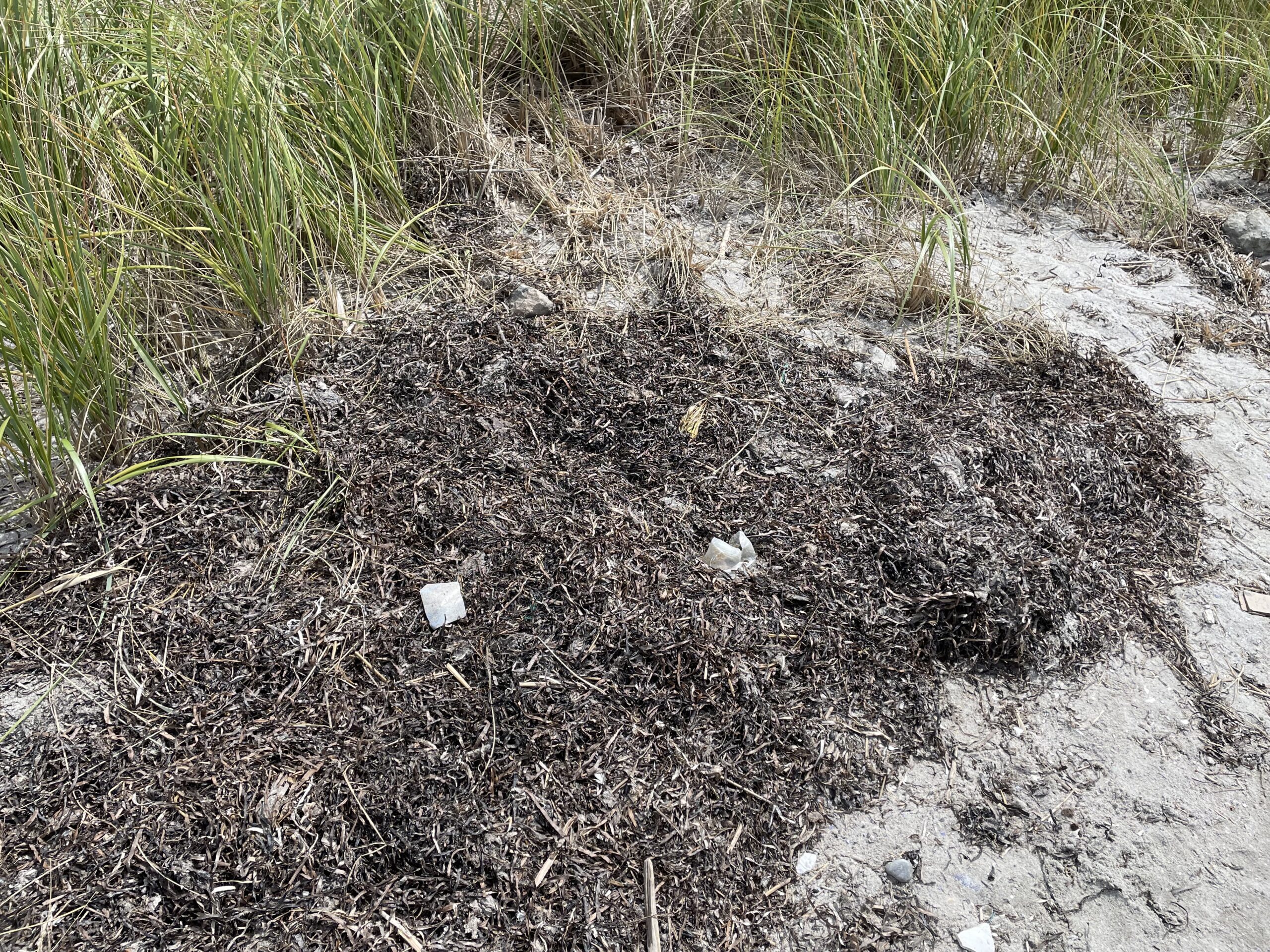
Plastic litter quickly breaks down into smaller pieces. These fragments,
called macroplastics because they are larger than 5 millimeters,
washed up in the seaweed at Quonochontaug Pond in Charlestown.
Plastic waste can be divided into two broad categories: macroplastics, such as water bottles, that are larger than 5 millimeters, and microplastics, which measure from 5 millimeters to 1 micrometer.

Davis described several sources of plastics entering Narragansett Bay and freshwater bodies. One source, which might come as a surprise to many people, is clothing.

“Sewage-related debris … is a major source of microplastic fibers from clothing and microbeads from cosmetics,” she said. 

“Much of our clothing is made of plastic. Polyester is one of the main woven plastic materials that we use as a textile, and every time we wash our clothes, we actually release thousands of fibers into the wastewater that flows out of our washing machines, and if we’re attached to local sewer systems, most wastewater treatment plants can’t filter out these tiny fibers and they’re released at outflow points into our waterways.”

Native Families' Right to Stay Together Is at Stake at the Supreme Court

Will Trump's Supreme Court majority allow revival of Indian boarding schools?

THEODORA SIMON for Speak Freely / ACLU

The Carlisle Indian Industrial School in Pennsylvania around 1890.
Photo from the Library of Congress
Since European settlers arrived on the shores of what is now known as the United States, federal and state governments, intent on seizing Indian lands, have sought to undermine and threaten the existence of tribes through the forced separation and assimilation of Native children. 

By severing Native children from their families, tribes, and culture, colonizers believed they could stamp out Indigeneity and erase tribal people altogether. As with any nation, the future ceases to exist if children are prevented from carrying on the languages, traditions, and knowledge passed down from each generation to the next.

This tool of assimilation and genocide has been wielded against tribal nations and Native children repeatedly throughout history, and it is happening again now.

The Indian Child Welfare Act (IWCA)—a law that aims to protect Native children from forced removal from their families, tribes, and culture and preserve tribal sovereignty—is currently under attack and at risk of being overturned by the U.S. Supreme Court. Congress passed ICWA in 1978 to address the nationwide crisis of state child welfare agencies tearing Native children from their families and placing them in non-Native homes, in an attempt to force Native children to assimilate and adopt white cultural norms. 

Before ICWA, public and private agencies were removing 25% to 35% of Native American/Alaska Native children from their homes, and 85% of those children were placed in non-Native households.

Overwhelming evidence has found that being removed from homes and disconnected from culture, tradition, and identity profoundly harms Native children. The Indian Child Welfare Act requires state courts to make active efforts to keep Native families together and to prioritize the placement of Native children within their families and within tribal communities—where their cultural identities will be understood and celebrated.

This November, the U.S. Supreme Court will hear oral arguments in Brackeen v. Haaland, a case that challenges the constitutionality of ICWA. If the Supreme Court rules ICWA unconstitutional, it could have devastating consequences for Native children, families and tribes while simultaneously putting the existence of tribes in jeopardy. 

Saturday, August 27, 2022

Another Crooked Bank?

A dozen locations in Rhode Island

By Phil Mattera for the Dirt Diggers Digest

When one large corporation is found to be breaking the law in a particular way, there is a good chance that its competitors are doing the same thing. The latest evidence of this comes in an announcement by the Consumer Financial Protection Bureau concerning U.S. Bank.

The CFPB fined the bank $37.5 million for illegally accessing credit reports and opening checking and savings accounts, credit cards, and lines of credit without customers’ permission. U.S. Bank employees were said to have done this in response to management pressure to sell more financial products and thus generate more fee revenue.

If this sounds familiar, it is exactly what came to light in 2016 regarding Wells Fargo, which was initially fined $100 million by the CFPB for the fraudulent practice and subsequently faced a wave of other legal entanglements, including a case brought by the U.S. Justice Department in which Wells had to pay $3 billion to resolve civil and criminal charges.

The U.S. Bank case has not yet generated the tsunami of outrage that accompanied the revelations about the phony accounts at Wells. Perhaps that is because it is the middle of the summer. Yet chances are that the CFPB’s enforcement action will not be the only punishment the bank will face.

Yeah, they sure do love the thin blue line


Go Joe!


Act now if you want a free shade tree

1,000 Free Trees Available for Fall Planting through Energy-Saving Tree Program

The Department of Environmental Management (DEM), along with the RI Tree Council, The Rhode Island Nursery and Landscape Association, and the Arbor Day Foundation, is providing 1,000 free trees to Rhode Island residents this fall through the Energy-Saving Trees program. Registration opened yesterday Friday, August 26. 

Now in its 13th season, this popular program helps Rhode Islanders save energy and lower their utility bills by strategically planting trees on their property.

"Planting trees in our neighborhoods makes them greener and provides shade to keep people cooler and healthier in hot weather. These are investments in our communities and the quality of life throughout Rhode Island, particularly in our cities. From an environmental perspective, planting a tree in the right place can improve air quality, capture and store carbon, and help manage stormwater runoff," said DEM Director Terry Gray. 

"It's a terrific way for Rhode Islanders to reduce their energy costs today and in the years to come, and a tangible way to stand up to climate change. Fall is an ideal time to plant a tree because the cooler temperatures help encourage new root growth."

Top 10 Health Benefits of Mushrooms, the Ultimate Superfood

However, be VERY careful about eating wild mushrooms

By SCITECHDAILY.COM 

There are several types of mushrooms that have unique and beneficial properties. They’re low in calories and fat but packed with vitamins, minerals, and bioactive compounds such as beta-glucans. Mushrooms are a storehouse of amazing nutrients, vitamins, and minerals that have been recognized for their health benefits. They are a thorough source of fiber (which helps keep you full), antioxidants, and minerals like potassium.

You can do your own research at the National Library of Medicine, part of the National Institutes of Health website. This information is discussed here with studies and their results. A serving of mushrooms provides about 20% of the daily value for vitamin D and B6 as well as some copper. In addition to being excellent sources of fiber, they’re also good sources of selenium, zinc, and manganese along with a variety of other vitamins and minerals. Here are the top 10 health benefits of mushrooms you should know:

1. Mushrooms can help with weight loss

Mushrooms are a great low-calorie, low-fat alternative to meat. They also have a high water content and are low in calories. Mushrooms are about 90% water and have about 3 calories per half cup. Mushrooms have a pectin high content, a soluble fiber that slows down digestion, helping you feel fuller for longer. They are also low in fat and rich in protein. Mushrooms are an excellent source of copper, a mineral that helps you metabolize fat. Copper is also an essential mineral for healthy hair. Copper-rich foods like mushrooms contribute to collagen formation in the skin, which is important for healthy, glowing skin.

Here's something Ashley Kalus, Sarah Morgenthau and John Pacheco should read

Dr. Oz should be worried – voters punish ‘carpetbaggers,’ and new research shows why

Charles R. HuntBoise State University

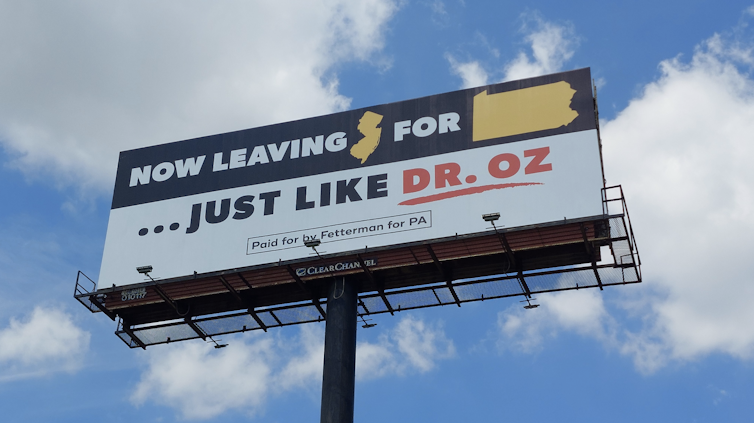
A Fetterman campaign billboard on the New Jersey/Pennsylvania border.
 Fetterman campaign/Twitter
Pennsylvania’s U.S. Senate race between Democrat John Fetterman and Republican Mehmet Oz has garnered a lot of media attention recently, thanks to the Fetterman campaign’s relentless trolling of his opponent, mainly for being a resident of neighboring New Jersey rather than the state he’s running to represent.

Fetterman has run ad after ad using Oz’s own words to highlight his deep Jersey roots. His campaign started a petition to nominate Oz for the New Jersey Hall of Fame. Fetterman even enlisted very-Jersey celebrities like Snooki of “Jersey Shore” to draw attention to his charge that Oz is a carpetbagger in the Pennsylvania race: a candidate with no authentic connection to an area, who moved there for the sole purpose of political ambition.

Fetterman’s attacks against Oz may be entertaining, but they aren’t unprecedented. Such characterizations can be helpful in elections.

Sen. Jon Tester, a Democrat, won a tight race in Montana in 2018 in part by dubbing his out-of-town opponent “Maryland Matt.” Democrat Joe Manchin has held on for so long to a Senate seat in a deep red state by “play[ing] up his West Virginia roots.” Meanwhile, Maine Democrat (and native Rhode Islander) Sara Gideon got caught – and derided for – sporting a Patagonia fleece in a state that famously is home to L.L. Bean. She lost to Maine native Susan Collins in the 2020 Senate race even as Joe Biden carried the state by nine points.

Given how heavily defined modern congressional elections are by partisanship and by the increasing focus on national rather than local issues, is this kind of messaging actually effective as a campaign strategy?

Do voters really still punish carpetbaggers and reward candidates with deep ties to their districts?

Friday, August 26, 2022

It's going to take all of us

The Federal Government Alone Won’t Save Us from Climate Change

By Rachael Lyle

On the morning of June 30, the last day of a U.S. Supreme Court term that oversaw disastrous decisions on guns and abortion, the Court issued its long-awaited opinion in West Virginia v. Environmental Protection Agency. 

To the chagrin of environmental and pro-regulation groups alike, the Court’s devastating and regressive ruling severely hampered the EPA’s authority to restrict greenhouse gas emissions from power plants, weakening the ability of the federal agency to take significant action on major issues such as climate change.

A few weeks after the Court’s ruling, the United Kingdom broke its highest-ever temperature record, and the normally temperate Pacific Northwest saw several heat-related deaths — all while heat waves, droughts, wildfires, and floods continue to batter the globe. It is abundantly clear that we are feeling the effects of climate change right now. And climate scientists have repeatedly warned us that things will only get worse if governments fail to act.

Fortunately, West Virginia v. EPA does not limit the authority of states, cities, and local municipalities to wean themselves off fossil fuels. Given the state of the Supreme Court and industry-backed efforts to delay action on federal climate legislation, states and local authorities must urgently move forward in tackling the crisis. It’s clear that the federal government has not been up to the task.

While the Inflation Reduction Act, which recently passed the Senate and includes significant funding for climate and energy programs, might provide some hope, we cannot rely solely on Congress. That’s been made evident over the last 18 months as West Virginia Sen. Joe Manchin (who had holdings last year valued at up to $5 million in the coal brokerage business that he founded) had continually delayed negotiations on a bipartisan infrastructure bill aimed at reducing fossil fuel emissions until, on the evening of July 27, he reversed course. The deal was struck after congressional staffers staged a sit-in outside of Sen. Chuck Schumer’s office demanding that he immediately restart negotiations on climate action.

Continued pressure, whether it be from congressional staffers or everyday citizens, will be vital in securing additional climate policies. We already have a blueprint for public action to protect public health and the environment: from collective action like that of the Standing Rock Sioux Tribe to the work of individuals like Rhiana Gunn-Wright, an architect of the proposed Green New Deal, and climate scientists themselves, we have seen how the public can transform climate policies.

The FBI affidavit for Mar-A-Lago search as been released


Republicans complaining about student loan relief took millions in debt relief themselves

Here are Republican members of Congress who received debt forgiveness for loans that took out under the pandemic relief Paycheck Protection Program (PPP): 


Environment Rhode Island sues Kenyon Industries to stop Pawcatuck River pollution

Kenyon Industries’ textile mill has violated toxic pollution limits for years


The non-profit group Environment Rhode Island announced on August 24 that it has filed a lawsuit against Kenyon Industries, Inc., and its parent company, Brookwood Companies Incorporated, for alleged violations of the federal Clean Water Act at their textile mill in Kenyon, Rhode Island.

Kenyon (d/b/a Brookwood Finishing) operates what it calls a “state of the art” textile manufacturing facility that straddles the Pawcatuck River in southern Rhode Island, less than a quarter mile upstream of Horseshoe Falls. Environment Rhode Island seeks to put an end to what it says is more than a decade of illegal discharges from the facility into the river.

The complaint, filed on August 23, alleges that the mill has violated the Clean Water Act 1,784 times since 2017, routinely discharging wastewater with more than two-and-a-half times the permitted concentrations of copper, a toxic pollutant.   

Two surprising reasons behind the obesity epidemic

Too much salt, not enough water

Richard JohnsonUniversity of Colorado Anschutz Medical Campus

Salty french fries may taste good, but they just contribute 
to dehydration and obesity. William Voon/EyeEm via Getty Images

Scientific studies and media coverage are rife with warnings on how sugar, carbohydrates, saturated fat and lack of exercise contribute to obesity. And tens of millions of Americans are still overweight or obese in large part because of the classic Western diet and lifestyle.

As an educator, researcher and professor of medicine, I have spent more than 20 years investigating the causes of obesity, as well as related conditions such as diabetes, high blood pressure and chronic kidney disease.

Throughout my many years of studying obesity and related health conditions, I’ve observed that relatively little is said about two significant pieces of this very complex puzzle: lack of hydration and excessive salt intake. Both are known to contribute to obesity.

1 in 10 teachers say they’ve been attacked by students

Teachers deserve respect and a safe work environment

Charles BellIllinois State University

Physical assaults against educators are on the rise.
 Hal Bergman Photography via Getty Images
Ten percent. That’s the portion of K-12 teachers in the United States who say they’ve been physically attacked by a student, a new survey has found.

Various news outlets have reported what has been described as a “wave of student misbehavior” since students returned from remote learning to in-person instruction. 

The purported surge in student misconduct is part of an upward trend in student assaults on teachers. The percentage of teachers who have been attacked by students has increased from 6% to 10% over the past decade, federal data shows.

As school districts across the country report critical shortages in teaching staff, some people worry that the attacks on teachers might push qualified candidates away from the profession. Such concerns are well founded.

In my research interviews with high school teachers who were attacked by students, I learned from teachers firsthand that these assaults have a negative effect on their morale and make them want to leave their jobs.

As I point out in my book “Suspended: Punishment, Violence, and the Failure of School Safety,” attacks are leaving teachers traumatized. In some cases, educators told me they started illegally carrying guns to school after they were attacked.

Teachers also told me they feel as if principals don’t have their backs. In fact, several teachers who have been attacked by students expressed fear of retribution from administrators.

Why would a principal not support a teacher for reporting being attacked? Teachers informed me the principals were worried about their schools getting a bad reputation, which could make it harder to recruit new teachers and students. At least one school in my study could not recruit substitute teachers because the school had a reputation for violence between students and staff.

When teachers reported to principals they had been victimized by students, the principals would minimize their concerns, according to the teachers. The principals would also shift the focus to what the teacher did or didn’t do leading up to the attack.