Wednesday, August 2, 2023
Neronha wants shoreline access lawsuit thrown out
Says the beach front property owners' lawsuit is fatally flawed
By Nancy Lavin, Rhode Island Current

So said Attorney General Peter Neronha, whose office filed a motion in U.S. District Court for the District of Rhode Island on Monday seeking to dismiss the lawsuit.
The new law, signed by Gov. Dan McKee in June, attempted to clarify a decades long dispute over where to draw the line in the sand, allowing public access to the beach anywhere 10 feet landward from the high tide or “wrack” line.
Weeks later, a group of shoreline property owners known as the Rhode Island Association of Coastal Taxpayers sued Neronha and other state agencies, contending the law amounted to an unconstitutional “taking” of their property and asking for a judge to immediately stop them from enforcing the law.
Neronha’s office countered in the 58-page filing that the taxpayers group failed to identify any individual members who have been harmed by the state law clarifying public beach access. Even David Welch, president of the taxpayers group, doesn’t qualify because the Charlestown beachfront home is owned by a limited liability company, not Welch himself, Neronha’s office said.


Coastal landowners seek injunction against new beach access law
They want to block the new law right now
By Rob Smith / ecoRI News staff

The Rhode Island Association of Coastal Taxpayers (RIACT),
a 50-member coalition of beach and waterfront property owners, filed a preliminary injunction July
25 in U.S. District Court to stop state authorities from enforcing the law the
General Assembly passed and the governor signed last month.
The new law moved the rights of legal access for Rhode Island beachgoers — as guaranteed in the state Constitution — from the mean high-water line (MHW) to 10 feet landward of the lowest seaweed line that can be found on the shore.
It only impacts lateral access, allowing people to walk
up and down the shore contiguously. Getting to the shore, called perpendicular
access, is another matter entirely.
The MHW line posed problems for beachgoers and private
property owners, as its only discernible with scientific surveying equipment
and nearly 20 years of tidal data. The boundary was not only impossible to see
with the naked eye, it also was often underwater, and it frequently moved,
making the rights to “enjoy the privileges of the shore” illusory, according to
lawmakers.
In the recently filed brief, part of a larger lawsuit that
seeks to overturn the new law, RIACT’s attorneys Daniel Procaccini and J. David
Breemer argued the new law was an illegal seizure of private property and a
Fifth Amendment violation by the state because of the public easement it placed
on all coastal land. Furthermore, according to the group’s attorneys, RIACT has
no other legal remedy but an injunction until its lawsuit plays out in court.
How Omega-3 Fatty Acids Promote Lung Health
The Breath of Life
By NATIONAL HEART, LUNG AND BLOOD
INSTITUTE
 |
| Omega-3 fatty acids, prevalent in fish and fish oil, show promise for maintaining lung health, according to a comprehensive study supported by the National Institutes of Health. |
The study provides the strongest evidence to date of this association and underscores the importance of including omega-3 fatty acids in the diet, especially given that many Americans do not meet current guidelines.
Funded largely by the National Heart,
Lung, and Blood Institute (NHLBI), part of NIH, the study results were
published in the American Journal of Respiratory and Critical
Care Medicine.
6 ways AI can make political campaigns more deceptive than ever
Will AI be used to rig the 2024 election?
David E. Clementson, University of Georgia |
| AI-generated "deep fakes" can be vicious or very funny |
Bush never said such a thing.
The next day Bush responded by releasing an ad saying Kerry “supported higher taxes over 350 times.” This too was a false claim.
These days, the internet has gone wild with deceptive political ads. Ads often pose as polls and have misleading clickbait headlines.
Campaign fundraising solicitations are also rife with deception. An analysis of 317,366 political emails sent during the 2020 election in the U.S. found that deception was the norm.
For example, a campaign manipulates recipients into opening the emails by lying about the sender’s identity and using subject lines that trick the recipient into thinking the sender is replying to the donor, or claims the email is “NOT asking for money” but then asks for money. Both Republicans and Democrats do it.
Campaigns are now rapidly embracing artificial intelligence for composing and producing ads and donor solicitations. The results are impressive: Democratic campaigns found that donor letters written by AI were more effective than letters written by humans at writing personalized text that persuades recipients to click and send donations.
And AI has benefits for democracy, such as helping staffers organize their emails from constituents or helping government officials summarize testimony.
But there are fears that AI will make politics more deceptive than ever.
Here are six things to look out for. I base this list on my own experiments testing the effects of political deception. I hope that voters can be equipped with what to expect and what to watch out for, and learn to be more skeptical, as the U.S. heads into the next presidential campaign.
Tuesday, August 1, 2023
Housing is a basic human right
Our government should start treating it that way.
By Farrah
Hassen | July 19, 2023

The pandemic revealed the full extent of the U.S. housing
crisis. Where were the roughly 580,000 people living unhoused in 2020 to go
under “stay at home” orders? And what about those facing eviction?
At the same time, the pandemic proved that federal
intervention could ease the crisis. Eviction moratoria and unemployment relief
helped keep more people housed, fed, and secure. But these initiatives ended
too quickly.
Lifting federal pandemic eviction protections in 2021 put
as many as 17 million people at risk of becoming
unhoused. And last year, the number of unsheltered individuals increased by 3.4 percent from 2020 — and many
times that in some areas.
There’s a misconception that homelessness
is primarily caused by addiction and mental illness. But a
new study in California
— where over 171,000 people experience homelessness
every day — found that poverty and high housing costs are the
driving forces.
The median monthly income for people who became homeless
was just $960, the University of California, San Francisco (UCSF) report found.
Prior evictions, poor credit history, and systemic discrimination further prevent
people from re-entering housing — and even shorten their life expectancy.
These are national problems. Nearly half of all tenants now spend
30 percent or more of their income on rent, which has risen 18 percent nationally over the past
five years.
Housing is fundamental to every person’s life, health,
and security. We need to recognize it as a human right and transform our
country’s approach. While this may sound lofty, it’s not as far-fetched as
it seems.
International law already treats housing as a human
right.


The sound of silence?
Researchers demonstrate people hear it
Johns Hopkins University
Silence might not be deafening but it's something that literally can be heard, concludes a team of philosophers and psychologists who used auditory illusions to reveal how moments of silence distort people's perception of time.
The findings address the debate of whether
people can hear more than sounds, which has puzzled philosophers for centuries.
"We typically think of our sense of
hearing as being concerned with sounds. But silence, whatever it is, is not a
sound -- it's the absence of sound," said lead author Rui Zhe Goh, a Johns
Hopkins University graduate student in philosophy and psychology. "Surprisingly,
what our work suggests is that nothing is also something you
can hear."
Good for Your Health and the Climate
The Power of a Plant-Based Diet
By EUROPEAN SOCIETY OF CARDIOLOGY

According to a comprehensive evaluation of randomized trials published since 1982, both vegan and vegetarian diets are associated with decreased cholesterol and fat levels in the bloodstream.
This research, which was published in
the European Heart Journal, indicates that plant-based
diets can significantly contribute to the reduction of arterial blockages. This
consequently decreases the risk of cardiovascular diseases including stroke and
heart attacks, as per the authors of the study.
August 19 School Supply Giveaway Party at the Jonnycake Center of Westerly
Wood River Health and the Jonnycake Center of Westerly join to help parents

This second annual event will take place on Saturday, August 19 from 10am to noon in the Jonnycake Center of Westerly’s rear parking lot at 23 Industrial Drive in Westerly. The event is sponsored in part by Neighborhood Health Plan of Rhode Island.
After recognizing the importance of school preparedness, local organizations have come together for a second year to provide children with backpacks, school supplies, and educational items to ensure the school year starts strongly for all. Musical entertainment will be provided by WBLQ AM 1230, and there will also be games, face painting, craft tables and a visit by a firetruck!
Families are invited to the event at the Jonnycake Center of Westerly’s rear parking lot at 23 Industrial Drive on Saturday, August 19 between 10am and noon to receive a free backpack that comes filled with essentials needed for school. The backpacks will be distributed on a first-come, first-served basis.
Monday, July 31, 2023
What's behind your new Charlestown property tax bill?
Higher assessments and lower tax rate and other important tax issues
By
Will Collette
 |
| A Connecticut couple bought this Charlestown property in May of last year for $9,500,000. It is currently assessed at $9,187,800 |
That bill comes due tomorrow, August 1.
This
phenomenon of rising home assessments, not to mention higher infrastructure
costs, caused by non-resident homeowners, is common along the shoreline.
This year’s town
budget passed with almost no drama, unlike previous years where voters had
to contend with financial improprieties (e.g., the $2 million
“oopsie”),
audit flags for
budget mismanagement,
shady land deals and false claims from the Charlestown
Citizens Alliance
(CCA) that the only thing that matters is the town’s low tax rate.
This
year, the tax rate plummeted largely due to mega-million real estate buys by rich
people from out of state that pushed up nearly
everyone’s property assessments. Yes, homes went up in valuation, though
that hardly translates into money in your pocket though it does mean added tax costs out of your pocket.
 |
| $1,000,000+ purchases in Charlestown since the first of the year |
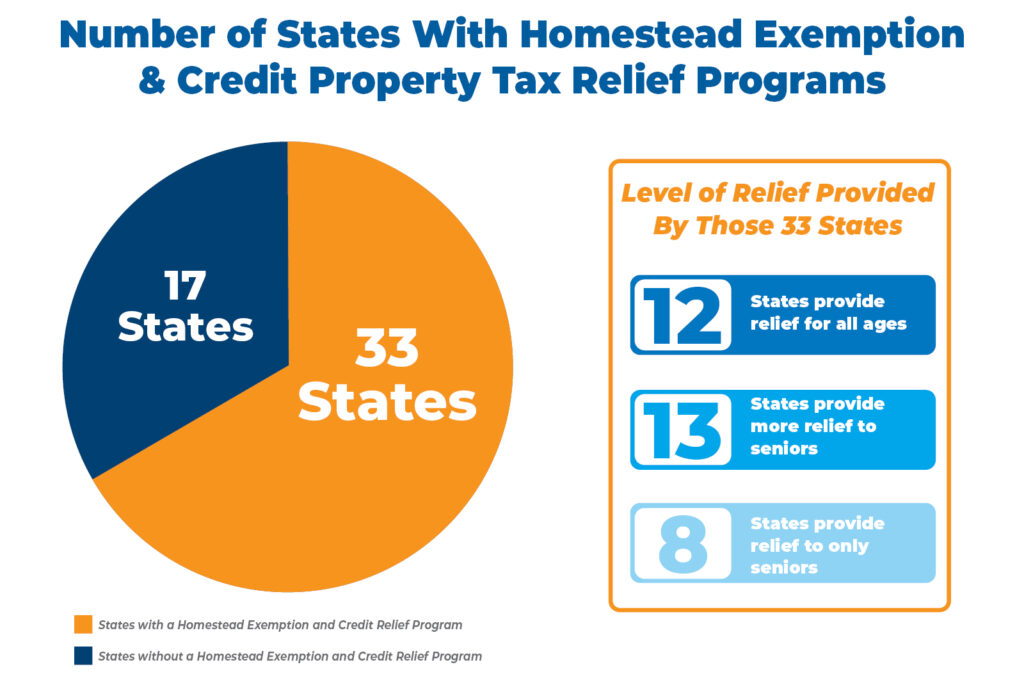 |
| Rhode Island IS one of the states but municipalities have to apply. Providence does. So does Newport. And Narragansett, North and South Kingstown. But NOT Charlestown, thanks to the CCA. |
It has
led many of our neighbors (e.g. South Kingstown, Narragansett, North Kingstown and even Newport) to institute
“Homestead” tax breaks to compensate full-time residents for this cost.
Other
than Charlestown’s two
fake fire districts
– Central Quonochontaug and Shady Harbor, who
pay little or no tax on the tens of millions of dollars of real estate they own
– the rest of us received assessment revaluations averaging around 50%.
 After
that audit, Marcum LLP tried to pile on an outrageous extra charge of $55,992 even
though they knew going in that the audit was going to be complicated by the
mess left behind by the old CCA Town Council majority and ex-Town
Administrator Mark Stankiewicz.
I
cannot fathom how ChurchWoods got on the list. They are a small, affordable
housing complex for low to moderate income senior citizens.
Not
Charlestown, though – the CCA bitterly opposed a
proposal from town Democrats for a Homestead Tax Credit. I think it’s
an idea that should be revisited.
 |
| Central Quonnie's 4+ acre tennis club, assessed at $130,100 |
Neither “fire
district” actually fights fires. They use their property like a
homeowners’ association with private beaches, water systems, recreational
facilities including a tennis club and more. If they paid tax on their
properties at fair market value, it would further reduce everyone’s taxes. But
under this outrageous system, it’s the taxpayers who are subsidizing these fake
fire districts.
I have a proposal: strip fire districts that have no capacity to fight fires of their tax-favored status. Make them pay like the rest of us.
Use the new revenue to address
Charlestown’s chronic shortage of volunteer firefighters by
offering a generous annual tax break. There may even be enough money gained to
jumpstart a Homestead tax credit.
I
know some families have more than one firefighter in the household. No problem.
Let the family accumulate the credits. Under our existing tax policies,
veterans are allowed to accumulate more than one tax credit, and no one seems
to have a problem with that. If a firefighter doesn’t own a home, let the credit
be applied to car tax, or be rebated directly.
So,
now back to property values and finances….
The assessment of our North of One house and land increased by 65%. But, despite that huge jump in assessment, our total tax went up by only $793 due to the new tax rate.
You can run the numbers for your own property using Tax Assessor Ken
Swain’s handy new data page HERE. Ken and his staff did a great job
of presenting the new tax data in a user-friendly way.
In
keeping with its obligation to present a balanced budget, the big rise in the
total value of taxable property was largely offset by dropping the tax rate
from $8.17 per $1000 last year to $5.74 this year, almost 30%.
To
get to this point, Charlestown had to go through a painful audit with a new
firm, Marcum LLP. They replaced our old auditors who resigned rather than be
fired after large scale financial mismanagement came to light. The Marcum LLP audit spotlighted
significant defects in the way the CCA-run town government managed our
money.

The
new Town Council majority
(CRU) refused to pay and negotiated the bill down to a fraction of what it was ($18,000) and then fired
Marcum LLP.
Shortly
after that, the federal Securities and Exchange Commission released a statement
noting that Marcum LLP had committed “systemic quality control failures” and
agreed to pay a $10 million fine. From the SEC’s June 21,
2023 news release:
The Securities and Exchange Commission today charged audit firm Marcum LLP with systemic quality control failures and violations of audit standards in connection with audit work for hundreds of special purpose acquisition company (SPAC) clients beginning at the latest in 2020. The SEC’s order also found that Marcum’s deficiencies were not limited to SPAC clients, but they reflected systemic quality control failures throughout the firm. Marcum agreed to pay a $10 million penalty to settle the charges.
I
am not privy to Charlestown’s internal legal strategy, but I would hope they
are considering moves to recover the $18,000 we paid Marcum to settle their
$55,992 bill for extra work.
Based
on Charlestown’s bad experience with Marcum LLP plus the SEC charges, the Chariho School Committee
voted 11-0
to terminate their contract with James Wilkinson of Marcum LLP.
There was one abstention: CCA-sponsored School Committee member Donna Chambers who has yet to publicly explain why she abstained on such a no-brainer.
Maybe she
had not received her instructions on how to vote from the CCA Steering
Committee (or forgot what they were).
A deeper dive into
taxes and property values
Real estate data
firm Stacker currently rates Charlestown as the 12th most expensive
area
in the metro area with a “typical” home value of $604,442. Over the past five
years, home prices in Charlestown grew by 54.8%, up $213,959.
A
couple months ago, the Providence Journal
published an article
listing the top 30 taxpayers in Charlestown. Spoiler alert: neither the Quonnie
or Shelter Harbor fake fire districts made the list.
All
but one are multi-million dollar seaside estates.
Here’s
is the Journal’s list of top
Charlestown taxpayers:
1. Joseph N. Walsh III & Barbara Walsh, 21 Dowd Drive
— $55,540. Besides its seven bedrooms and seven bathrooms, this estate has a separate
one-bedroom, 1,600 house on its 2.78 acres. The property was assessed at $6.8
million.
2. 264 East Beach Holdings, 264 East Beach Rd. — $47,644.
This seven-bedroom, seven-bathroom house has an inground pool on 4.57 acres. The property was assessed at
$5.8 million.
3. H. David & Tracy L. Overbeeke, 648A West Beach Rd.
— $41,671. This four-bedroom, three-bathroom house has an 816-square-foot detached garage on 2.12 acres. The property
was assessed at $5.1 million.
4. Dowd Drive Realty Trust, 27 Dowd Drive — $37,656. This three-bedroom, two-bathroom house sits on 0.72 acres. The property was assessed at $4.9 million.
5. Stephen H. Long Revocable Trust, 38 Ninigret Ave. —
$35,664. This four-bedroom, four-bathroom house sits on 0.89 acres. The property was assessed at $4.4 million.
6. Dolores Cusson Qualified Personal Trust, 93 Surfside
Ave. — $34,746.
7. Brooke N. Muggia Revocable Trust, 75 Surfside Ave. —
$32,361. 85
8. Surfside Avenue LLC, 85 Surfside Ave. — $31,879.
9. Kelly Hickey Crawford Revocable Trust, 165 Surfside
Ave. — $31,060.10.
10. Gregory B. Howey Surfside Qualified Personal Trust,
109 Surfside Ave. — $30,956.11.
11. Joan B. Gurney Life Use, 25 Dowd Drive — $30,728.12.
12. Timothy A. & Beverly C. Holt, 175 Surfside Ave. —
$30,590.13.
13. Sean H. Reynolds, 159 Surfside Ave. — $30,433.14.
14. Jeffrey W. & Kathryne A. Gardner, 89B South
Arnolda Rd. — $30,262.15.
15. 2016 Rhode Island Trust, 179 Surfside Ave. — $30,181.16.
16. Denis G. & Nancy A. Gagnon, 3 Wells Lane — $29,033.17.
17. Charles A. Glew, 5790B Post Rd. — $28,602.18.
18. Thomas C. Uger, 75 Ocean View Ave. — $28,062.19.
19. 101 Surfside LLC, 101 Surfside Ave. — $27,880.20.
20. Laura A. More Revocable Trust, 34 Ninigret Ave. —
$27,83421.
21. Alexander S. Ehrlich Revocable Trust, 187 Warren Rd.
— $27,616.22.
22. Robert K Miller III Revocable Living Trust, 182
Surfside Ave. — $27,365.23.
23. Keith W. & Catherine A. Swaby, 137 Southern Way —
$27,118.24.
24. Roberta Peet, 57 Surfside Ave. — $26,854.25.
25. Brian J. & Tiffany S. Van Elsander, 89 Surfside
Ave. — $26,588.26.
26. DLM Ninigret Cove Trust, 209 Cove Point West —
$26,491.27.
27. Kimberly G.F. & Robert P. Anderson, 335 West
Beach Rd. — $26,427.28.
28. Martha G. Kellogg Personal Residence Trust, 153
Surfside Ave. — $26,378.29.
29. James P. & Lisa M. McConnell, 359 West Beach Rd.
— $25,974.30.
30. ChurchWoods LLC, 4110 Old Post Rd. — $25,936
 |
| ChurchWoods. Their assessment is thirty times higher than Quonnie's tennis club. Both properties are just above 4 acres |
It was built on
land from the Episcopal Diocese of Rhode Island. Their assessed value for Charlestown tax purposes is $3,964,200. Compare that to Central Quonnie's tennis club (see above) appraised at only $130,100.
That they should be on the
list and not the Central Quonnie or Shady Harbor (fake) Fire Districts is disgusting.
I don’t mind paying taxes, but I am outraged at unfair taxation. I’ve written about numerous instances of CCA-driven tax inequities. The CCA leadership knew about them, but over their decade of power over Charlestown’s affairs, they not only did nothing but made the inequities worse. I suggest this is a subject our new town leadership should examine closely and then take action.

Subscribe to:
Posts (Atom)