Menu Bar

Home           Calendar           Topics          Just Charlestown          About Us

Monday, September 4, 2023

Work or die

Precarious employment conditions can increase risk of early death

Karolinska Institutet

People without a secure job contract can reduce their risk of premature death by 20 per cent if they gain permanent employment, a study from Karolinska Institutet published in The Journal of Epidemiology and Community reports. According to the researchers, the results indicate that job security on the Swedish labour market needs to improve.

Precarious employment is a term that is used to describe jobs with short contracts (e.g. temping), low wages and a lack of influence and rights, all of which lead to a working life without predictability and security.

In the present study, the researchers have examined how this affects the risk of death.

Live long and prosper

8 Habits That Could Extend Your Life by Decades

By  

A new study involving over 700,000 U.S. veterans reports that people who adopt eight healthy lifestyle habits by middle age can expect to live substantially longer than those with few or none of these habits. 
The eight habits are: 
  1. being physically active, 
  2. being free from opioid addiction, 
  3. not smoking, 
  4. managing stress, 
  5. having a good diet, 
  6. not regularly binge drinking, 
  7. having good sleep hygiene, and 
  8. having positive social relationships.

According to the results, men who have all eight habits at age 40 would be predicted to live an average of 24 years longer than men with none of these habits. For women, having all eight healthy lifestyle factors in middle age was associated with a predicted 21 additional years of life compared to women with none of these habits.

Can autoworkers draw from their history?

What would Walter Reuther do?


UAW President Walter Reuther, center, shakes hands with
 a Ford executive after agreeing on a three-year contract
in 1967. Bettmann via Getty Images
The United Auto Workers are engaged in high-stakes labor negotiations that could lead to the union’s first simultaneous strike against all of Detroit’s Big Three automakers: General Motors, Ford and Stellantis, the company that owns Chrysler.

After decades of making concessions to their employers, the union’s demands for pay increases and better benefits exceed what some automotive industry executives say are reasonable

Unless the two sides reach an agreement by midnight on Sept. 14, 2023, 97% of the 150,000 UAW members employed by the three companies have authorized their leaders to call a strike.

It would be the industry’s first walkout since a monthlong GM strike in 2019. UAW President Shawn Fain, elected in March 2023, and other new UAW leaders have a decidedly more militant approach than their recent predecessors – some of whom landed in prison after being convicted of embezzling union funds.

As a labor and business scholar who has studied the history of UAW collective bargaining with the Detroit Three, I believe that whether or not the union does hold a strike against one or more of the automakers in the near future, it would benefit from heeding some lessons from its own past. 

In particular, it should consider the legacy of Walter Reuther, the labor leader who served as the UAW’s president from 1946 until his death in 1970. By balancing his vision and aspirations with pragmatism, Reuther showed that bold labor leaders can score big wins.

Sunday, September 3, 2023

Workers know what's right and in their interests

Workers like it when their employers talk about diversity and inclusion

Rita Men, University of Florida

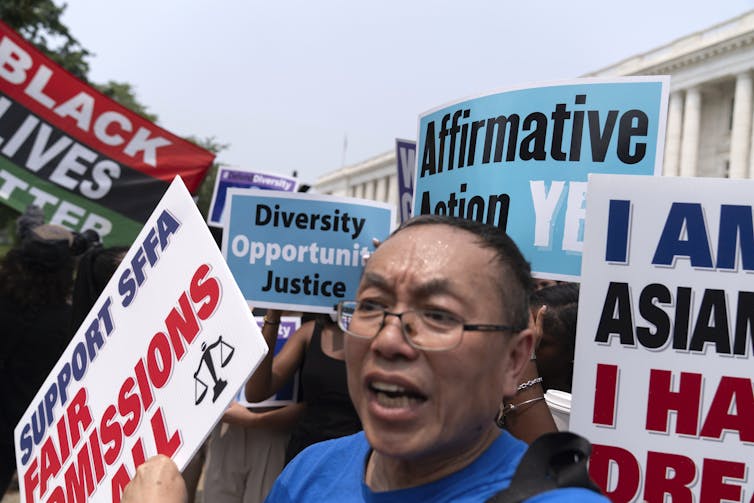
a woman holding a sign protests outside of the Supreme Court building amid several other affirmative action-related signs
Some believe corporate diversity programs will be targeted
next after the Supreme Court in June 2023 ended affirmative
action in college admissions.
 AP Photo/Jose Luis Magana
Many companies have made commitments toward diversity, equity and inclusion initiatives in recent years, particularly since the murder of George Floyd sparked weeks of racial justice riots in 2020.

But some of those efforts, such as hiring diversity leaders and creating policies to address racial inequality, have stalled or reversed at the same time as a growing conservative backlash is threatening to further undermine such initiatives.

Most recently, a June 2023 Supreme Court ruling tossing out affirmative action policies at several universities has prompted businesses and advocates to worry that similar corporate efforts to improve the diversity of their workforces may be next.

That would be bad news for companies, because research has shown that diversity, equity and inclusion initiatives improve creativity, innovation, productivity and organizational performance.

What’s more, a majority of workers say they want their employers to do DEI. My own research in corporate communications suggests how employees communicate their efforts is just as important as having them.

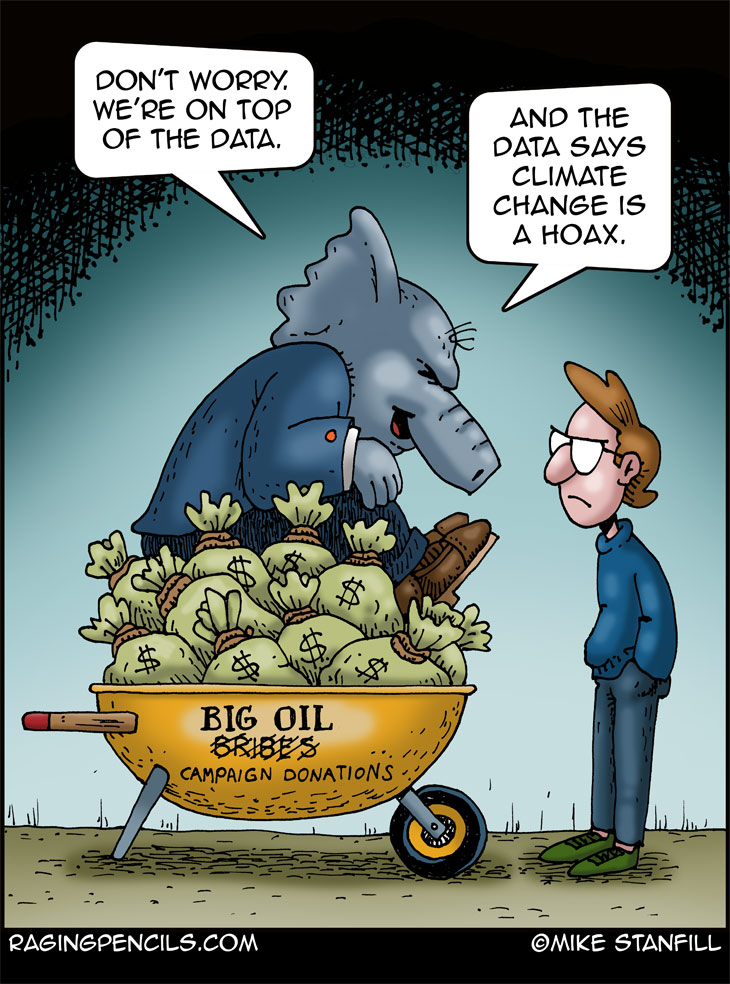
Yeah, they're on top of it

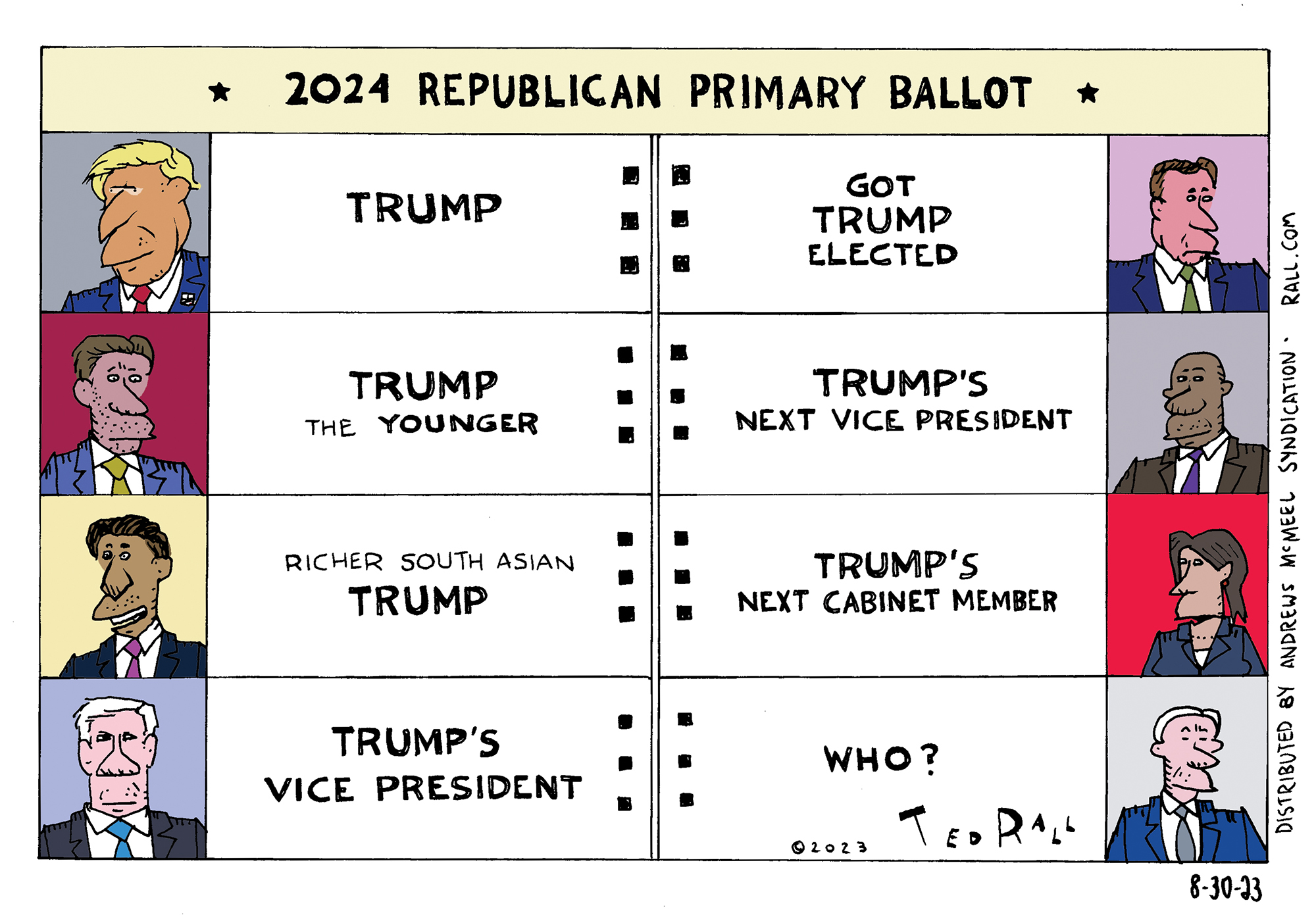
Sample GOP primary ballot

For more cartoons by Ted Rall, CLICK HERE

Jobs are up, wages less so

Lower purchasing power could still lead the US into a recession

Christopher DeckerUniversity of Nebraska Omaha

Economists are feeling dismal for a reason. IS/Getty Images
Don’t be overly fooled by seemingly rosy jobs data heading into the Labor Day weekend.

Yes, the U.S. economy added 187,000 jobs in August 2023 – faster than the revised 157,000 increase for July and above most analysts’ expectations for the month. And yes, gains were seen across most industries, with health care and social assistance adding 97,300 positions, leisure and hospitality boosting numbers by 40,000, construction up by 22,000 jobs, and 16,000 additional general manufacturing jobs.

But there was also enough in the data released by Bureau of Labor Statistics on Sept. 1 to give comfort – of sorts – to the “Jeremiahs” among us economists. I’ll explain.

While jobs were up, so too was the unemployment rate, which ticked up a modest 0.3% from July to 3.8%. And average hourly earnings increased by just 0.2% in the month to US$33.82 – working out to a rather paltry 8 cent increase.

To me, rather than indicating that the job market is moving along at a healthy clip, as some suggest, it shows signs of something else: a continuing slowdown.

Countering Weight Gain

New Research Reveals Why You Should Eat Meals Earlier

A new study indicates that consuming a larger portion of daily calories earlier in the day could help counter weight gain, stabilize blood sugar variations, and decrease the duration of elevated blood sugar levels.

“This type of feeding, through its effect on blood sugar, may prevent those with prediabetes or obesity from progressing to type 2 diabetes,” said study lead author Joanne H. Bruno, MD, PhD, an endocrinology fellow at NYU Langone Health.

Recently resented at the Endocrine Society’s annual meeting, the new report evaluated early time-restricted feeding (eTRF), which involves restricting calories to the first eight hours of the day. 

Previous studies have found this form of intermittent fasting may improve cardiometabolic health and blood sugar levels. However, the team wanted to determine whether these improvements were related to weight loss or the fasting strategy.

Fishermen quit in protest over wind energy

R.I. fishing panel resigns en masse over offshore wind approvals

by Nancy Lavin, Rhode Island Current

Fed up with state coastal regulators’ perceived “deference” to offshore wind developers, all nine members of an advisory panel of Rhode Island fishing industry representatives have quit.

In a letter sent Thursday, Aug. 31, to Rhode Island Coastal Resources Management Council (CRMC) Executive Director Jeff Willis, the entire Rhode Island Fishermen’s Advisory Board (FAB) declared its members were resigning effective immediately. 

The decision comes amid mounting tension between offshore wind developers and fishermen over the slew of offshore wind projects planned in and around Rhode Island waters. 

Saturday, September 2, 2023

Clarence Thomas admits it (some of it) but it doesn't excuse corruption

Clarence Thomas acknowledges undisclosed real estate deal with Harlan Crow and discloses private jet flights

by Joshua Kaplan, Justin Elliott and Alex Mierjeski for ProPublica


By Ann Telnaes

Supreme Court Justice Clarence Thomas’ decadeslong friendship with real estate tycoon Harlan Crow and Samuel Alito’s luxury travel with billionaire Paul Singer have raised questions about influence and ethics at the nation's highest court.

Supreme Court Justice Clarence Thomas for the first time acknowledged that he should have reported selling real estate to billionaire political donor Harlan Crow in 2014, a transaction revealed by ProPublica earlier this year. Writing in his annual financial disclosure form, Thomas said that he “inadvertently failed to realize” that the deal needed to be publicly disclosed.

In the form, which was made public Thursday after he’d received an extension on the filing deadline, Thomas also disclosed receiving three private jet trips last year from Crow. ProPublica reported on two of those trips.

Thomas defended his previous practice of not disclosing private jet flights provided to him over the years.

In a statement Thursday, an attorney for Thomas, Elliot Berke, said that “after reviewing Justice Thomas’s records, I am confident there has been no willful ethics transgression, and any prior reporting errors were strictly inadvertent.”

Thomas’ expanded disclosures for 2022 follow a series of ProPublica stories that documented an array of undisclosed luxury vacations and other gifts Thomas has received over the years from a cadre of billionaires, including Crow. 

ProPublica revealed Texas real estate magnate Crow’s generosity toward Thomas, including yacht cruises, private jet flights, the purchase of his mother’s house in Georgia and tuition payments. Subsequently, we reported that Thomas has received at least 38 destination vacations and 26 private jet flights from multiple billionaires. Thomas’ latest filing brings the total number of jet flights he’s received even higher.

In its initial story, ProPublica reported Thomas took a trip to Crow’s private resort in the Adirondacks last July and to a conservative think tank conference in Dallas last May, noting that flight records suggested he flew to and from both places on Crow’s jet. In his new form, Thomas confirmed that Crow provided the private plane travel.

In the form, Thomas said that his security detail recommended he fly private whenever possible “because of the increased security risk following the Dobbs opinion leak.” The Supreme Court did not respond to a question about whether all justices are now advised to take private jet flights for security purposes.

Thomas also disclosed one previously unknown private jet trip he received from Crow. He reported taking a private plane on the way home from a February conference in Dallas because of an “unexpected ice storm.”

In his form, Thomas wrote that he “continues to work” with judiciary staff to determine “whether he should further amend his reports from any prior years.”

The disclosure contains Thomas’ first public comments on his failure to disclose a 2014 real estate deal with Crow. As ProPublica reported this spring, Crow purchased Thomas’ mother’s house and two nearby vacant lots from Thomas and his relatives for $133,363. Thomas’ mother continues to live at the property, which Crow now owns. Crow has said he plans to someday turn the house, which was Thomas’ childhood home, into a museum.

In the form, Thomas said he took a loss on the deal because he and his wife “put between $50,000 to $75,000 into his mother’s home in capital improvements over the years.”

Thomas also defended his practice for more than two decades of not disclosing private jet trips provided by Crow and other wealthy businessmen.

Justices are required by a federal ethics law passed after Watergate to publicly disclose most gifts. Thomas’ defense centers on a carve-out in the law known as the “personal hospitality” exemption. The exemption states that gifts of “food, lodging, or entertainment received as personal hospitality” don’t have to be disclosed. The judiciary updated its guidelines earlier this year to make explicit that the exemption doesn’t apply to private jet travel.

Seven ethics law experts told ProPublica that even before the update, both the law and the judiciary’s regulations have required that gifts of transportation, such as private jet travel, be disclosed because they are not food, lodging or entertainment. Reviewing other federal judges’ financial disclosure filings, ProPublica found at least six examples of judges disclosing gifts of private jet travel in recent years prior to the update.

In the new filing, Thomas for the first time said he got advice that he did not have to disclose such flights from staff at the Judicial Conference, the policymaking arm of the federal judiciary. He said he received that advice from “Conference staff, and in conversations with court officers and colleagues early in his tenure on the Court.” In his previous statement on the matter, Thomas did not say he had consulted the ethics staff.

Prior to his most recent disclosure, Thomas had reported receiving one private jet trip from Crow in 1997, the year after the pair met.

Thomas also pointed to advice received in 2006 by a lower court federal judge, Ray Randolph, that a private jet flight to Alaska didn’t need to be disclosed.

A judiciary spokesperson declined to comment Thursday on whether it has ever been the Judicial Conference’s position that judges can accept gifts of private jet travel without disclosing them.

She also declined to confirm Thomas’ account of past advice he’d received from conference staff. “Advice sought by any filer is confidential and we do not discuss that advice publicly,” the spokesperson said.

The Supreme Court press office did not immediately respond to a request for more details on the advice Thomas said he received.

Thomas’ attorney criticized watchdog groups and Democratic members of Congress who have called for Thomas to be investigated.

“The attacks on Justice Thomas are nothing less than ridiculous and dangerous, and they set a terrible precedent for political blood sport through federal ethics filings,” Berke wrote.

Justice Samuel Alito’s filing was also released Thursday. His did not contain any new disclosures of gifts. Earlier this year, ProPublica reported that in 2008, Alito accepted a private jet flight to Alaska from a hedge fund billionaire who later had cases before the Supreme Court. Alito said that he was not required to disclose the gift, and that when the billionaire’s companies came before the court, Alito was unaware of his connection to the cases.

ProPublica is a Pulitzer Prize-winning investigative newsroom. Sign up for The Big Story newsletter to receive stories like this one in your inbox.

Series: Friends of the Court:SCOTUS Justices’ Beneficial Relationships With Billionaire Donors

Poor former guy

By Matt Davies

Making history


What history teaches about the next ice age

Extent of future warming will dictate impacts, according to research

Rutgers University

The rapid sea level rise and resulting retreat of coastal habitat seen at the end of the last Ice Age could repeat itself if global average temperatures rise beyond certain levels, according to an analysis by an international team of scientists from more than a dozen institutions, including Rutgers.

In a study published in Nature, scientists reported how ancient coastal habitats adapted as the last glacial period ended more than 10,000 years ago and projected how they are likely to change with this century's predicted sea level rise. 

They conducted their analysis by examining the ocean sediments of ancient shorelines from a time when oceans rose rapidly, mainly because of melting ice sheets in the Northern Hemisphere. This examination allowed them to infer how ancient coastal habitats changed and formed the basis of improved predictions about the present.

Robots may decide your level of pain

Artificial Intelligence May Influence Whether You Can Get Pain Medication


Elizabeth Amirault had never heard of a Narx Score. But she said she learned last year the tool had been used to track her medication use.

During an August 2022 visit to a hospital in Fort Wayne, Indiana, Amirault told a nurse practitioner she was in severe pain, she said. She received a puzzling response.

“Your Narx Score is so high, I can’t give you any narcotics,” she recalled the man saying, as she waited for an MRI before a hip replacement.

Tools like Narx Scores are used to help medical providers review controlled substance prescriptions. They influence, and can limit, the prescribing of painkillers, similar to a credit score influencing the terms of a loan. Narx Scores and an algorithm-generated overdose risk rating are produced by health care technology company Bamboo Health (formerly Appriss Health) in its NarxCare platform.

Such systems are designed to fight the nation’s opioid epidemic, which has led to an alarming number of overdose deaths. The platforms draw on data about prescriptions for controlled substances that states collect to identify patterns of potential problems involving patients and physicians. 

State and federal health agencies, law enforcement officials, and health care providers have enlisted these tools, but the mechanics behind the formulas used are generally not shared with the public.

Artificial intelligence is working its way into more parts of American life. As AI spreads within the health care landscape, it brings familiar concerns of bias and accuracy and whether government regulation can keep up with rapidly advancing technology.

The use of systems to analyze opioid-prescribing data has sparked questions over whether they have undergone enough independent testing outside of the companies that developed them, making it hard to know how they work.

Federal Judge says Guiliani not the victim for failing to follow court rules

Giuliani Liable for Defaming Two Georgia Election Workers

JAKE JOHNSON for Common Dreams

A federal judge on August 30 ruled that Rudy Giuliani, former President Donald Trump's erstwhile personal attorney, is legally liable for defaming Ruby Freeman and Shaye Moss, Georgia election workers who have endured death threats and harassment since Giuliani falsely accused them of committing fraud during the 2020 presidential contest.

Judge Beryl Howell of the U.S. District Court for the District of Columbia wrote in a scathing 57-page opinion that "rather than simply play by the rules designed to promote a discovery process necessary to reach a fair decision on the merits of plaintiffs' claims, Giuliani has bemoaned plaintiffs' efforts to secure his compliance as 'punishment by process.'"

"Donning a cloak of victimization may play well on a public stage to certain audiences," Howell added, "but in a court of law this performance has served only to subvert the normal process of discovery in a straightforward defamation case, with the concomitant necessity of repeated court intervention."