Monday, February 5, 2024
Tomato Juice Effectively Kills Salmonella and Other Harmful Bacteria
By AMERICAN SOCIETY FOR MICROBIOLOGY
Research published in Microbiology Spectrum demonstrates that tomato juice can kill Salmonella Typhi and other harmful bacteria affecting digestive and urinary tract health. This breakthrough suggests that regular consumption of tomatoes can offer natural antibacterial benefits, particularly against pathogens like Salmonella Typhi.
A study reveals that tomato juice effectively kills Salmonella Typhi and other harmful bacteria, thanks to specific antimicrobial peptides found in tomatoes. This discovery highlights the potential health benefits of consuming tomatoes.
Tomato juice can kill Salmonella Typhi and other bacteria that can harm people’s digestive and urinary tract health, according to research published this week in Microbiology Spectrum, a journal of the American Society for Microbiology. Salmonella Typhi is a deadly human-specific pathogen that causes typhoid fever.
New state ADU bill moves forward
R.I. House panel advances ‘granny flats’ legislation to full chamber
By Nancy Lavin, Rhode Island Current
The lone straggler from House Speaker K. Joseph Shekarchi’s 14-bill housing package unveiled in the 2023 legislative session is making a strong comeback this year, with a House panel advancing the “granny flats” legislation Thursday.
The Charlestown Citizens Alliance (CCA) would have you believe this
is what will happen if the town allows ADU construction
The House Municipal Government and Housing Committee’s 10-2 vote does not necessarily signal its approval, but rather sends the bill to the House floor for a vote by the entire chamber. A floor vote will be scheduled for the week of Feb. 12, said House spokesperson Larry Berman.
Still, the accessory dwelling unit legislation championed by Shekarchi and sponsored by Rep. June Speakman, a Warren Democrat, seems bound for passage in the lower chamber. The same bill was overwhelmingly approved in the House in June, but stalled in committee on the Senate side.
Heralded by proponents as a way to combat the housing crisis, the legislation would make it easier for property owners to add a granny flat, or accessory dwelling unit, to their property by lifting some of the red tape imposed at the municipal level.
Specifically, the bill allows residential property owners to build an attached or standalone ADU “by right” under any of three scenarios: to provide for family members with disabilities; on lots at least 20,000 square feet in size; or when the proposed ADU would be carved out from an existing structure, therefore not expanding the total building footprint.
Sunday, February 4, 2024
Once beloved by the alt-right, Taylor Swift is now one of the MAGAnuts most feared enemies
The alt-right saw Taylor Swift as an 'Aryan goddess.' She shook them off as 'repulsive'
by Charles Jay for Community Contributors Team
Fox News hosts have been engaged in
pushing out some pretty special conspiracy theories. The newest
is that the Super Bowl somehow has been rigged so
that pop megastar Taylor Swift, who is dating Kansas City Chiefs tight end
Travis Kelce, will have a platform to endorse President Joe Biden’s
reelection campaign.
By Mike Luckovich
Fox host Jesse Waters even
went so far as to suggest that the Pentagon’s “psychological operations unit”
has turned Swift into “an asset.” He said Swift could be “a front for
a covert political agenda.” The Pentagon dismissed the accusation with a
Swiftian song reference: “As for this conspiracy theory, we are going to shake
it off.”
But there was at least one unexpected voice of reason in the Murdoch media empire: Fox Sports pundit Colin Cowherd, who on his show “The Herd” blasted those people who have a problem with Swift appearing on NFL broadcasts when she attends a game.
He cited a New York Times report
that found that Swift appeared on camera for only 32 seconds during the
3.5-hour broadcast of Sunday’s Ravens-Chiefs AFC Championship game—17 seconds
of which were devoted to an in-house promo for the network’s upcoming broadcast
of Sunday’s Grammy Awards.
Charlestown Awarded Funding for Breachway Restoration
Charlestown among 19 municipalities to receive infrastructure funding
On January 25th the Infrastructure Bank joined with Governor Dan McKee and Newport Mayor Xaykham Khamsyvoravong to award $12 million in Municipal Resilience Program Action Grants to 20 projects in 19 communities across Rhode Island.
This is the description of Charlestown's project:
The Town of Charlestown is leading a crucial project to
address the impacts of climate change, sea-level rise, and storm surges on the
Charlestown Breachway barrier beach-lagoon system in Rhode Island. This project
focuses on the first design phase, which includes engagement with adjacent
landowners, RIDEM and USFWS. 
Photo by Will Collette
This phase is instrumental in preparing the second phase to be "shovel-ready" and eligible for future funding opportunities through the Town budget and grants over the next three years.
The
second phase, to be conducted over the subsequent two to three years, involves
breachway west wall reconstruction, dredging, dune restoration, and dune grass
planting. The overall project aims to enhance the resilience of the breachway
system and adjacent natural habitats, providing a safer and more sustainable
coastal access point for the public while protecting vital ecosystems.
Over just the last few
weeks, communities across our state have experienced the effects of extreme
storms, severe flooding, and coastal erosion, all of which are anticipated to
increase due to the impacts of climate change. Rhode Island needs to invest in
resilient infrastructure solutions now, and that is exactly what this $12
million in 20 Municipal Resilience Program Action Grants will allow 19
communities across our state to do.
For this round of MRP
Action Grants, the Infrastructure Bank received 41 proposals from 30
communities, totaling $52 million in grant requests. Far exceeding currently
available funding.
Breaking the Habit:
Researchers Identify Most Effective Stop-Smoking Aids
By UNIVERSITY OF MASSACHUSETTS
AMHERST
Nicotine e-cigarettes and two prescription medications that curb symptoms of withdrawal are the most effective stop-smoking aids, according to a comprehensive, multinational review by a team of scientists, including a University of Massachusetts Amherst public health and health policy researcher.
Dual forms of nicotine replacement therapy
(NRT), such as combining a patch with gum or a lozenge, were found to be nearly
as effective.
Smoking remains the leading cause of
preventable disease and death worldwide, and many people who want to quit
smoking find it very difficult, due to the addictive nature of nicotine. The
new study’s findings offer strong evidence to help reshape public health
policies and strategies, offering smokers more effective tools to quit for
good.
Protect your dog this winter
Dog care below freezing
Erik Christian Olstad, University of California, Davis
![]() |
| Dogs get cold in the winter too, but there are things pet owners can do to help them feel comfortable. AP Photo/David Duprey |
But in much of the country, when winter rolls around, previously hospitable conditions can quickly turn chilly and dangerous for people and pups alike.
Winter brings some unique challenges for dog owners, since dogs still need activity and socialization during colder seasons. Studies have shown that dog owners are almost 50% less likely to walk their dogs when the weather gets cold. Knowing the basics of winter safety is critical to maintaining a healthy lifestyle for your dog.
I am an assistant professor at the University of California Davis School of Veterinary Medicine who weathered polar vortexes with my dog while living in Michigan early in my career. While I’ve since moved to sunny California, I’ve seen how quickly frigid temperatures can turn dangerous for pets.
Saturday, February 3, 2024
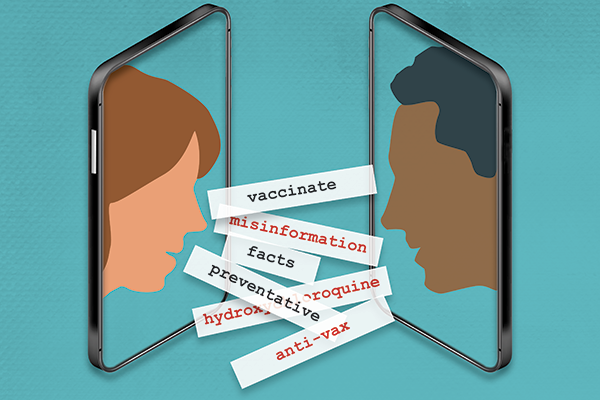
How Fringe Anti-Science Views Infiltrated Mainstream Politics
It's costing a lot of American lives
![]() |
| Illustration by David Pickel |
In recent weeks, an infant and two young children have been hospitalized amid an ongoing measles outbreak in Philadelphia that spread to a day care center.
It’s a dangerous shift driven by a critical mass of people who now reject decades of science backing the safety and effectiveness of childhood vaccines. State by state, they’ve persuaded legislators and courts to more easily allow children to enter kindergarten without vaccines, citing religious, spiritual, or philosophical beliefs.
Growing vaccine hesitancy is just a small part of a broader rejection of scientific expertise that could have consequences ranging from disease outbreaks to reduced funding for research that leads to new treatments.
“The term ‘infodemic’ implies random junk, but that’s wrong,” said Peter Hotez, a vaccine researcher at Baylor College of Medicine in Texas. “This is an organized political movement, and the health and science sectors don’t know what to do.”
Changing views among Republicans have steered the relaxation of childhood vaccine requirements, according to the Pew Research Center. Whereas nearly 80% of Republicans supported the rules in 2019, fewer than 60% do today.
Democrats have held steady, with about 85% supporting. Mississippi, which once boasted the nation’s highest rates of childhood vaccination, began allowing religious exemptions last summer. Another leader in vaccination, West Virginia, is moving to do the same.
An anti-science movement picked up pace as Republican and Democratic perspectives on science diverged during the pandemic. Whereas 70% of Republicans said that science has a mostly positive impact on society in 2019, less than half felt that way in a November poll from Pew.
URI's popular forensic science seminars return
National security, bombings, domestic violence, among topics of URI’s Spring Forensic Seminar Partnership Series
By Benjamin Smith
The University of Rhode Island’s Forensic Science Partnership lecture series is back for the spring semester.
All lectures are held on Fridays at 3:30 p.m. in the
Richard E. Beaupre Center for Chemical and Forensic Sciences. For 25 years, the
seminar has brought local, regional, national and international authorities to
talk about everything from the criminal world of the late Whitey Bulger to Sept
11, 2001. The seminars feature experts on crime, evidence-gathering, crime
prevention and investigations that rely on scientific processes.
The first program was held on Feb. 2: “Seeing the invisible: flow visualization and scientific imaging to improve CBRNE safety, security, defense, and forensics,” fluid dynamics expert Matt Staymates of the National Institute of Standards & Technology. The office promotes innovation and industrial competitiveness by advancing chemical, biological, radiological, nuclear and explosive capabilities, to improve economic security and improve people’s lives.
During its run, the series has hosted guest speakers such
as Henry Lee, the renowned forensic scientist who worked on the O.J. Simpson
criminal case, and the late URI faculty member, Robert Leuci, who exposed
corruption in the New York City Police Department. Visiting speakers have
discussed many topics in forensic science that deal with everything from death
investigations to fingerprinting DNA analysis to Sherlock Holmes and terrorism.
Dennis Hilliard, director of the Rhode Island State
Crime Laboratory at URI, coordinates the free public lecture series with
Professor of Chemistry Jimmie Oxley, an expert on explosives and energetic
materials.
The rest of this spring’s speakers and topics are:
Another ISS overflight tonight
By Will Collette
Time: Sat Feb 03 5:34 PM, Visible: 7 min,
Max Height: 60°, Appears: 10° above WNW, Disappears: 10° above SE
Time: Sat Feb 03 5:34 PM, Visible: 7 min,
Max Height: 60°, Appears: 10° above WNW, Disappears: 10° above SE
MAGA menace: Canada
Some Republicans are saying we need to wall off the 5,500 mile Canadian border, too.
In the 1980s, many Texans were alarmed that hordes of
immigrants were fleeing Rust Belt states and pouring across the Red River to
take our jobs. So my friend Steve Fromholz recommended a big beautiful wall
across our northern border to keep them
out.
They must be stopped!
Fromholz, a popular singer-songwriter and renowned
political sprite, was ahead of his time in the political sport of wall
building.
Instead of steel barriers and miles of nasty razor wire,
Steve proposed preventing Yankee refugees from entering the Lone Star State by
planting a 10-foot high, 10-foot thick wall of jalapeño peppers along the
length of the Red River. Eat your way through and you’d be accepted as a
naturalized Texan.
I thought of Steve’s impishness when I read that Nikki
Haley, Ron DeSantis, and other Republicans were concocting a whole new
xenophobic bugaboo to goose up their anti-immigrant demagoguery.
Friday, February 2, 2024
Let's Control All Drug Prices
SONALI KOLHATKAR
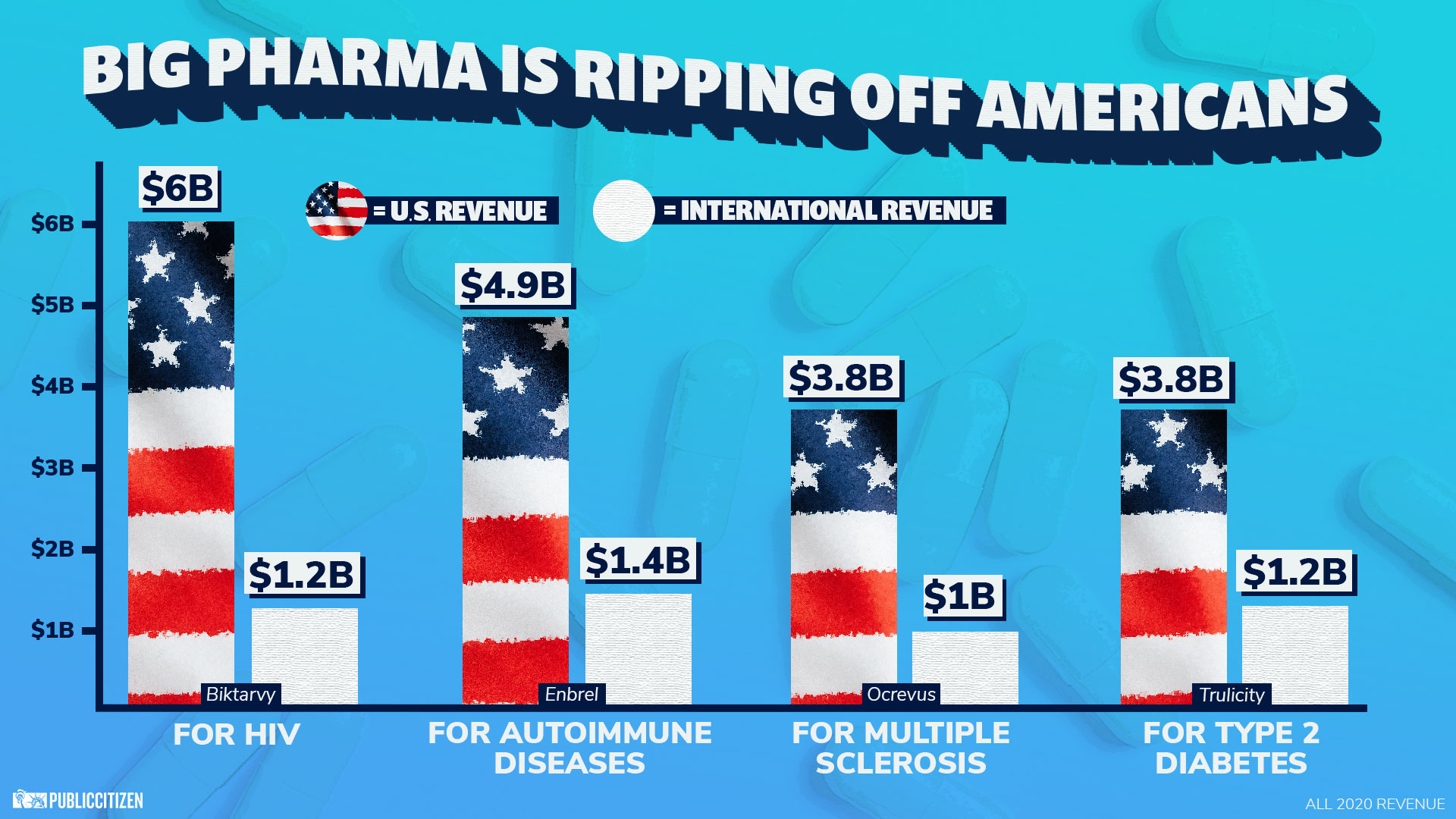
Major pharmaceutical companies in the United States are battling with Vermont Senator Bernie Sanders over an issue that is at the heart of whether we value human wellbeing over corporate profits. As chair of the Senate Committee on Health, Education, Labor, and Pensions (HELP), Sanders has vowed to force CEOs of pharmaceutical companies to publicly answer for why their drug prices are so much higher than in other nations.
In a defensive-sounding letter to Sanders, an attorney for Johnson & Johnson accused the Senator of using committee hearings to “punish the companies who have chosen to engage in constitutionally protected litigation.”
It appears that Johnson & Johnson and Merck are indeed afraid of being questioned by lawmakers about drug-profiteering in the U.S.
One pharmaceutical expert, Ameet Sarpatwari of Harvard Medical School explained to the New York Times that, “The U.S. market is the bank for pharmaceutical companies… There’s a keen sense that the best place to try to extract profits is the U.S. because of its existing system and its dysfunction.” Another expert, Michelle Mello, a professor of law and health policy at Stanford university, told the Times, “Drugs are so expensive in the U.S. because we let them be.”
In other words, it’s been a free-for-all for pharmaceutical companies in the U.S. In 2003, then-President George W. Bush signed a Medicare reform bill into law, promising help for seniors struggling to pay for medications, but that law stripped the federal government of its power to negotiate drug prices for Medicare’s participants. It was a typically Republican, Orwellian move: promise help to ordinary people and deliver the exact opposite.


.webp)