R.I. Beach Health Responds to Better Stormwater Management
By FRANK CARINI/ecoRI News staff
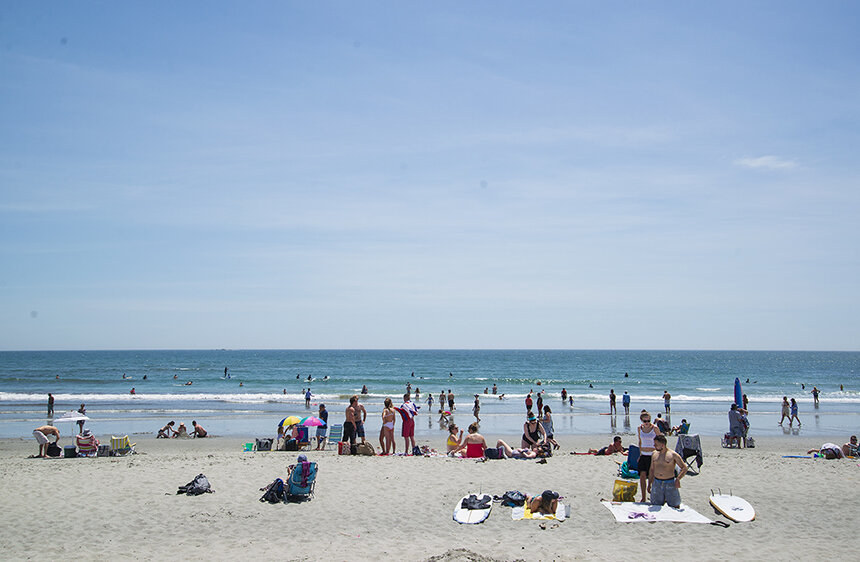 |
| Beachgoers enjoy a sunny day at Second Beach in Middletown. Beach closures in Rhode Island are trending downward. (Joanna Detz/ecoRI News) |
Many of the changes witnessed along Rhode Island’s coastline during the past two decades are noticeable and concerning, especially when it comes to the impact on the brick-and-mortar environment that replaced the natural world.
The seaside town of South Kingstown provides a telling example of Mother Nature’s brisk alternations. Less than 20 years ago, a sandy carpet fronted Matunuck Beach Road and Ocean Mist, an iconic Ocean State watering hole.
That carpet of disintegrated rock and fine
mineral particles has largely been replaced by briny water. The Atlantic Ocean
now laps beneath beachfront bars and restaurants and is advancing on the
infrastructure buried beneath Matunuck Beach Road.
There
are, however, unseen changes to the Ocean State’s waterfront that are cause for
optimism.
The
amount of sand in front of them may be shrinking, but water quality at Rhode
Island’s signature attractions — its tourist-filled, economically important
beaches — is improving.