Menu Bar

Home           Calendar           Topics          Just Charlestown          About Us

Tuesday, March 29, 2022

Bill Would Give DEM More Power to Battle Avian Flu Outbreak

Measure would allow the agency to enact quarantine measures on chicken flocks 

By Rob Smith / ecoRI News staff

State environmental officials are hoping the General Assembly approves a bill that would give the Rhode Island Department of Environmental Management (DEM) more authority to combat a possible outbreak of avian influenza.

House bill H7785, sponsored by Rep. Brandon Potter, D-Cranston, would allow DEM to enact quarantine measures on chicken flocks and other livestock based on the suspected presence of infectious diseases, as opposed to confirmed cases. States across the country, including nearby Connecticut and Massachusetts, have confirmed avian flu cases in domestic poultry.

“The highest-risk farms are the ones that allow access to poultry outdoors, especially if they have potential contact with wild waterfowl,” state veterinarian Scott Marshall said. Chickens, turkeys, pheasants and other domesticated farm birds are at risk for contracting avian flu, he said.

The new strain of avian flu is the third outbreak since 2015, and the first one expected to infect birds in R.I. This year’s outbreak was first detected in wild birds in South Carolina on Jan. 14. As of March 17, the U.S. Department of Agriculture (USDA) reports confirmed cases in 18 states, including Massachusetts, Connecticut, New Hampshire and Maine. DEM officials expect it to be a matter of when, not if, the disease is detected in R.I.; the state is part of the Atlantic flyway, a migratory bird route on which hunter-harvested wild waterfowl have shown signs of the disease in other states.

Majority of Americans Fear Nuclear Weapons Use After Russia's Ukraine Invasion

Nearly 9 in 10 people in a new poll said they fear US could be drawn into Putin's war in Ukraine

75% said they are worried the U.S. will be targeted in a nuclear attack.

JULIA CONLEY for Common Dreams

Russian President Vladimir Putin's invasion of Ukraine has left Americans on edge, according to a recent poll which found a majority of people in the U.S. are worried that the war has made the impending use of nuclear weapons more likely.

Nearly three-quarters of respondents told the Associated Press and NORC Center for Public Affairs Research that the invasion has increased the likelihood that nuclear weapons will be used anywhere in the world.

Eighty-five percent of people surveyed said they were concerned that the U.S. could be drawn into the conflict, including 47% of people who said they were "extremely or very concerned" about this scenario, which would amount to a conflict between the two countries with the world's largest nuclear stockpiles.

Putin raised alarm when he placed his country's nuclear weapons on high alert days after invading Ukraine. In the U.S., President Joe Biden last week unnerved international observers when he appeared to call for the Russian president's removal from power.

Monday, March 28, 2022

Revenue for Rhode Island coalition looking to tax the one percent

Time to tax the rich 

By Steve Ahlquist

The Revenue for Rhode Island coalition kicked off their 2022 campaign today to “raise revenue for the state by adding one new tax bracket – at a marginal rate of 8.99% (in place of the current top rate of 5.99%) on income above $500,000, ensuring the top 1% of earners are contributing their fair share. 

The legislation, S2264, sponsored by Senator Melissa Murray (Democrat, District 24, Woonsocket, North Smithfield), and H7440, sponsored by Representative Karen Alzate (Democrat, District 60, Pawtucket, Central Falls), is estimated to raise $144.5 million in new tax revenue, and would only impact the top 1% of tax filers.”

“The gap between the rich and poor continues to widen due to decades of policies that have helped the rich get richer,” stated Senate bill sponsor Senator Murray. 

Bring on the clowns!

For more cartoons by Tom Tomorrow, CLICK HERE.


What would you do, Donnie?


Seal release at Blue Shutters Beach tomorrow

Gray Seal Rescued and Rehabilitated by Mystic Aquarium will return to Ocean Home! 

From the Mystic Aquarium

Gray seal from an earlier release in Charlestown. Photo by Will Collette
An approximately 3-month-old male gray seal weanling rescued from Misquamicut Beach, Westerly, RI on February 15, 2022.

At approximately 8 weeks old, he was found minimally responsive and in very thin body condition. Upon arrival he weighed just 30 lbs.  

While rehabilitating, the seal received antibiotics for an infection and fluids to address dehydration. Throughout his time with our Animal Rescue Program, he has more than doubled his weight; currently weighing in at over 60 lbs!  

The seal has recovered well in rehabilitation and is ready to return to his ocean home!  This Gray Seal will be released during a can’t miss moment on Tuesday, March 29:

Mystic Aquarium’s Animal Rescue Program cordially invites you:  

 What:  Mystic Aquarium is proud to announce the release of one rehabilitated gray seal 

When:  10:00 a.m., Tuesday, March 29, 2022 

Where:  Blue Shutters Beach - Charlestown, RI  

Media is encouraged to arrive early – Mystic Aquarium Animal Rescue will be on site by 9:45 A.M. 

Advocates Want More Money for Farmland Preservation in Green Economy Bond

Saving farms is good for the economy

By Rob Smith / ecoRI News staff

Rhode Island is slowly but surely losing its farmland. Between 2001 and 2016, the state lost 4% of available farmland to development. (istock)

Advocates are asking state officials to add $3 million for farmland conservation to this year’s $38 million Green Economy bond.

The money would go toward the Agricultural Lands Preservation Commission (ALPC), a quasi-governmental agency overseen by the Rhode Island Department of Environmental Management that helps farmers by purchasing development rights to their land. This year’s Green Economy bond is the first bond question in over a decade to not include funding for the ALPC program, and advocates say the program will run out of money as soon as next year.

“If there’s no money for the commission to use, that program will get shut down,” said Diane Lynch, director of the Rhode Island Food Policy Council. “And that means we continue to lose farmland, which is normal for the kind of state we are, but we’ll just continue to lose and there will be nothing preserved.”

Farmland is indeed slowly vanishing in R.I. Between 2001 and 2016, the state lost 4% of available farmland to development, with an estimated annual farm revenue of $3.7 million, according to the American Farmland Trust. The average land value for farmland per acre is $16,468.

Stopping the NEXT COVID variant

To Prevent Future Variants, We Must Protect Those Most At Risk

By Michael Rose

As the omicron wave wanes, people across the U.S. are welcoming reprieve from a virus that has killed nearly 1 million Americans and hospitalized millions more. 

But as recent articles in The New York TimesThe Atlantic, and other outlets have pointed out, the threat of Covid-19 still looms large for millions of Americans who have compromised immune systems. 

As mask mandates expire and social distancing measures are curbed, cancer patients receiving chemotherapy, patients on aggressive immunosuppressive regimens, transplant recipients, and many others at high risk for severe Covid-19 continue to live in fear.

And their fear is well-founded.

Even after vaccination, severely immunocompromised people face substantial risk. For example, when researchers measured mortality of fully vaccinated solid organ transplant recipients, they found that, of those who suffered breakthrough infections, nearly one in 10 died. (Notably, this analysis predated widespread use of helpful boosters.)

But many of the pleas to protect immunocompromised patients have missed a crucial public health point: Shielding them is not only an important matter of health equity and social justice, it is a critical component in efforts to forestall the rise of new coronavirus variants. Put simply, by protecting people with weakened immune systems, we protect all of us.

Variant creation is driven by the amount of replicating virus in existence. Whether an evolutionary offshoot ultimately takes hold is a product of viral fitness, selection pressures, and host susceptibility. 

This equation explains why the most immunocompromised amongst us are so pivotal for preventing the rise of new mutations. When someone who is severely immunosuppressed is infected with the coronavirus, large loads of the virus can replicate for weeks or even months

And if natural immune responses and therapeutic treatments are unsuccessful, this uncontrolled viral replication can lead to the creation of mutant strains. Due to the high viral loads, the variants can easily spread to other susceptible individuals if enhanced isolation precautions are not strictly followed.

Sunday, March 27, 2022

Sea level rise and storms pose greatest risk to Charlestown

UPDATED: But many Charlestown shoreline owners don’t give a crap

By Will Collette

Joanna Detz/ecoRI News
WPRI’s Target 12 investigative team just released a devastating report that makes many of Charlestown’s richest people look pretty stupid.

According to the First Street Foundation that specializes in monitoring flood risk, Charlestown has the greatest proportion of properties at risk of flooding in Rhode Island.

Even though there is federal financial support available to raise their homes up and (hopefully) above storm surge, only 38% of eligible homeowners have taken the initial step, the design phase. That’s 17 of a total of 45 eligible properties. Under the federal program, the feds will pay 65% of the cost of raising a house above the danger level.

As Superstorm Sandy proved in 2012, a major storm will cause catastrophic damage. Such storms will become more frequent, plus sea level will continue to rise.
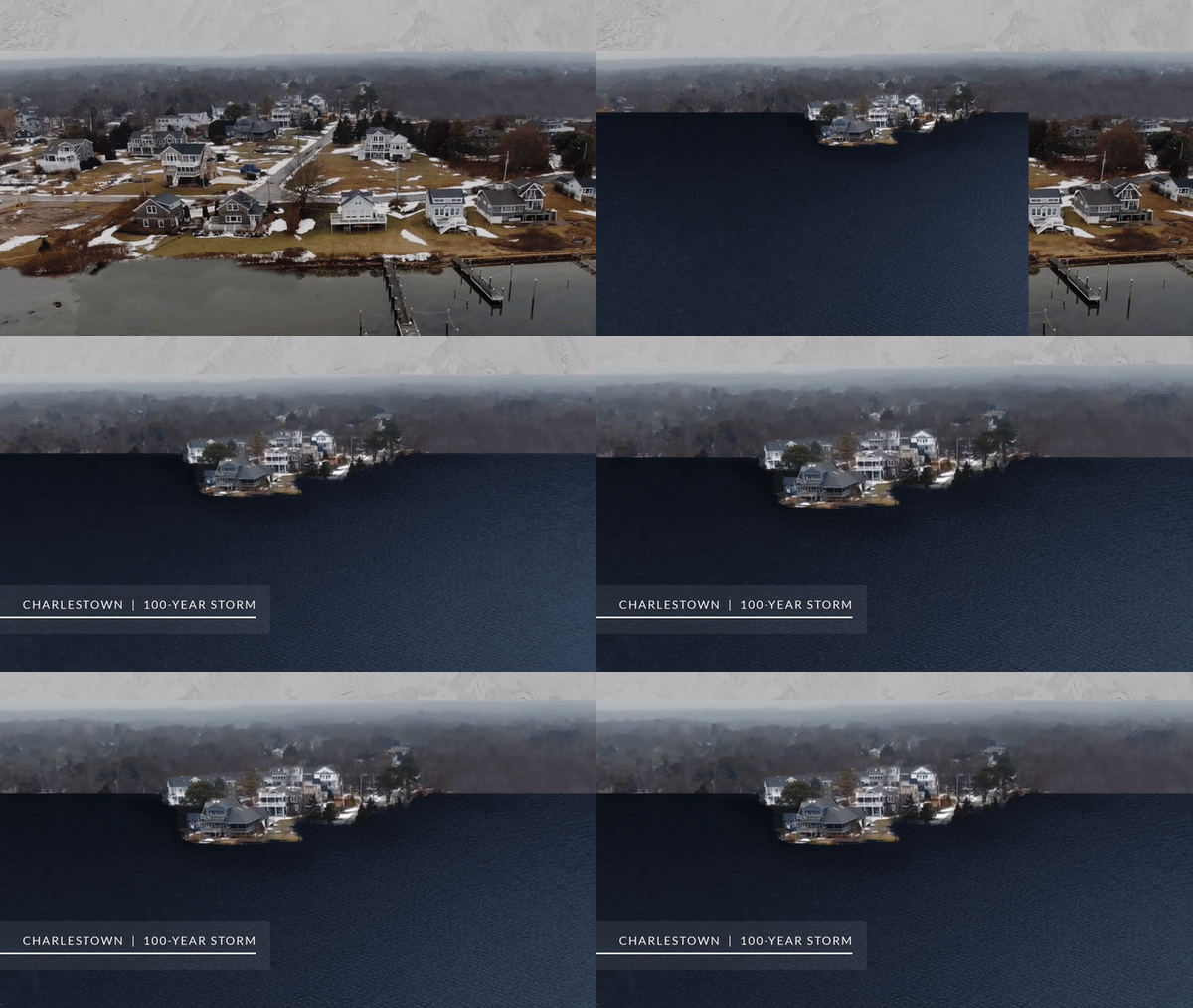
This GIF was created by WPRI for its story on Charlestown's lack of participation in the federal program to storm proof homes. It shows the level of inundation from a 100-year flood, of the type we get more frequently these days.

Channel 12 estimated that, depending on the size of the house, the cost share under the federal program to the homeowner would be between $45,000 and $89,000.

Since so many of these properties are valued at $1 million or more, sometimes a lot more, and there are insurance savings to be had, the lack of participation is baffling.

Our Zoning Officer Joe Warner told Channel 12 “It’s certainly intriguing that we didn’t have more interest because that’s a pretty big percentage [65%] to be paid for.”

Charlestown is not alone when it comes to apathy to flooding from climate change, especially among the wealthy. A recent Georgia State University study of coastal home buying in Florida showed there was almost no effect on home buying in flood-threatened areas even though sellers are required to disclose the risk.

Part of the problem is that mortgage lenders and many appraisers were not including flood damage potential in their determinations of home value even though flood insurance sellers were. But wealthy buyers who pay cash aren’t required to purchase flood insurance.

They may be sanguine about storm damage, thinking they can afford to simply repair or rebuild. Maybe they can do that in Florida but under Rhode Island CRMC rules, if a coastal property suffers 50% or more damage from a storm, the property may not be rebuilt.

The WPRI report quotes CRMC spokesperson Laura Dwyer who cites this CRMC regulation:

“…all residential and non-water dependent recreational, commercial, and industrial structures on undeveloped barriers physically destroyed fifty percent (50%) or more by storm induced flooding, wave or wind damage may not be reconstructed regardless of the insurance coverage carried.

Joe Warner, for his part, has done everything he can to help coastal homeowners. He’s taken courses, won certifications and taken measures to secure the highest rating from FEMA for Charlestown’s emergency preparedness. Joe’s efforts have substantially cut the insurance cost for these properties.

But property owners’ failure to elevate their structures might affect that rating as the climate crisis worsens.

Joe also noted that the federal assistance program only covers a small fraction of endangered properties:

“[The Army Corps of Engineers] only came up with 45 properties and we have hundreds, if not thousands that are potentially in harm’s way.”

If anyone in town would know this, it’s Joe. But his estimate has some back up from the First Street Foundation who say:

“There are 500 properties in Charlestown that have a greater than a 26% of being severely affected by flooding over the next 30 years. This represents 23% of all properties in the city.”

There is a strong political dimension to this problem. The Charlestown Citizens Alliance (CCA) counts on wealthy shoreline residents as its core support for campaign funding. Those shoreline properties are also a big part of Charlestown’s tax base.

For those reasons, the CCA and the town have a pretty strong self-interest to keep those properties from being blown and washed away in the next inevitable major storm.

A NASA satellite, Sentinel 6, is constantly measuring sea levels, the newest
of several satellites providing critical data about the climate crisis. 
This animation shows the radar pulse from the Sentinel-6 Michael Freilich
satellite’s altimeter bouncing off the sea surface in order to measure the
height of the ocean. Credit: NASA/JPL-Caltech
But fear not, we have a new Charlestown Climate Resiliency Commission. It has had at least one meeting and has a link to draft minutes posted on the town website.
But WARNING: do not click on that link – when I did, my anti-virus software immediately signaled the link is contaminated with a serious virus. Town Hall says the link is clean. It could have been a false alarm from my Afee software. - WC

Hopefully, they’ll get that fixed quickly.

This Commission has the following mission:

Study and analyze issues and impacts of climate change and global warming, development of strategies, policies and plans for mitigation of and adaptation to impacts from climate change and global warming.

There are a veritable legion of scientists and experts already studying the effects of the climate crisis on the New England coastline and we already know what is most likely going to happen to Charlestown.

For example, there is a newly released National Oceanic and Atmospheric Administration’s 2022 Sea Level Rise Technical Report. Frank Carini at EcoRI writes about this report HERE.

This Commission may have some talented people on it, but I hope they are smart enough not to waste time duplicating the efforts of federal, state, university, non-profit and businesses who have already done the science.

Illegal in Charlestown
I believe this Commission will most likely turn its attention to what it will do about the likely damage increased bad weather and sea level rise will do to people and property.

I hope this Commission will also recommend that Charlestown puts more effort into reducing carbon emissions and increasing the use of green energy. Better late than never.

New wind wall: Illegal in Charlestown
Charlestown still has an onerous ordinance passed in 2011 that makes small residential wind turbines impossible to get. Indeed, not one single residential wind turbine permit has been issued in the eleven years since the ordinance was passed. That must change.

Charlestown should restart its Solarize Charlestown program and also launch other group-buying efforts to help property owners make the switch to green energy. Solarize Charlestown was the only town effort to promote the switch to green energy but it only lasted a few months in 2017 and less than 40 households participated (mine was one of them – best decision we made).
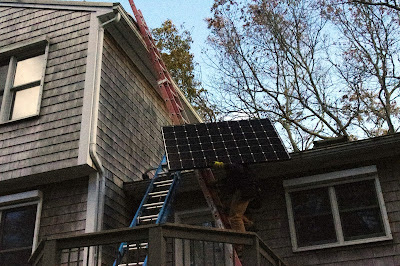
We had these panels installed under Solarize Charlestown in Nov. 2017.
Since then, they have saved us thousands in lower electric bills
and rebate checks from National Grid, (Photo by Will Collette)
The town should also offer property tax credits for green energy installations and for investments in resilience (e.g. hurricane proof windows, shutters and doors, metal roofs).

These measures are in line with global and national efforts to try to slow down the climate crisis but it’s not going to stop the storms.

I have raised concerns in the past that perhaps one of the driving forces behind the Budget Commission and CCA effort to raise taxes so we can build up a huge budget surplus to use as a bail-out fund for Charlestown’s beach property owners.

Chair of Charlestown Budget Commission, explaining $3 million "oopsie"
The CCA Council majority just passed a “plan” for the town’s unassigned fund balance (a.k.a. surplus) that anticipates building up this surplus to $10 million from its current $5 million and change. This is WAY above the normal recommended level.

As we all discovered in January, the Charlestown Budget Commission accidentally spent $3 million it thought it had in unassigned surplus funds because of an “oopsie” that assigned those $3 million to another purpose.

I am concerned the CCA and the Budget Commission will use the new Climate Resiliency Commission to provide political cover so they can raise taxes in the budget due to go into effect July 1 (assuming voter approval) to rebuild the surplus money pool.

What the Climate Resiliency Commission can actually do to guide Charlestown through the climate crisis remains to be seen though I do wish them luck.

Crime is crime


Again, priorities

Nick Anderson


Close the blinds during sleep to protect your health

Even moderate light exposure during sleep harms heart health and increases insulin resistance

Northwestern University

Exposure to even moderate ambient lighting during nighttime sleep, compared to sleeping in a dimly lit room, harms your cardiovascular function during sleep and increases your insulin resistance the following morning, reports a new study. 

Just a single night of exposure to moderate room lighting during sleep can impair glucose and cardiovascular regulation, which are risk factors for heart disease, diabetes and metabolic syndrome.

Close the blinds, draw the curtains and turn off all the lights before bed. Exposure to even moderate ambient lighting during nighttime sleep, compared to sleeping in a dimly lit room, harms your cardiovascular function during sleep and increases your insulin resistance the following morning, reports a new Northwestern Medicine study.

"The results from this study demonstrate that just a single night of exposure to moderate room lighting during sleep can impair glucose and cardiovascular regulation, which are risk factors for heart disease, diabetes and metabolic syndrome," said senior study author Dr. Phyllis Zee, chief of sleep medicine at Northwestern University Feinberg School of Medicine and a Northwestern Medicine physician. "It's important for people to avoid or minimize the amount of light exposure during sleep."

There is already evidence that light exposure during daytime increases heart rate via activation of the sympathetic nervous system, which kicks your heart into high gear and heightens alertness to meet the challenges of the day.

Clean out the brain gunk

Waste management deficiency in brain may contribute to cerebral amyloid angiopathy

By Tony LaRoche

A healthy brain requires regular “clearing” to flush away toxins and other waste products that can lead to dementia and cognitive impairments. 

But a new study published in Nature Aging and conducted by a team of researchers at the University of Rhode Island, Yale School of Medicine, and Stony Brook University shows that trouble with the brain’s clearance systems may contribute to cerebral amyloid angiopathy (CAA), a condition in older adults that causes brain hemorrhages and commonly occurs with Alzheimer’s disease.  

William Van Nostrand, Herrmann Professor of Neuroscience and co-director of the George & Anne Ryan Institute at URI, was a co-senior author on the study, which found that both the glymphatic system and lymphatic drainage were impaired in a rodent model of cerebral amyloid angiopathy. 

An expert on trends in gun sales and gun violence in pandemic America

Why so many guns?

Garen WintemuteUniversity of California, Davis

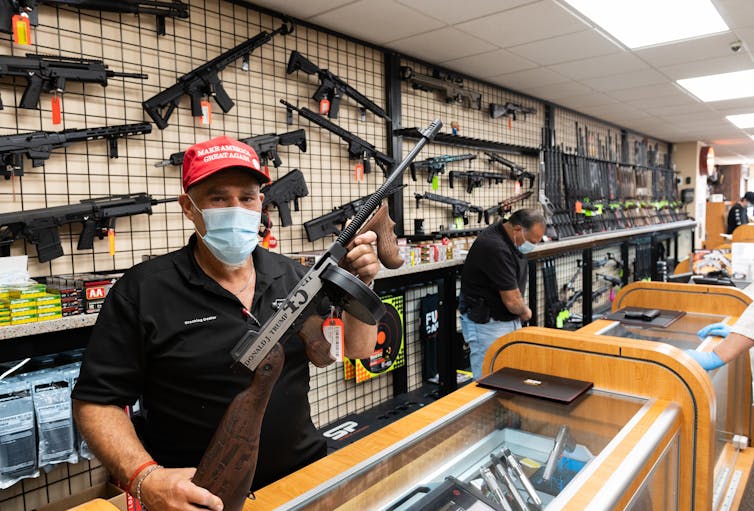
Most people buy guns for protection. The hat might be a clue.
(Mike Pont/Getty Images News via Getty Images)
Gun sales have risen in recent years, particularly during the COVID-19 pandemic. 

On Feb. 28, 2022, SciLine interviewed Garen Wintemute – an emergency medicine physician at the University of California, Davis, Medical Center and director of the California Firearm Violence Research Center – about what’s driving this change and what gun usage and culture looks like in America two years into the pandemic.

The Conversation has collaborated with SciLine to bring you highlights from the discussion, which have been edited for brevity and clarity.

Saturday, March 26, 2022

Trumplicans have nothing to offer on inflation

Republicans are beating up Joe Biden for rising prices while blocking efforts to do anything about it.

By Jim Hightower 

By Pat Bagley
Republican politicos are all over Joe Biden for failing to stop inflation. Perhaps you wonder, though, what these squawkers would do if they were in charge.

No need to wonder — just look back to 1974, when Americans were being pummeled by price spikes that topped 12 percent, nearly double what we’re enduring today. Back then, President Gerald Ford and his Republican contingent in Congress met the challenge head-on with a new magical program of economic uplift they called “WIN”: Whip Inflation Now!

But it was nothing — just a political slogan with no magic and no action behind it.

Price controls? Antitrust action? No to both. GOP, Inc. didn’t want to offend, much less punish, corporate titans for a little profiteering, so they shifted the blame for inflation to consumers, demanding that families just say no to price gouging.

Ford himself went on national TV, urging fellow citizens to join him in buying “only those products and services priced at or below present levels.”

The core of the Republican “program,” then, was telling hard-hit wage earners to battle the monopolistic behemoths of Big Oil, Big Pharma, Big Food, etc. on their own by simply refusing to pay inflated prices for the gasoline, medicines, and groceries that they needed.