Menu Bar

Home           Calendar           Topics          Just Charlestown          About Us

Thursday, August 3, 2023

Criminal law expert explains new charge based on Trump's role in Jan. 6 insurrection

Using ‘dishonesty, fraud and deceit’ to cling to power

Gabriel J. ChinUniversity of California, Davis

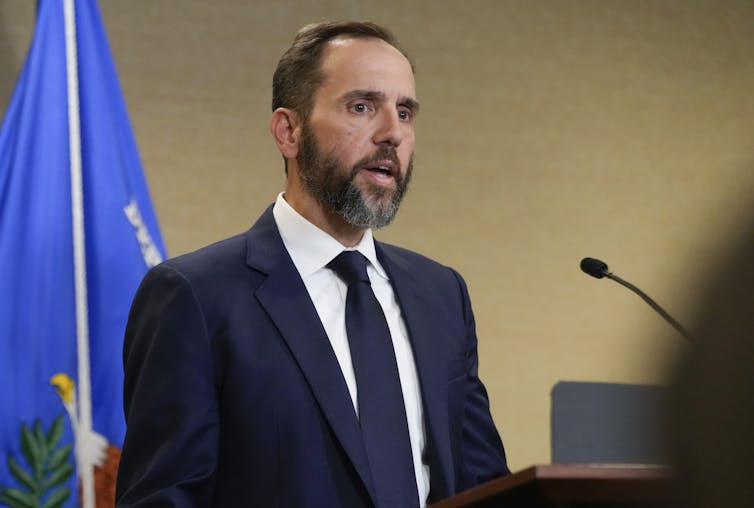
Special Counsel Jack Smith announces the second federal
indictment of Donald Trump on Aug. 1, 2023.
 AP Photo/Jacquelyn Martin
The Justice Department announced its second federal indictment of former president Donald J. Trump on Aug. 1, 2023. The charges are groundbreaking and not just because a former president is facing multiple criminal charges.

It’s because these are the first federal charges alleging a former president effectively attempted a particular kind of coup, called an auto-coup, in which he attempted to keep himself in power by illegal means.

The indictment lists four felony charges. All of them rely on the same facts and boil down to the same set of five allegations, many of which have been previously reported.

All of the charges rest on the claim that Trump and his co-conspirators knew the former president lost the 2020 election, and that his claims of fraud and voting irregularity made before and on Jan. 6, 2021 were unfounded.

Three counts in this new indictment allege conspiracies: There is conspiracy to defraud the government; to obstruct an official proceeding – in this case, counting the electoral votes on Jan. 6, 2021; and against the rights of the voters to cast ballots and have them fairly and honestly counted.

The remaining count alleges obstruction of an official proceeding – namely, tallying the electoral vote. The document states that Trump allegedly had the help of six co-conspirators, including four lawyers, a Justice Department official and a political consultant.

None of them are charged in the indictment, and they are identified by number, not name. This could mean one or more of these people are cooperating with the Justice Department, but not necessarily.

The indictment charges that all of Trump’s many claims of election irregularities “were false, and the Defendant knew that they were false.”

I am a scholar of criminal law and procedure. While Trump is facing multiple other charges, this indictment contains the most serious charges he has faced thus far.
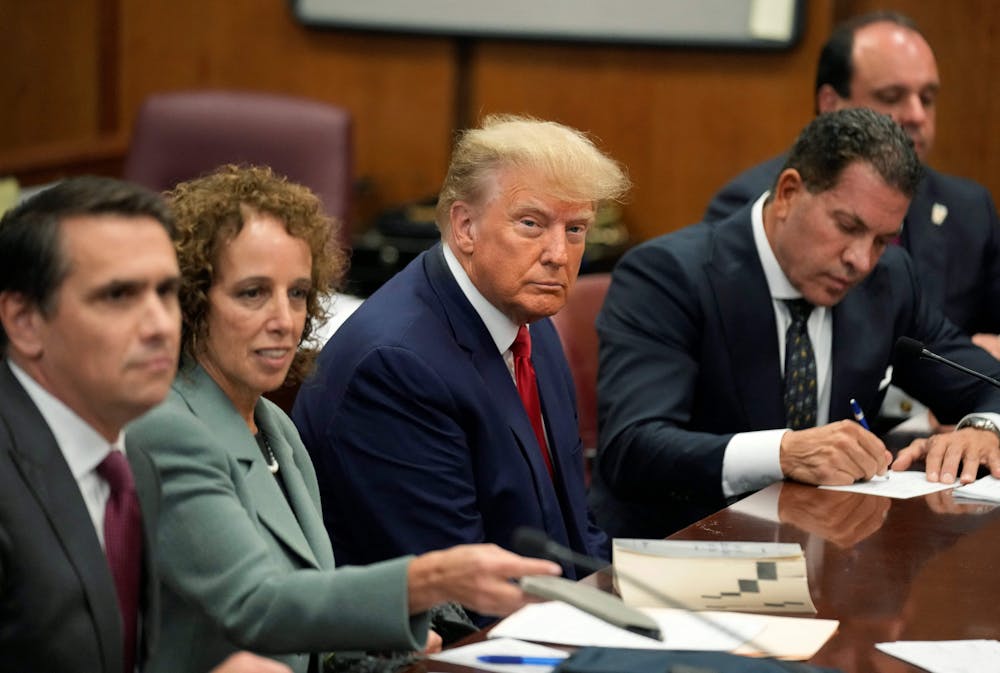
Five people sitting on one side of a table with papers on the table in front of them.
Former President Donald Trump with his attorneys inside the
courtroom during his arraignment at the Manhattan
Criminal Court on April 4, 2023.
 Seth Wenig/POOL/AFP via Getty Images
In another case, Trump is being charged in New York with falsifying business records, which is, to some extent, a technical offense. 

And the Justice Department has charged him in Florida with illegally keeping national security documents, but there is no allegation they were disclosed to foreign agents or represented much more than souvenirs.

This indictment, by contrast, alleges that Trump knowingly worked to hold on to an office he knew he was not entitled to.

Wednesday, August 2, 2023

Most Serious Charges Against Trump Yet Won’t Hurt Him with GOP Voters

Maybe Trump COULD get away with shooting someone in the middle of Fifth Avenue.

ROBERT REICH in Robertreich.Substack.Com

A grand jury has officially indicted Donald Trump on four felony counts related to his attempt to overturn the 2020 presidential election.

These are the most serious charges against Trump yet, but the reality is that these charges will only boost Trump in the Republican primary.

In March, several weeks before the first indictment, Trump had just 43% of the vote in Republican polling, according to a RealClearPolitics average. But a day after he was charged in a hush money scheme to an adult film actress, his numbers had jumped to 50%.

Two months later, he was indicted for mishandling classified documents. His polling average jumped again. By July 18, when a federal judge clarified that Trump had “raped” writer E. Jean Carroll, Trump’s approval had risen to 54% in the RealClearPolitics national polling average—a 10-point climb during the spring and summer.

So today’s long-expected Justice Department indictment of Trump for trying to overturn the last presidential election is likely to boost his favorable rating into the polling stratosphere as far as the Republican nomination is concerned.

Each indictment and civil verdict against Trump provides even more ammunition for Trump in his campaign against the so-called “Deep State.” Each further entrenches his campaign in a singular narrative focusing on him—placing Trump at the center of a national conspiracy.

This dynamic makes it all but impossible for any of his rivals to criticize him. DeSantis and most of Trump’s opponents have embraced the Trump-stoked view that nearly any effort by a Democratic administration to pursue justice against Trump is de facto illegitimate. Siding with Jack Smith against Trump has become a litmus test that is little different from choosing the wrong side on abortion.

The Trump campaign’s current strategy is to attack rivals (mostly Ron DeSantis) for any hint they might be siding with prosecutors over Trump.

The dynamic also ties the Republican Party ever tighter to Trump’s self-referential conspiratorial narrative.

But each indictment and civil verdict has given the rest of America further confirmation of how dangerous and loathsome Donald Trump really is, and how far the Republican Party has gone in rejecting the rule of law.

There will not be enough time in the general election to alter this dynamic. It will likely contribute to Democratic sweeps of the presidency, Congress, and most state contests.

It could also put the current GOP into a death spiral—resulting in a purge of its Trump-dependent lawmakers and candidates. This may be the only way the Republican Party can begin to rebuild itself.

Tuesday’s indictment begins a reassertion of the rule of law in America. We are deeply indebted to Special Counsel Jack Smith and his staff for their care, integrity, and commitment to the Constitution.

© 2021 robertreich.substack.com

ROBERT REICH  is the Chancellor's Professor of Public Policy at the University of California, Berkeley, and a senior fellow at the Blum Center for Developing Economies. He served as secretary of labor in the Clinton administration, for which Time magazine named him one of the 10 most effective cabinet secretaries of the twentieth century. His book include: "Aftershock" (2011), "The Work of Nations" (1992), "Beyond Outrage" (2012) and, "Saving Capitalism" (2016). He is also a founding editor of The American Prospect magazine, former chairman of Common Cause, a member of the American Academy of Arts and Sciences, and co-creator of the award-winning documentary, "Inequality For All." Reich's newest book is "The Common Good" (2019). He's co-creator of the Netflix original documentary "Saving Capitalism," which is streaming now.

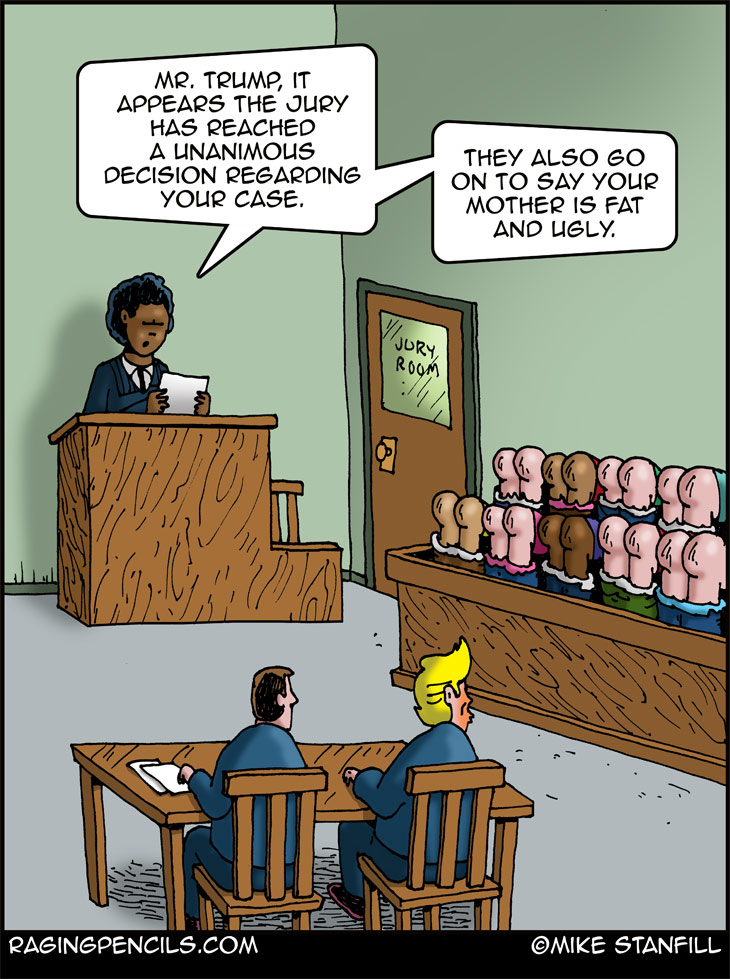
The verdict is in

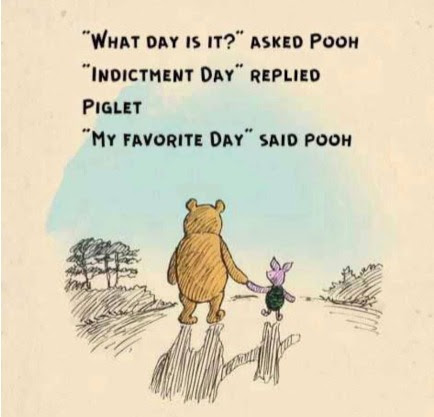
My favorite day, too


Neronha wants shoreline access lawsuit thrown out

Says the beach front property owners' lawsuit is fatally flawed

By Nancy Lavin, Rhode Island Current

The group of coastal taxpayers seeking to stop state agencies from enforcing the new shoreline access law has no grounds to sue.

So said Attorney General Peter Neronha, whose office filed a motion in U.S. District Court for the District of Rhode Island on Monday seeking to dismiss the lawsuit.

The new law, signed by Gov. Dan McKee in June, attempted to clarify a decades long dispute over where to draw the line in the sand, allowing public access to the beach anywhere 10 feet landward from the high tide or “wrack” line.

Weeks later, a group of shoreline property owners known as the Rhode Island Association of Coastal Taxpayers sued Neronha and other state agencies, contending the law amounted to an unconstitutional “taking” of their property and asking for a judge to immediately stop them from enforcing the law.

Neronha’s office countered in the 58-page filing that the taxpayers group failed to identify any individual members who have been harmed by the state law clarifying public beach access. Even David Welch, president of the taxpayers group, doesn’t qualify because the Charlestown beachfront home is owned by a limited liability company, not Welch himself, Neronha’s office said.

Coastal landowners seek injunction against new beach access law

They want to block the new law right now

By Rob Smith / ecoRI News staff

Beachfront property owners drew another line in the sand this week in their legal battle over the state’s new shoreline access law.

The Rhode Island Association of Coastal Taxpayers (RIACT), a 50-member coalition of beach and waterfront property owners, filed a preliminary injunction July 25 in U.S. District Court to stop state authorities from enforcing the law the General Assembly passed and the governor signed last month.

The new law moved the rights of legal access for Rhode Island beachgoers — as guaranteed in the state Constitution — from the mean high-water line (MHW) to 10 feet landward of the lowest seaweed line that can be found on the shore. 

It only impacts lateral access, allowing people to walk up and down the shore contiguously. Getting to the shore, called perpendicular access, is another matter entirely.

The MHW line posed problems for beachgoers and private property owners, as its only discernible with scientific surveying equipment and nearly 20 years of tidal data. The boundary was not only impossible to see with the naked eye, it also was often underwater, and it frequently moved, making the rights to “enjoy the privileges of the shore” illusory, according to lawmakers.

In the recently filed brief, part of a larger lawsuit that seeks to overturn the new law, RIACT’s attorneys Daniel Procaccini and J. David Breemer argued the new law was an illegal seizure of private property and a Fifth Amendment violation by the state because of the public easement it placed on all coastal land. Furthermore, according to the group’s attorneys, RIACT has no other legal remedy but an injunction until its lawsuit plays out in court.

How Omega-3 Fatty Acids Promote Lung Health

The Breath of Life

By NATIONAL HEART, LUNG AND BLOOD INSTITUTE 

Omega-3 fatty acids, prevalent in fish and fish oil, show
promise for maintaining lung health, according to a
comprehensive study supported by the National Institutes of Health.
Omega-3 fatty acids, which are abundant in fish and fish oil supplements, appear promising for maintaining lung health, according to new evidence from a large, multi-faceted study in healthy adults supported by the National Institutes of Health (NIH). 

The study provides the strongest evidence to date of this association and underscores the importance of including omega-3 fatty acids in the diet, especially given that many Americans do not meet current guidelines. 

Funded largely by the National Heart, Lung, and Blood Institute (NHLBI), part of NIH, the study results were published in the American Journal of Respiratory and Critical Care Medicine.

6 ways AI can make political campaigns more deceptive than ever

Will AI be used to rig the 2024 election?

David E. Clementson, University of Georgia

AI-generated "deep fakes" can be vicious or very funny
Political campaign ads and donor solicitations have long been deceptive. In 2004, for example, U.S. presidential candidate John Kerry, a Democrat, aired an ad stating that Republican opponent George W. Bush “says sending jobs overseas
‘makes sense’ for America.”

Bush never said such a thing.

The next day Bush responded by releasing an ad saying Kerry “supported higher taxes over 350 times.” This too was a false claim.

These days, the internet has gone wild with deceptive political ads. Ads often pose as polls and have misleading clickbait headlines.

Campaign fundraising solicitations are also rife with deception. An analysis of 317,366 political emails sent during the 2020 election in the U.S. found that deception was the norm

For example, a campaign manipulates recipients into opening the emails by lying about the sender’s identity and using subject lines that trick the recipient into thinking the sender is replying to the donor, or claims the email is “NOT asking for money” but then asks for money. Both Republicans and Democrats do it.

Campaigns are now rapidly embracing artificial intelligence for composing and producing ads and donor solicitations. The results are impressive: Democratic campaigns found that donor letters written by AI were more effective than letters written by humans at writing personalized text that persuades recipients to click and send donations.

A pro-Ron DeSantis super PAC featured an AI-generated imitation of Donald Trump’s voice in this ad.

And AI has benefits for democracy, such as helping staffers organize their emails from constituents or helping government officials summarize testimony.

But there are fears that AI will make politics more deceptive than ever.

Here are six things to look out for. I base this list on my own experiments testing the effects of political deception. I hope that voters can be equipped with what to expect and what to watch out for, and learn to be more skeptical, as the U.S. heads into the next presidential campaign.

Tuesday, August 1, 2023

Housing is a basic human right

Our government should start treating it that way.

By Farrah Hassen | July 19, 2023

In the wealthiest country on the planet, too many people still lack access to housing.

The pandemic revealed the full extent of the U.S. housing crisis. Where were the roughly 580,000 people living unhoused in 2020 to go under “stay at home” orders? And what about those facing eviction?

At the same time, the pandemic proved that federal intervention could ease the crisis. Eviction moratoria and unemployment relief helped keep more people housed, fed, and secure. But these initiatives ended too quickly.

Lifting federal pandemic eviction protections in 2021 put as many as 17 million people at risk of becoming unhoused. And last year, the number of unsheltered individuals increased by 3.4 percent from 2020 — and many times that in some areas.

There’s a misconception that homelessness is primarily caused by addiction and mental illness. But a new study in California — where over 171,000 people experience homelessness every day  — found that poverty and high housing costs are the driving forces. 

The median monthly income for people who became homeless was just $960, the University of California, San Francisco (UCSF) report found. Prior evictions, poor credit history, and systemic discrimination further prevent people from re-entering housing — and even shorten their life expectancy.

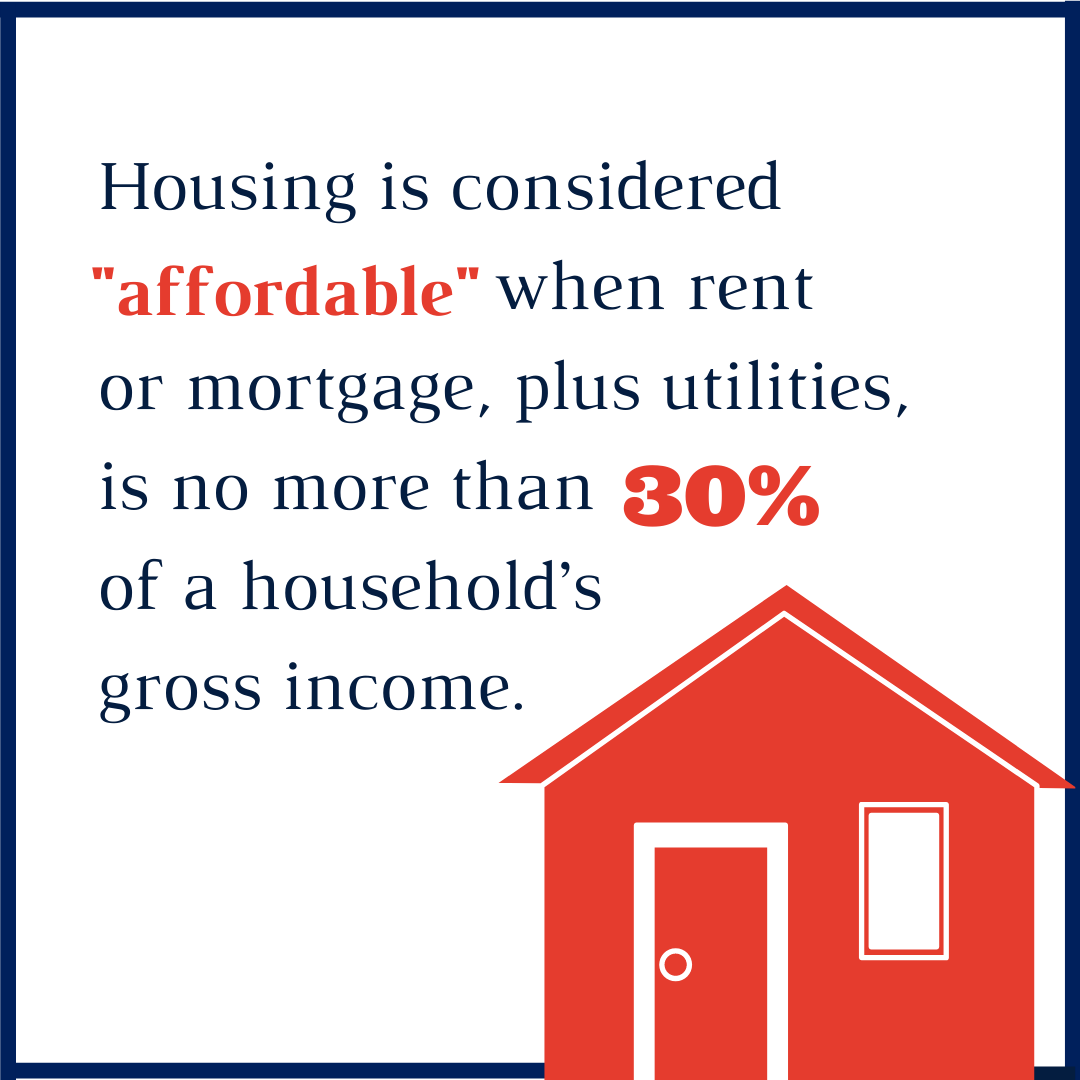
These are national problems. ​​Nearly half of all tenants now spend 30 percent or more of their income on rent, which has risen 18 percent nationally over the past five years. 

Housing is fundamental to every person’s life, health, and security. We need to recognize it as a human right and transform our country’s approach. While this may sound lofty, it’s not as far-fetched as it seems.

International law already treats housing as a human right. 

Run, Donnie, Run


By Michael deAdder

This rule is for thee, not for me

For more cartoons by Jen Sorenson, CLICK HERE

Big difference


The sound of silence?

Researchers demonstrate people hear it

Johns Hopkins University


Silence might not be deafening but it's something that literally can be heard, concludes a team of philosophers and psychologists who used auditory illusions to reveal how moments of silence distort people's perception of time.

The findings address the debate of whether people can hear more than sounds, which has puzzled philosophers for centuries.

"We typically think of our sense of hearing as being concerned with sounds. But silence, whatever it is, is not a sound -- it's the absence of sound," said lead author Rui Zhe Goh, a Johns Hopkins University graduate student in philosophy and psychology. "Surprisingly, what our work suggests is that nothing is also something you can hear."

Good for Your Health and the Climate

The Power of a Plant-Based Diet

By EUROPEAN SOCIETY OF CARDIOLOGY 

According to a comprehensive evaluation of randomized trials published since 1982, both vegan and vegetarian diets are associated with decreased cholesterol and fat levels in the bloodstream.

This research, which was published in the European Heart Journal, indicates that plant-based diets can significantly contribute to the reduction of arterial blockages. This consequently decreases the risk of cardiovascular diseases including stroke and heart attacks, as per the authors of the study.

August 19 School Supply Giveaway Party at the Jonnycake Center of Westerly

Wood River Health and the Jonnycake Center of Westerly join to help parents

Washington County-area non-profit organizations, including the Jonnycake Center of Westerly and Wood River Health have announced that they are partnering for a back-to-school supply giveaway party benefitting local children in need

This second annual event will take place on Saturday, August 19 from 10am to noon in the Jonnycake Center of Westerly’s rear parking lot at 23 Industrial Drive in Westerly. The event is sponsored in part by Neighborhood Health Plan of Rhode Island. 

After recognizing the importance of school preparedness, local organizations have come together for a second year to provide children with backpacks, school supplies, and educational items to ensure the school year starts strongly for all. Musical entertainment will be provided by WBLQ AM 1230, and there will also be games, face painting, craft tables and a visit by a firetruck! 

Families are invited to the event at the Jonnycake Center of Westerly’s rear parking lot at 23 Industrial Drive on Saturday, August 19 between 10am and noon to receive a free backpack that comes filled with essentials needed for school. The backpacks will be distributed on a first-come, first-served basis.