Menu Bar

Home           Calendar           Topics          Just Charlestown          About Us

Tuesday, February 13, 2024

Understanding how the environment affects pregnant people’s health

Exposure to environmental hazards can have long-term effects on pregnant people’s health, too.

Lily Stewart for the Environmental Health News

The effects of environmental hazards on children’s health are widely researched and documented.

Exposure to environmental pollutants can be especially damaging to fetuses as they develop in the womb, resulting in low birth weights, congenital disorders and even stillbirths.

But during pregnancy, fetuses’ bodies aren’t the only ones that develop. Pregnant people go through a development period, too, making them more vulnerable to the health effects of environmental stressors like air pollution, heavy metals, PFAS (per- and polyfluoroalkyl substances), endocrine-disrupting chemicals, pesticides and others.

Now, scientists are starting to study how being exposed to environmental stressors affects pregnant people’s short- and long-term health. Though the mechanisms aren’t clear yet, a handful of researchers across the world are discovering associations between exposure to pollutants during pregnancy and health conditions that can last long after giving birth, such as hypertension and diabetes.

They contend that this burgeoning body of scientific literature shows the need for further research to protect and promote the health of the almost 130 million people worldwide who give birth each year.

Social media and kids

Tech companies rely on young users but fail to protect them

Joan Donovan, Boston University and Sara Parker, McGill University

The CEOs of Discord, Snap, TikTok, X and Meta prepare
to testify before the Senate Judiciary Committee on
Jan. 31, 2024. Alex Wong/Getty Images
“You have blood on your hands.”

“I’m sorry for everything you have all been through.”

These quotes, the first from Sen. Lindsey Graham, R-S.C., speaking to Meta CEO Mark Zuckerberg, and the second from Zuckerberg to families of victims of online child abuse in the audience, are highlights from an extraordinary day of testimony before the Senate Judiciary Committee about protecting children online.

But perhaps the most telling quote from the Jan. 31, 2024, hearing came not from the CEOs of Meta, TikTok, X, Discord or Snap but from Sen. Graham in his opening statement: Social media platforms “as they are currently designed and operate are dangerous products.”

We are university researchers who study how social media organizes news, information and communities. Whether or not social media apps meet the legal definition of “unreasonably dangerous products,” the social media companies’ business models do rely on having millions of young users. At the same time, we believe that the companies have not invested sufficient resources to effectively protect those users.

Mobile device use by children and teens skyrocketed during the pandemic and has stayed high. Naturally, teens want to be where their friends are, be it the skate park or on social media. 

In 2022, there were an estimated 49.8 million users age 17 and under of YouTube, 19 million of TikTok, 18 million of Snapchat, 16.7 million of Instagram, 9.9 million of Facebook and 7 million of Twitter, according to a recent study by researchers at Harvard’s Chan School of Public Health.

Teens are a significant revenue source for social media companies. Revenue from users 17 and under of social media was US$11 billion in 2022, according to the Chan School study. Instagram netted nearly $5 billion, while TikTok and YouTube each accrued over $2 billion. Teens mean green.

Social media poses a range of risks for teens, from exposing them to harassment, bullying and sexual exploitation to encouraging eating disorders and suicidal ideation. For Congress to take meaningful action on protecting children online, we identify three issues that need to be accounted for: age, business model and content moderation.

Monday, February 12, 2024

Bill would end most abuses Charlestown saw under the CCA and ex-Town Administrator Mark Stankiewicz


Chairs DiPalma and Serpa  highlight APRA reform legislation
EDITOR'S NOTE: Before the Charlestown Citizens Alliance (CCA) was booted out of office in 2022, they infamously used their henchman, former Town Administrator Mark Stankiewicz, to cover up shady land deals, financial irregularities and abuse of power through the loopholes in the state open records law. This proposed legislation would end or shrink most of those loopholes. - Will Collette

Sen. Louis P. DiPalma, chairman of the Senate Finance Committee, and Rep. Patricia A. Serpa, chairwoman of the House Oversight Committee, held a press conference today to introduce legislation (2024-S 2256, 2024-H 7181) that would reform the Access to Public Records Act (APRA).
           
“We lived in a very different time when the Access to Public Records Act was enacted in 1978.  The way the public accesses information and data has become far more advanced, and complicated, and the standards of transparency and accountability that the public demands and requires has also changed since that time. 

"No one, whether it is a private citizen or a journalist, should have to jump through unrealistic and overly complicated hoops in order know what’s going on at the State House or in the numerous city and town halls across the state. 

"This proposal will not only keep the public better informed of government operations, but I also truly believe that this bill will help restore trust and accountability between the public and those that serve the public.,” said Chairman DiPalma (D-Dist. 12, Middletown, Little Compton, Newport, Tiverton).
           
“As we have seen with the Washington Bridge closure, access to public documents is crucial for the public to stay informed about how our state is run and managed.  Times change and so must our laws that grant the public the ability to find out what is going on in Rhode Island.

"These changes to APRA are needed in our evolving and more interconnected world and I urge support for this bill that champions transparency and accountability above all,” said Chairwoman Serpa (D-Dist. 27, West Warwick, Coventry).
           
The legislation would amend the Access to Public Records Act in several areas, including:

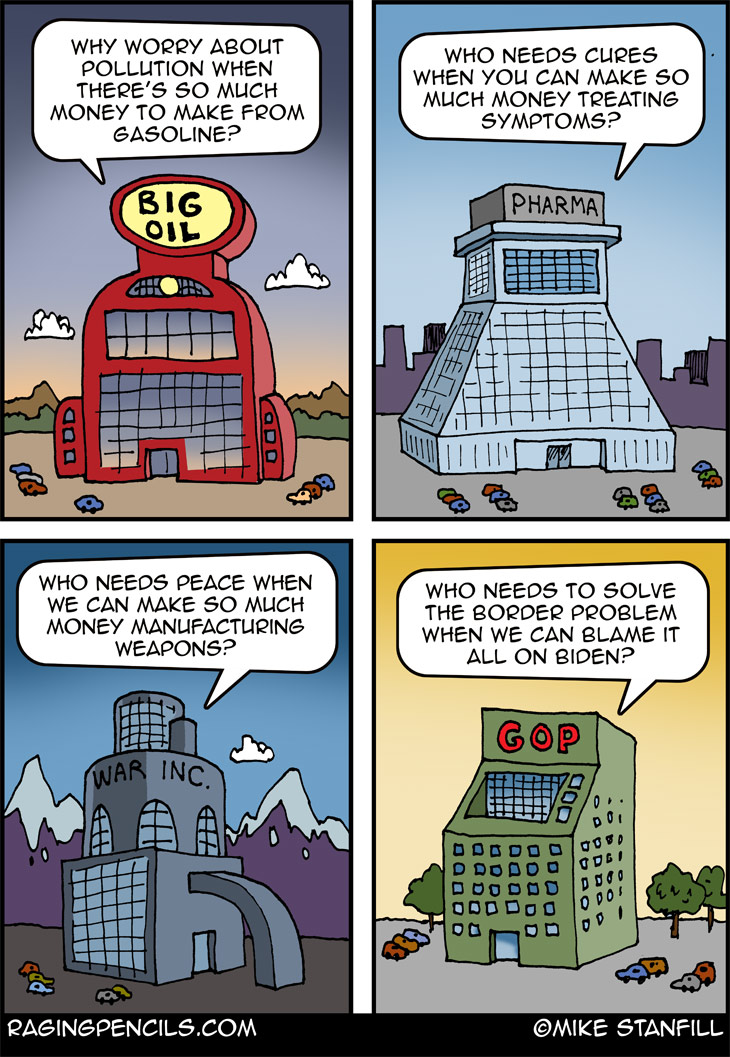
Don't need it

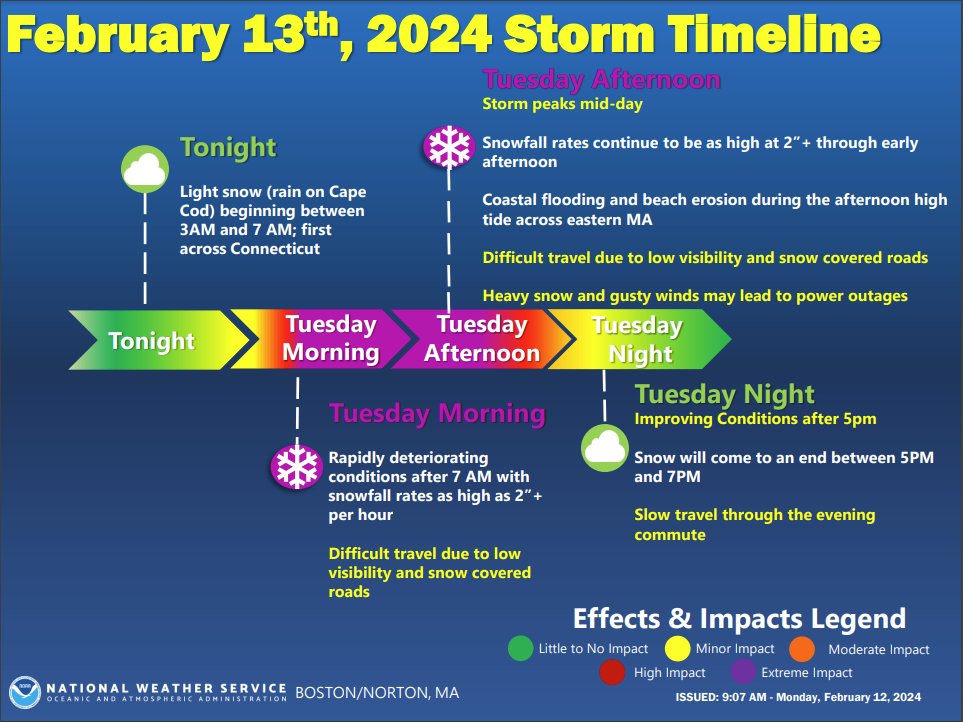
Storm timeline. Predictions on amount of snow vary widely. Be careful out there.

Hey, kids - wanna be a journalist?

Rhode Island students can get up to $15,000 a year

There was a time when journalists were respected
The Rhode Island PBS Scholarship offers awards to residents of Rhode Island PBS’s demographic market area who demonstrate promise of a successful career in the fields of broadcasting, communications, and/or journalism.

In 2017, Rhode Island PBS established the Rhode Island PBS Scholarship. The scholarship offers awards to residents of the station’s demographic market area who demonstrate promise of a successful career in the fields of broadcasting, communications, and/or journalism. 

Applicants must be a graduating high school senior planning to attend an accredited 4-year post-secondary institution, or must be currently enrolled in an accredited 4-year post-secondary institution. 

Applicants will be asked to provide a recommendation letter from a teacher or professional who can attest to the applicant’s merit towards a successful career in the noted fields. Awards of up to $15,000 will be awarded annually and are renewable for an additional three years.

Selection criteria

  • Resident of Rhode Island or Bristol County, Massachusetts
  • A graduating high school senior planning to attend an accredited 4-year post-secondary school, or a student currently enrolled in an accredited 4-year post-secondary institution
  • Demonstration of merit toward a successful career in broadcasting, communications, and/or journalism
  • Award: up to $15,000; past recipients are eligible to reapply
  • Current employees of Rhode Island-PBS and their children and other immediate family members are not eligible to apply.

The price of eggs and more

The Real Reason Your Grocery Bill Is Still So High

BY SONALI KOLHATKAR

Americans have had to weather much in the years since the COVID-19 pandemic first began, including price inflation of basic necessities. 

Grocery bills, especially, are a drain on household finances. But, as recent reports show, inflation is easing across many industries, and yet food prices overall have remained stubbornly high. 

Not only is that an indication of a deep rot at the heart of the food industry, agribusinesses, and corporate grocery chains, but it is also a clear sign that we need to repair our entire food system.

Reporting on a new Census Bureau survey, USA Today’s Sara Chernikoff found that “[t]he average American household spends more than $1,000 per month on groceries.” 

And, while it’s not surprising that those residing in expensive states like California have high grocery bills, there’s little relief for those living in states with lower costs of living. An average California family’s weekly grocery bill is $297.72, but an average North Carolina family’s bill is $266.23—nearly as high.

Attempting to downplay this reality, Paul Donovan, chief economist of UBS Global Wealth Management, wrote in an op-ed in the New York Times that Americans might be overestimating how serious inflation is, feeling the pinch most especially when they buy something as small as a candy bar. 

“[C]onsumers perceive inflation as higher than it actually is,” wrote Donovan. Further, he claimed, “[h]umans are genetically programmed to emphasize bad news over good news when they make decisions.” Donovan is implying that we’re just imagining high grocery bills.

In fact, inflation in the grocery industry has been higher than in other industries, rising 25 percent over the past four years compared to 19 percent overall, and many have pointed to simple greed as the reason: food prices are high because the companies setting prices think they can get away with padding their profits. 

Category 6? Scientists Highlight 'Growing Inadequacy' of Current Hurricane Scale

The experts found five storms that would fit into their hypothetical category—and they have all happened since 2013.

JESSICA CORBETT for Common Dreams

Building on arguments and warnings that climate campaigners and experts have shared for years, a pair of scientists on Monday published a research article exploring the "growing inadequacy" of the Saffir-Simpson Hurricane Wind Scale and possibly adding a Category 6.

Global heating—driven by human activities, particularly the extraction and use of fossil fuels—is leading to stronger, more dangerous storms that are called hurricanes in the North Atlantic and Northeast Pacific, typhoons in the Northwest Pacific, and tropical cyclones in the South Pacific and Indian oceans.

Sunday, February 11, 2024

Hot topics on the agenda for Monday Charlestown Town Council meeting

February 12 Town Council Meeting Preview

 Thomas Dambo

The Charlestown Town Council has an agenda full of compelling topics for Monday night.


First, there will be an executive session meeting, at 6:15 pm, to consider contract agreements with the various unions and associations of town workers. The regular Council meeting will begin at 7 pm in the Council Chambers. Here are some of the topics that will be of interest:


  • The meeting will start with presentations and proclamations honoring former Town Council member Grace Klinger, who passed away on January 20.
  • Amendments to the Town ordinance on Taxation will be introduced, and scheduled for a public hearing on March 11. The changes are mostly corrections that will eliminate unnecessary requirements for those receiving tax exemption. The full text can be read here.
  • A proposed zoning change for the property at 1645 Shannock Road will be introduced and scheduled for a public hearing on March 11. This would change the property to mixed use, with a commercial portion, to be used by South County Habitat For Humanity, and a two-bedroom residential unit. The property most recently held a septic service company. Prior to that, it was the site of Charlestown Fire District's Station 1 (Charlestown-Richmond Fire Department) before moving to the new building on South County Trail. The details can be read here.
  • The Council will consider a proposed resolution supporting state legislation authorizing the Chariho Regional School District's plan to build three new elementary schools, replacing existing schools. This Resolution supports the people's right to vote on this matter. It can be read here.
  • The Council will consider filling an Alternate member position on the Zoning Board of Review. Applications have been received from Joseph M. DeMarco, William Isabella, and Steven A. Rice.
  • The Council will hold a public hearing amending Chapter 218 - Zoning, primarily to conform to recently enacted State mandates. The proposed changes can be read here.
  • The Council will discuss a report on options for resurfacing Charlestown Beach Road, along and near the beach, and the recommendation from the Climate Resiliency Commission. The report was initially presented to the Council at the January 22 meeting. Next steps will be decided at this meeting. The information can be read here.
  • The Ninigret Troll artwork project and agreement with the South County Tourism Council will be discussed.
  • The Council and Town Solicitor will discuss whether a special town vote will be needed to approve possible demolition of the existing Charlestown Elementary School as part of the Chariho Regional School District's plans to build new schools. This item is continued from the January 22 meeting.
  • The Council will discuss whether and how to fill the current vacancy on the Town Council. Information, including the Town Charter section on filling vacancies, can be read here.

The entire agenda, including the procedure for streaming access, can be viewed here.

Trump's next lawyer?


But what about the paper cuts?

What do your blood test results mean?

A toxicologist explains the basics of how to interpret them

Brad Reisfeld, Colorado State University

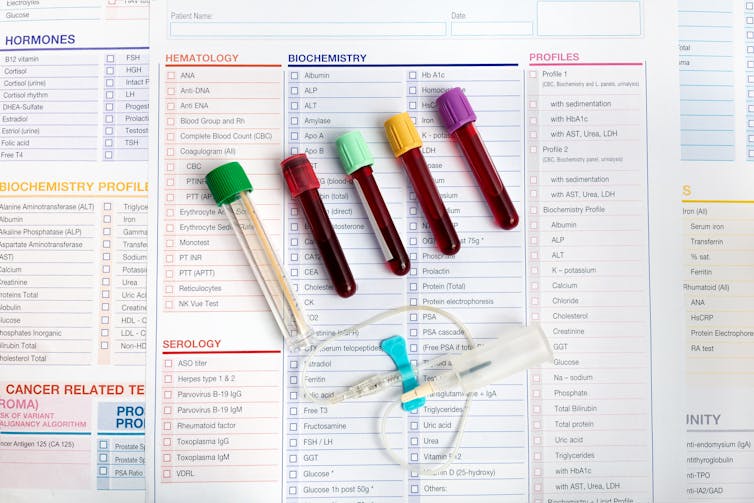
From CBC to CMP and beyond, blood test panels
provide essential information to health practitioners.
 angelp/iStock via Getty Images Plus
Your blood serves numerous roles to maintain your health. To carry out these functions, blood contains a multitude of components, including red blood cells that transport oxygen, nutrients and hormones; white blood cells that remove waste products and support the immune system; plasma that regulates temperature; and platelets that help with clotting.

Within the blood are also numerous molecules formed as byproducts of normal biochemical functions. When these molecules indicate how your cells are responding to disease, injury or stress, scientists often refer to them as biological markers, or biomarkers. 

Thus, biomarkers in a blood sample can represent a snapshot of the current biochemical state of your body and analyzing them can provide information about various aspects of your health.

As a toxicologist, I study the effects of drugs and environmental contaminants on human health. As part of my work, I rely on various health-related biomarkers, many of which are measured using conventional blood tests.

Understanding what common blood tests are intended to measure can help you better interpret the results. If you have results from a recent blood test handy, please follow along.

Longitudinal study links PFAS contamination with teas, processed meats and food packaging

This crap is everywhere!

Zara Abrams

New research is shedding light on food and beverage products linked to per- and polyfluoroalkyl substances, or PFAS, and suggesting potential solutions for protecting the public.

PFAS are known to be harmful to health: They can disrupt hormones, weaken bones and increase disease risk. Sometimes called “forever chemicals” because they take so long to break down, PFAS are used in fabrics, furniture and other household items—but they are also hard to get rid of. 

Recent tests now trace the chemicals to livestock, drinking water and food packaging, but little is known about the extent of that contamination.

A new study, funded in part by the National Institutes of Health and led by researchers at the Keck School of Medicine of USC, is uncovering key details about the link between PFAS and diet. 

Three things every woman should know about stroke risk

One in five older women will suffer a stroke 

Brown University


Dr. Tracy Madsen has been studying the topic of women and stroke since beginning her residency in emergency medicine at Brown’s Warren Alpert Medical School in 2008. She originally focused on the disparities in the treatment of women in the emergency department.

“The E.D. was an important setting for me, because that’s where I care for patients,” said Madsen, an associate professor of emergency medicine and epidemiology at Brown and attending physician at the Miriam Hospital and Rhode Island Hospital. “I’ve always been very interested in learning whether women who came to the E.D. with stroke symptoms were receiving the care they should be receiving.”

Over time, other stroke specialists came to share Madsen's research interests.

“When I first started doing some of this work 10 years ago, it felt like there weren’t that many people working in this area, but the number of investigators who are actively working on ways to improve stroke care for women has expanded significantly,” Madsen said. “Understanding how to improve stroke care for women will not only elevate stroke care for women, but will ultimately improve stroke care for all.”

Madsen has participated in more than 35 research projects on women and stroke, focused not only on clinical care and treatment but also risk factors.

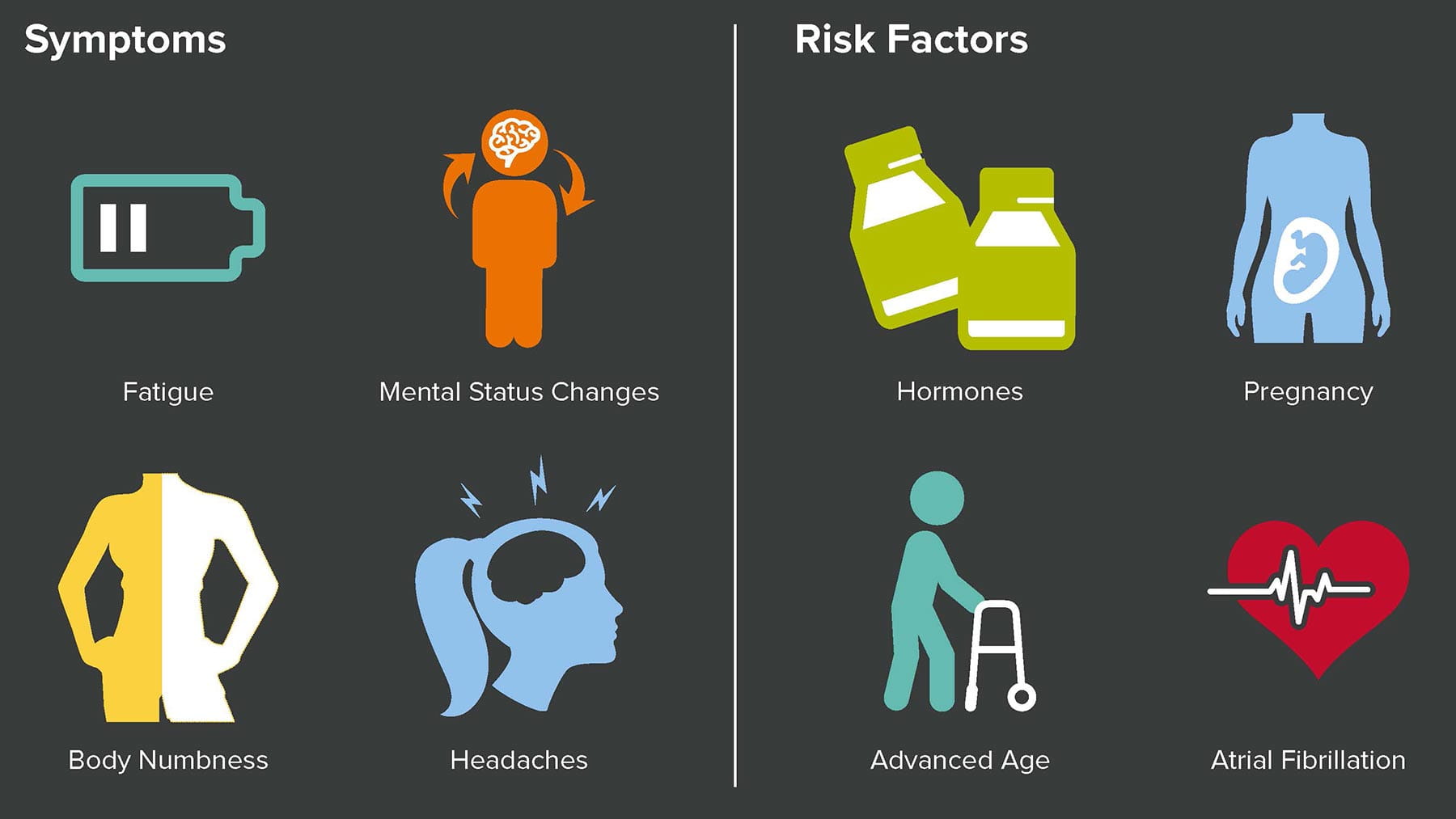
A woman’s stroke risk changes with age, she noted: The likelihood of a stroke is higher during pregnancy and increases again during and after menopause. Elderly women are the most likely to have a severe and debilitating stroke. 

In the United States, one in five women between ages 55 and 75 will have a stroke, according to the U.S. Centers for Disease Control and Prevention; stroke is the third leading cause of death for women. Yet four in five strokes are preventable, Madsen said, which is why it’s important for researchers and clinicians to understand the risk factors and educate women on how they can protect themselves.

With the incidence of risk so significant, Madsen shared three insights from her recent research projects on women and stroke.

Saturday, February 10, 2024

As economic gains under Biden become undeniable, denial seems to be lessening

Even Trumpers are having to admit it.

By TOM REDBURN

Many people remain dissatisfied, but it’s time to admit what has been obvious for quite some time: the U.S. economy is delivering more prosperity to more Americans than at almost any time in my lifetime (73 years!).

Perhaps the only comparable periods were the late 1990’s in the midst of the Clinton-era tech boom driven by the expansion of the Internet, and the mid–to-late 1960s, after the Kennedy-Johnson tax cuts of 1964 and before a combination of Vietnam War and Great Society spending forced the government to raise interest rates and taxes to try to restrain inflation.

We’re still living in an era of deep inequality, of course, ushered in by profound changes in the global economy and the neo-liberal policies initiated during Ronald Reagan’s presidency. 

But the tight labor market of recent years has helped narrow the gap, as workers in the bottom half of the income ladder have made outsized gains, while the growing strength of labor unions has also lifted the fortunes of blue-collar industrial workers, even those not unionized as employers raise wages to compete.

All in all, despite ongoing problems with expensive housing and health care costs, Americans are doing so well heading into this election year that the economy should provide plenty of support for the incumbent president despite the rose-colored contentions of his far less successful predecessor.