
Wednesday, March 20, 2024

What Is the Best Way To Memorize Stuff?
Pacing helps
By UNIVERSITY OF PITTSBURGH
.webp)
The research, published in the journal Proceedings of the National Academy of Sciences (PNAS),
suggests that varying what we study and spacing out our learning over time can
both be helpful for memory — it just depends on what we’re trying to remember.
“Lots of prior research has shown that learning and
memory benefit from spacing study sessions out,” said Benjamin Rottman, an
associate professor of psychology and director of the Causal Learning and
Decision-Making Lab at Pitt.
“For example, if you cram the
night before a test, you might remember the information the next day for the
test, but you will probably forget it fairly soon,” he added. “In contrast, if
you study the material on different days leading up to the test, you will be
more likely to recall it for a longer period of time.”
But while the “spacing effect” is one of the most replicated findings in psychological research, much of this work has been predicated on the idea that what you are trying to learn — the content of the experience itself — repeats identically each time. Yet that is rarely the case in real life, when some features of our experiences may stay the same, but others are likely to change.
For example, imagine repeat trips to your local
coffee shop. While many features may stay the same on each visit, a new barista
may be serving you. How does the spacing effect work in light of such variation
across experiences?


RI Republican senators vote against safe gun storage
Safe weapons bill passes through Rhode Island Senate
By Christopher Shea, Rhode Island Current
 |
| Republicans are OK with this |
The bill sponsored by Sen. Pam Lauria, a Barrington Democrat, was passed 28-7. All five of the Senate’s Republicans voted against the measure, along with Democrats Leonidas Raptakis of Coventry and Frank Ciccone III of Providence.
 |
| And of course, Charlestown state Senator Elaine Morgan voted NO while our other Senator Victoria Gu voted YES. |
“How do we protect our children from the leading cause of death in their age group?” Lauria asked her Senate colleagues. “How do we reduce targeted school gun violence? How do we reduce children firearm suicides? And how do we reduce gun thefts? Research reveals that locking firearms and ammunition is associated with a dramatic reduction in all of the above.”
Lauria’s bill requires that all firearms be stored in a locked container or equipped with a tamper-resistant lock when not in use by the owner or another authorized user.
Right to Read Act puts Rhode Island ahead of many states.
Books and literacy education need proper funding
By Julia Steiny, Rhode Island Current

So said one wag among the many educators I’ve talked to lately about the Right to Read Act. School administrators in particular expressed similar sentiments in less colorful terms.
How could a governing body decide to use their power to give real sparkle to Rhode Island’s lackluster education system — and then not attach a single dollar to their demands?
Granted, the Rhode Island Department of Education cobbled together a bunch of competitive grants the districts could apply for and maybe get. Some schools used their federal ESSA money, which will be entirely gone in September, adding to the deficit now referred to as “the fiscal cliff.”
Unfortunately for struggling readers, some schools were delighted that the pandemic windfall could pay for other long-standing needs — computers, raises, mental-health workers.
But with Right to Read, all schools, district and charter, must figure out how to meet the massive challenges of getting their entire staff trained in science-based reading, paying for substitutes to cover those teachers during training, and buying new curricula with related materials, and so forth.
Reading instruction here is shifting 180 degrees, which is great. But not if the underfunding is a setup for failure.
Tuesday, March 19, 2024
Stable genius
Seriously, how dumb is Trump?
.webp)
In recent days, Trump has again publicly charged that E.
Jean Carroll’s allegation of sexual abuse, for which he has been found liable
in court, is “false.”
When a jury last year found Trump liable for sexually
abusing and defaming E. Jean Carroll, Trump responded at a CNN town hall by
defaming Carroll again.
So when it came time earlier this year for another jury
to decide what Trump owed Carroll in the second defamation lawsuit, her
attorneys asked jurors to make sure it was enough to “make him stop.”
The second jury awarded Carroll $83.3 million (which,
with interest added in, is $91 million). But it apparently is still not enough
to make Trump stop.
Trump has just renewed his attacks on Carroll in much the
same terms as before — claiming that she “made up” the story and that he had
“never heard” of her.
Unsurprisingly, Carroll’s attorney now suggests there
could be a third lawsuit, because the previous verdict was obviously not enough
to dissuade him from more defamation.
I have to wonder why the mainstream media isn’t
discussing Trump’s extraordinary stupidity.
UPDATE: Charlestown teamwork
Rep. Spears, Sen. Gu introduce coastal resiliency bill
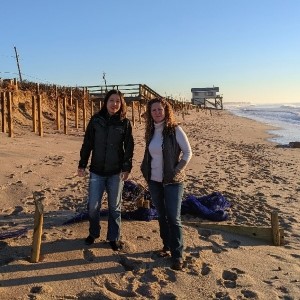
Rep. Tina Spears and Sen. Victoria Gu are
sponsoring legislation to mandate the creation and maintenance of a statewide
coastal resiliency plan, the Act on Coasts. The plan will assess community
vulnerabilities, recommend mitigation strategies along ocean and riverine
coasts, and recommend financing strategies to implement these resiliency
strategies.
“Rising sea levels aren’t just coming – they are already
here,” said Representative Spears (D-Dist. 36 Charlestown, New Shoreham, South
Kingstown, Westerly). “The question is what we plan to do in response. This
bill will ensure that the state climate resiliency plan accounts for mitigation
and resiliency efforts along all our coasts and waterways.”
The 2021 Act on Climate already mandates a statewide
climate change resiliency plan. This legislation adds a dedicated coastal
resiliency plan to that mandate and ensures that it be reviewed and updated at
least every two years, as coastal conditions in Rhode Island change and
mitigation strategies evolve.
“In the past six months we’ve seen repeated and severe flooding and erosion along our coasts and rivers statewide. We have to do more to adapt so that we don’t lose the places we love in South County,” said Senator Gu (D-Dist. 38, Westerly, Charlestown, South Kingstown).
“While work is already
underway across the state to mitigate these adverse effects, we need to
integrate all the federal, municipal, and state efforts into a comprehensive
and actionable plan.”
Representative Spears introduced the bill (2024-H
7022) in the House on January 5. Senator Gu will shortly introduce the same
bill in the Senate.


Former U.S. poet laureate, Pulitzer Prize winner to visit URI for National Poetry Month
Natasha Trethewey to give reading on April 4

Trethewey will read from her 2018 poetry collection “Monument: Poems New & Selected,” which was longlisted for the National Book Award, at 5 p.m. in the Galanti Lounge of the Carothers Library and Learning Commons, 15 Lippitt Road, Kingston.
There will also be a question and answer session. The event is free and open to the public.
Registration is required to attend in-person or to receive a link to the livestream.
“What better way to celebrate National Poetry Month than by listening to the elegant and heartfelt work of one of America’s handful of top poets,” said Peter Covino, associate professor of English at URI.
“National Poetry Month is a time to contemplate what excellent writing and measured, rhythmic speech can do to change and improve the national conversation about all types of profound creative and social issues.”
Trethewey, who was the 19th poet laureate of the United States from 2012-14 and a poet laureate of the state of Mississippi, won the 2007 Pulitzer Prize for her collection of poetry “Native Ground.”
Diet Myths Debunked by Hard Science
Be flexible
By TAYLOR & FRANCIS GROUP
.webp)
Joyce Patterson, MPH, RDN, BC-ADM, CPT is a registered
dietitian and a diabetes care and education specialist at Michigan Medicine in
Ann Arbor, U.S., and she says the science points to a balanced approach.
“We live in a world full of messages to restrict, eliminate, and fast, and misconceptions related to diet trends are common, such as macronutrient or supplement needs,” she explains.
“For example, the war
wages on over fats versus carbs, or eggs come in and out of favor every couple
of years, and the media and food manufacturers exploit such information to
drive what people think about nutrition to increase sales.
“The sheer number of products and programs claiming to
‘reset your metabolism’ or ‘cleanse’ your system indicates that many people are
indeed interested in the science. But few receive comprehensive and reliable
nutrition education and are unable to discern between marketing ploys and good
science. They are making food choices and purchase decisions based on minimal
or misleading information.”
A Fight is Brewing Over Rhode Island’s Forests
Prevent fires through more logging?
.webp)
But critics argue the measures are a
thinly-veiled attempt by the timber industry to increase logging on public
lands for private profit.
At the center of the controversy is the
“Forestry and Forest Parity Act” (2024 H 7618), sponsored by Representative
Megan Cotter. The bill would provide significant tax breaks for commercial
logging operations, remove zoning restrictions on where they can take place,
and formally declare timber harvesting a “permitted use” in essentially all
areas of the state.
“We need to adapt to our changing climate
with a new and more vigorous approach to forest management,” Cotter wrote in a
recent op-ed for RI News Today. “That means we must work as partners with
landowners, helping them safely manage the risks of fires, for their benefit
and the safety of the public.”
Monday, March 18, 2024
Taylor Swift inspires new MAGA fever dream
Steve Bannon’s latest theory on Taylor Swift is the craziest conspiracy yet
By Walter Einenkel for Daily Kos

If you don’t know, according to
conspiracists, Taylor Swift is not-so-secretly being used by deep-state forces hellbent on
reelecting President Joe Biden. Bannon plussed-up the conspiracy theory by
implying that Swift’s successful tour’s dates were not coincidental. Cue
dramatic sting!d More
BANNON:
This is the Taylor Swift situation. I don't believe in coincidences. Her tour, which is the biggest tour, I think, in music history, stops on 20 August and doesn't pick back up until mid-November, early to mid-November. To be fully available after Labor Day to do whatever. And she's pretty adamant.
She got involved in the ‘22 midterms, and Taylor Swift, with TikTok in back, is a formidable presence. And anybody that doesn't believe that, I don't think is looking at the demographic and the power she has with that demographic.


Subscribe to:
Posts (Atom)