Menu Bar

Home           Calendar           Topics          Just Charlestown          About Us

Monday, September 27, 2021

Abortion bans will kill women

Study shows an abortion ban may lead to a 21% increase in pregnancy-related deaths


Banning abortion can have health consequences for pregnant people.
 Jordan Vonderhaar/Stringer via Getty Images News
A new Texas law bans nearly all abortions, and other states have indicated that they likely will follow suit. 

But the research is clear that people who want abortions but are unable to get them can suffer a slew of negative consequences for their health and well-being.

As a researcher who measures the effects of contraception and abortion policy on people’s lives, I usually have to wait years for the data to roll in. But sometimes anticipating a policy’s effects before they happen can suggest ways to avoid its worst consequences.

In my forthcoming peer-reviewed paper, currently available as a preprint, I found that if the U.S. ends all abortions nationwide, pregnancy-related deaths will increase substantially because carrying a pregnancy to term can be deadlier than having an abortion.

Burn, Mitch, burn


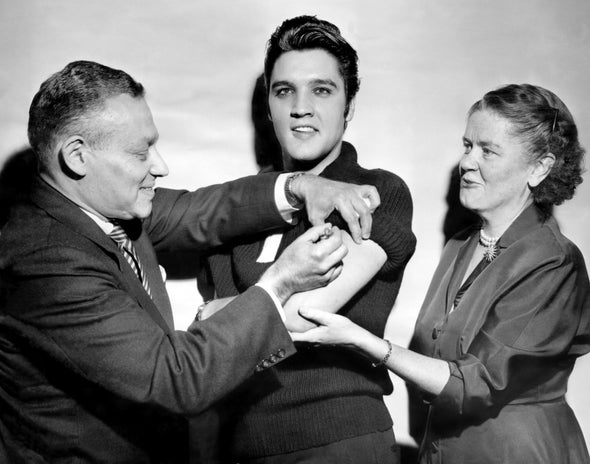
Elvis spotted getting vaxxed!

 Follow the King

Yeah, it was in 1956 and happened on the "Ed Sullivan Show." He did this with the intent of inspiring public confidence in the polio vaccine. Wonder what he would think of all those folks who STILL think he's The King but won't get vaxxed. Getty Images.

Prevent roadkill in Charlestown

Fall means more deer on the road: 4 ways time of day, month and year raise your risk of crashes


Deer cross roads whenever they wish, but some time periods are
higher risk than others. Josh Edelson/AFP via Getty Images
Autumn is here, and that means the risk of hitting deer on rural roads and highways is rising, especially around dusk and during a full moon.

Deer cause over 1 million motor vehicle accidents in the U.S. each year, resulting in more than US$1 billion in property damage, about 200 human deaths and 29,000 serious injuries. 

Property damage insurance claims average around $2,600 per accident, and the overall average cost, including severe injuries or death, is over $6,000.

While avoiding deer – as well as moose, elk and other hoofed animals, known as ungulates – can seem impossible if you’re driving in rural areas, there are certain times and places that are most hazardous, and so warrant extra caution.

Transportation agencies, working with scientists, have been developing ways to predict where deer and other ungulates enter roads so they can post warning signs or install fencing or wildlife passages under or over the roadway. Just as important is knowing when these accidents occur.

My former students Victor Colino-Rabanal, Nimanthi Abeyrathna and I have analyzed over 86,000 deer-vehicle collisions involving white-tailed deer in New York state using police records over a three-year period. Here’s what our research and other studies show about timing and risk:

What can possibly go wrong?

Now we’re cooking with lasers

Columbia University School of Engineering and Applied Science

Imagine having your own digital personal chef; ready to cook up whatever you want; able to tailor the shape, texture, and flavor just for you; and it's all at the push of a button. Columbia engineers have been working on doing just that, using lasers for cooking and 3D printing technology for assembling foods.

Under the guidance of Mechanical Engineering Professor Hod Lipson, the "Digital Food" team of his Creative Machines Lab has been building a fully autonomous digital personal chef. Lipson's group has been developing 3D-printed foods since 2007. Since then, food printing has progressed to multi-ingredient prints and has been explored by researchers and a few commercial companies.

The official word on booster shots

You can (and should get the Pfizer booster if your last Pfizer shot was 6+ months ago and you are 65 and older

Also if you are younger but are immuno-comprised or have illnesses (e.g. diabetes) that put you at higher risk or you are a front-line worker (e.g. health care, grocery store)

Matthew Woodruff, Emory University

The FDA and CDC are recommending use of a third shot, or “booster dose”
for certain groups of people in the U.S. Patrick T. Fallon/AFP via Getty Images
Following the recommendations of its vaccine advisory committee, the Food and Drug Administration gave emergency use authorization to Pfizer-BioNTech’s COVID-19 vaccine booster dose for certain populations. 

The single shot is to be administered six months following completion of the original two-dose course.

The FDA’s Sept. 22, 2021, decision to not extend boosters to the general population – at least not yet – was a direct rebuke to the Biden administration’s announcement in August that booster shots would be rolled out to all eligible Americans beginning in late September. Biden’s pledge had been widely criticized for getting out in front of the science and the regulatory process.

The FDA instead limited its authorization of the third Pfizer dose to people 65 and older, people ages 18-64 at high risk of severe COVID-19 due to pre-existing conditions, and individuals with frequent risk of exposure to the coronavirus through their work, such as health care workers and teachers.

The Centers for Disease Control and Prevention’s Advisory Committee on Immunization Practices then issued its own booster recommendations on Sept. 23, 2021. Its guidance aligned with the FDA’s authorization of boosters for use in ages 65 and up and people at high risk of severe COVID-19, but stopped short of endorsing booster shots for people with frequent occupational exposure. 

However, in an effort to realign the two agencies’ recommendations, CDC director Dr. Rochelle Walensky overrode the CDC advisory committee, providing the go-ahead for all groups listed under the FDA’s emergency use authorizations – including those with increased job-site risk.

Despite the mixed messaging between the agencies, the immediate effect is that millions of Americans will be in line for added protection amid concerns over waning vaccine immunity. An ongoing evaluation of whether COVID-19 boosters should be administered more broadly among vaccine-eligible people is likely to take place in the coming months, as more data becomes available to inform questions of safety, need and efficacy of boosters.

EDITOR'S NOTE: In Rhode Island, you should probably make an appointment. Pharmacies (e.g. CVS) can give your flu shot at the same time. Flu could make a comeback this winter with fewer people wearing masks than last year.  - Will Collette

Sunday, September 26, 2021

There WILL be a next time

How Congress Can Prevent the Next Pandemic

By Gabe Bankman-Fried for the Independent Media Institute

The House of Representatives just took a much-needed first step in preparing for the next pandemic. The Energy and Commerce Committee announced that the Build Back Better Act will include  $15 billion for pandemic preparedness. 

This modest investment -- less than .5% of the Build Back Better package -- will massively pay off in helping us avoid another calamity like COVID-19.  

$15 billion isn’t enough, but it is an important starting point. We must come to terms with the grim certainty that another pandemic will devastate our country in our lifetimes. Our government cannot afford another scramble for vaccine technology and personal protective equipment.

We must prepare for the next pandemic today. 

Eleven times

By Ann Telnaes, Washington Post


In case you forgot


Will we control it or will it control us?

New report assesses progress and risks of artificial intelligence

Brown University


Artificial intelligence has reached a critical turning point in its evolution, according to a new report by an international panel of experts assessing the state of the field. 

Substantial advances in language processing, computer vision and pattern recognition mean that AI is touching people’s lives on a daily basis — from helping people to choose a movie to aiding in medical diagnoses.

With that success, however, comes a renewed urgency to understand and mitigate the risks and downsides of AI-driven systems, such as algorithmic discrimination or use of AI for deliberate deception. Computer scientists must work with experts in the social sciences and law to assure that the pitfalls of AI are minimized.

Those conclusions are from a report titled “Gathering Strength, Gathering Storms: The One Hundred Year Study on Artificial Intelligence (AI100) 2021 Study Panel Report,” which was compiled by a panel of experts from computer science, public policy, psychology, sociology and other disciplines. 

AI100 is an ongoing project hosted by the Stanford University Institute for Human-Centered Artificial Intelligence that aims to monitor the progress of AI and guide its future development. This new report, the second to be released by the AI100 project, assesses developments in AI between 2016 and 2021.

How Much Water Should I Drink?

We Asked Five Experts

By ALEXANDRA HANSEN, THE CONVERSATION 

Do I have to drink eight glasses of water per day?

Everyone knows humans need water and we can’t survive without it. We’ve all heard we should be aiming for eight glasses, or two liters of water per day.

This target seems pretty steep when you think about how much water that actually is, and don’t we also get some water from the food we eat?

We asked five medical and sports science experts if we really need to drink eight glasses of water per day.

All five experts said no

Here are their detailed responses:

Top 11 Reasons for COVID-19 Vaccine Hesitancy

Could “stupid” be one of them?

By UNIVERSITY OF TECHNOLOGY SYDNEY 

By Walt Handelsman, The Advocate
People’s trust in the government’s approval of a safe and effective vaccine against COVID-19 is the biggest driver of vaccine uptake, an Australian study has found.

Second on the list of motivations identified in the study is the perceived effectiveness of the vaccine to protect others in the community.

The next two most common drivers of vaccine hesitancy were found to be “free-riding,” where individuals believe they can benefit from others taking up the vaccine without being immunized themselves, and conspiracy beliefs about vaccination, capturing the attitudes of “anti-vaxxers.”

The study, conducted by researchers from the Centre for Business Intelligence & Data Analytics at the University of Technology Sydney (UTS), sampled more than 4300 respondents in Australia, New Zealand, the United States, Canada, and the United Kingdom, and found 11 factors were enablers or barriers to COVID-19 vaccination. 

“This study offers strong insights for improving vaccination coverage, with the challenge of implementing one of the most important vaccination programs in human history,” said Associate Professor Paul Burke, Deputy Director, Centre for Business Intelligence & Data Analytics at UTS Business School.

“While the development of effective vaccine offerings is essential, unless people are going to be vaccinated such programs will not be successful. This study tells us the who and the why to encourage more significant uptake.” 

Saturday, September 25, 2021

States vs. Big Business

Rhode Island has been an active litigant

By Phil Mattera for the Dirt Diggers Digest

Twenty twenty-one is turning out to be a banner year for state government prosecution of corporate crime and misconduct. 

The biggest events are, of course, the settlements with pharmaceutical companies Purdue Pharma and Johnson & Johnson along with the three big drug distributors—Cardinal Health, AmerisourceBergen and McKesson—for their role in creating and prolonging the opioid epidemic.

While some argue that the amounts are not sufficient, those cases will result in billions of dollars in payments to state governments from the corporations and the family, the Sacklers, who controlled the now bankrupt Purdue and grew enormously wealthy from its operations.

In all, the states will rack up more than $30 billion in 2021, which would be the largest amount since 2008, when the states received about $53 billion in payments, largely as the result of a series of billion-dollar-plus settlements with the likes of Merrill Lynch, Morgan Stanley and Goldman Sachs to resolve allegations that the Wall Street banks misled investors in the marketing of auction-rate securities.

This year’s total is not entirely the result of the opioid litigation. There have also been numerous other cases resolved by state attorneys general that may not involve billions but are still quite significant. Here are some examples.

In July, the New York AG announced that TIAA-CREF, a subsidiary of retirement-services giant TIAA, had agreed to pay $97 million to resolve allegations that it fraudulently misled tens of thousands of customers into moving their retirement investments into higher-fee accounts offered by the company.

History lesson

By Matt Davies, Newsday


Be Ready for Ticks


Be Ready for Ticks—Be TickSmart™


At TickEncounter, we are re-imagining the way people learn about ticks and tick-bite protection. Imagine if learning about ticks was fun … engaging … interactive … and still informative! Check out these innovative resources and tools to help you get TickSmart™.


Mom daughter walk in woods


Simple, Effective Strategies To Enjoy Nature and Avoid Ticks


TickSmart™ focuses on providing people at risk for dangerous tick encounters with simple, effective strategies—everyday practices—for tick-safe living. Our goal is to make tick-bite protection so easy that you’ll actually “do it.”  Get TickSmart™!


United States map


Use the Interactive Tick Map


Find a tick? Or just curious about tick activity in your region? Maybe you want to discover tick encounter risk across the country before your next trip? Pick a date and pick a state, then use our tool to get started. Explore the map.


TickSpotters


Need Help Identifying Ticks?


Our TickSpotters program provides users with accurate, timely tick identification information, as well as science-based risk assessments tailored to their tick.


Our expert guidance empowers people to take best next actions following tick encounters to lessen their risk of future tick-borne disease and tick bites. Submit a tick.


Tick habitat sign


Post a Tick Habitat Sign


Our innovative QR code "Warning—Tick Habitat" sign provides anytime access to simple, practical ways for taking best practice actions to prevent or effectively deal with tick bites. Users just scan the QR code—it’s that easy! Purchase your sign today.


Dog sits in pile of leaves


TickSmart Google Calendar Offers Free Tick Reminders


Tick prevalence and behavior changes as their life phases do. We have put together a Google calendar to take the guesswork out of your tick prevention for you and your pets!


Add this free calendar to your existing calendar today, and be reminded when to take tick-specific actions! Add TickEncounter's Google calendar.