Menu Bar

Home           Calendar           Topics          Just Charlestown          About Us

Tuesday, October 5, 2021

URI Theatre planning full season with return of live audiences

Good luck with that

Lineup features ‘Silent Sky,’ ‘Clue,’ ‘Twelfth Night’ and ‘Wizard of Oz’ opening Oct. 14

Tony LaRoche

BACK ON STAGE: URI actors rehearse a scene from “Miss Nelson is Missing!” last spring. The play was filmed and shown online to more than 9,000 elementary and middle school students around the state. This year, the goal is to bring audiences back into the theater. (URI Photo by Nora Lewis)

The University of Rhode Island Theatre Department opens an uncertain season next month with a play about a pioneering group of women “computers” who helped scientists map the stars and night sky.

Theatre Chair David Howard will be wishing on those stars, hoping the 2021-2022 season’s return to live theater goes off with as few hitches as possible.

With the pandemic still shuttering many theaters, the Theatre Department is planning a full slate of four productions intended to be staged before live audiences, starting with mid-October’s “Silent Sky.”

Hit the sleep ‘sweet spot’ to keep brain sharp

Too little and too much sleep linked to cognitive decline

Washington University School of Medicine

Like so many other good things in life, sleep is best in moderation. A multiyear study of older adults found that both short and long sleepers experienced greater cognitive decline than people who slept a moderate amount, even when the effects of early Alzheimer's disease were taken into account. 

The study was led by researchers at Washington University School of Medicine in St. Louis.

Poor sleep and Alzheimer's disease are both associated with cognitive decline, and separating out the effects of each has proven challenging. 

By tracking cognitive function in a large group of older adults over several years and analyzing it against levels of Alzheimer's-related proteins and measures of brain activity during sleep, the researchers generated crucial data that help untangle the complicated relationship among sleep, Alzheimer's and cognitive function. The findings could aid efforts to help keep people's minds sharp as they age.

New Insights Into How Metabolism Changes Over the Human Lifespan

Mapping how the body changes over time

By AMERICAN ASSOCIATION FOR THE ADVANCEMENT OF SCIENCE 


Metabolism and total energy expenditure change throughout our lives, and now a new study documents a series of distinct, related changes in unprecedented detail. The data – drawn from a large cohort of humans spanning from birth to old age – shed new light on human development and aging and could help shape targeted nutrition and health strategies across the human lifespan.

The complex machine that is the human body requires a substantial amount of energy to fuel day-to-day physical activity and sustain life. 

However, while energy use is central to understanding many aspects of human health and physiology, including daily nutritional requirements and metabolic investment in myriad activities, very little is known about total energy expenditure in humans or how it varies over the human lifespan.

Allergies to mRNA-based COVID-19 vaccines rare, generally mild, study finds

They should not deter people from becoming vaccinated

Stanford Medicine

Allergic reactions to the new mRNA-based COVID-19 vaccines are rare, typically mild and treatable, and they should not deter people from becoming vaccinated, according to research from the Stanford University School of Medicine.

The findings published online in JAMA Network Open.

"We wanted to understand the spectrum of allergies to the new vaccines and understand what was causing them," said the study's senior author, Kari Nadeau, MD, PhD, the Naddisy Foundation Professor in Pediatric Food Allergy, Immunology, and Asthma.

The study analyzed 22 potential allergic reactions to the first 39,000 doses of Pfizer and Moderna COVID-19 vaccines given to health care providers at Stanford soon after the vaccines received emergency use authorization from the Food and Drug Administration.

Most of those in the study who developed reactions were allergic to an ingredient that helps stabilize the COVID-19 vaccines; they did not show allergies to the vaccine components that provide immunity to the SARS-CoV-2 virus. Furthermore, these allergic reactions occurred via an indirect activation of allergy pathways, which makes them easier to mitigate than many allergic responses.

Monday, October 4, 2021

Can COVID quacks be striped of their medical licenses?

Will ‘Dr. Disinformation’ Ever Face the Music?


Earlier this month, Dr. Rashid Buttar posted on Twitter that covid-19 “was a planned operation” and shared an article alleging that most people who got the covid vaccine would be dead by 2025.

His statement is a recent example in what has been a steady stream of spurious claims surrounding the covid vaccines and treatments that swirl around the public consciousness. Others include testimony in June by Dr. Sherri Jane Tenpenny before Ohio state legislators that the vaccine could cause people to become magnetized. 

Clips from the hearing went viral on the internet. On April 9, 2020, Dr. Joseph Mercola posted a video titled “Could hydrogen peroxide treat coronavirus?” which was shared more than 4,600 times. In the video, Mercola said inhaling hydrogen peroxide through a nebulizer could prevent or cure covid.

These physicians are identified as members of the “Disinformation Dozen,” a group of top superspreaders of covid vaccine misinformation on social media, according to a 2021 report by the nonprofit Center for Countering Digital Hate. 

The report, based on an analysis of anti-vaccine content on social media platforms, found that 12 people were responsible for 65% of it. The group is composed of physicians, anti-vaccine activists and people known for promoting alternative medicine.

The physician voices are of particular concern because their medical credentials lend credence to their unproven, often dangerous pronouncements. All three continue to hold medical licenses and have not faced consequences for their covid-related statements.

But leaders of professional medical organizations increasingly are calling for that to change and urging medical oversight boards to take more aggressive action.

In July, the Federation of State Medical Boards, the national umbrella organization for the state-based boards, issued a statement making clear that doctors who generate and spread covid misinformation could be subject to disciplinary action, including the suspension or revocation of their licenses. 

The American Board of Family Medicine, American Board of Internal Medicine and American Board of Pediatrics issued a joint statement Sept. 9 in support of the state boards’ position, warning that “such unethical or unprofessional conduct may prompt their respective Board to take action that could put their certification at risk.”

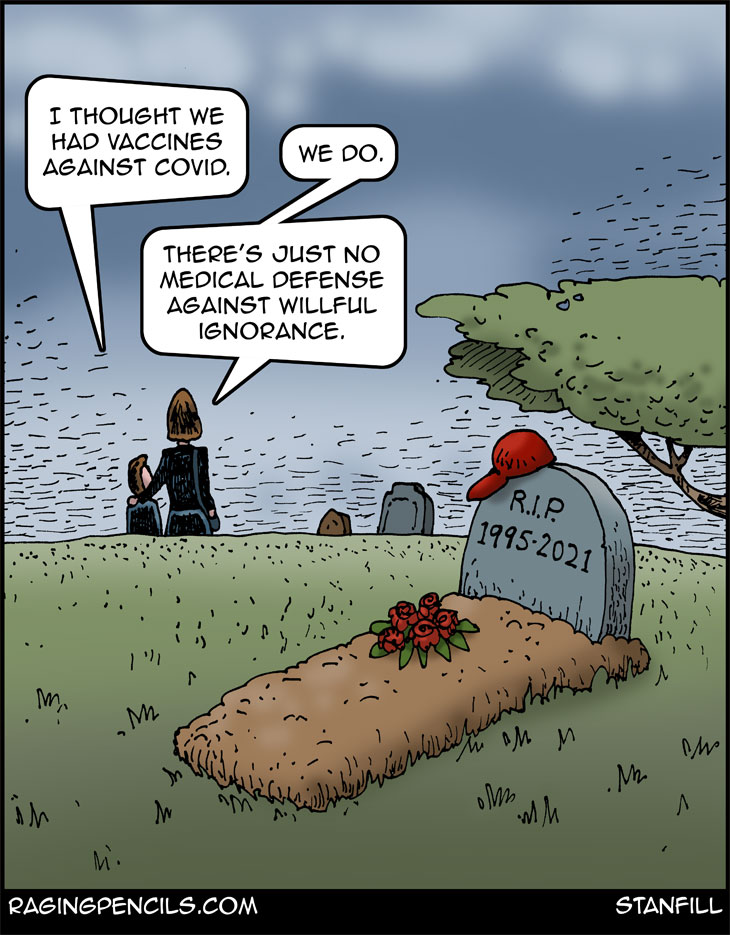
He did his own research

By Drew Sheneman, The Star-Ledger


Not 100% effective, but...


Asteroid sample brought back to Earth gets a close-up look at Brown

Brown scientists are analyzing a tiny chunk of the asteroid Ryugu to understand the early history of the solar system.


The Hayabusa2 spacecraft shot this image of the asteroid Ryugu at a distance of 40 kilometers as it approached the asteroid in 2018. Credit: JAXA

In December 2020, Japan’s Hayabusa2 spacecraft swung by Earth to drop off a cache of rock samples taken from a near-Earth asteroid called Ryugu. Asteroids like Ryugu are thought to represent the ancient building blocks of the solar system, and scientists have been eager to get a closer look at the returned samples.

Last week, the Japanese Aerospace Exploration Agency shipped one of the samples — a millimeter-sized fragment from the asteroid’s surface — to the laboratory of Brown University planetary scientist Ralph Milliken for analysis. Milliken’s lab is one of the first in the U.S. to examine a Ryugu sample so far.

COVID doesn't care what you eat

Can healthy people who eat right and exercise skip the COVID-19 vaccine? 

A research scientist and fitness enthusiast explains why the answer is NO

Richard Bloomer, University of Memphis

Several thousand protestors opposed to the COVID-19 vaccine march
through the streets of midtown Manhattan in New York on Sept. 18, 2021. 
Andrew Lichtenstein/Corbis News via Getty Images
I’m a fitness enthusiast. I also adhere to a nutrient-dense, “clean” eating program, which means I minimize my sugar intake and eat a lot of whole foods for the purpose of optimizing my health.

You might wonder how effective such a diet and exercise plan would be in the fight against COVID-19, since some have suggested – without supporting evidence – that vaccination may be unnecessary if a detailed wellness lifestyle is closely followed.

As a research scientist who has studied nutrition for close to 20 years, I have watched the wellness community’s response to the COVID-19 vaccines with great interest. 

While eating right can favorably impact the immune system, it is not reasonable to expect that nutrition alone will defend against a potentially life-threatening virus.

With some Covidiots, it may be hard to tell what's different

Hospital Reports a Scary Effect of Severe COVID-19 Is Far More Common Than Thought

CARLY CASSELLA

Patients with COVID-19 who have been admitted to the intensive care unit are very likely to experience unusually persistent delirium, according to emerging research.

Delirium is a medical term used to describe confused thinking and reduced awareness of surroundings - a not uncommon state of mind for the sickest hospitalized patients.

As it turns out, severe cases of COVID-19 are enough to trigger something similar. In fact, initial investigations have suggested delirium occurs in up to 80 percent of ICU patients with COVID-19, possibly as a result of loss of oxygen to the brain or widespread inflammation.

Now a new analysis of critically ill COVID-19 patients at a single hospital in Michigan has found even more evidence that delirium is a very common symptom of the disease - one that could possibly slow patient recovery if it's not addressed.

Using medical records and discharge surveys from 148 patients checked into the ICU between March and May 2020, researchers have found more than 70 percent of the cohort experienced a prolonged disturbance in their mental abilities.

In most cases, the delirium lasted for days. But nearly a third of participants left hospital without demonstrating they'd fully recovered from their delirium.

Sunday, October 3, 2021

In the footsteps of Nixon, Gingrich, Cheney and the whole rogues' gallery

When Will the US Break Free from the Clutches of Its Grifters?

By Thom Hartmann for the Independent Media Institute

Trump just unleashed an unhinged, barely coherent rant about the possibility President Biden might reveal what was going on in the White House on January 6th, the day Trump tried to finally end, once and for all, any possibility of governmental oversight of his ongoing criminal career.  

He believed he could follow in the footsteps of grifters before him who’ve taken control of and then drained dry countries from Hungary to Russia, Brazil to Turkey and The Philippines.

Thus it surprises nobody to discover that when Donald Trump and the people around him learned, in mid-November of 2020, that there was absolutely no meaningful voter fraud in that month’s election, they chose, instead of acknowledging the truth, to go ahead with a plan to raise over $200 million dollars (and counting).  

That even today “President Trump” is sending out one or two fundraising emails a day, each one with the tiny “make this a recurring donation” box pre-checked.

Republican appointees on the US Supreme Court cracked open the door for professional grifters in 1976 when, for the first time in American history, the Court redefined politicians taking money from billionaires away from being “political corruption” and “bribery” — what such behavior had been called since the beginning of the republic — to instead say it was a mere “exercise of free speech” on the part of the morbidly rich. 

Sympatico

For more cartoons by Ted Rall, CLICK HERE.


Get help with rent


RI Delegation Secures $1.1 Million in American Rescue Plan Act Funding for ServeRI Programs

More money for public service jobs

U.S. Senators Jack Reed and Sheldon Whitehouse and Congressmen Jim Langevin and David Cicilline today announced that ServeRI will be receiving $1.1 million in American Rescue Plan Act funding to strengthen national service in Rhode Island and provide relief for organizations and communities disproportionately impacted by the pandemic. 

Specifically, this federal funding will provide Rhode Island with additional flexibility and resources to boost living allowances for AmeriCorps members, stabilize Rhode Island’s AmeriCorps programs, and expand ServeRI opportunities over the next three years. 

“This federal funding will provide a significant boost to community service efforts throughout Rhode Island. Through their dedication and sacrifice, AmeriCorps members help build stronger communities and I am glad Rhode Island is finally getting these additional American Rescue Plan funds to help AmeriCorps support its service members and expand its reach in the Ocean State,” said Senator Reed, a senior member of the Appropriations Committee and a champion of AmeriCorps funding. “From education to conservation, this federal funding will help AmeriCorps members in Rhode Island tackle important challenges and make a positive difference.” 

“AmeriCorps members and volunteers are on the front lines of helping their communities recover from the pandemic,” said Senator Whitehouse. “This American Rescue Plan funding will create more opportunities for Rhode Islanders to make a difference through national service.” 

“AmeriCorps members and volunteers are among the very best of us, and I’m so very grateful for the selfless work they do to strengthen our communities and improve the lives of Rhode Islanders every day,” said Rep. Langevin. “I’m proud that this American Rescue Plan Act funding will help bolster ServeRI and those who devote themselves to national service. As our state recovers from this pandemic, we must ensure that our frontline organizations have the necessary resources to continue serving our communities.”

Coffee bean prices have doubled in the past year

They might double again – what’s going on?


Beans are booming. Robert Shunev/Unsplash, CC BY-SA
International Coffee Day feels very different this year. Introduced by the International Coffee Organization (ICO) on October 1 2015 to raise awareness of the product and the challenges faced by producers, the day has usually focused on how low prices paid for unroasted beans barely cover farmers’ costs – let alone support their families.

Not this year, though. In the past 12 months, the C price – the benchmark price for commodity-grade Arabica coffee on the New York International Commodity Exchange – has risen from US$1.07 (£0.80) per pound (454g) to around US$1.95. Back in July, it touched US$2.08.