Rise of the Lone Star Tick Brings New Disease Threats
By Rene Ebersole
Dressed in blue jeans tucked into gray socks and hiking boots, Jim Occi was prepared to round up some ticks from a New Jersey woodland. While some people might consider this a nightmare outing, it’s Occi’s idea of “fun”— he finds the arachnids fascinating, as proven by the tick tattoos on his forearms. It’s also useful because, as a microbiologist at Rutgers University’s Center for Vector Biology, he studies ticks and their diseases.
Occi marched along a forest trail, dragging a white muslin cloth attached to a PVC pole on the ground, working it through the leaf litter and along the grassy edges. Every few steps, he stopped to squint, searching for moving black specks that can be as small as a grain of sand.
New Jersey now hosts what Occi calls the “big five” tick species: blacklegged, lone star, dog, Gulf Coast, and the newly arrived Asian longhorned, most of which have been growing in numbers and expanding their range.
These species “quest” for their hosts, meaning they perch in leaf litter or on a blade of grass with a pair of legs outstretched waiting for an animal, whether it’s a person, a small mammal, or even a bird or reptile.
“If anything comes by, they’ll just clamp on,” Occi said as he used the cloth on the end of the pole to mimic an animal shuffling in the underbrush. “They can’t hop, skip, jump, or fly — they have to have direct contact with the host.”
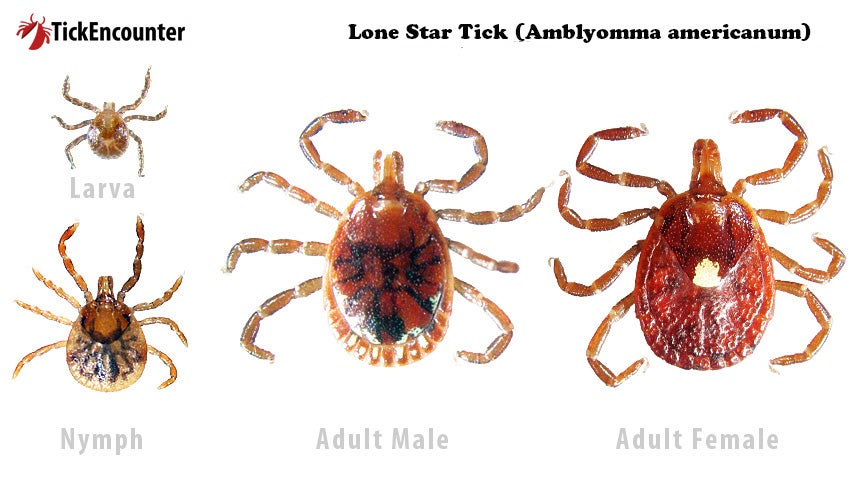
The species that he was hoping to catch, the lone star tick, doesn’t only quest — it also hunts. The lone star can sense vibrations and carbon dioxide emitted by a potential host. “They detect your breath and become alert,” Occi said. “And then you gotta watch out.” If a person sits down in a forest where they’re present, the lone stars will likely come crawling.