Menu Bar

Home           Calendar           Topics          Just Charlestown          About Us

Tuesday, April 23, 2024

Here are ways to filter out some harmful ‘forever chemicals’ at home

Removing PFAS from public water will cost billions and take time

Kyle Doudrick, University of Notre Dame

PFAS are showing up in water systems across the U.S.
 Jacek Dylag/Unsplash, CC BY
Chemists invented PFAS in the 1930s to make life easier: Nonstick pans, waterproof clothing, grease-resistant food packaging and stain-resistant carpet were all made possible by PFAS. 

But in recent years, the growing number of health risks found to be connected to these chemicals has become increasingly alarming.

PFAS – perfluoroalkyl and polyfluoroalkyl substances – are now either suspected or known to contribute to thyroid disease, elevated cholesterol, liver damage and cancer, among other health issues.

They can be found in the blood of most Americans and in many drinking water systems, which is why the Environmental Protection Agency in April 2024 finalized the first enforceable federal limits for six types of PFAS in drinking water systems. 

The limits – between 4 and 10 parts per trillion for PFOS, PFOA, PFHxS, PFNA and GenX – are less than a drop of water in a thousand Olympic-sized swimming pools, which speaks to the chemicals’ toxicity. The sixth type, PFBS, is regulated as a mixture using what’s known as a hazard index.

Meeting these new limits won’t be easy or cheap. And there’s another problem: While PFAS can be filtered out of water, these “forever chemicals” are hard to destroy.

My team at the University of Notre Dame works on solving problems involving contaminants in water systems, including PFAS. We explore new technologies to remove PFAS from drinking water and to handle the PFAS waste. Here’s a glimpse of the magnitude of the challenge and ways you can reduce PFAS in your own drinking water:

EPA’s New Guidelines, and Funding, Will Boost Testing and Controls of PFAS in Rhode Island

Numerous sites across South County, including Charlestown

By Mary Lhowe / ecoRI News contributor

PFAS, manufactured since the 1940s, can be found in our food, our drinking water, and in our body tissue. They are in the soil, in rainwater, and in emissions spewed into the air. (EPA)

The Biden administration and the Environmental Protection Agency announced new guidelines this month that will give a push to efforts around the nation, including in Rhode Island, to eliminate or reduce toxic per- and polyfluoroalkyl substances — a class of chemicals known as PFAS — from drinking water.

The announcement created the first nationwide and enforceable ceiling — or “maximum contaminant level” (MCL) — of 4 parts per trillion (ppt) of PFAS in drinking water. A few types of PFAS chemicals were given a federal MCL of 10 ppt.

The new federal levels are more restrictive than the current maximum contaminant level in Rhode Island, which is 20 ppt in drinking water. Up to April 10, when the guidelines were announced, no federal level existed; states devised maximum contaminant levels for themselves.

The announcement also said the federal government would offer $1 billion to states and territories for testing and treatment of drinking water. It is part of a $9 billion investment through the Bipartisan Infrastructure Law to help communities track and clean up PFAS and other “emerging contaminants” in drinking water.

EPA believes that 6% to 10% of the nation’s 66,000 public drinking water systems may have to take action to reduce PFAS to meet the new standards. It also said the final rule of April 10 would reduce PFAS exposure for about 100 million people.

Both through legislation and in water treatment facilities and water pipes, Rhode Island has been working over the past few years to get control over PFAS — a class of toxic chemicals that have been used since the 1940s in a wide range of consumer products from food wrappers to carpets to Teflon pans to firefighting foam.

Monday, April 22, 2024

Republicans keep wasting our money on their ideological boondoggles

Americans Pay a High Price for the GOP's Fiscal Irresponsibility

DAN BROOK for Common Dreams

The GOP is fiscally irresponsible in all sorts of ways.

Republicans are worse for the economy overall, worse for gross domestic product, worse for the budget deficit and national debt, worse for the trade deficit, worse for job growth, worse for wage increases, worse for inequality, worse for the stock market, and worse for much else.

No modern Republican president has ever reduced the deficit in any year with any budget. Every Republican president raised the federal budget deficit by overspending wildly on the military, the wealthy, and other wasteful things that don't constructively add to our economy or society.

The only three modern presidents to reduce the budget deficit have been Bill Clinton (who eliminated it and created a surplus), Barack Obama, and Joe Biden, all Democrats.

  • About three-fourths of the entire national debt was accrued under Republican borrow-and-spend presidents.
  • Republicans run higher trade deficits than Democrats.
  • Unemployment is higher under Republican administrations
  • The stock market does worse under Republican administrations, on average.
  • Most recessions have begun under Republican administrations, as did the Great Depression.

None of the tax cuts for the rich and corporations that Republicans said would pay for themselves wound up paying for themselves. Instead, they made the wealthy wealthier. 

Push back on November 5


A cartoon by Clay Bennett

No good deed goes unpunished


URI-led team finds direct evidence of ‘itinerant breeding’ in East Coast shorebird species

And they DANCE!

Migration and reproduction are two of the most demanding events in a bird’s annual cycle, so much so that the vast majority of migratory birds separate the two tasks into different times of the year.

But a study by University of Rhode Island researchers has found direct evidence of a species – the American woodcock, a migratory shorebird from eastern and central North America – that overlaps periods of migration and reproduction, a rare breeding strategy known as “itinerant breeding.” Their work, backed by collaborators across the East Coast, was published in the biological sciences journal Proceedings of the Royal Society B.

Fermented foods sustain both microbiomes and cultural heritage

Don't fear the pickle

Andrew Flachs, Purdue University and Joseph Orkin, Université de Montréal

Each subtle cultural or personal twist to a fermented
dish is felt by your body’s microbial community.
 microgen/iStock via Getty Images
Many people around the world make and eat fermented foods. Millions in Korea alone make kimchi. 

The cultural heritage of these picklers shape not only what they eat every time they crack open a jar but also something much, much smaller: their microbiomes.

On the microbial scale, we are what we eat in very real ways. Your body is teeming with trillions of microbes. These complex ecosystems exist on your skin, inside your mouth and in your gut. They are particularly influenced by your surrounding environment, especially the food you eat. Just like any other ecosystem, your gut microbiome requires diversity to be healthy.

People boil, fry, bake and season meals, transforming them through cultural ideas of “good food.” When people ferment food, they affect the microbiome of their meals directly. Fermentation offers a chance to learn how taste and heritage shape microbiomes: not only of culturally significant foods such as German sauerkraut, kosher pickles, Korean kimchi or Bulgarian yogurt, but of our own guts.

RI Congressional incumbents amass impressive campaign war chests

Lots of green helps keep RI Blue

By Janine L. Weisman, Rhode Island Current

Congratulations to Seth and wife Julia McDowell
on the birth of their new daughter, and son Max's
new sister. Not to mention the healthy
campaign war chest.
The state’s Democratic congressional delegates up for re-election this year are showing healthy war chests, according to first quarter campaign finance reports with the Federal Elections Commission.

U.S. Rep. Seth Magaziner reported he had over $1 million in cash on hand as of March 31 for his reelection bid to seek a second term in his 2nd Congressional District seat.

The first quarter filing deadline was Monday.

Republican Steven Corvi, a Warwick resident, formally announced his campaign to run for the 2nd Congressional District seat to the news media on April 13. Corvi, whose LinkedIn page says he has a Ph.D. in history, is listed as an adjunct history professor at Bentley University and Northeastern University. 

Sunday, April 21, 2024

Westerly Rep. Azzinaro sets up redundant commission

Waste of time

By Will Collette

UPDATE: If you really want to know more about the climate crisis and our shoreline, I suggest you attend this forum (or you can wait for Sam's commission to come out with its findings, presuming it ever meets:

RI State Senator Victoria Gu and RI State Representative Tina Spears will host a Town Hall on Climate Resiliency on Monday April 29th, 6-8pm at the Quonochontaug Grange Hall (5662 Post Road, Charlestown, RI). RI CRMC, RI EMA, and FEMA representatives will also be participating.

They will discuss some frequently asked questions about recent storm recovery work, regulations, and funding opportunities for mitigation work.

FEMA and RI EMA representatives will do a presentation and will be available to assist individuals and business owners who sustained losses during the Dec 17-19th 2023/Jan 9th-13th 2024 storms and are eligible for federal disaster relief funds. May 20th, 2024 is the deadline to apply (people may also visit www.DisasterAssistance.gov).

Residents, local officials, and businesses are invited to share their ideas, experiences, and priorities regarding climate resiliency efforts in our area.

For well over a decade, anyone who has been paying attention knows we are in a worsening climate crisis. Its effects on Rhode Island are already clear - bizarre weather, bigger and more frequent storms and sea level rise.

For more than a decade, government, academia and non-profit organizations have devoted considerable time and money to study this problem and come up with ways to cope. URI, the Woods Hole Institute, NOAA, DEM and the CRMC have looked closely what to do about Rhode Island's climate-driven coastal erosion problem.

Some fine work has already been done and lots of different options have been explored, including some that have already been put into effect.

Two local General Assembly members from Charlestown's Rep. Tina Spears and Sen. Victoria Gu, jointly sponsored legislation to promote coastal resiliency, drawing on the hard work already done by scientists and experts. 

So why then does Rep. Sam Azzinaro (DINO-Westerly) want to set up a new study commission on beach erosion? 

It's hardly within the scope of his two main categories of concern, namely veterans' affairs and anything of concern to the Roman Catholic Diocese of Providence. (He once said he put the interests of ex-Bishop Thomas Tobin over his own constituents). 

Azzinaro says, as if this had not occurred to him before, "We have a serious problem here...This commission will be an important tool to protect our beaches and hopefully reverse the erosion that is plaguing too many oceanfront communities.”

His commission would include the same agencies that has already done the work but adds the director of the Misquamicut Business Association.

The House approved the resolution probably for the same reason they had approved ex-Rep. Justin Price (MAGA-Richmond) legislation to create a study commission on "chemtrails - to shut him up. Price's chemtrail commission never met and never issued findings. I am willing to bet the same fate awaits Sam's commission.

I suggest it is time for Sam to consider retirement and let voters choose a new representative. Or at minimum, he should stick to what he knows.

Here's the official news release on Azzinaro's commission: 

Always classy: snoozing and farting through his criminal trial

By Chris Britt

Keep Donald Trump away from babies

Concerned about developing babies, EPA warns about danger of weed killer used on farms, golf courses

JOHNATHAN HETTINGER  

The US Environmental Protection Agency (EPA) on Monday took the rare step of issuing a warning about “serious, permanent, and irreversible health risks” associated with a chemical used to kill weeds on farms and golf courses and athletic fields. 

Citing “significant health risks to pregnant individuals and their developing babies,” the agency said farmworkers and others handling dimethyl tetrachloroterephthalate, more commonly known as DCPA, were at risk, as are people who might play on courses or fields recently sprayed with the pesticide. 

The most serious risks extend to the developing babies of pregnant women, especially those handling DCPA products.  

The agency said pregnant women exposed to DCPA could experience changes to fetal thyroid hormone levels, which are linked to low birth weight, impaired brain development, decreased IQ, and impaired motor skills later in life.  

Though product labels say people should stay out of fields for 12 hours after they are sprayed with DCPA, the EPA said evidence indicates that in many cases, sprayed fields would be unsafe for 25 days or more. 

The agency additionally said that mothers and their developing babies could be at risk if they live near areas where DCPA is used because the pesticide can drift.

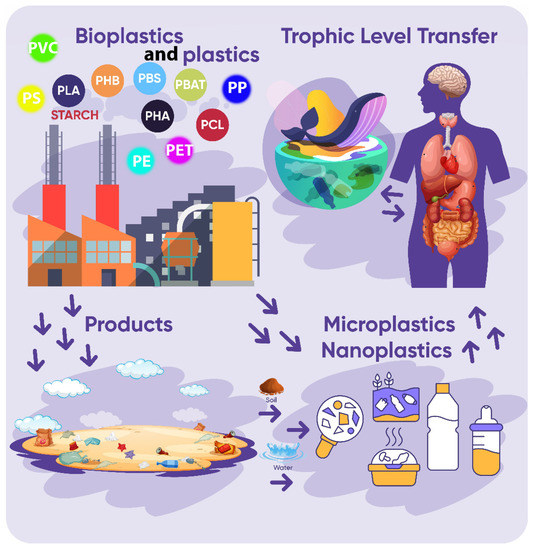
Microplastics Make Their Way from the Gut to Other Organs

How do they get there? What do they do?

By Nicole San Roman

It’s happening every day. From our water, our food and even the air we breathe, tiny plastic particles are finding their way into many parts of our body.

But what happens once those particles are inside? What do they do to our digestive system?

In a recent paper published in the journal  Environmental Health Perspectives, University of New Mexico researchers found that those tiny particles – microplastics – are having a significant impact on our digestive pathways, making their way from the gut and into the tissues of the kidney, liver and brain.

Research continues to show the importance of gut health. If you don't have a healthy gut, it affects the brain, it affects the liver and so many other tissues. So even imagining that the microplastics are doing something in the in the gut, that chronic exposure could lead to systemic effects.

Governors of old Confederacy states declare war on the United Auto Workers

Goes to show how alive the plantation mentality is in the South

Is the South preparing itself for a second Civil War? The following statement was issued by the Republican Governors of Mississippi, Alabama, Texas, South Carolina, Georgia and Tennessee. It speaks for itself.

Three days after this denunciation of unions, the UAW won an election at a big Volkswagen plant in Tennessee on April 19. 
President Joe Biden made this comment on the union's win:
"Let me be clear to the Republican governors that tried to undermine this vote: there is nothing to fear from American workers using their voice and their legal right to form a union if they so choose."
 Here's the full statement by the Republican governors:

MONTGOMERY, APRIL 16, 2024– Governor Kay Ivey, along with the governors of Georgia, Mississippi, South Carolina, Tennessee and Texas, issued the following joint statement:

“We the governors of Alabama, Georgia, Mississippi, South Carolina, Tennessee and Texas are highly concerned about the unionization campaign driven by misinformation and scare tactics that the UAW has brought into our states. As governors, we have a responsibility to our constituents to speak up when we see special interests looking to come into our state and threaten our jobs and the values we live by.

“The reality is companies have choices when it comes to where to invest and bring jobs and opportunity. We have worked tirelessly on behalf of our constituents to bring good-paying jobs to our states. These jobs have become part of the fabric of the automotive manufacturing industry. Unionization would certainly put our states’ jobs in jeopardy – in fact, in this year already, all of the UAW automakers have announced layoffs. In America, we respect our workforce and we do not need to pay a third party to tell us who can pick up a box or flip a switch. No one wants to hear this, but it’s the ugly reality. We’ve seen it play out this way every single time a foreign automaker plant has been unionized; not one of those plants remains in operation. And we are seeing it in the fallout of the Detroit Three strike with those automakers rethinking investments and cutting jobs. Putting businesses in our states in that position is the last thing we want to do.

Saturday, April 20, 2024

If Trump Wins, the GOP Is Ready to Wage War on the Working Class

Their Project 2025 plan shows what they plan to do to workers

REBECCA GORDON for the TomDispatch

Recently, you may have noticed that the hot weather is getting ever hotter. Every year the United States swelters under warmer temperatures and longer periods of sustained heat. 

In fact, each of the last nine months—May 2023 through February 2024—set a world record for heat. As I’m writing this, March still has a couple of days to go, but likely as not, it, too, will set a record.

Such heat poses increasing health hazards for many groups: the old, the very young, those of us who don’t have access to air conditioning. One group, however, is at particular risk: people whose jobs require lengthy exposure to heat. 

Numbers from the Bureau of Labor Statistics show that about 40 workers died of heat exposure between 2011 and 2021, although, as CNN reports, that’s probably a significant undercount. 

In February 2024, responding to this growing threat, a coalition of 10 state attorneys general petitioned the federal Occupational Safety and Health Administration (OSHA) to implement “a nationwide extreme heat emergency standard” to protect workers from the kinds of dangers that last year killed, among others, construction workers, farm workers, factory workers, and at least one employee who was laboring in an unairconditioned area of a warehouse in Memphis, Tennessee.

Facing the threat of overweening government interference from OSHA or state regulators, two brave Republican-run state governments have stepped in to protect employers from just such dangerous oversight. Florida and Texas have both passed laws prohibiting localities from mandating protections like rest breaks for, or even having to provide drinking water to, workers in extreme heat situations. 

Seriously, Florida and Texas have made it illegal for local cities to protect their workers from the direct effects of climate change. Apparently, being “woke” includes an absurd desire not to see workers die of heat exhaustion.

And those state laws are very much in keeping with the plans that the national right-wing has for workers, should the wholly-owned Trump subsidiary that is today’s Republican Party take control of the federal government this November.

GOP 2024 playbook

For more cartoons by Tom Tomorrow, CLICK HERE