Menu Bar

Home           Calendar           Topics          Just Charlestown          About Us

Saturday, May 28, 2022

Towards More Efficient, Non-toxic, and Flexible Thin-film Solar Cells

Researchers from Japan pave the way for a clean energy economy with low-cost, cadmium-free, thin-film solar cells

Ritsumeikan University


While solar cells are a great alternative to fossil fuels, the environmental impact of the processes involved in manufacturing solar cells has been a concern. Solar panel fabrication often involves toxic materials such as cadmium and industrial waste. 

In a new study, researchers from Ritsumeikan University, Japan, have now developed an eco-friendly method that eliminates the use of toxic cadmium in the production process to produce cost-effective, efficient, and eco-friendly solar cells. 

One week to better health

A Simple One-Week-Long Break From Social Media Can Improve Your Health

By UNIVERSITY OF BATH 

Results of a study that asked participants to take a week-long break from social media find positive effects for wellbeing, depression and anxiety.

According to the authors of a new study, asking individuals to cease using social media for one week might result in substantial improvements in their well-being, depression, and anxiety, and could be recommended as a way to help people manage their mental health in the future.

A team of researchers from the University of Bath (UK) evaluated the mental health impacts of a week-long social media hiatus. For some research participants, this meant freeing up roughly nine hours of their week that would otherwise have been spent browsing through Instagram, Facebook, Twitter, and TikTok.

Their results — published on Friday, May 6th, 2022 in the US journal Cyberpsychology, Behaviour and Social Networking — suggest that just one week off social media improved individuals’ overall level of well-being, as well as reduced symptoms of depression and anxiety.

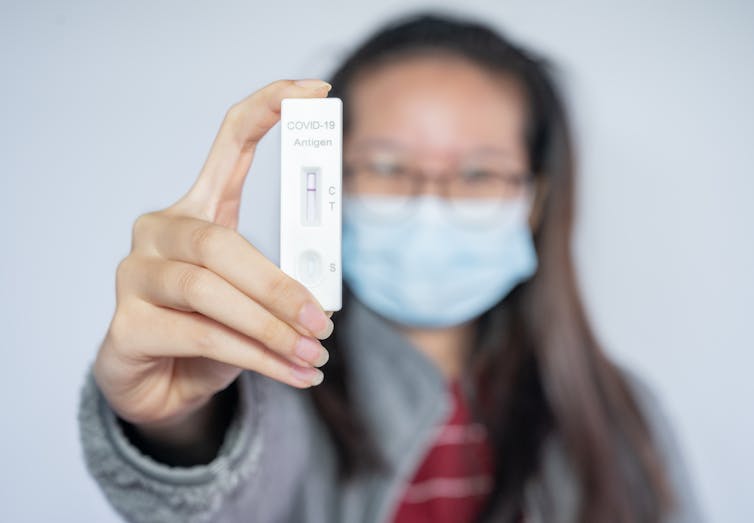
Just how accurate are rapid antigen tests?

Useful tool but not infallible

Nathaniel HaferUMass Chan Medical School and Apurv SoniUMass Chan Medical School

Once in short supply, rapid antigen tests are now available
throughout the U.S. Boy_Anupong/Moment via Getty Images
As of May 2022, the U.S. is experiencing another uptick in the number of COVID-19 cases. 

High rates of infection in Europe and Asia, along with the continued emergence of new sub-variants, such as omicron BA.4 and BA.5, raise concerns that another surge could be on the way.

Even though demand for COVID-19 tests greatly overwhelmed supply earlier in the pandemic, rapid home tests are more available today. 

While home tests provide a quick, accurate result, the flip side is that many test results are no longer reported to health authorities. The power behind widely available over-the-counter testing is that people can quickly and conveniently know their infection status early on to prevent spreading the virus to others.

We’re part of a team at UMass Chan Medical School that has been studying COVID-19 molecular, or PCR, and antigen test performance over the past two years. During this time, we’ve helped multiple companies generate the data needed to move their products through the Food and Drug Administration’s Emergency Use Authorization process and into commercial development.

We have also conducted large-scale, real-world studies to understand how over-the-counter rapid tests perform in comparison to PCR tests in detecting different variants of SARS-CoV-2, the virus that causes COVID-19, including among people without symptoms. We have also studied whether mass distribution of rapid antigen tests prior to a surge helps prevent spread, and whether users of these tests are likely to report the results to health departments.

These studies are beginning to provide researchers like us with evidence about how these tests perform and how we can use them to make the best public health recommendations moving forward.

Friday, May 27, 2022

To Tax the Rich, We Need to Debunk the Myth of Fleeing Millionaires

As it turns out, high-earners won't leave if you increase their taxes.

OMAR OCAMPO for Inequality.org

Some of them would not be missed. If they won't pay their fair share,
why should we want them?
This November, the Massachusetts electorate will vote on a ballot initiative that will have profound consequences: the ability for the state to amend its constitution and levy a 4 percent surtax on all individuals that have an annual income of one million dollars or more. 

The Fair Share Amendment—or "millionaire's tax" as it is known colloquially—is expected to raise significant revenue with the majority, if not all, of the monies to be invested in education and public transportation. It's of no surprise then that the initiative is very popular with Bay Staters. According to a poll conducted late last year, 70 percent of the electorate support the initiative.

But its popularity has not stopped opponents from deploying recycled talking points expressed by wealth defense specialists. They argue that increasing taxes on high income earners are counterproductive because they will move to other states with a less punishing tax environment. 

study by the right-wing Beacon Hill Institute estimated that about a fifth of Massachusetts' 20,970 million-dollar earners will pack their bags and leave within the first year of implementation, shrinking the tax base and hurting the state's economy. 

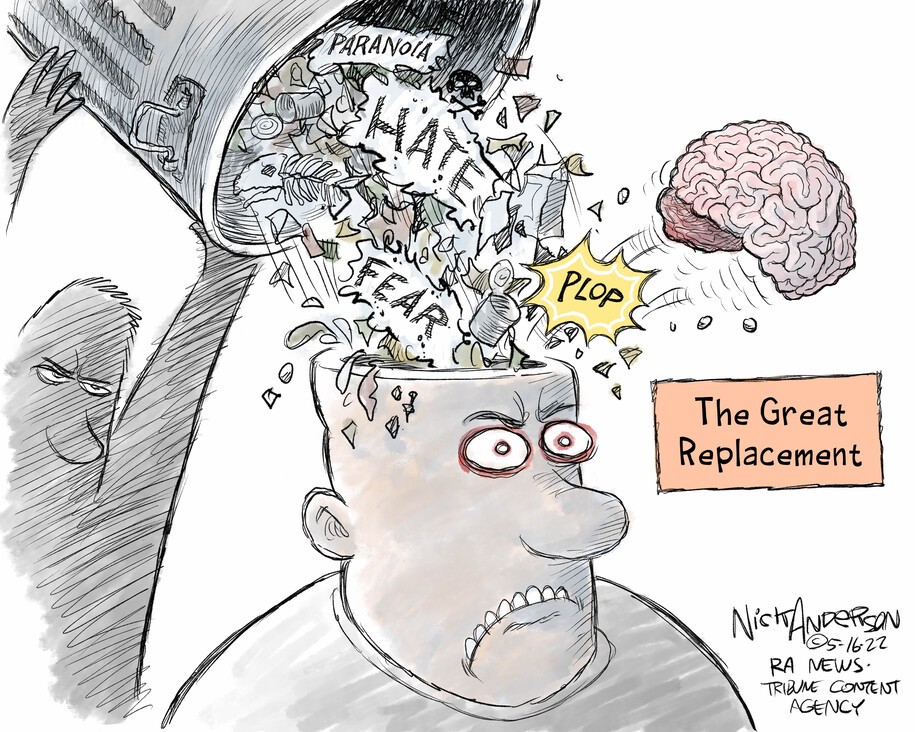
Great Replacement

For more cartoons by Nick Anderson, CLICK HERE.


Support our teachers


Poll the audience: Using data from citizen science to keep wild birds in flight

Data from birding apps offer utility to researchers and managers

S.J. & Jessie E. Quinney College of Natural Resources, Utah State University

Bald eagle in Charlestown. Photo by Mindy Trudell
Using the eyes and ears of public volunteers can stretch the reach of science, according to a new analysis from Erica Stuber from the Department of Wildland Resources and the Ecology Center. Stuber and a team of researchers examined the accuracy of information produced by citizen science apps for monitoring bird populations. They compared publicly-produced data with officially tracked numbers from monitoring programs and found that, with some refinement, data from citizen scientists could offer a lot of utility for researchers.

Citizen science uses volunteers from the general public to collect a variety of information to answer particular questions or to collect observations -- and report it to a shared database. Over the past decade such collective public power has benefited science efforts in all sorts of ways, from sorting images of the cosmos to mapping mosquito populations. But the big data collected by such efforts is now outpacing scientists' ability to effectively use it, especially when it comes to decisions about wildlife populations.

Which is a shame, Stuber said, because data from such public efforts are often collected with more detail and across a wider geographical range than professional researchers can manage by themselves. If there was a way to better filter, focus and apply such data, it could be a valuable resource in a climate of shrinking restoration budgets, insufficient feet-on-the-ground and intimidatingly vast areas that wildlife depend on to survive and thrive.

A key step toward better using the available information is to understand and test the data coming out of such projects by directly comparing citizen science numbers with more traditional monitoring methods.

The app eBird, developed and maintained by the Cornell Lab of Ornithology, has been around for 20 years. 

“Swim into the light….”

Scallops swim into illuminated fishing pots

Scallops are drawn to illuminated fishing pots like moths to a flame, new research shows.

The study examined the effect of LED lights on crab and lobster pots used by fishing boats off the coast of Cornwall, UK, and the research team -- including engineering firm Fishtek Marine and the University of Exeter -- were stunned by the results.

More than 500 scallops were caught -- 99.6% of them in pots with lights -- and videos show the shellfish piling into the pots.

Wild-caught scallops are usually fished using dredges and trawls, so the findings present a chance to develop a new, low-impact fishing method for the high-price seafood.

"We were working on lights for crab and lobster pots and I gave some to a fisherman for testing," said Dr Rob Enever, head of science and uptake at Fishtek.

"He told me the lights made no difference to crabs or lobsters, but he noticed quite a lot of scallops in his pots.

"We decided to test this properly in this study. When I saw the results, I couldn't believe my eyes.

"Boats that would only see two or three scallops in their pots annually were now seeing 20 or more in a single pot.

"We have found something really astonishing here.

"This could be a real opportunity for crab and lobster fishers, because the lights don't seem to reduce the number of crabs and lobsters they can catch -- they just bring in an extra haul of scallops."

Further work is planned this summer to optimise this new method of fishing by trialling different lights, pot designs in different areas of the UK in order to establish a new, low-impact and commercially viable fishery for scallops.

Dr Phil Doherty, from the University of Exeter, said: "We are delighted to be working with an excellent local company to do the science that underpins innovation that could be good for fishers and the environment."

The study team included the University of York, and the research was funded by Defra's Seafood Innovation Fund and Natural England.

Acceptable risk?

It’s impossible to determine your personal COVID-19 risks and frustrating to try

Malia JonesUniversity of Wisconsin-Madison

Before the pandemic, an intergenerational tea party wouldn’t have
seemed a risky proposition. fotostorm/E+ via Getty Images
“How risky is being indoors with our 10-year-old granddaughter without masks? We have plans to have birthday tea together. Are we safe?”

That question, from a woman named Debby in California, is just one of hundreds I’ve received from concerned people who are worried about COVID-19. 

I’m an epidemiologist and one of the women behind Dear Pandemic, a science communication project that has delivered practical pandemic advice on social media since the beginning of the pandemic.

How risky is swim team? How risky is it to go to my orthodontist appointment? How risky is going to the grocery store with a mask on if no one else is wearing one and my father is an organ transplant recipient? How risky is it to have a wedding with 200 people, indoors, and the reception hall has a vaulted ceiling? And on and on.

These questions are hard to answer, and even when we try, the answers are unsatisfying.

So in early April 2022, when Anthony Fauci, the president’s chief medical advisor, told Americans that from here on out, each of us is going to have to do our own personal risk assessment, I put my head down on my desk.

Individualized risk assessment is not a reasonable ask, even for someone who does risk assessment for a living, let alone for the rest of us. It’s impossible to evaluate our own risk for any given situation, and the impossibility of the task can make us feel like giving up entirely. So instead of doing that, I suggest focusing on risk reduction. 

Reframing in this way brings us back to the realm of what we can control and to the tried and true evidence-based strategies: wearing masks, getting vaccinated and boosted, avoiding indoor crowds and improving ventilation.

Thursday, May 26, 2022

Crickets and prayers from RI Republicans

To Republicans, “pro-life” means NO to effective gun control

By Will Collette


Another murderous massacre with another military style weapon. The United States, unlike any nation in the world, makes it easy for just about anyone to acquire and use weapons of mass destruction on each other, citing the antiquated and misread Second Amendment of the Constitution as the justification for this slaughter.

In numerous decisions, the Supreme Court has held that “the Constitution is not a suicide pact” and that, yes, sensible measures to control firearms are Constitutional. But try telling that to Republicans.

Guns should be regulated at least as strictly as automobiles, with age restrictions, training, licensure, registration, taxation and regulation appropriate for deadly devices.

Let’s take a look at how Republicans in Rhode Island responded to the Uvalde Texas school massacre where 19 little kids and two adults were murdered with a guy carrying a legally purchased AR-15 assault rifle. 

Some background facts: the Uvalde school district doubled its budget for school safety. The school itself had been hardened. They had an armed school police officer present. This is one of the most disturbing facts, reported by ABC news:

The gunman was first spotted outside the school by an armed school resource officer who did not fire at him, but instead confronted him and “followed him in” to the school.”

Armed police were on the scene quickly, but held off for almost an hour before storming the building despite pleas from parents to get in there and save their kids.

Let me remind you that the armed school safety officer during the Parkland Florida mass shooting walked away rather than try to confront the murderer and his assault rifle.

Ashley Kalus, the Republicans’ carpetbagger candidate for Rhode Island issued a long statement that boiled down to this:

“Our existing gun laws need to be enforced to the fullest extent, and every school in our state should have a police officer present to defend our vulnerable children from these heinous and disgusting perpetrators. We must invest in mental health services to ensure we stop these devastating acts of violence before they occur.”

The killer bought his two AR-15s legally under "our existing gun laws." Uvalde had those safety measures in place except they failed. The armed school safety officer and the armed response officers were reluctant to confront a killer with an automatic weapon. The “good guys with guns” were there but the kids still got killed.

Kalus doesn't know what she's talking about, but that's no surprise. She says the political figure she most admires is Florida Governor Ron DeathSantis.

Efforts to strengthen existing laws, including a tougher “red flag” law to strip guns from unstable and violent offenders, were fought tooth and nail by Rhode Island’s Republican legislators, especially our three local General Assembly members Rep. Blake “Flip” Filippi, Sen. Elaine Morgan and Rep. Justin Price.

They are all hard-right with ties to armed militias. Justin Price even went to the January 6 insurrection. He claims he didn't go inside the Capitol but did get close enough to become convinced that Antifa was responsible. Aside from the nonsense of that claim, Price is admitting he illegally crossed police lines. 

One thing I always found to be funky about Price's excuse is why, if he identified the rioters as Antifa, didn't he do something about them? After all, he claims he was a big, tough Marine yet he says he just stood there and watched.

Kristen Chambers of Richmond described her encounters with Price as well as Elaine Morgan in a Westerly Sun letter to the editor

As a member of Moms Demand Action for Gun Sense, I went to the Rhode Island State House on May 24 to lobby my legislators and ask them to pass a slate of five gun-safety bills. Those bills seek to prohibit assault weapons, limit magazines to 10 rounds, prohibit open carry of loaded rifles and shotguns, raise the minimum age to purchase rifles and shotguns to 21, and require safe firearm storage. I handed a flyer outlining the bills to my legislators and asked them to support gun safety. Rep. Justin Price shook his head and handed the flyer back to me. Sen. Elaine Morgan said “No” and continued walking. 

These three fools need to be voted out in November.

Justin Price, Blaske "Flip" Filippi and Elaine Morgan

Presumptive Republican candidate for Congress, Second District, and Charlestown consultant Allan Fung directed most of his post-Uvalde remarks to attacking his likely Democratic opponent Seth Magaziner. Here's Seth Magaziner's tweeted statement: 

Tonight I hugged my son harder than usual, knowing there are 18 sets of parents in Texas who will never be able to hug their kids again. Then I opened my email & learned we’ve been named a Gun Sense Candidate by @MomsDemand Action.  I will fight to end gun violence until my last breath

Fung found Seth’s message offensive. Why? I dunno. Maybe he’s offended by a message that goes beyond thoughts and prayers. Maybe he just has other priorities.
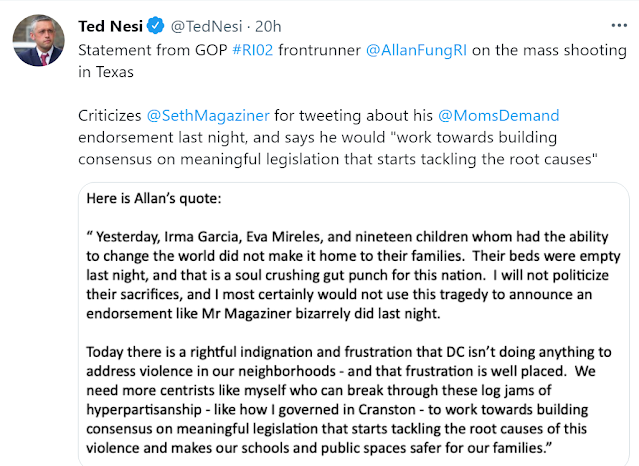
In the same sentence where Fung says "I will not politicize their sacrifices" he politicizes their sacrifices with his baseless attack on Seth Magaziner. His second paragraph is a prime example of hypocrisy.

Blake “Flip” Filippi certainly has some odd priorities when it comes to protecting children. While he has had nothing to say about the murder of little kids with an assault rifle, he tweeted today how much this irks him:

I just don’t understand what’s wrong with these people.

I think most reasonable people understand there is no single or simple answer to America’s unique and deadly gun problem. But surely one of those answers is to end the public sale and ownership military-style automatic weapons and extra-large magazines.

Rhode Island Attorney General Peter Nerohna could not have put it more clearly:

Thoughts and prayers

By Mike Luckovich


Solution to #4: stay home


Decarbonizing US Energy System Would Save 50,000 Lives and $600 Billion a Year

Saving lives and money

ANDREA GERMANOS

A new study adds to the case for urgent decarbonization of the U.S. energy system, finding that slashing air pollution emissions from energy-related sources would bring near-term public health gains including preventing over 50,000 premature deaths and save $608 billion in associated benefits annually.

"Our work provides a sense of the scale of the air quality health benefits that could accompany deep decarbonization of the U.S. energy system," said Nick Mailloux, lead author of the study and a graduate student at the Center for Sustainability and the Global Environment in University of Wisconsin–Madison’s Nelson Institute for Environmental Studies.

"Shifting to clean energy sources," Mailloux said, "can provide enormous benefit for public health in the near term while mitigating climate change in the longer term."

Published Monday in the journal GeoHealth, the analysis by Mailloux and fellow UW-Madison researchers focuses on emissions of fine particulate matter, referred to as PM2.5, and of sulfur dioxide and nitrogen oxides from the electric power, transportation, building, and industrial sectors.

Those sectors account for 90% of U.S. CO2-equivalent greenhouse gas (GHG) emissions, the paper notes. The bulk of the emissions from the sectors comes from fossil fuel use, though the study points to "a substantial portion" of particulate pollution stemming from wood and bark burning and "a small portion" resulting from non-combustion sources.

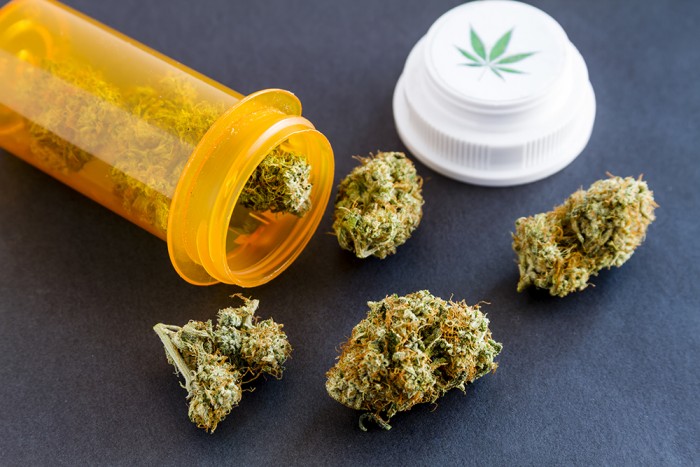
Medicinal Cannabis Reduces Pain and Need for Opiate Painkillers Among Cancer Patients

Has brought comfort to millions

By FRONTIERS 

A new research study finds that medicinal cannabis reduces cancer-related pain and the need for opiate-based painkillers.

A comprehensive assessment of the benefits of medical cannabis for cancer-related pain found that for most oncology patients, pain measures improved significantly, other cancer-related symptoms also decreased, the consumption of painkillers was reduced, and the side effects were minimal. Published in Frontiers in Pain Research, these findings suggest that medicinal cannabis can be carefully considered as an alternative to the pain relief medicines that are usually prescribed to cancer patients.

Pain, along with depression, anxiety, and insomnia, are some of the most fundamental causes of oncology patients’ disability and suffering while undergoing treatment therapies, and may even lead to worsened prognosis.

“Traditionally, cancer-related pain is mainly treated by opioid analgesics, but most oncologists perceive opioid treatment as hazardous, so alternative therapies are required,” explained author David Meiri, assistant professor at the Technion Israel Institute of Technology.

“Our study is the first to assess the possible benefits of medical cannabis for cancer-related pain in oncology patients; gathering information from the start of treatment, and with repeated follow-ups for an extended period of time, to get a thorough analysis of its effectiveness.”

Hurricane season is not looking good

The Loop, Mother of monster looks like it did in 2005

Nick ShayUniversity of Miami

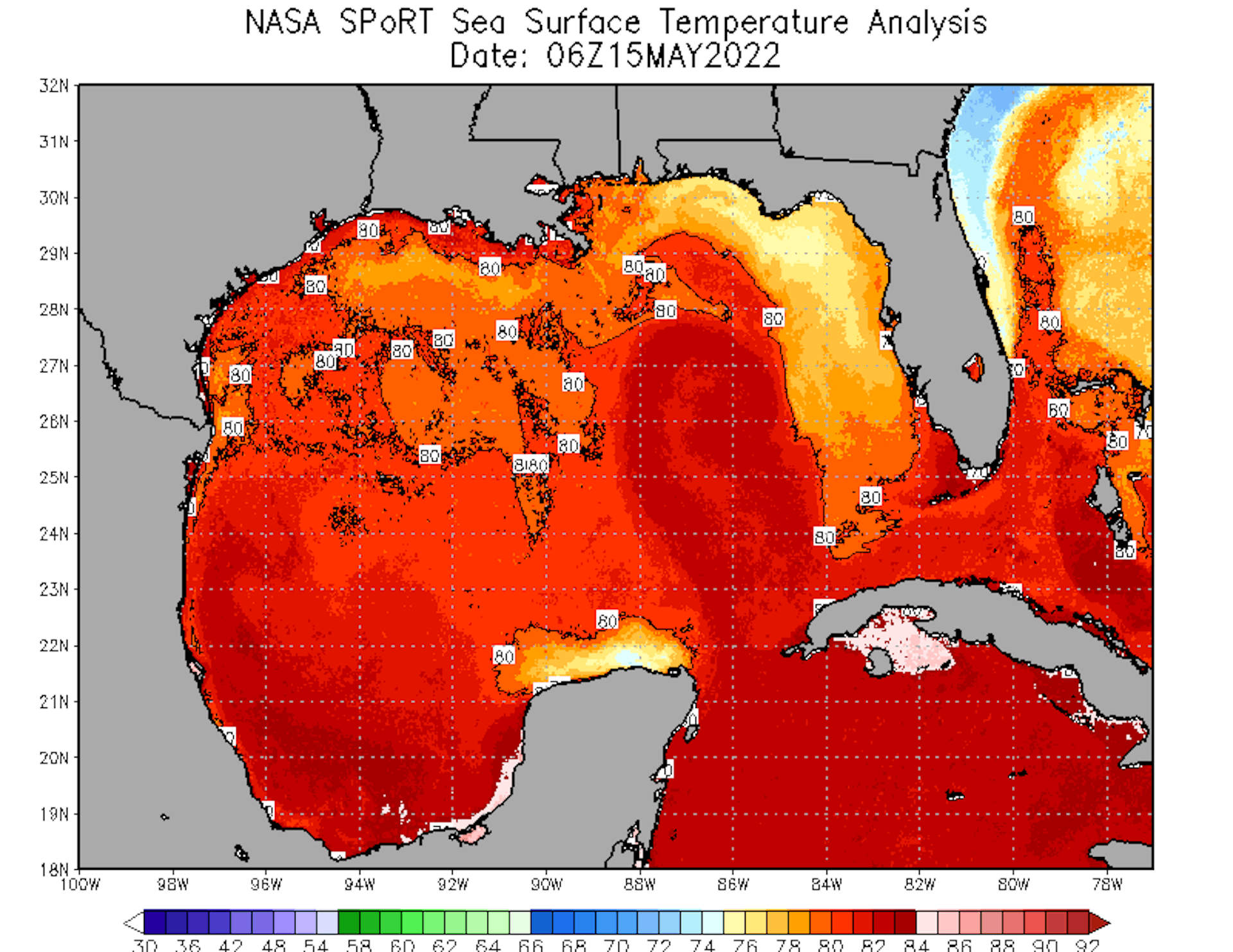
A satellite image of ocean heat shows the strong Loop Current and swirling eddies. Christopher Henze, NASA/Ames

The Atlantic hurricane season starts on June 1, and the Gulf of Mexico is already warmer than average. Even more worrying is a current of warm tropical water that is looping unusually far into the Gulf for this time of year, with the power to turn tropical storms into monster hurricanes.

It’s called the Loop Current, and it’s the 800-pound gorilla of Gulf hurricane risks.

When the Loop Current reaches this far north this early in the hurricane season – especially during what’s forecast to be a busy season – it can spell disaster for folks along the Northern Gulf Coast, from Texas to Florida.

If you look at temperature maps of the Gulf of Mexico, you can easily spot the Loop Current. It curls up through the Yucatan Channel between Mexico and Cuba, into the Gulf of Mexico, and then swings back out through the Florida Strait south of Florida as the Florida Current, where it becomes the main contributor to the Gulf Stream.