Menu Bar

Home           Calendar           Topics          Just Charlestown          About Us

Thursday, October 19, 2023

Marine biologist Wallace J. Nichols to discuss climate change and life below water at URI fall Honors Colloquium

Water warrior promotes the ‘blue mind’ life

Noted ocean explorer Wallace J. Nichols will take a deep dive into climate change—and life below water—at the 2023 University of Rhode Island Honors Colloquium Tuesday, Oct 24.

Nichols has been called a water warrior, one who commits to helping others access their “blue mind state.” 

His book Blue Mind, published in 2014, quickly became a national bestseller. Translated into numerous languages, it’s since inspired a wave of media attention and practical application.

Nichols will speak at 7 p.m. at Edwards Hall on the Kingston Campus, as part of the University’s fall Honors Colloquium, “Not Business As Usual: Business for the Common Good.” The talk will also be streamed live (video links are available the day of each event, at the link above).

Nichol’s visionary ideas related to ocean and aquatic ecosystems, migratory species, marine protected areas, fisheries management and plastic pollution inspire others to find a deeper connection with nature and embrace inventive approaches to issues ranging from protection of ocean life to global water supply to the mental health benefits of a life spent on or near the water.

World may have crossed solar power ‘tipping point’

Time to crown solar?

 By Alex Morrison


The world may have crossed a “tipping point” that will inevitably make solar power our main source of energy, new research suggests.

The study, based on a data-driven model of technology and economics, finds that solar PV (photovoltaics) is likely to become the dominant power source before 2050 – even without support from more ambitious climate policies.

However, it warns four “barriers” could hamper this: creation of stable power grids, financing solar in developing economies, capacity of supply chains, and political resistance from regions that lose jobs.

The researchers say policies resolving these barriers may be more effective than price instruments such as carbon taxes in accelerating the clean energy transition.

The study, led by the University of Exeter and University College London, is part of the Economics of Energy Innovation and System Transition (EEIST) project, funded by the UK Government’s Department for Energy Security and Net Zero and the Children’s Investment Fund Foundation (CIFF).

Wednesday, October 18, 2023

Construction unions team up to boost solar projects

Electricians, Engineers and Laborers Sign Historic Three-Union Solar Agreement   

The American Prospect
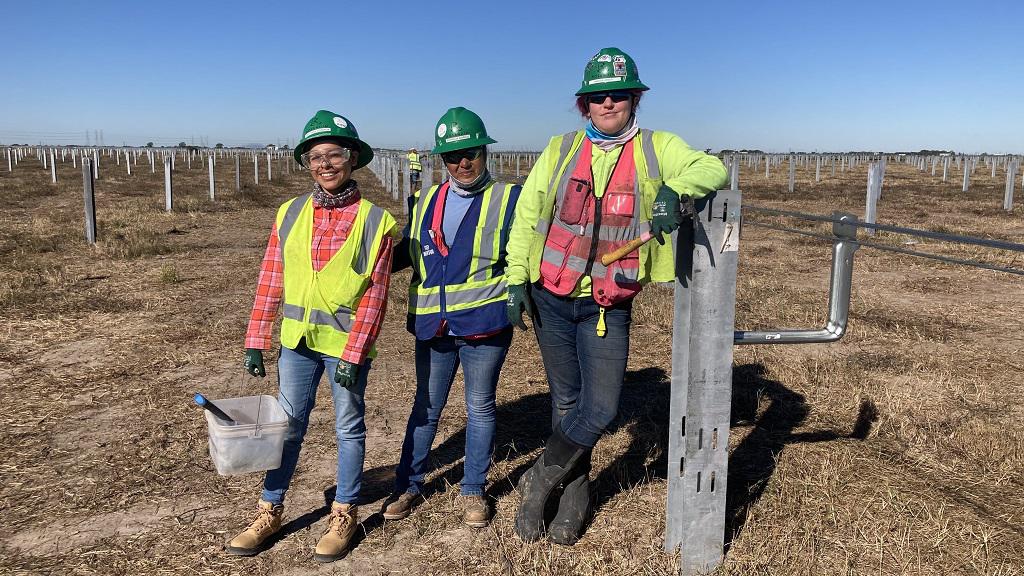
This week, the presidents of the International Brotherhood of Electrical Workers, the Laborers International Union of North America, and the International Union of Operating Engineers signed a national tri-trade solar agreement governing the construction of utility-scale solar projects, making it easier for developers, contractors, and unions to bring critical renewable energy generation online to power America’s communities.

“The members of our three unions have been key to the growth of utility-scale solar power for years now, and this agreement solidifies our role as leaders in this industry,” said IBEW International President Kenneth W. Cooper. 

“It will streamline the process of bringing large-scale solar projects onto the grid while ensuring they are done on time and under budget by experienced, skilled trades workers.”

Muscatel

Ian Boothby 


Boo!


Sic 'em

New strategy for controlling spotted lanternfly enlists canine investigators

By Cynthia Drummond, Rhode Island Current

An adult spotted lanternfly (Lycorma delicatula) in
Pennsylvania, on July 20, 2018.
(Stephen Ausmus/USDA-ARS Photo)
The dogs following their noses around Butterfly Farm, on Great Road represented diverse ages and breeds but all were being asked to do the same job.

Sniff out the egg masses of one of Rhode Island’s newest invasive pests.

Spotted lanternflies, native to China, threaten apple, grape, stone fruits, walnut and other economically important plants. The adult moths, about an inch long with red back wings with black spots and black-and-white bands could be considered pretty, if they weren’t so destructive. 

The insects were first identified in Pennsylvania in 2014, and are now found in 14 states. Rhode Island’s first confirmed lanternfly sighting was in Warwick in 2021. So far, they appear to be confined to the northern part of the state, where many of the crops they love to eat grow, like apples, peaches and other fruits.

For the dogs, being directed to “find” or “seek” is a challenge and a game. For their human owners, most of whom have competed in scent work, it’s an opportunity to keep their dogs engaged and sharp, by teaching them to identify something new.

It’s also a way for both to participate in scientific research.

Nice flavor mix

Scientists Discover Simple New Remedy for Garlic Breath

By OHIO STATE UNIVERSITY 

New research indicates that yogurt, especially its fat and protein, can effectively neutralize garlic odors. High-protein foods, such as Greek yogurt, may be future solutions for combating garlic breath. Immediate consumption post-garlic ingestion is advised.

New research uncovers proteins in particular have a strong deodorizing effect.

A recent discovery suggests that yogurt might have a previously unknown benefit: eliminating garlic odors.

A new study conducted in a lab – with follow-up human breath tests being planned – indicates that whole milk plain yogurt prevented almost all of the volatile compounds responsible for garlic’s pungent scent from escaping into the air.

Researchers tested the garlic deodorizing capacity of yogurt and its individual components of water, fat, and protein to see how each stood up to the stink. Both fat and protein were effective at trapping garlic odors, leading the scientists to suggest high-protein foods may one day be formulated specifically to fight garlic breath.

The medicine of the future could be artificial life forms

Some very creepy health news

University of Southern Denmark

Creating artificial life is a recurring theme in both science and popular literature, where it conjures images of creeping slime creatures with malevolent intentions or super-cute designer pets. 

At the same time, the question arises: What role should artificial life play in our environment here on Earth, where all life forms are created by nature and have their own place and purpose?

Associate professor Chenguang Lou from the Department of Physics, Chemistry, and Pharmacy, University of Southern Denmark, together with Professor Hanbin Mao from Kent State University, is the parent of a special artificial hybrid molecule that could lead to the creation of artificial life forms. 

They have now published a review in the journal Cell Reports Physical Science on the state of research in the field behind their creation. The field is called "hybrid peptide-DNA nanostructures," and it is an emerging field, less than ten years old.

Lou's vision is to create viral vaccines (modified and weakened versions of a virus) and artificial life forms that can be used for diagnosing and treating diseases.

Tuesday, October 17, 2023

The new robber barons


Trump library opens

Fall camping?


Fall in love with the Pawcatuck

Image


The Junk Food Industry’s Drug Problem

Ozempic and other weight loss drugs cutting into junk food sales

By Philip Mattera, director of the Corporate Research Project for the Dirt Diggers Digest

There’s a crisis related to junk food in America, but unlike in the past, the problem is not that people are eating too much of it and harming their health. 

Instead, consumption levels are declining, darkening the prospects for companies that depend on selling products filled with saturated fat and sugar.

The reason for this is the arrival of Ozempic and other weight-control medications that are highly effective in controlling the urge to overeat. From a public health perspective, this is great news. 

These drugs have the potential to substantially reduce obesity and related medical problems such as diabetes. Use of the drugs is soaring, and analysts expect millions more to follow suit.

While pharmaceutical companies are making a killing from these high-priced drugs, the food industry is faced with reduced demand. Most vulnerable are those companies that profit from binge eating, especially the snack food sector. 

According to the Wall Street Journal, executives at these firms are being barraged with questions from investors about the impact on profitability and stock prices. Wall Street analysts are pointing to vulnerability for manufacturers such as Hershey, Mondelez International (which makes Oreos, among other things) and Hostess Brands (Twinkies, etc.).

Your immune system makes its own antiviral drug

It’s likely one of the most ancient


Blocking viruses from replicating their RNA is one way
antivirals work. CROCOTHERY/iStock via Getty Images Plus
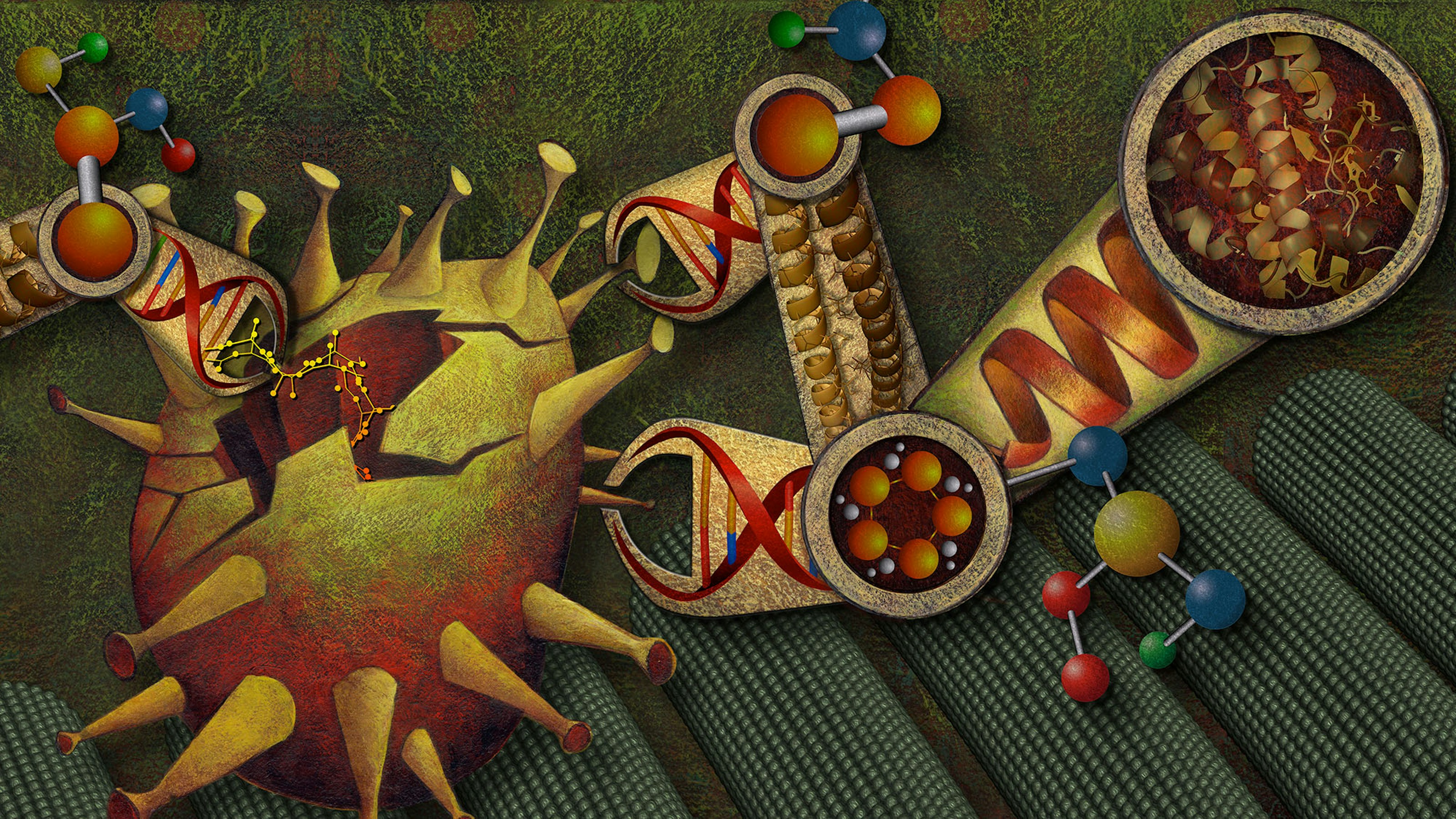
Antiviral drugs are generally considered to be a 20th century invention. But recent research has uncovered an unexpected facet to your immune system: It can synthesize its own antiviral molecules in response to viral infections.

My laboratory studies a protein that makes these natural antiviral molecules. Far from a modern human invention, nature evolved cells to make their own “drugs” as the earliest defense against viruses.

How antivirals work

Viruses have no independent life cycle – they are completely dependent on the cells they infect to supply all the chemical building blocks needed to replicate themselves. Once inside a cell, the virus hijacks its machinery and turns it into a factory to make hundreds of new viruses.

Antiviral drugs are molecules that inactivate proteins essential to the functioning of the virus by exploiting the fundamental differences in the way that cells and viruses replicate.

"Decisions are made by those who show up"

Fishing industry voice now absent from wind farm negotiations

By Nancy Lavin, Rhode Island Current

Jo Shelley/CNN
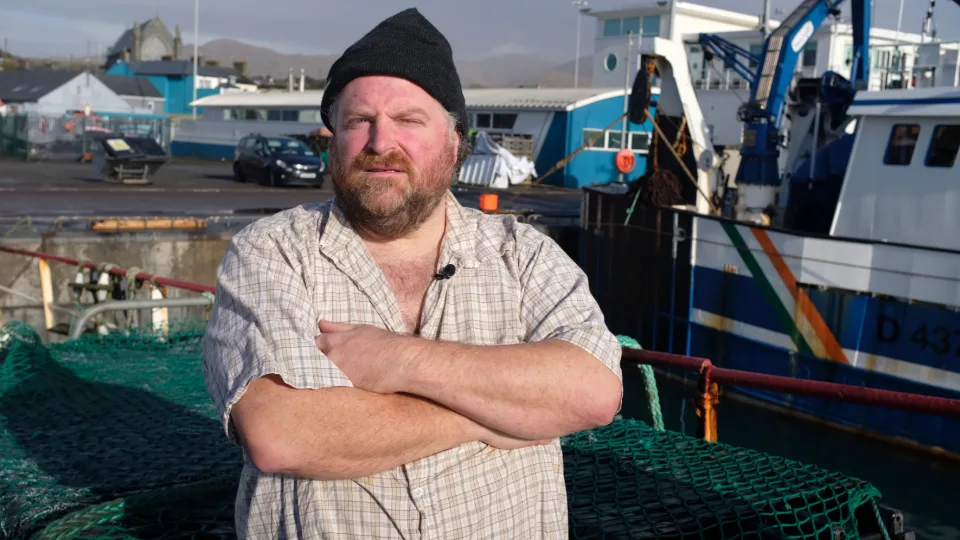
The usual uproar over how offshore wind projects will affect Rhode Island’s fishing industry may be muted Tuesday night as state coastal regulators consider a 130-turbine wind farm planned for waters south of Martha’s Vineyard.

Not because fishermen are less upset about how the two-phase New England Wind Farm project would affect their livelihoods. But they have lost their usual platform to voice objections, having resigned en masse from a state appointed panel meant to represent the fishing industry during Rhode Island Coastal Resources Management Council (CRMC) consideration of offshore wind farms.

The CRMC’s scheduled review and vote Tuesday on the New England Wind Farm (formerly known as Vineyard Wind South) will be the first offshore wind decision to come before Rhode Island regulators since members of the Rhode Island Fishermen’s Advisory Board (FAB) quit in August. The mass resignations came amid mounting frustrations over offshore wind negotiations, and the CRMC’s perceived deference to developers. 

The CRMC through its Ocean Special Area Management Plan (SAMP) gets to weigh in on any development within 30 miles of the state coastline. In the case of offshore wind arrays, that means determining whether the projects meet state regulations and also recommending mitigation measures to help minimize losses to the fishing industry from the construction and operation of the projects. 

The Ocean SAMP also outlines the role of the Fishermen’s Advisory Board, stating that the council “shall engage commercial and recreational fishermen in the Ocean SAMP decision-making process,” by including on wind farm locations, access, and mitigation measures, according to the regulations.