 |
| Ivan Ehlers |
Saturday, November 11, 2023

Want to achieve your goals? Get angry
Anger can be useful when facing a challenge, study says
American Psychological Association
While often perceived as a negative emotion, anger can
also be a powerful motivator for people to achieve challenging goals in their
lives, according to research published by the American Psychological
Association.
Role model?
"People often believe that a state of happiness is ideal, and the majority of people consider the pursuit of happiness a major life goal," said lead author Heather Lench, PhD, a professor in the department of psychological and brain sciences at Texas A&M University.
"The view that positive emotion is ideal for mental health and well-being
has been prominent in lay and psychological accounts of emotion, but previous
research suggests that a mix of emotions, including negative emotions like
anger, result in the best outcomes."
The functionalist theory of emotion, which has been studied for decades, suggests that all emotions, good or bad, are reactions to events within a person's environment and serve the purpose of alerting that person to important situations that require actions, according to Lench.
Each
emotion may call for a different response. For example, sadness may indicate
that a person needs to seek help or emotional support, while anger may suggest
they need to take action to overcome an obstacle.


Researchers Warn: Eating Too Much Salt Could Increase Your Risk of Diabetes
Just a pinch
By TULANE UNIVERSITY

Those at risk for Type 2 diabetes may already know to
avoid sugar, but new research suggests they may want to skip the salt as well.
A study recently conducted by Tulane University, published in the journal Mayo Clinic Proceedings, reveals that frequently adding salt to foods to food was associated with an increased risk of developing Type 2 diabetes.
Why are US politicians so old?
And why do they want to stay in office?
Mary Kate Cary, University of Virginia

Biden, now 80 years old, is the first octogenarian to occupy the Oval Office – and his main rival, former President Donald Trump, is 77. A Monmouth University poll taken in October 2023 showed that roughly three-quarters of voters think Biden is too old for office, and nearly half of voters think Trump is too old to serve.
My former boss, President George H.W. Bush, happily chose not to challenge Clinton again in the 1996 election. If he had run and won, he would have been 72 at the 1997 inauguration. Instead, he enjoyed a great second act filled with humanitarian causes, skydiving and grandchildren.
Bush’s post-presidential life, and American ideals of retirement in general, raise the question of why these two men, Biden and Trump – who are more than a decade and a half beyond the average American retirement age – are stepping forward again for one of the hardest jobs in the world.
Friday, November 10, 2023
Mass Shootings and the 100th Monkey
Could we be approaching a tipping point?

Banks. Bars. Beauty Salons. Big box stores. Bowling alleys. Concerts. Colleges and universities. Convenience stores. Dance studios. Gas station. Grocery stores. Halloween parties. Houses of worship. Massage parlors. Mushroom farms. Movie theaters. Nail salons. Nightclubs. Restaurants. Schools. Shopping malls. Spas.
Please forgive me if I missed other venues where (primarily) white men hunt to kill in the land of the free and the home of the brave.
On October 25, a 40-year-old white male Army reservist murdered 18 people and wounded 13 in Lewiston, Maine. Even before authorities discovered that he had died by suicide, a Maine congress member did a 180, reversing his views on gun control. Rep. Jared Golden, a Democrat, told a press conference:
On October 25, a 40-year-old white male Army reservist murdered 18 people and wounded 13 in Lewiston, Maine. Even before authorities discovered that he had died by suicide, a Maine congress member did a 180, reversing his views on gun control. Rep. Jared Golden, a Democrat, told a press conference:
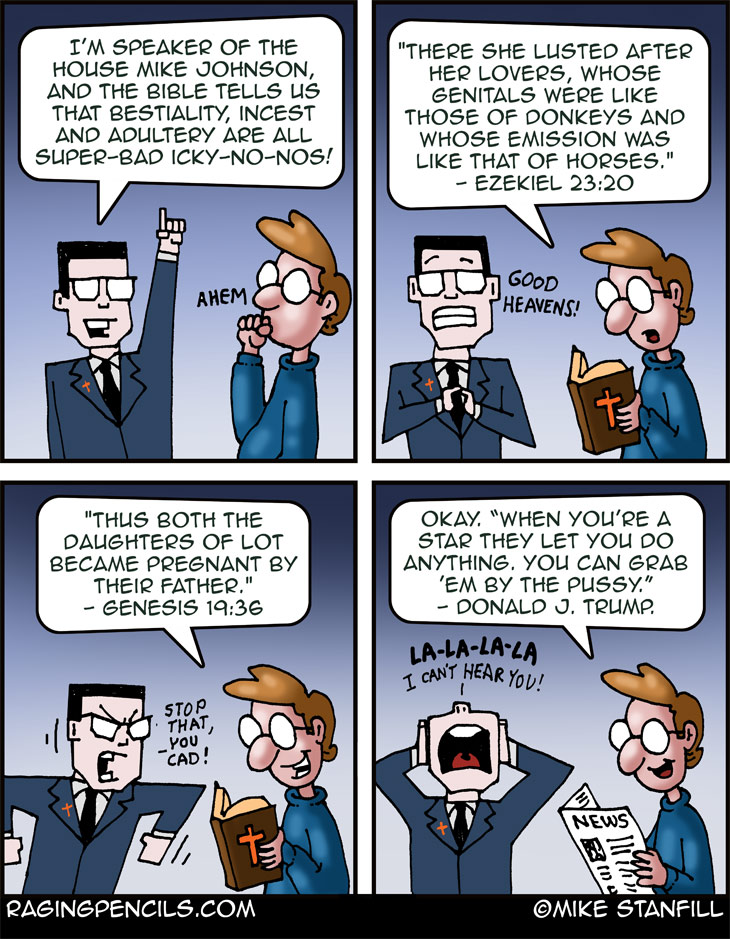
"I have opposed efforts to ban deadly weapons of war like the assault rifle used to carry out this crime. The time has now come for me to take responsibility for this failure—which is why I now call on the United States Congress to ban assault rifles like the one used by the sick perpetrator of this mass killing in my hometown of Lewiston."Don’t hold your breath waiting for Congress to take up his proposal. The best newly installed Speaker of the House, evangelical Christian and staunch gun control opponent Rep. Mike Johnson (R-La.), could manage to offer was, “This is a dark time in America… Prayer is appropriate at a time like this, that this senseless violence can stop.” That’s it, Mr. Speaker? That’s your “Sandy Hook” promise? WWJD?

Keeping a human in the loop
Managing the ethics of AI in medicine
University of Rochester Medical Center
Artificial intelligence (AI) -- of ChatGPT fame -- is increasingly used in medicine to improve diagnosis and treatment of diseases, and to avoid unnecessary screening for patients.
But AI medical devices could
also harm patients and worsen health inequities if they are not designed,
tested, and used with care, according to an international task force that
included a University of Rochester Medical Center bioethicist.
Jonathan Herington, PhD, was a member of the AI Task Force of the Society for Nuclear Medicine and Medical Imaging, which laid out recommendations on how to ethically develop and use AI medical devices in two papers published in the Journal of Nuclear Medicine.
In short,
the task force called for increased transparency about the accuracy and limits
of AI and outlined ways to ensure all people have access to AI medical devices
that work for them -- regardless of their race, ethnicity, gender, or wealth.
While the burden of proper design and testing falls to AI
developers, health care providers are ultimately responsible for properly using
AI and shouldn't rely too heavily on AI predictions when making patient care
decisions.
What they DON'T want to tell you about gas stoves
They've known about the pollution hazards for 50 years
Jonathan Levy, Boston University

Viewers probably didn’t know that Child’s new and improved kitchen studio, outfitted with gas stoves, was paid for by the American Gas Association.
While this may seem like any corporate sponsorship, we now know it was a part of a calculated campaign by gas industry executives to increase use of gas stoves across the United States.
And stoves weren’t the only objective. The gas industry wanted to grow its residential market, and homes that used gas for cooking were likely also to use it for heat and hot water.
The industry’s efforts went well beyond careful product placement, according to new research from the nonprofit Climate Investigations Center, which analyzes corporate efforts to undermine climate science and slow the ongoing transition away from fossil fuels.
As the center’s study and a National Public Radio investigation show, when evidence emerged in the early 1970s about the health effects of indoor nitrogen dioxide exposure from gas stove use, the American Gas Association launched a campaign designed to manufacture doubt about the existing science.
As a researcher who has studied air pollution for many years – including gas stoves’ contribution to indoor air pollution and health effects – I am not naïve about the strategies that some industries use to avoid or delay regulations.
But I was surprised to learn that the multipronged strategy related to gas stoves directly mirrored tactics that the tobacco industry used to undermine and distort scientific evidence of health risks associated with smoking starting in the 1950s.
The Problem With Leaf Blowers
Do they cause more problems than they are worth?
RICHARD HEINBERG for
Common
Dreams

Rather than letting a
pet peeve render me literally insane, I’ve decided to explore
the leaf blower’s deeper significance. A psychologist might call this writing
therapy. Maybe the result can also provide a little relief for you, the reader,
if you share my irritation.
The most obvious critique of the leaf blower is that it’s an obnoxious, destructive piece of machinery. As everyone within earshot of one knows, gasoline-powered leaf blowers are noisy. Deafening, in fact. The device blasts 95 to 115 decibels of sound at its operator.
According to the website Dangerous Decibels, this is roughly equivalent to a chainsaw or a passenger jet taking off, and it can cause permanent hearing loss. Further, research into the specific characteristics of sound from gas-powered leaf blowers, published in the Journal of Environmental and Toxicological Studies, showed that, unlike most other loud machines, leaf blowers produce low-frequency noise that travels long distances and penetrates building walls. That’s why a single leaf blower can annoy an entire neighborhood.
Leaf blowers contribute significantly to worsening noise pollution in
cities. Wildlife experience chronic stress as
a result, with birds having to sing louder to find mates or define breeding
territory. Everyone—human or non-human—feels on edge when that ugly noise
starts up.
At the same time, leaf blowers emit toxic pollution. The blower’s two-stroke engine drinks a combustible mix of oil and gas, but a typical leaf blower burns just two-thirds of its fuel, spewing the rest into the air.
That’s why two-stroke gas engines have been phased out in nearly all
applications—except landscape maintenance. The noxious stew of gases released
by leaf blowers—including cancer-causing benzene, volatile organic compounds,
ozone, and nitrogen oxides—is a health hazard for workers and bystanders alike.
Regarding nitrogen oxide, the California Air Resources Board figures that using a gas-powered leaf blower for an hour emits as much as driving a Toyota Camry from Los Angeles to Denver.
Of course, gas-powered leaf blowers
also spew climate-wrecking CO2, but their nitrogen oxide emissions have an
outsized climate impact: The EPA estimates that
one pound of nitrous oxide has almost 300 times as much global warming effect
as a pound of carbon dioxide.
All of these drawbacks have led over 100 cities and towns
across the country to ban or restrict
the use of gas-powered leaf blowers. California is phasing out gas-powered
leaf blowers, but doing so will take many years. My neighbor obviously hasn’t
gotten the memo, nor have millions like him.
Thursday, November 9, 2023
Do they REALLY care about whales?
Gadflies Swarm Around Whale Carcasses
By Frank Carini / ecoRI News colunmist

When it comes to the real threats to the 350 or so right
whales left on the planet — entanglements with fishing gear and strikes with
ships — the mob’s ranting and raving goes largely silent, and my stomach turns.
These self-proclaimed pro-whale warriors only care about
the lives of these majestic marine mammals when they fit into their
manufactured hysteria about offshore wind.
Among those spreading the mob’s propaganda are southern
New England firebrand Lisa Quattrocki Knight, president of Green
Oceans, and Constance Gee, a Westport, Mass., resident and Green
Oceans member; Lisa Linowes, executive director of the Industrial
Wind Action Group Corp, also known as The WindAction Group; Protect
Our Coast New Jersey; and blogger Frank
Haggerty, a blowhole of offshore wind misinformation.
Their bluster is either funded by the fossil fuel
industry and/or they are wealthy coastal property owners more concerned that
their ocean views will be ruined by a different type of energy infrastructure.
Either way, the lives of whales, dolphins, birds, and humans living near
polluting fossil fuel operations don’t matter.
Green Oceans has filed a civil lawsuit against
the Coastal Resources Management Council, claiming the Rhode Island agency
violated the state’s Constitution, state regulations, and its own
responsibilities when it approved the Revolution Wind project in May.
In September, Knight put on an anti-wind show for
a Westport audience. She touched on popular anti-wind talking points, including
potential harms of offshore wind to the ocean environment and animals; dangers
to fishermen; costs of electricity created by wind power; and the fossil fuel
industry origins of some wind developers.
I find the last one especially amusing. She doesn’t trust
the industry (no one should) when it comes to offshore wind development, but
yet neither her nor her organization protest ocean drilling for fossil fuels,
hydraulic fracturing, or tar sands mining.
In fact, Knight and the Green Oceans website barely, if
ever, mention the harms associated with the exploration, extraction, and
burning of fossil fuels. In February, Green Oceans published a white paper that
espoused the idea of converting U.S. coal-fired power plants to natural gas
ones as a solution to the climate crisis.

EOY sale is on at the Charlestown Gallery
|
||||||||||||||||
|


Go ahead and hit the snooze button
Snoozing Benefits Uncovered in Sleep Research
By

New research from the Department of Psychology at
Stockholm University shows that snoozing may actually support the waking
process for regular snoozers.
The Science of Hitting the Snooze Button
It’s common to want to stay in bed, potentially even go back to sleep, when the alarm goes off in the morning. The snooze button has been a function in alarm clocks and cell phones for decades and is often claimed to have negative effects, both on sleep and the brain’s ability to wake up.
However, there has been no scientific research to support these claims. Researchers from Stockholm University have now investigated how common snoozing is and what effects this behavior has on sleep, sleepiness, mood, and cognitive abilities.
Subscribe to:
Posts (Atom)