Menu Bar

Home           Calendar           Topics          Just Charlestown          About Us

Tuesday, January 23, 2024

Senate Democrats propose bill to lower taxes on dead millionaires

When a million isn't enough

STEVE AHLQUIST

From the band Dead Billionaires
Less than a week after a report from the Institute on Taxation and Economic Policy [ITEP] showed that Rhode Island has a regressive tax structure that benefits the top one percent of earners at the expense of the lowest 20% of earners, members of the Rhode Island Senate introduced a bill, S2064, to lower the taxes paid by dead millionaires.

If signed into law, the bill would increase the net taxable estate exemption to $4 million for deaths that occur on or after January 1, 2025. It is supported by Senators David TikoianRyan PearsonHanna GalloJohn BurkeMatthew LaMountainValerie LawsonWalter FelagDawn EuerFrank Lombardo, and Frank Ciccone, all Democrats.

Note that this bill is being introduced at a time when Governor Daniel McKee, Senate President Dominick Ruggerio, and Speaker of the House K. Joseph Shekarchi have announced a period of fiscal belt-tightening following the end of Covid-era federal relief dollars.

So what is the estate tax?

The estate tax is paid by dead millionaires. No one in Rhode Island who dies with an estate worth less than a million dollars pays the estate tax. No living person has ever paid one penny in estate tax. 

When a millionaire dies, their estate typically consists of real estate, stocks and bonds, mutual funds, and other financial assets. Before these assets are passed onto their inheritors, a tax is assessed, but only if the estate is worth more than $1.5 million.

The Speaker on the pulpit

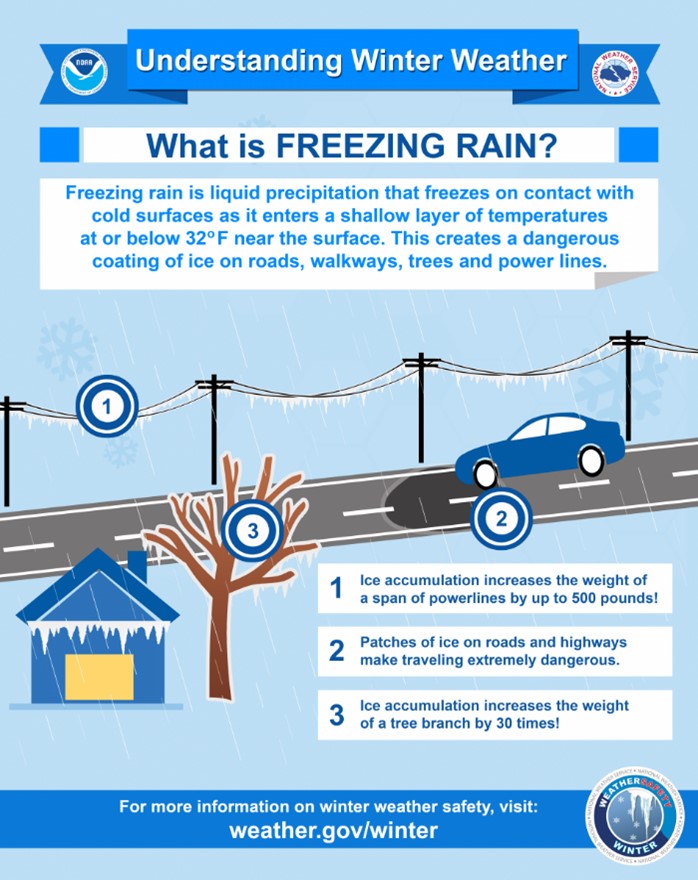
How dangerous is freezing rain?

‘Connecting in the Garden, Growing Together Again’ is theme of URI Master Gardener symposium, March 2

Ecological gardening program, open to the public

Kristen Curry

A perennial Rhode Island gardening favorite is returning this spring, for the first time since 2020.

This year’s Rhode Island Garden Symposium, the first since the pandemic, will feature prolific garden writers and speakers Karen Bussolini and Charlie Nardozzi. Sponsored by the University of Rhode Island Master Gardener Program and designed for gardeners of all abilities, the symposium aims to inspire gardeners to take their gardens to the next level or start one for the first time. 

It runs from 9 a.m. to 3 p.m. Saturday, March 2, at the URI Center for Biotechnology and Life Sciences, 120 Flagg Road, Kingston campus.

The theme for this year’s symposium is “Connecting in the Garden, Growing Together Again.”

“The R.I. Garden Symposium had become a tradition for the Rhode Island gardening community,” says Vanessa Venturini, program leader in URI Cooperative Extension. 

“We are excited to bring everyone back together for this in-person event packed with information about ecological gardening techniques. This event is designed for gardeners of all experience levels to enjoy.” The symposium will cover everything from soil to pest control to wildlife gardening.

This year’s program features two national presenters:

What’s the best diet for healthy sleep?

A nutritional epidemiologist explains what food choices will help you get more restful z’s

Erica JansenUniversity of Michigan

A balanced diet is one key factor in getting a restful
night’s sleep. SimpleImages/Moment via Getty Images
You probably already know that how you eat before bed affects your sleep. Maybe you’ve found yourself still lying awake at 2 a.m. after enjoying a cup of coffee with dessert. But did you know that your eating choices throughout the day may also affect your sleep at night?

In fact, more and more evidence shows that overall dietary patterns can affect sleep quality and contribute to insomnia.

I am a nutritional epidemiologist, and I’m trained to look at diets at the population level and how they affect health.

In the U.S., a large percentage of the population suffers from poor sleep quality and sleep disorders like insomnia and obstructive sleep apnea, a condition in which the upper airway becomes blocked and breathing stops during sleep. At the same time, most Americans eat far too much fatty and processed food, too little fiber and too few fruits and vegetables.

Although it is difficult to determine whether these two trends are causally linked to one another, more and more research points to linkages between sleep and diet and offers hints at the biological underpinnings of these relationships.

Rise of COVID in RI brings back masking

With COVID numbers rising, Lifespan reinstates masking policy

By Alexander Castro, Rhode Island Current

A two-fold increase in the average number of COVID cases has led the state’s largest health system to reinstate masking policies at the end of 2023.

Patients are now required to wear a surgical mask when being treated or examined at any Lifespan-affiliated medical offices or its four acute care hospitals. 

But patients are not required to wear them in waiting rooms, or when alone or with a guest in a room, Lifespan spokesperson Kathleen Hart confirmed in an email. 

Lifespan issued an advisory to “ensure awareness of, and clarity on, the policy,” Hart said.

“So if just a patient is in the room alone, they do not have to wear the mask, but when a caregiver comes in both the caregiver and patient need to put on the Level 2 mask,” Hart explained.

Lifespan’s four hospitals — Rhode Island, Hasbro Children’s and The Miriam Hospitals in Providence, plus Newport Hospital — observed a daily average of 41 positive COVID cases in December 2023. In Nov. 2023, the daily average had been 21 cases. 

The masking policies were reinstated on Dec. 28, 2023. As of Jan. 9, the average number of positive COVID cases across all four hospitals was 71, a Lifespan news release reported.      

Monday, January 22, 2024

A Modest Proposal to Combat Gun Violence

Treat guns like cars, among other approaches

THOMAS MEISENHELDER for Common Dreams

It is not news that’s the United States suffers from way too much gun violence. This sad fact is common knowledge around the world. When the American problem of gun violence is brought to the attention of our leaders, they announce their sadness over the situation and then conclude that nothing can be done about it. I disagree.

First, a quick review of the problem. Although the last few years have seen a slight reduction in violent crime, the United States still has more gun violence by far than any other developed country. Our rate of gun violence is seven times that of Canada and 340 times the rate of the United Kingdom! 

To be sure other develop countries have poverty and inequality, racism and patriarchy, violent entertainment, and mental illness just like the United States; but they do not have the high rates of suicide and homicide by gun that we do.

What is this so? Clearly, it is the presence of guns. The United States has about 330 million people and it has nearly 400 million guns. Guns are present in around 45% of American homes. And, it should go without saying, these firearms are dangerous, very dangerous. 

In the USA there are around 240 million car owners and, sadly, every year there are about 43,000 deaths from car accidents; at the same time, there are nearly 82 million gun owners and over 45,000 guns deaths. 

Guns cause nearly 50,000 deaths every year. They produced nearly 27,000 suicides and 21,000 homicides in 2022; this was 75% of all homicides and 54% of all suicides. Every day in our country, over 300 people are shot and over 100 of these people die (40% murders, 60% suicides).

So, yes, it is a huge problem in our country. But it is soluble problem.

Current comparisons between states with strong gun ownership regulations and those with less stringent laws point toward a solution. Gun deaths are higher in states with lots of gun owners and lower in states with fewer. 

Relax - he has total immunity


PAID summer internships!

How a fish fight could change the country

A Supreme Court ruling on fishing for herring could sharply curb federal regulatory power

Robin Kundis CraigUniversity of Southern California

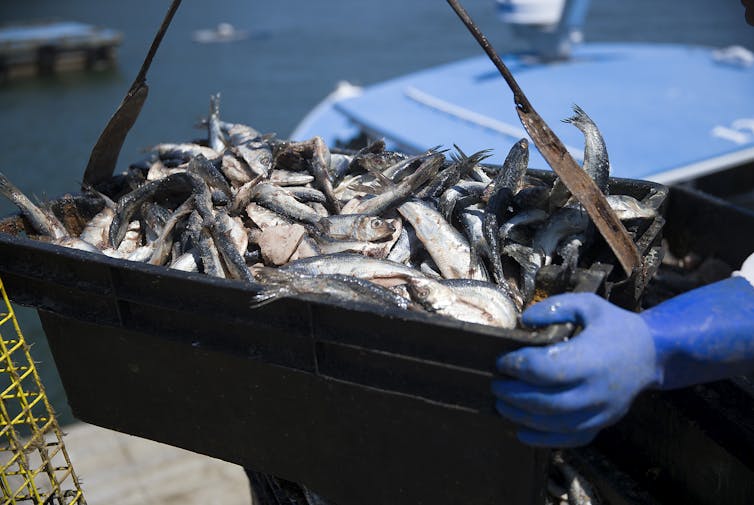
Two cases centered on Atlantic herring could have
widespread impacts on federal regulation. 
Joe Raedle/Getty Images
The Supreme Court heard oral argument on Jan. 17, 2024, in two cases that center on fisheries management, but could have broad impacts on federal regulatory power.

The question at the core of Loper Bright Enterprises vs. Raimondo and Relentless Inc. vs. Department of Commerce is whether the Secretary of Commerce, acting through the National Marine Fisheries Service and following the Magnuson-Stevens Fishery Conservation and Management Act, can require commercial fishers to pay for onboard observers whom they are required to take on some fishing voyages. 

In both cases, the plaintiffs assert that the Commerce Department has exceeded its legal authority. That claim turns on how much deference the court should give the agency’s interpretation of the Magnuson-Stevens Act.

The plaintiffs are challenging a nearly 40-year-old doctrine of federal administrative law, known as Chevron deference for the 1984 case in which it was set forth. This tenet provides that when a federal statute is silent or ambiguous about a particular regulatory issue, courts defer to the implementing agency’s reasonable interpretation of the law.

In other words, if the agency and federal courts disagree about the “best” interpretation of a federal law, the courts cannot force the agency to accept their version of what the statute means or allows, so long as the agency’s own interpretation is reasonable.

During oral argument, the justices voiced concerns about issues including legal stability, past rulings and the proper relationship between federal courts and federal agencies. They also expressed differing views about how statutory interpretation actually works in practice. Several justices asked whether overruling Chevron would reopen prior decisions to new challenges.

Justice Neil Gorsuch, one of the Chevron doctrine’s most prominent critics, worried instead that deferring to regulators created legal instability by allowing agencies to change the law, flip-flopping when presidential administrations changed. Liberal Justices Sonia Sotomayor and Elena Kagan most clearly supported relying on agencies’ expertise, particularly in highly technical situations.

On Roe v. Wade anniversary, Magaziner vows to restore abortion rights for all women across the country

Choice should belong to women, not politicians, especially hypocrites

Representative Seth Magaziner (RI-02) issued a statement commemorating the 51th anniversary of the Roe v. Wade decision and urged Members of Congress to restore abortion rights for all women across the country. 

“Women deserve to make decisions about their own bodies, health, and future – not have those decisions made by politicians. As we commemorate the anniversary of Roe v. Wade, we are reminded of the stark reality that millions of women currently do not have access to abortion care,” said Rep. Seth Magaziner. 

“But make no mistake – this fight is not over. We will not stop working to restore Roe and codify abortion rights into law once and for all.” 

Rep. Magaziner is an original cosponsor of HR12 - Women’s Health Protection Act (WHPA), which is the only legislation that enshrines the principles of Roe v. Wade into law. 

WHPA creates a statutory right for health care providers to provide abortion care and for their patients to receive that care, free from medically unnecessary restrictions that single out abortion and impede access. 

Rep. Magaziner is also a cosponsor of H.R. 782 - Ensuring Women’s Right to Reproductive Freedom Act, which prohibits women from being punished for traveling across state lines to access reproductive health care, and H.Con. Res. 33 - Freedom to Decide Act, which protects access to the abortion pill mifepristone and supports telemedicine across state lines, so doctors can prescribe mifepristone wherever women are in need of health care. 

Rhode Island "No Labels" may already have committed election fraud

 Alleged signature fraud spotted in Jamestown, Cranston

By Nancy Lavin, Rhode Island Current

A bipartisan group called No Labels trying to prop up a third-party presidential candidate in 2024 is under scrutiny for allegedly submitting forged signatures, including from dead residents, on petition papers to local election administrators. 

The Jamestown Board of Canvassers on Friday unanimously voted to refer some of the party petition papers submitted by No Labels to the Jamestown Police Department, after flagging two dozen signatures of registered voters that did not match the handwriting on town records, said Jamestown Canvassing Clerk Keith Ford. 

Meanwhile, the Cranston Board of Canvassers has also flagged an “unusually high” number of suspicious signatures on papers turned in to the city, including 10 signatures of deceased residents, according to Nick Lima, the city’s election director.

Both municipalities have also reported their concerns to the Rhode Island Board of Elections, which has final review authority on the signatures needed for the aspiring political party to gain ballot access in Rhode Island. 

No other cities or towns have reported suspicious signatures collected by No Labels as of Thursday, according to Chris Hunter, a state elections board spokesperson. Hunter declined to comment on the Jamestown referral to local police.

No Labels, a bipartisan political organization founded in 2010, has been rallying supporters and raising money to potentially run a “unity ticket” with an alternative presidential candidate in the 2024 election. 

First, it needs party recognition in all 50 states, a step which requires collecting a certain amount of signatures of registered voters in each state to gain ballot access.

In Rhode Island, efforts are being led by Gary Sasse, who also serves as director of the Bryant Institute for Public Leadership at Bryant University.

Sunday, January 21, 2024

McKee’s Budget Offers Only Modest Increases to Environmental Programs

Big talk, but little funding

By Rob Smith / ecoRI News staff

Where's the money, Dan?
Environmentalists and advocates yearning for bigger environmental investments on the part of the state are going to be disappointed this year.

Under the $13.68 billion budget proposal released Thursday afternoon by Gov. Dan McKee, state environmental priorities would only see modest increases to existing programs, and a typical green economy bond proposed for the November ballot.

State officials have stressed for weeks that, while the state was narrowly avoiding a recession, with the end of pandemic federal funds, many state agencies were going to have to live within their means.

Brian Daniels, director of the state Office of Management and Budget (OMB), told reporters Thursday that all state agencies were told to strictly limit their budget increases without very good reason.

“If [your agency] was asking for more than a 2.6% increase, you are contributing to the state deficit,” Daniels said.

The state’s environmental agencies, the Department of Environmental Management and the Coastal Resources Management Council, account for 1.1% of total state budget expenditures.

Here’s what’s in the governor’s budget proposal for the environment:

Bad news, good news

Tom Toro 


The choice for true patriots