Menu Bar

Home           Calendar           Topics          Just Charlestown          About Us
Showing posts with label history. Show all posts

Friday, May 22, 2026

Trump Uses America’s 250th Anniversary To Rewrite History With Corporate Sponsorships

George Orwell warned us: "Who controls the past, controls the future" 

By Gina-Marie Cheeseman

Key Takeaways

  • Freedom 250 is a corporate-sponsored initiative by the Trump administration to celebrate America’s 250th birthday, heavily influenced by Hillsdale College’s narrative.
  • Interior Secretary Doug Burgum has directed employees to promote Freedom 250, despite the existence of a nonpartisan organization, America250.
  • The initiative serves as an advertising scheme, allowing corporations to sponsor the celebration for large donations, while taxpayer money funds these events.
  • Critics argue that the Freedom 250 logo and its related propaganda undermine government neutrality and erase historical accuracy.
  • Concerns have been raised about potential foreign donations, despite claims by Freedom 250 spokespeople that they do not accept such funds.

What do you get when you combine a view of American history reminiscent of the novel 1984 with corporate sponsors? Freedom 250 is the result, or as its website proclaims, the Trump administration’s “national, non-partisan organization leading the celebration of our Nation’s 250th birthday.”

Thursday, May 21, 2026

Scientists are reading Block Island’s past to protect its future

Maybe it will teach us more about coastal change

By Amber Neville

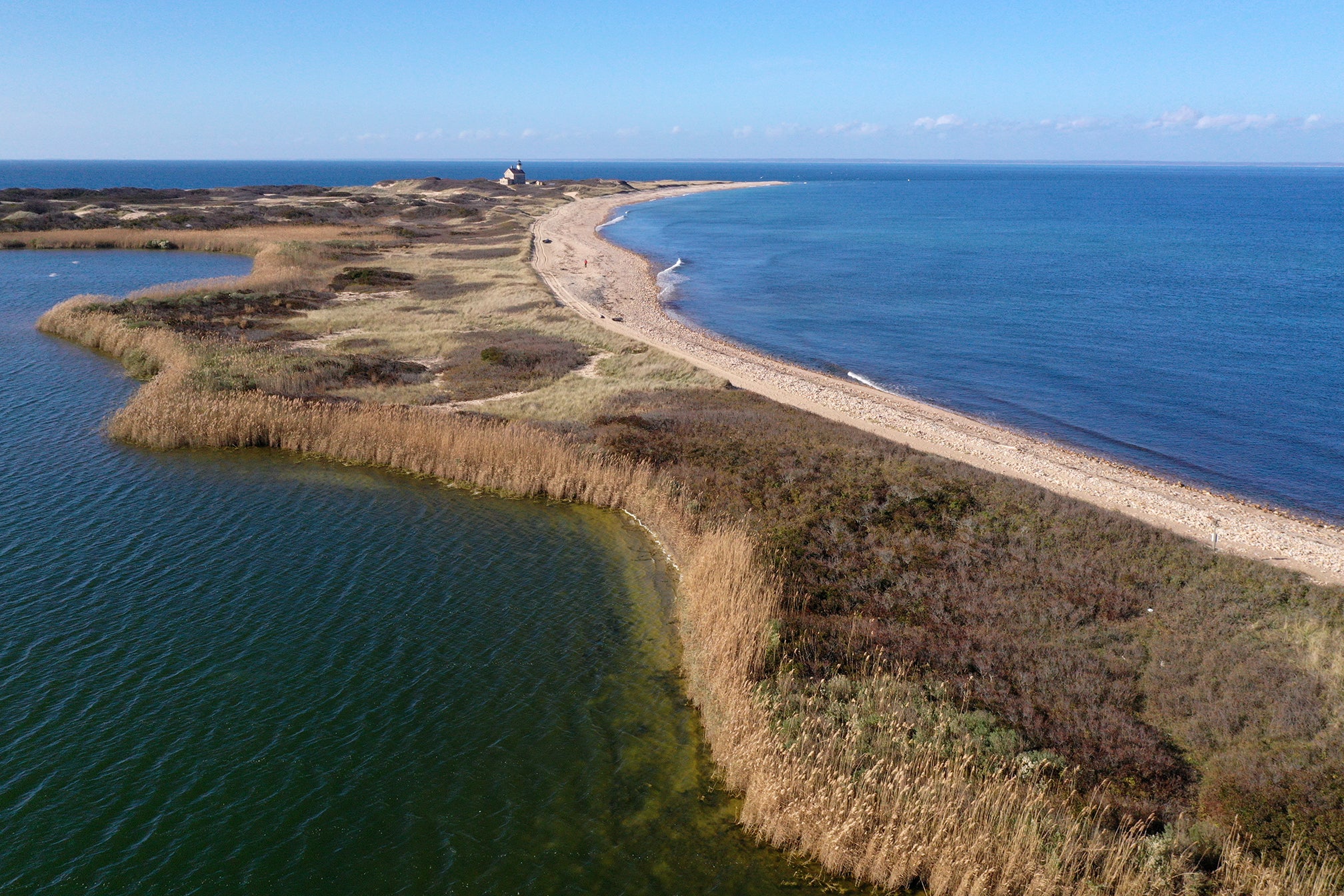
Two new URI studies will decode over a century of coastal change on one of New England’s most treasured islands, delivering planning tools and scientific guidance directly to the community, backed by more than $800,000 in combined Rhode Island Sea Grant funding and matching funds. (URI Photo / Rhode Island Sea Grant)

Every summer, the population of Block Island swells to over 15,000 as visitors arrive for its 17 miles of beaches, dramatic glacial bluffs, and quiet ponds. The island has always changed — its bluffs eroding, its shorelines shifting, its marshes responding to the rhythms of tide and season. But the pace of that change is accelerating, and the decisions the community makes in the coming years will shape what the island looks like for generations to come.

The University of Rhode Island is working alongside that community to make those decisions better informed. Two new research projects, supported by more than $800,000 in combined Rhode Island Sea Grant funding and matching funds from URI and Eastern Connecticut State University (ECSU), will produce the most detailed picture yet of how Block Island’s shoreline and salt marshes are changing and what is driving those changes.

Wednesday, May 20, 2026

New hospital safety ratings show Westerly Hospital with an “A” and South County with a “C”

South County Hospital needs help

By Will Collette

The latest ratings on hospital safety just came out from the Leapfrog Group, the leading ranking service in the country. Under its rankings for Rhode Island, Miriam Hospital continues in the top spot as the safest in the state.

South County’s two non-profit hospitals have bracketed hospital ratings for safety and effectiveness over the past couple of decades, one usually ranked at or near the top, the other at or near the bottom.

When Cathy and I returned to Rhode Island in 2001, it was South County Hospital with the great scores and Westerly Hospital with the poor ones. That changed about ten years ago.

In 2012, Westerly Hospital was on the brink of shutting down, having run out of money with a management that had run out of ideas. They were saved, barely, when they were purchased by Lawrence & Memorial Hospital of New London. L&M management brutally cut staff and services at Westerly, while also engaged in a bitter strike with their own employees in New London.

However, in 2016, the dynamic changed when both Lawrence & Memorial and Westerly Hospitals were bought out by Yale-New Haven as Yale brought higher standards to both hospitals.

By contrast, South County Hospital remained Rhode Island’s only independent hospital, for better or worse, and also recently went through its own corporate turmoil that broke into the open in summer 2024.

My own personal connection to South County Hospital goes back more than 50 years. As a young strategic researcher, I worked on a statewide campaign led by former RI AFL-CIO President George Nee to get every hospital in Rhode Island to help uninsured and unemployed workers by treating them regardless of ability to pay and to write off a substantial amount of medical debt. Each hospital in turn was targeted until they agreed to these terms.

Donald Ford
Except South County. Under longtime CEO Donald Ford, South County already had these policies in place and advertised this policy on the radio. I called Ford to find out why South County alone had such a positive approach. He laughed, said he expected I’d get around to calling, and invited me down.

I went and discovered a new friend, if not a kindred spirit. As we walked through the whole hospital, especially the inner sections rarely seen by visitors, Donald greeted workers and often patients by name. He ran the hospital that way for almost 30 years. I mourned his passing in 2010.

Fast forward to the present and we have a new South County CEO, Aaron Robinson who took over as boss in 2018. His policies and management style provoked a staff revolt, mass resignations, a sharp decline in South County’s ratings and community protests demanding his resignation.

Robinson responded by adopting a siege mentality and, in a move I’ve never seen, filed a punitive SLAPP suit against the community opposition group “Save South County Hospital.” SLAPP suits are illegal under Rhode Island law.

Whether it was the SLAPP suit or some genuine compromise, South County management and its angry constituents came to some kind of undisclosed compromise, but not in time to prevent South County Hospital’s safety score from dropping another letter grade.

One of the few details of the settlement acknowledged by both sides was that South County would seek and secure some sort of "partnership" deal with an undisclosed third party that would boost quality through more investment yet also preserve SCH's independence.

I asked several SCH staff at various levels about this secret deal, and they said they were waiting to see what Robinson had in mind.

Meanwhile, under Yale-Haven, Westerly Hospital continues to show marked improvement as their scores over the past several years shows.


Contrast this with South County Hospital's poor showing.

If you open up the FULL REPORT, you can see where South County has fallen short. I was especially concerned about the two tables above. My interpretation of this data is that safety standards certainly appear to have slipped, but it doesn't seem to be the staff's fault. 

Non-profit hospitals should be a public trust. That's what Donald Ford told me almost 50 years ago. Today, they are more like businesses, and their leaders resemble Wall Street CEOs rather than Main Street civic leaders. While I harbor no false hopes about any return to the good old days, there must be a way rekindle the bond between the public and these once revered institutions.

Sunday, May 17, 2026

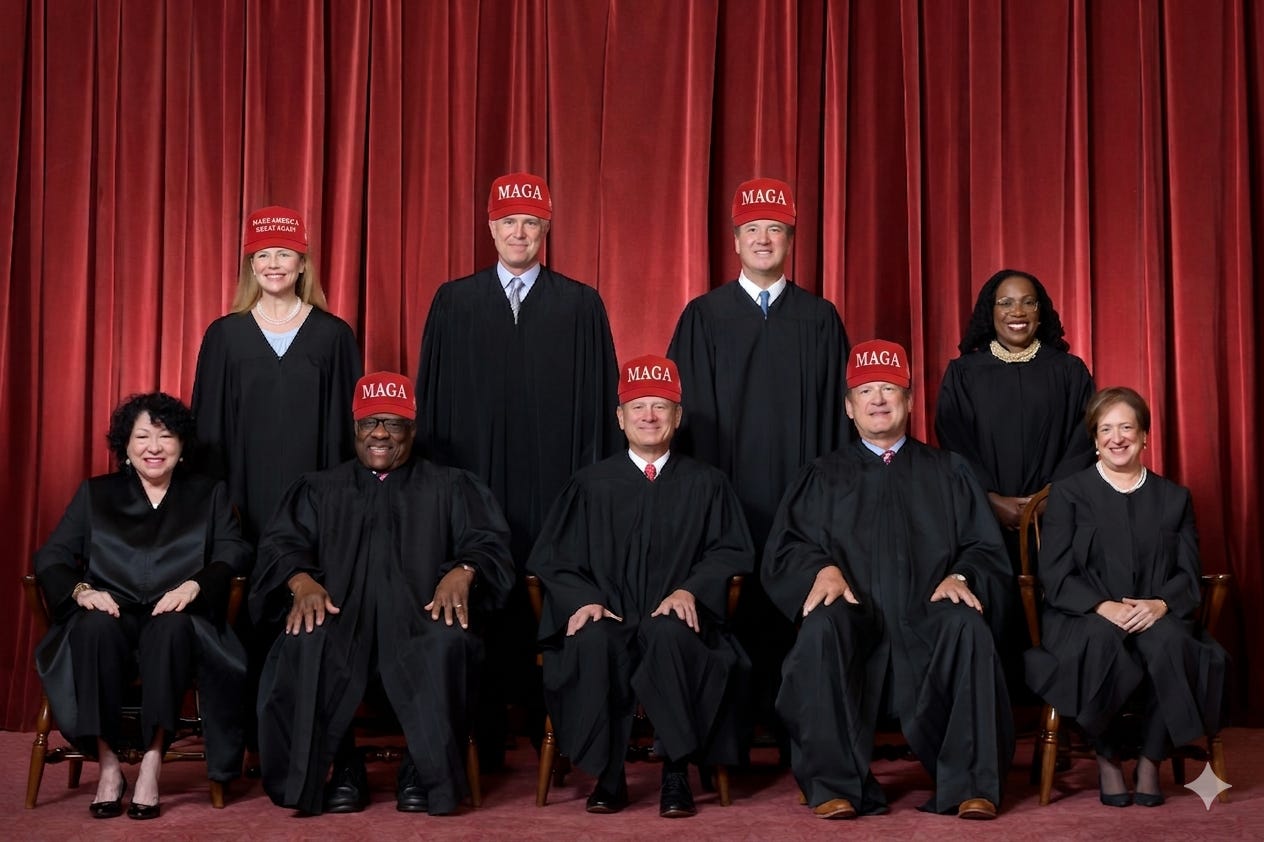
MAGA Supreme Court Okays G.O.P. Overthrow of American Democracy

Disenfranchising 40% of a state’s citizens cannot be reconciled with representative democracy

Mitchell Zimmerman

The Supreme Court gave a “two-fer” to white supremacists and proponents of Republican autocracy: First, six right-wing justices completed the erasure of the crowning achievement of the 1960s Civil Rights Movement, the Voting Rights Act. Second, in the same case, Louisiana v. Callais, the right-winger judges approved of states shaping legislative districts that deny the opposing party any role in government.

In essence, the Supreme Court okayed the destruction of Congress as an instrument of American democracy.

The Fifteenth Amendment to the Constitution was enacted and ratified five years after the Civil War. The Amendment confirmed – in principle – that African-American citizens have the right to vote and to have their votes count.

So said the Constitution. But for almost a century the former Confederate states negated African-Americans’ right to vote.

The Voting Rights Act put an end to the myriad legal schemes Southern white politicians had used to disenfranchise Black Americans

The Fifteenth Amendment also gave Congress the power to enforce its mandate. After years of struggle over civil rights – after peaceful demonstrators in Birmingham confronted snarling police dogs, mass arrests and lethal bombing, after hundreds of nonviolent students worked for freedom in Mississippi in the face of murder, assaults and the burning of Black churches, after peaceful marchers for voting rights returned to Selma after being clubbed by state troopers and ridden down by racist possemen – Congress tackled the white supremacist obstacles to African-American voting.

The Voting Rights Act of 1965 put an end to the myriad legal schemes that Southern white politicians had used to disenfranchise Black Americans and terminated the ploys used to deny African-Americans a fair opportunity to elect representatives of their choice.

Rep. Spears honors great-nephew of Ellison ‘Tarzan’ Brown for completion of Boston Marathon

Congratulations Thawn 

The House approved a resolution from Rep. Tina L. Spears honoring the great-nephew of Ellison “Tarzan” Brown for his completion of the Boston Marathon 90 years after Brown’s first Boston Marathon victory.

Thawn Sherenté Harris of Charlestown completed the marathon in an official time of 3 hours, 59 minutes, and 30 seconds, making him the third member of the Narragansett Tribe to complete the race and giving him the second-fastest recorded time among the tribe.

The resolution (2026-H 8539) sponsored by Representative Spears (D-Dist. 36, Charlestown, New Shoreham, South Kingstown, Westerly) declared that “Ellison ‘Tarzan’ Brown rose to national prominence in the 1930s, winning the Boston Marathon in 1936 and again in 1939, and competing in the 1936 Olympic Games, while bringing recognition and pride to the Narragansett people. 

Tarzan Brown’s 1936 victory included his legendary passing of race favorite Johnny Kelley on the hills of Newton, an iconic moment that gave rise to what is now known as ‘Heartbreak Hill.’ In completing the Boston Marathon, Thawn symbolically followed in his great-uncle’s footsteps along that same historic stretch, retracing the site of one of Brown's most celebrated achievements.”

Sunday, April 26, 2026

Trump Declares Victory in Iran. Reality Disagrees.

Killing, destruction, trashing the global economy and making life miserable for America is not "winning"

By Mitchell Zimmerman

Did you know that Germany won World War II?

Because so many died in the Soviet Union, the combined Russian and U.S. military deaths in World War II were over twice that of Germany. So Germany won — except for the small matter of the Soviets and the U.S. occupying burned-out Berlin at the end of the war.

Similarly, U.S. forces suffered about one tenth as many combat deaths as the Viet Cong and the North Vietnamese Army in the Vietnam War. So we won. Except for the North Vietnamese overrunning Saigon in 1975 and reunifying the country under Communist rule.

The same upside-down “logic” applies to Donald Trump’s claim that the U.S. has defeated Iran — since our bombs have devastated Iran and since the U.S. has killed many more Iranians than Iranians have killed Americans.

Back in the real world, none of Trump’s war aims has been achieved. Notwithstanding the cost to Iran and its people, Iran is emerging as an even stronger regional power.

Saturday, April 25, 2026

Tomaquag Museum’s New Exhibition

"Revolution to Reclamation, Freedom through Indigenous Sovereignty"

Tomaquag Museum's new exhibit, "Revolution to Reclamation, Freedom through Indigenous Sovereignty" opened on April 22nd to coincide with the 250th anniversary of the United States. 

While the American Revolution serves as a historical focal point, the exhibit moves beyond commemoration to connect the past with the present through an exploration of land, freedom, responsibility, and enduring Indigenous presence.

This exhibition represents the first complete transformation of the museum's gallery space since 1996. Executive Director Lorén Spears encourages past visitors to return, noting that many will scarcely recognize the reimagined space. 

Designers at SmokeSygnals have reshaped the gallery through innovative exhibit fabrication and immersive design. At its center is a striking art installation of life-sized figures set against a watercolor forest, creating a visual anchor while emphasizing the enduring connection between Indigenous peoples and the land. 

As Spears explains, "We are the land, the land is us. What we do to the land, we do to ourselves. This is ancient wisdom passed down through our ancestors".

Tuesday, April 14, 2026

Surprising truths about America’s tax history

"The Price of Democracy"

By Gerald Scorse

The more things change, the more they stay the same. Taxes, for instance, have been changing and staying the same ever since Reagan and the 1980s: They’ve been heaven for corporations and the rich, purgatory or worse for everybody else.

Now comes a groundbreaking book that looks back not just decades but centuries. It’s Vanessa A. Williamson’s The Price of Democracy: The Revolutionary Power of Taxation in American History. The surprises never stop coming.

Surprise No. 1, the Boston Tea Party. We’ve been brainwashed into believing that taxes were the cause. Not so; the Sons of Liberty were actually opposing the bailout of the “too big to fail” East India Company. As Samuel Adams warned, the bailout was “introductive to Monopolies.” 

Williamson says the colonists never objected to paying taxes. “To the extent the American Revolution was about taxation,” she writes, “it was about the desire of Americans to tax themselves…"

Come 1787, the new America had to decide what its own tax policies would be. Next surprise, the framers of the Constitution agreed that the wealthy few had to be protected from the masses. Listen to this from Alexander Hamilton: 

“All communities divide themselves into the few and the many. The first are the rich and well-born, the other the mass of the people.” As Hamilton saw it, the people “seldom judge or determine right.”

Thomas Paine saw things the other way around.  

Everybody knows that Paine helped ignite the American Revolution. Not many know that he wanted a tax revolution as well. Paine worried about the “overgrown influence” of wealth, calling it “one of the principal sources of corruption at elections.” He wanted marginal income tax rates, topping out at 100%.  Echoing Paine, an early New York newspaper proposed that “men should by every fair means be legally prevented from becoming exorbitantly rich”.

Thursday, March 26, 2026

Under Donald Trump, ‘Everything Is for Sale’

Trump Exploits 250th Anniversary of US Independence for Yet Another Grift

Jake Johnson for Common Dreams

Allies of the Trump administration, in partnership with the White House, are reportedly using the upcoming 250th anniversary of the adoption of the Declaration of Independence as another opportunity to solicit deep-pocketed donors, enticing them with promises of access to the president and other rewards.

The New York Times reported Sunday that donors who give at least $1 million to Freedom 250—a group announced by Donald Trump in December—have been promised a path to “gain access to, and seek favor with, a president who has maintained a keen interest in fundraising, and a willingness to use the levers of government power to reward financial supporters,” including through his crypto scam and ballroom project.

Trump has described Freedom 250 as a “public-private partnership” dedicated to organizing “a celebration of America like no other” later this year. Listed as official corporate sponsors of the initiative are prominent corporate names, including ExxonMobil, Mastercard, and Palantir.

The Times obtained a donor solicitation document circulated by Meredith O’Rourke, Trump’s top fundraiser. Donors who give at least $1 million to Freedom 250 “will receive prominent logo placement at Freedom 250 events,” which are expected to include UFC fights and an IndyCar race.

Freedom 250 appears to have been created to dodge oversight that applies to America250, a bipartisan congressional commission formed to plan official celebrations of the nation’s semiquincentennial.

Saturday, March 21, 2026

George Washington was a huge vaccine supporter and even used the smallpox vaccine to help beat the British

Washington MANDATED that American troops be vaccinated against smallpox

By Matt Kaplan

It was June of 1775 and the British army was in control of Boston. George Washington had only recently become the commander of the colonial army and, while he had not fought at Bunker Hill, he arrived there shortly thereafter. He and his soldiers hid in the woodlands around the city watching and waiting for an opportunity to take Boston back. There were several problems with that plan, though.

First, Washington did not have the weapons on hand for a siege. Second, even if the weapons had been available, they wouldn’t have done him much good since he didn’t have enough troops to actually lay siege. Yet both of these problems paled in comparison to the third. There was a smallpox outbreak in the city.

The accompanying excerpt is adapted from “I Told You So!: Scientists Who Were Ridiculed, Exiled, and Imprisoned for Being Right,” by Matt Kaplan. (St. Martin’s, 288 pages.) Copyright © 2026 by the author and reprinted by permission of St. Martin’s Publishing Group.

You can say what you like about Covid-19, but when you compare it to the great many diseases that have infected human beings throughout history, it is not as bad as most of them. I am not trying to make light of a pandemic that killed millions, but it is important to put it in perspective. Even at the very beginning, when there were no vaccines and no known treatments, Covid-19 rendered roughly 15 percent of those who caught it in North America and Europe seriously ill. Many of these sufferers ended up in the hospital. Some developed complications. Some of those with complications died. In short, for those who were identified as carrying Covid-19, the chance of dying from the disease in 2020 was around 1 to 3 percent. Now let’s take a look at smallpox.

Early stages of smallpox were not much different from Covid-19 and influenza. People would get a fever, they’d have aches and pains, they’d feel tired, and often develop nausea. Then the real horror of the virus emerged. Little pimples started to appear on the patient’s forehead.

These multiplied rapidly, covering the face and the inside of the mouth. They then spread pretty much everywhere else on the body. Over the next few days, these pimples filled with fluid. They transformed into the dreaded pustules (pox) that smallpox is known for. These were horrible round, hard, and raised structures that looked like Rice Krispies that had been inserted under the skin.

Patients were often covered with them from head to toe. The infectious liquid inside these pustules then slowly started leaking until, a couple weeks after the disease appeared, the pustules dried out, broke off the skin, and left behind permanent disfiguring scars. This was the “ordinary” version of smallpox, and conservative records indicate that it killed 30 percent of those who caught it. There were more deadly versions of the disease (aptly named the malignant and hemorrhagic variants). They killed just about everyone who caught them.

Thursday, March 19, 2026

Narragansett Tribe interested in acquiring possible burial site

R.I. Pond’s Drawdown Reveals What Could be Native American Burial Ground

By Dan D'Ambrosio / ecoRI News contributor

The drastically reduced water level in Old Killingly Pond has revealed a mystery site that may be a Native American burial ground, described as a rectangular area covered in stones on the Rhode Island side of the pond.

Rhode Island state archaeologist Charlotte Taylor said she has not yet been able to visit the site, which is accessible only from the Connecticut side of the pond. There are many unknowns about the site, according to Taylor, who has seen photos.

“It does not look like a typical Rhode Island Native American past period burial,” Taylor said. “These burials weren’t usually demarcated by rock piles on top in a rectangular way.”

It’s also not clear who owns the site.

“It could be private property; then it is the property of the owner of the land,” Taylor said.

Even if the site turns out to be on private property, it would still be protected by Rhode Island’s law prohibiting disturbing burial grounds, according to Taylor.

“Someone going in and digging up a possible burial would be against the law,” Taylor said.

Connecticut state archaeologist Sarah Sportman first learned of the possible burial ground in January, when she got a call from a reporter for The Day newspaper in New London.

Friday, February 6, 2026

URI researchers launching local stone wall study

Natural Resources Science faculty hope to examine the environmental legacy of New England’s iconic stone walls

Kristen Curry 

An iconic New England landscape feature is now the subject of focus for URI researchers, launching a study of local stone walls. (URI Photo / Amy Mayer)

This year’s snowy winter makes New England’s iconic stone walls look even more picturesque. The sturdy markers dot our local landscape, a backdrop to yards, property lines, photos and views. But what else do they do?

Photo by Will Collette
Kathleen Carroll and Shelby Rinehart in the University of Rhode Island’s Department of Natural Resources Science are asking that question and have launched a project examining the effects of stone walls on biodiversity and ecosystem processes across New England to better understand their biological importance. They hope to solicit public interest, support and participation for this effort.

“Growing up, stone walls were all around me,” says Rinehart, a new assistant professor of watershed ecology at URI, who grew up in rural Connecticut. Rinehart runs URI’s Watershed Bio(diversity)-Funk(tion) Lab, which studies how plant and animal biodiversity can support local efforts to conserve, manage, and restore important ecosystems, like salt marshes.

New postdoctoral researcher Jamie Bucholz is working with him on this new project, looking to understand the ecosystem of stone walls. Bucholz will use what she learns about stone walls to better understand the genetic biodiversity of the species that call them home. 

New to New England, she is beginning her work by examining stone walls found across the region by utilizing RIGIS environmental data provided by URI’s Jason Parent and Elliot Vosburgh ’18 ’24. The pair created a rich data set, the Rhode Island Stone Wall Mapping Project, showing where all of Rhode Island’s stone walls exist.

Monday, January 5, 2026

January 6 protests tomorrow

Why they are important

Here are two articles explaining why, one from Indivisible Rhode Island, host of a State House vigil tomorrow and from former US Sec. of Labor Robert Reich.

First, from Indivisible:

Indivisible Rhode Island: Why we will gather by candlelight on January 6 at the State House

Lev Poplow; Lead Organizer, Indivisible Rhode Island
MK Getler; Indivisible Rhode Island Steering Committee Member
Michaela Keegan; Indivisible Rhode Island Steering Committee Member

"Democracies do not fail all at once. They erode slowly in pivotal moments when truth becomes negotiable, and participation becomes optional..."

On January 6, 2026, as the Rhode Island General Assembly gavels in its first day of a fresh new legislative session, the members of Indivisible Rhode Island and our Chapters will gather quietly by candlelight.

We do so not to celebrate the occasion, but to honor the truth.

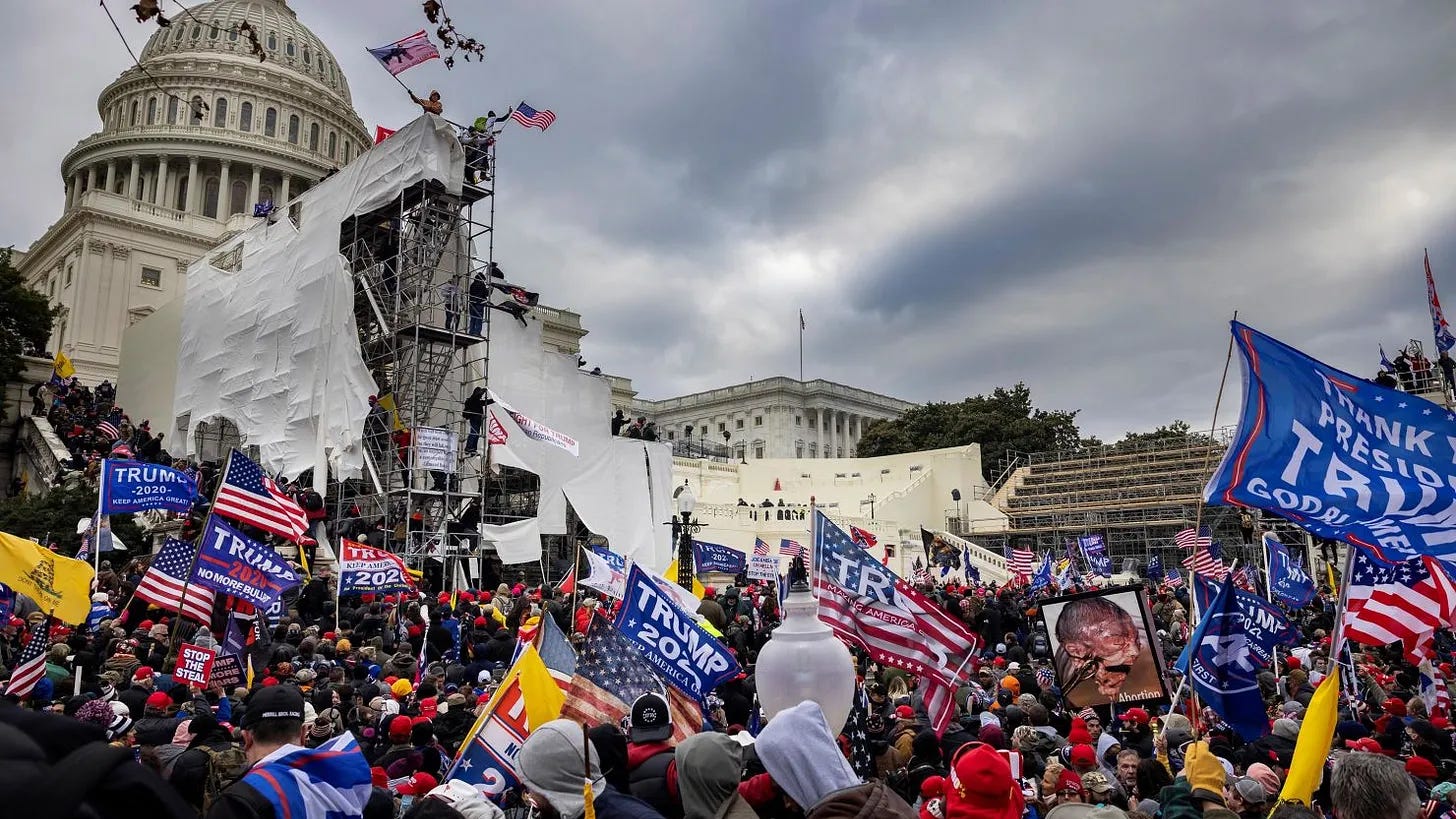
Five years ago, on January 6, 2021, our nation watched as a violent mob stormed the United States Capitol in an attempt to overturn a free and fair election. People were injured. Lives were lost. Democratic norms, the likes of which many of us had taken for granted, were shaken to their core. For some, the images feel like a distant memory. For others, especially those who work in public service, journalism, advocacy, and policy, that day fundamentally altered how safe and stable our democracy felt.

The candlelight vigil we are holding is first and foremost about those impacted by that day: Capitol staff, law enforcement officers, elected officials, their families, and everyday Americans who realized, perhaps for the first time, how fragile our democratic system can be when hateful rhetoric is allowed to metastasize into violence.

But this vigil is also about Rhode Island.

January 6, 2026, is not just an anniversary. It is the first day of legislation at the Rhode Island State House. The irony of that convergence is not lost on us.

However, kismet the dates may be, we choose to let them serve as a reminder that democracy is not an abstract ideal housed in Washington, D.C. It lives here in our tiny state. It dwells in our state house, city halls, school committees, and town councils. It lingers in the daily work of governance and in citizens’ responsibility to remain engaged, informed, and vigilant.

Indivisible Rhode Island believes that remembrance is not passive, and as such, this candlelight vigil is an action: a form of accountability and responsibility. When we forget, or worse, when we normalize political violence, we weaken the guardrails that protect a pluralistic democracy. A candlelight vigil is deliberate: quiet instead of chaos, reflection instead of rage, community instead of fear.

Some may ask why we are “looking back” when there is so much work ahead. Our answer is simple: We cannot move forward responsibly without reflecting on what has led us to this moment. Democracies do not fail all at once. They erode slowly in pivotal moments when truth becomes negotiable, and participation becomes optional.

As lawmakers return to the State House to debate policies that will shape the lives and wellbeing of Rhode Islanders, from housing and healthcare to education and climate resilience, we want to ground that work in a shared commitment to democratic principles: Respect for humanity. Civic disagreement without dehumanization. And equal rights for all.

Rhode Island has a long history of civic engagement and dissent rooted in a commitment to the common good. Gathering by candlelight on January 6 is our way of reaffirming that legacy. It is an invitation to lawmakers and neighbors alike to begin this legislative session with humility, inclusivity, and resolve.

Democracy is not self-sustaining. It asks something of each of us. It calls us to action and challenges us to pursue a more perfect society.

On January 6, we will show up not with slogans or speeches, but with light. A beacon of our state motto: Hope.

Source: SteveAhlquist.news is a reader-supported publication. To receive new posts and support my work, consider becoming a free or paid subscriber.

The most shameful day in American history

We will never forget, and we will not let the nation or the world forget.

Robert Reich

Jan 05, 2026

Friends,

Five years ago tomorrow was the most shameful day in American history.

We must not allow Trump to persuade America that it did not happen or that he was innocent, or let him deflect the nation’s attention from the fifth anniversary of what occurred that day.

Less than three weeks ago, Jack Smith, the former special counsel to the Justice Department, appeared before the House Judiciary Committee and testified under oath:

“Our investigation developed proof beyond a reasonable doubt that President Trump engaged in a criminal scheme to overturn the results of the 2020 election and to prevent the lawful transfer of power.”

The sole reason Donald Trump is not now behind bars is that Smith dropped the case after Trump was elected to a second term, because the Supreme Court’s ruling in Trump v. United States — written by Chief Justice John Roberts and joined by five other justices, three of whom were nominated by Trump — prevented the prosecution of a sitting president.

Let us ponder this for a moment.

Although the peaceful transfer of power lies at the heart of American democracy, Trump sought to overturn the result of the 2020 election. He is now president once again.

Five years ago tomorrow, on January 6, 2021, when Vice President Mike Pence walked into the Capitol, he faced a withering pressure campaign by Trump.

Trump and his henchmen had already twisted the arms of governors and election officials around the country to change the result of the election in his favor. They had coaxed loyalists in five swing states to submit signed certificates falsely claiming they were “duly elected and qualified” members of the Electoral College.

Pence was about to throw out the slates of false electors. As he began the electoral vote count, thousands of Trump supporters — many of them armed — stormed the Capitol. Some chanted they wanted to “hang Mike Pence” for refusing to block the certification.

They came directly from a rally Trump held on the Ellipse, in which Trump repeated his false claim that the election had been stolen and told the crowd, “If you don’t fight like hell, you’re not going to have a country anymore.”

According to the criminal indictment,

“After it became public on the afternoon of January 6 that the Vice President would not fraudulently alter the election results, a large and angry crowd — including many individuals whom the Defendant had deceived into believing the Vice President could and might change the election results — violently attacked the Capitol and halted the proceeding.”

The FBI estimated that between 2,000 and 2,500 people entered the Capitol Building in the attack, some of whom participated in vandalism and looting, including of the offices of members of Congress. Rioters also assaulted Capitol Police officers. They occupied the empty Senate chamber while federal law enforcement officers defended the evacuated House floor.

Within 36 hours, five people died. One was shot by Capitol Police; another died of a drug overdose; three died of heart attacks or strokes, including a police officer who died the day after being assaulted by rioters. Many were injured, including 174 police officers. Four other officers who responded to the attack died by suicide within seven months.

“President Trump was wrong,” Pence said subsequently. “I had no right to overturn the election. And his reckless words endangered my family and everyone at the Capitol that day, and I know history will hold Donald Trump accountable.”

A week after the attack, the House of Representatives impeached Trump for incitement of insurrection. In February 2021, after he left office, the Senate voted 57–43 in favor of conviction but fell short of the required two-thirds majority, resulting in his acquittal.

Senate Republicans then blocked a bill to create a bipartisan independent commission to investigate the attack, leaving the House to organize its own select committee.

After an 18-month investigation including more than 1,000 witnesses and nine televised public hearings, the House’s select committee identified Trump as the “central cause” of the Capitol attack by the pro-Trump mob.

The panel, made up of seven Democrats and two Republicans, voted unanimously to recommend charges to the Justice Department to prosecute Trump for seeking to overturn the results of the 2020 election.

Following a special counsel investigation by the Justice Department, Trump was indicted on four charges in August 2023.

As I’ve noted, all charges against Trump were dismissed after his reelection to the presidency.

Of the 1,424 people charged with federal crimes relating to the riot, 1,010 pled guilty and 1,060 were sentenced and served time in prison. Enrique Tarrio, then the chairman of the Proud Boys, received the longest sentence, a 22-year prison term.

Upon retaking the presidency, Trump pardoned them all.

***

Trump and his lackeys in the Republican Party have since promoted a revisionist history of the event — downplaying the severity of the violence, spreading conspiracy theories, and portraying those charged with crimes as hostages and martyrs.

Trump has tried to recast the violent events as a “day of love.”

On December 8, 2024, in his first broadcast news interview since the 2024 election, Trump said members of the House committee that investigated the riot “should go to jail.”

***

We must never forget. We must teach our children and our children’s children and all future generations of Americans what happened on January 6, 2021— so that, as Mike Pence hoped, “history will hold Donald Trump accountable.”

January 6, 2021 was the most shameful day in American history. It should live in infamy, as should the traitor who refused to accept the election results and incited the attack on the U.S. Capitol — Donald J. Trump.
Wednesday, December 17, 2025

Trump Administration asking universities to provide lists of Jews.

This is never a good thing.

Beth Kissileff

(RNS) — Timothy Snyder, a historian of the Holocaust and Eastern European tyranny, has a tip for dealing with authoritarianism: “Don’t obey in advance.” 

So, when the university that granted me my doctorate and educated four generations of my family was asked by the Trump administration in July for lists of Jewish faculty members, I held my breath. Would I be able to continue to be proud of the University of Pennsylvania, the place I learned so much from?

In the past year, universities have varied widely in their responses to demands from the Trump administration to fall into line on ridding their campuses of wokeness and antisemitism. Columbia University (my undergraduate alma mater) settled with the administration, paying $21 million in return for restoring its federal research grants. 

It’s hard to see how cutting basic science research will help reduce antisemitism. It will likely only cause Jews’ presence at a university to be seen as somehow disruptive. (See the recent arguments that women ruined the workplace.)

Other universities have variously complied with administration demands or resisted, but a few, such as Barnard College of Columbia University and the University of California, Berkeley, acquiesced and shared personal cellphone numbers of Jewish faculty. (Penn refused, and is now being sued by the U.S. Equal Employment Opportunity Commission.) Nara Milanich, a Barnard history professor, said it reminded her of 1930s Italy, when lists of Jews were put together by the local government. “We’ve seen this movie before, and it ends with yellow stars,” she said.

It also troubled Milanich that the government appeared to be “fishing” for reports of antisemitism: According to the Forward, the University of California, Berkeley said it had provided the names of 160 individuals involved in cases of antisemitism. “Evidently, they don’t have sufficient people to file lawsuits, so they have to go shake the trees to find people?” said Milanich.

Lists of Jews are never a good thing. Amanda Shanor, a professor at the Wharton School and Penn’s law school, told The Daily Pennsylvanian, the student newspaper: “The history of government demands for lists of Jewish people is one of the most terrifying in world history. I hope that students, faculty, and staff — Jewish and non-Jewish alike — will tell their family and friends about the government’s demand for a list of Penn’s Jews.”

Tuesday, December 16, 2025

Tariffs 101: What they are, who pays them, and why they matter now

Understanding Trump's new national sales tax

Kent Jones, Babson College

The U.S. Supreme Court is currently reviewing a case to determine whether Donald Trump’s global tariffs are legal.

Until recently, tariffs rarely made headlines. Yet today, they play a major role in U.S. economic policy, affecting the prices of everything from groceries to autos to holiday gifts, as well as the outlook for unemployment, inflation and even recession.

I’m an economist who studies trade policy, and I’ve found that many people have questions about tariffs. This primer explains what they are, what effects they have, and why governments impose them.

What are tariffs, and who pays them?

Tariffs are taxes on imports of goods, usually for purposes of protecting particular domestic industries from import competition. When an American business imports goods, U.S. Customs and Border Protection sends it a tariff bill that the company must pay before the merchandise can enter the country.

Because tariffs raise costs for U.S. importers, those companies usually pass the expense on to their customers by raising prices. Sometimes, importers choose to absorb part of the tariff’s cost so consumers don’t switch to more affordable competing products. However, firms with low profit margins may risk going out of business if they do that for very long. In general, the longer tariffs are in place, the more likely companies are to pass the costs on to customers.

Tuesday, November 18, 2025

How pecans went from ignored trees to a holiday staple

The 8,000-year history of America’s only native major nut

Shelley Mitchell, Oklahoma State University

Pecans, America’s only native major nut, have a storied history in the United States. Today, American trees produce hundreds of million of pounds of pecans – 80% of the world’s pecan crop. Most of that crop stays here. Pecans are used to produce pecan milk, butter and oil, but many of the nuts end up in pecan pies.

Throughout history, pecans have been overlooked, poached, cultivated and improved. As they have spread throughout the United States, they have been eaten raw and in recipes. Pecans have grown more popular over the decades, and you will probably encounter them in some form this holiday season.

I’m an extension specialist in Oklahoma, a state consistently ranked fifth in pecan production, behind Georgia, New Mexico, Arizona and Texas. I’ll admit that I am not a fan of the taste of pecans, which leaves more for the squirrels, crows and enthusiastic pecan lovers.

Saturday, November 15, 2025

Community health centers provide care for 1 in 10 Americans, but funding cuts threaten their survival

Groups like our local Wood River Health Center provide vital service

Jennifer Spinghart, University of South Carolina

Editor's Note: Group like 49-year-old Wood River are chronically underfunded and, in these times, face harsh cutbacks. 

That makes them even more dependent on community support, which is a lot of work. Recently, Wood River held its major annual fundraiser and raised $125,000. But it takes a lot more than that to stay open, so please give them your generous support.  - Will Collette

Affordable health care was the primary point of contention in the longest government shutdown in U.S. history, which hit 43 days on Nov. 12, 2025.

This fight highlights a persistent concern for Americans despite passage of the landmark Affordable Care Act 15 years ago.

In 2024, 27.2 million Americans, or 8.2% of the population, lacked health insurance entirely. A significant number of Americans have trouble affording health care, even if they do have insurance. The tax and spending package signed by President Donald Trump into law in July 2025 puts a further 16 million Americans at risk of losing their health care insurance by 2034, according to the Congressional Budget Office.

Many people who lack or have insufficient health insurance seek health care from a network of safety net clinics called community health centers. Even though community health centers provide care for 1 in 10 people in the U.S. – and 1 in 5 in rural areas – many people are unaware of their role in the country’s medical system.

As an emergency physician and the director of the student-led community health program at the University of South Carolina School of Medicine in Greenville, I collaborate with the community health center in Greenville and am closely familiar with how these types of providers function.

These clinics often operate on razor-thin margins and already function under continual demands to do more with less. Slated cuts to health care spending from the tax and spending bill and funding uncertainties that were driven by the shutdown threaten to destabilize them further.

Thursday, November 13, 2025

Most of what we believe about Vikings is wrong

For one thing, they didn't eat Spam

Cluster of Excellence

Ideas about Vikings and Norse mythology come mostly from much later medieval sources, leaving plenty of room for reinterpretation. Over centuries, writers, politicians, and artists reshaped these stories to reflect their own worldviews, from romantic heroism to dangerous nationalist myths. 

Pop culture and neo-paganism continue to amplify selective versions of this past. Scholars today are unraveling how these shifting visions emerged and how they influence identity and culture.

According to scholars of Scandinavian studies, many widely held beliefs about Vikings and Old Norse paganism cannot be confirmed through modern scientific methods. "They are based essentially on reports written by Christian scholars in the High Middle Ages well over a century later, since, besides brief runic inscriptions, no written texts from the original period have been preserved," explains Scandinavian scholar Roland Scheel from the Cluster of Excellence "Religion and Politics" at the University of Münster.

Scheel notes that people today often picture the Viking Age, which is generally defined as spanning the 8th to the 11th century, in very specific ways shaped by films, series, video games and museum presentations. Popular images, such as the fearless adventurer, powerful fighter and skilled seafarer, have become familiar. Yet Scheel stresses that the historical record is far less straightforward. He adds that important narratives used to explain paganism, including in museums and the media, frequently overlook that the surviving texts represent "memorialized history" only.