 |
| By Bill Bramhall |
Tuesday, September 12, 2023

Thar she blows!
Manatee spotted in Quonnie
By Will Collette
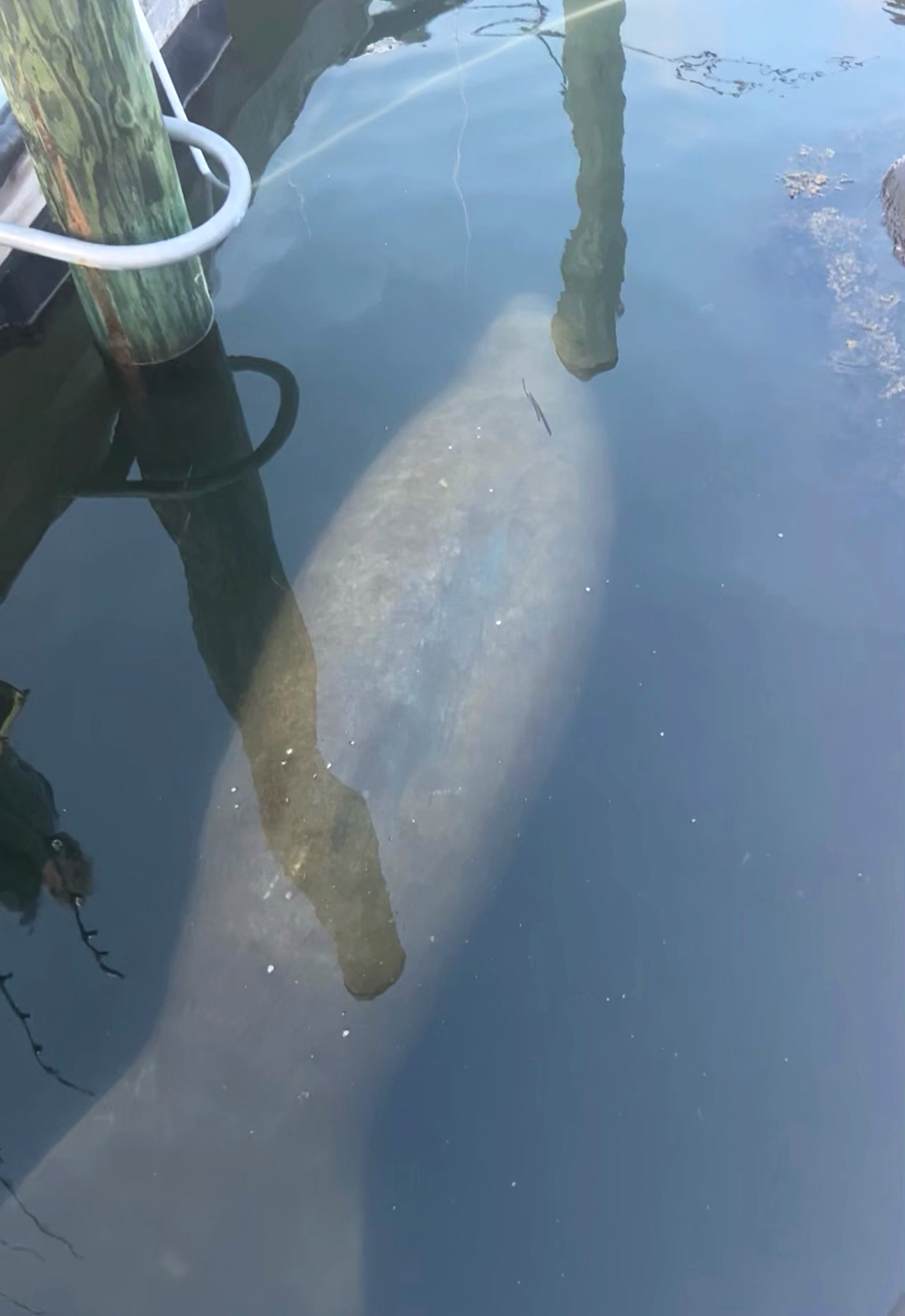
DEM spotted and photographed a manatee near a pier in Quonochontaug Pond, well over a thousand miles from its normal habitat.
DEM says they are monitoring the manatee, along with US Fish and Wildlife and the Mystic Aquarium in case it needs help.
Manatee have be spotted in RI waters in 2006 and 2016, according to DEM. They advise keeping 150 feet away and are warning boaters to use caution. In Florida, manatees are often killed or injured by boaters, not that Gov. Ron DeSantis's administration cares.
Speaking of matters aquatic, in one week, September 19, join us in celebrating international Talk Like a Pirate Day. It's a holy day on the Pastafarian calendar and a time for us all to practice talking like pirates.
 |
| Graphic by Sam Howard |


A good kind of shell game
When Sally Sells Seashells by the Seashore, Do They End Up in a Landfill?
By Colleen Cronin / ecoRI News
staff
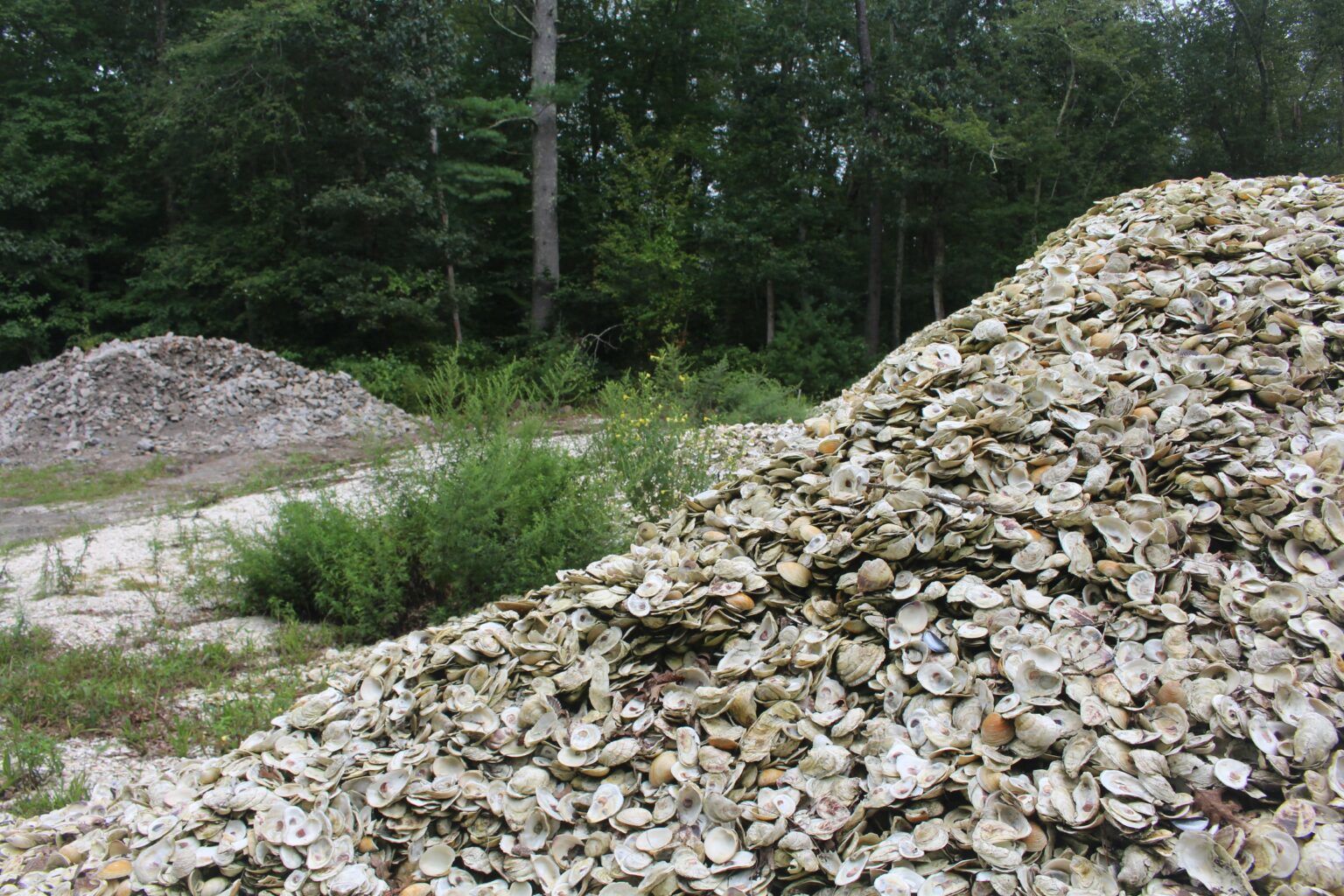
Bleached white from the sun and smelling a little salty,
the shells will eventually return to the sea, to help the Rhode Island
Department of Environmental Management restore reefs.
Reef restoration is the most common way that inedible
parts of the shellfish are reused in the Ocean State, though they can also be
used to line driveways, enhance fertilizers, or
become fibers for
sweaters.
Despite their value — after the meat inside has been
slurped down — many shells in Rhode Island don’t end up in reefs, flower beds,
or clothing threads, because the state doesn’t have a system to recycle the
material, which is difficult to compost on a large scale.
Efforts to recycle shells have been decentralized thus
far, but some restaurants, advocates, and oyster farmers would like to change
that.
The Nature Conservancy’s Rhode
Island chapter has led local shell collections in the past and
had a program that regularly picked up shells from four restaurants before the
pandemic shut it down.
Why are male kidneys more vulnerable to disease than female kidneys?
Mouse study points to testosterone
Keck School of Medicine of USC

A new USC Stem Cell-led study published
in Developmental Cell describes not only how sex hormones
drive differences in male and female mouse kidneys, but also how lowering
testosterone can "feminize" this organ and improve its resilience.
"By exploring how differences emerge in male and
female kidneys during development, we can better understand how to address
sex-related health disparities for patients with kidney diseases," said
Professor Andy McMahon, the study's corresponding author, and the director of
the Eli and Edythe Broad Center for Regenerative Medicine and Stem Cell
Research at the Keck School of Medicine of USC.
The next pandemic?
Bird flu is undergoing changes that could increase the risk of widespread human transmission
University of Nottingham

Researchers also say that the findings raise concerns of
a potential epidemic or pandemic in the making and that concerted research is
necessary to closely monitor such viruses in poultry and humans.
The results, which have been published in Cell,
report on the characterisation of a human isolate -- from a human patient -- of
the H3N8 avian influenza virus (AIV). Using laboratory mice and ferrets as
models for human infection, the study found that virus has undergone several
adaptive changes to cause severe animal infections and making it transmissible
by the airborne route between animals.
In humans, the avian H3N8 virus infection has been found
to cause acute respiratory distress syndrome and can even be fatal. The virus
is widespread in chicken flocks; however previously, the features of how it
might be transmitted from animals to humans is poorly understood.
Monday, September 11, 2023
The Lost Art (and Joy) of Taxing the Rich
Make them pay their fair share - the way they used to

These stiff top tax rates — all nearly unimaginable today — would help usher in a generation of unparalleled economic progress for average Americans and Brits. And those rates ebbed only slightly in the postwar years. In the 1950s, America’s richest faced a 91 percent top tax rate. The GOP president then sitting in the White House, Dwight Eisenhower, made no move whatsoever to hack that top rate down.
Overall, notes the economist Thomas Piketty, America’s wealthiest faced an average 81 percent top tax rate between the years 1932 and 1980, one key reason why our richest 0.1 percenters — over the course of the 20th century’s middle decades — saw their share of the nation’s wealth sink from 25 to just 7 percent.
The rich — on both sides of the Atlantic — would spend plenty of time stewing about that shocking sink throughout those middle decades. But these deep pockets would eventually regain their political mojo, first in the UK with Margaret Thatcher’s 1979 political ascent and then a year later with Ronald Reagan’s election. By 1988, the UK’s top rate had sunk by over half, and America’s richest faced just a 28 percent top-bracket bite.


On the Hunt for Dragons and Damsels
Dynamic duo searches high and low for favorite “prey”
By Frank Carini / ecoRI News staff
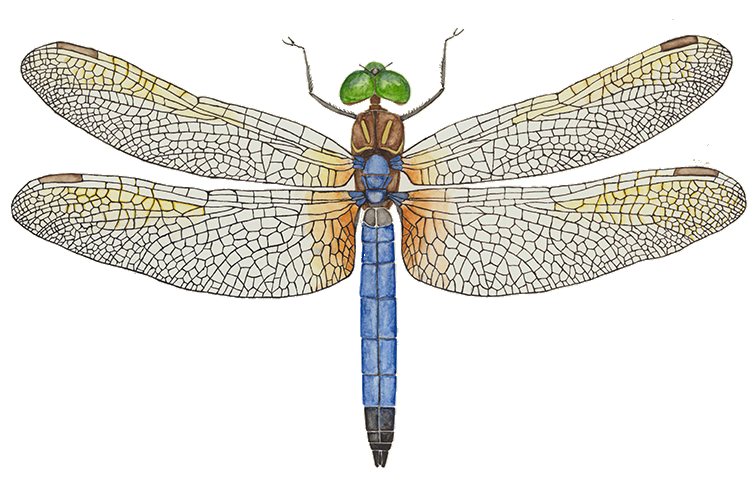
A Nina Briggs illustration of a blue dasher. We saw one during
our Sept. 2 ‘hunt’ through the Great Swamp Management
Area. It is a common dragonfly species in Rhode Island.
Capturing one is a bit more difficult. They can be up in a tree out of reach or hidden in leaf litter below. Catching one by hand is toilsome.
These dragons, glistening in shades of black, blue,
brown, green, red, and yellow, are some of the most colorful creatures on the
planet, with intricate patterns of stripes and spots. To Brown and Briggs, they
are also some of the most elegant insects on Earth.
These aerial assassins have been around for about 300
million years. They survived the asteroid that killed the dinosaurs. They have,
so far, survived humankind’s destructive nature.
They can be found buzzing around in the swampy wilds of
Rhode Island. In the summer, these winged acrobats perform stunts above and
around ponds, lakes, streams, bogs, marshes, and rivers.
On a recent Saturday morning at the Great Swamp Management Area off Great Neck Road, where the two conservationists guide public “hunts,” the longtime Rhode Island residents took this ecoRI News reporter on a 2-hour adventure in search of dragonflies and damselflies.
My guides noted their favorite insects demonstrate
charismatic behavior, possess an ancient evolutionary history, and play an
important role in the ecology of aquatic habitats.
Unexpected Side Effect of Daily Aspirin Usage in Older Adults
Might cause anemia
By MONASH UNIVERSITY

In light of these findings, researchers recommend routine
anemia checks for elderly individuals on low-dose aspirin. Additionally, they
advise such adults to consult their GP regarding any health or medication
concerns.
The Monash University-led study, published in Annals of Internal Medicine, followed 18,153 initially
healthy older adults in Australia and the USA and recorded incidents of anemia
over an average of 4.7 years. The risk of developing anemia was found to be 20
percent higher in the aspirin group compared to those in the placebo group.
It was the largest study to investigate anemia in older
people as part of a randomized controlled trial, ASPREE (ASPirin in Reducing
Events in the Elderly) – with half the participants taking a placebo and the
other half a daily low dose (100mg) of aspirin.
Engineers design more powerful RNA vaccines
May lead to intranasal vaccines for Covid-19 and other respiratory diseases
Massachusetts Institute of Technology

By tweaking the design of the vaccines, the researchers showed that
they could generate Covid-19 RNA vaccines that produce a stronger immune
response, at a lower dose, in mice.
Adjuvants are
molecules commonly used to increase the immune response to vaccines, but they
haven't yet been used in RNA vaccines. In this study, the MIT researchers
engineered both the nanoparticles used to deliver the Covid-19 antigen, and the
antigen itself, to boost the immune response, without the need for a separate
adjuvant.
If further
developed for use in humans, this type of RNA vaccine could help to reduce
costs, reduce the dosage needed, and potentially lead to longer-lasting
immunity. The researchers' tests also showed that when delivered intranasally,
the vaccine induced a strong immune response when compared to the response
elicited by traditional, intramuscular vaccination.
"With intranasal vaccination, you might be able to kill Covid at the mucus membrane, before it gets into your body," says Daniel Anderson, a professor in MIT's Department of Chemical Engineering, a member of MIT's Koch Institute for Integrative Cancer Research and Institute for Medical Engineering and Science (IMES), and the senior author of the study.
"Intranasal vaccines may also
be easier to administer to many people, since they don't require an
injection."
Sunday, September 10, 2023
Governors may make good presidents
But not ‘imperial governors’ like DeSantis
Raymond Scheppach, University of Virginia
Many people believe governors make good presidents. In fact, a 2016 Gallup Poll found that almost 74% of people say that governing a state provides excellent or good preparation for someone to be an effective president. As a result, many political commentators have tried to explain why Florida Gov. Ron DeSantis is stumbling in his campaign for president. 
Nearly all are present or former governors. By Bill Day
Some say it is because he is stiff or awkward on the campaign trail, or his path to the nomination is not really to the political right of former President Donald Trump, or he needs to step up and directly confront the former president.
But as the former executive director of the National Governors Association for 27 years, I have worked with well over 300 governors. During that time I have been part of many conversations with governors regarding other governors running for president.
So I know that some current and former governors on both sides of the aisle would have another reason for why DeSantis is stalling. If you were to ask them, I expect they would mostly smile and say quietly, “It is because he has become an imperial governor” – one who believes he is all-powerful and that all his decisions will be just applauded and never questioned or opposed.


Subscribe to:
Posts (Atom)