
Saturday, April 5, 2025

Rep. Tina Spears bill would help to quickly find missing disabled people
“PURPLE alert” legislation for missing individuals with disabilities
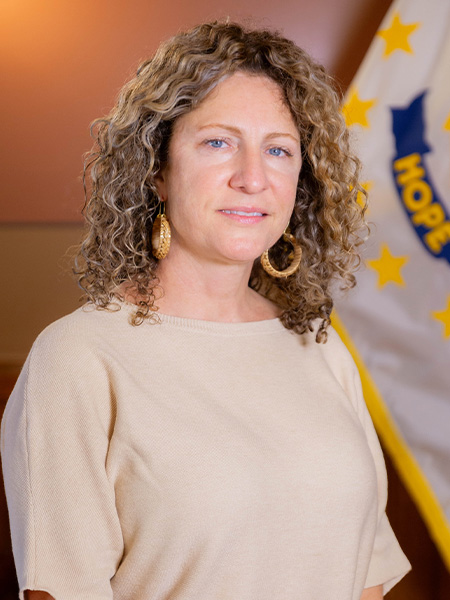
“As recent events have shown, this is a missing piece in our statewide system of care for the health and safety of adults with disabilities,” said Representative Spears (D-Dist. 36, Charlestown, New Shoreham, South Kingstown, Westerly), who serves as the executive director of the Community Provider Network of Rhode Island, which represents providers who support people with disabilities.
“This legislation would bring together law
enforcement, disability advocates, media outlets and state agencies in a collaborative
effort to build a system that works similarly to the alert programs that we
already have to get out the word to our communities when a person goes missing
whose disability and the circumstances of their disappearance place them in
danger.”
Last month, a nonverbal autistic woman went missing for several days in Cranston before being found alive in the back of a parked vehicle.


The Nobel Prize Please. The Strange Physics of Ranch Dressing
Besides being unhealthy, is Ranch dressing liquid or solid?
By Rae Robertson-Anderson, Professor of Physics
& Biophysics, University of San Diego
.webp)
So, you shake the bottle, and suddenly, a blob of dressing
plops onto your plate. Now it seems more like a liquid.
But unlike water or milk, the ranch doesn’t spread out
across the plate. Instead, it keeps its shape, almost like a pile of mashed
potatoes. That makes it seem more solid again.
Then, when you dip a carrot or celery stick into the blob,
it changes shape. You can smear it around, but it doesn’t resist like a true
solid would. Instead, it moves and spreads, much like a thick liquid.
So, what is ranch dressing? Is it a liquid, a solid, or
something in between?
Congratulations to five Charlestown first responders who were cited for their service
Five First Responders Who Left A Lasting Legacy In Charlestown
Patch Community Leaders, Patch Staff
Charlestown is fortunate to have dedicated first responders — police officers, firefighters, EMTs, dispatchers, and search and rescue teams —who work tirelessly to protect and serve our community. Their commitment carries forward the legacy of those who paved the way, demonstrating courage and dedication every day.
In partnership with T-Mobile, Patch is honoring the first responders who came before them—individuals whose impact continues to shape Charlestown. Today, we’re highlighting five remarkable figures who left a lasting mark on our community.

When a swimmer was swept 400 feet out by a rip current at Blue Shutters Town Beach, Sergeant Phillip Gingerella didn’t wait for backup — he dove in. With no lifeguards on duty and rescue boats still en route, Gingerella fought through powerful surf to reach the man and bring him back to safety. Though he was honored as the National Law Enforcement Officers Memorial Fund’s Officer of the Month for April 2015, Gingerella downplayed the spotlight, crediting the rescue to the teamwork and support of fellow first responders. The experience was so intense, he admitted he hasn’t entered the ocean since — a quiet testament to just how dangerous the situation was that day.
2. Officer Michael Carrasquillo (Charlestown Police
Department)

3. Firefighter Robert Thomas “Bob” Gardner Jr. (Richmond-Carolina
Fire District)


Officer John Bush of Charlestown was recognized for his swift and compassionate response during a crisis that could have ended in tragedy. Alongside Officer Nicholas Detroia, Bush helped save the life of a suicidal student at the University of Rhode Island, acting quickly to provide first aid and ensure she was safely transported to the hospital. His decisive actions during the critical moments reflected the highest standards of training and care, earning him a Life Saving Award from the URI Police Department. The incident highlighted the intense real-world emergencies campus officers are prepared to handle — situations where timing, training and empathy can mean the difference between life and death.
5. Officer Shannon Kane (Charlestown Police Department)

Friday, April 4, 2025
Trump is trying to destroy our nation's most vital asset—our innovative minds and ability to think for ourselves.
Trump, a Fascist Tyrant, Targets Universities and the Media
Robert Reich for Inequality Media

Next, subdue the courts by ignoring or threatening to ignore
court rulings you disagree with.
Intimidate legislators by warning that if they don’t bend to
your wishes, you’ll run loyalists against them. (Make sure they also worry
about what your violent supporters could do to them and their families.)
Then focus on independent sources of information: the media
and the universities. Sue media that publish critical stories and block their
access to news conferences and interviews.
Then go after the universities.
Last week, Trump threatened in a social media post to punish
any university that permits “illegal” protests. On Friday he cancelled hundreds of millions
in grants and contracts with Columbia University.
This is an extension of Republican tactics before Trump’s
second term. Prior to Trump appointing her ambassador to the United Nations,
former Representative Elise Stefanik (Harvard class of 2006) browbeat
presidents of elite universities over their responses to student protests
against Israel’s bombardment of Gaza,
leading to several presidents being fired.
Senator Josh Hawley (Stanford class of 2002 and Yale Law
class of 2006) called the student demonstrations signs of “moral rot” at the
universities.
But antisemitism was just a pretext.
JD Vance (Yale Law 2013) has termed university professors
“the enemy” and suggested using Victor Orban’s method for ending “left-wing
domination of universities.”
I think his way has to be the model for us: not to eliminate
universities, but to give them a choice between survival or taking a much less
biased approach to teaching. [The government should be] aggressively reforming
institutions … in a way to where they’re much more open to conservative ideas.”
Trump is also targeting diversity, equity, and inclusion
programs on university campuses.
But of all Trump’s and Republicans’ moves against higher
education, the most destructive is the cancelation of research grants and
contracts. The destruction is hardly confined to Columbia and other suspected
left-wing bastions.
Research universities depend on funding from the National
Science Foundation and the National Institutes of Health.


The big question: what happens to LIHEAP now that all the staff have been fired by RFK Jr.
April 24: URI Cooperative Extension aiming to connect all Rhode Islanders to increased home energy efficiency
Kristen Curry

URI Cooperative Extension is hoping to help consumers lower their bills in both the short- and long-term and, in turn, reduce the amount of energy homes consume and pay for. Organizers are particularly interested in hearing from residents in low- to moderate-income communities and the community-based workers who serve these individuals directly as part of the effort focused on increasing awareness of the importance of energy efficiency.
The sessions
start April 24 and are open to any interested community member: renters,
homeowners, landlords, community-based workers, energy and public health
professionals. Anyone who participates in at least three of the six sessions
will be eligible to receive incentives in exchange for their input and time.
According to Cooperative Extension’s Kate
Venturini Hardesty, this project hopes to reach and assist income-eligible
ratepayers: those who are eligible for assistance programs like the Low Income
Home Energy Assistance Program and those who spend a larger percentage of their
income on energy costs. Many of these residents also happen to live in older
houses which are less energy efficient, which compounds cost and means homes
are not as healthy as they could be.
EDITOR’S NOTE: US Health and Human
Services Secretary Robert F. Kennedy Jr. has fired
the entire staff of LIHEAP effectively ending the program. The terminations
took place on April 1st and
are no joke. There has been no statement from the Trump administration on what,
if any, provisions will be made for the program and the $400 million in aid
money that has been approved by Congress but not distributed. – Will Collette
New Research Reveals the Effects of Alcohol on the Entire Digestive System
Don't wanna ride that Whiskey Train
By Xia & He Publishing Inc.
 |
| Brackets indicate an increased risk of developing cancer, although the relationship is not yet fully established. Credit: Roberto De Giorgio, Fabio Caputo |
The liver, responsible for breaking down alcohol, suffers
immense damage, leading to cirrhosis and even liver cancer. Meanwhile, the
stomach and intestines experience erosion, ulcers, and nutrient malabsorption.
The pancreas is at risk for life-threatening pancreatitis, while the
gallbladder can develop painful gallstones. Even more alarming, alcohol
significantly raises the risk of deadly gastrointestinal cancers. Reducing
alcohol intake is the best way to protect digestive health and prevent
irreversible damage.
The Hidden Toll of Alcohol on Digestive Health
Excessive alcohol consumption is a major public health
issue, contributing to 6% of all deaths worldwide and 5.1% of the global
disease burden. It is a key risk factor for more than 200 diseases, including
liver cirrhosis, pancreatitis, and esophageal cancer, with particularly severe
effects on the digestive system. More than half of alcohol-related deaths are
linked to gastrointestinal diseases, underscoring the need to understand how
alcohol affects digestion. This review explores how the body processes ethanol
and how alcohol consumption contributes to diseases affecting the liver,
gastrointestinal tract, pancreas, and gallbladder.
Liver
The liver is the primary site of alcohol metabolism,
processing about 90% of the alcohol a person consumes. Once inside the liver,
ethanol is broken down into acetaldehyde by the enzyme alcohol dehydrogenase
(ADH). Acetaldehyde, a highly toxic substance, is then converted into acetate,
which eventually breaks down into carbon dioxide and water.
However, acetaldehyde can cause significant damage to liver
cells, leading to a range of liver diseases. These include fatty liver
(steatosis), liver inflammation (steatohepatitis and alcoholic hepatitis),
scarring (fibrosis and cirrhosis), and even liver cancer (hepatocellular
carcinoma or HCC). Chronic alcohol use speeds up liver damage, and factors such
as genetics and the type of alcohol consumed can influence disease progression.
Women are particularly vulnerable to alcohol-related liver damage due to differences
in metabolism and body composition, making them more susceptible to long-term
harm.
Promising anti-cancer based on mRNA technology many MAGA Republicans want to ban
Revolutionary Cancer Vaccine Targets Any Solid Tumors but will it be blocked by MAGAnuts?
By Tufts University
Cancer treatment vaccines have been in development since
2010, when the first was approved for prostate cancer, followed by another in
2015 for melanoma. 
The cancer vaccine targets the lymph system and enhances its
ability to recruit T cells to eliminate tumors. Here, three T cells (blue)
are shown attacking and breaking apart a cancer cell. Credit: Yu Zhao
While many therapeutic (rather than preventive) cancer
vaccines have been researched since then, none have received approval. A major
challenge in their development is identifying tumor antigens that are distinct
enough from normal cells to trigger a strong immune response.
Researchers at Tufts University have
now created a cancer vaccine designed to enhance the immune system’s ability to
recognize tumor antigens. This approach generates a powerful immune response
and establishes long-term immunological memory, reducing the likelihood of
tumor recurrence. Unlike traditional cancer vaccines that target specific
antigens, this new vaccine utilizes a lysate—a mix of protein fragments derived
from any solid tumor—eliminating the need to identify a single tumor-specific
antigen.
The vaccine they produced worked against multiple solid
tumors in animal models, including melanoma, triple-negative breast cancer,
Lewis lung carcinoma, and clinically inoperable ovarian cancer.
CLICK HERE to read more about rightwing attempts to ban mRNA vaccines.
Thursday, April 3, 2025
WHO director details health disruptions from US funding cuts, urges a more humane approach
Global infectious disease outbreaks could kill millions, including Americans
The United States has been extremely generous for many years
with its support for global health projects and is well within its rights to
set its own priorities and funding levels, but the country has a responsibility
to withdraw direct funding in an orderly and humane way that allows countries
and groups to find alternative support, the head of the World Health
Organization (WHO) said at a briefing..jpg/1024px-Nuremberg_chronicles_-_Dance_of_Death_(CCLXIIIIv).jpg)
"Make the Plague Great Again"
Comments from WHO Director-General Tedros Adhanom
Ghebreyesus, PhD, his most direct to date on the US cuts, come as regional
health groups take stock of the impact of the cuts and seek to bolster other
alliances and ways to boost domestic spending to address urgent health threats.
Fisher-kids alert
|


Butterflies declined by 22% in just 2 decades across the US
There are ways you can help save them
 |
| The endangered Karner blue butterfly has struggled with habitat loss. U.S. Fish and Wildlife Service |
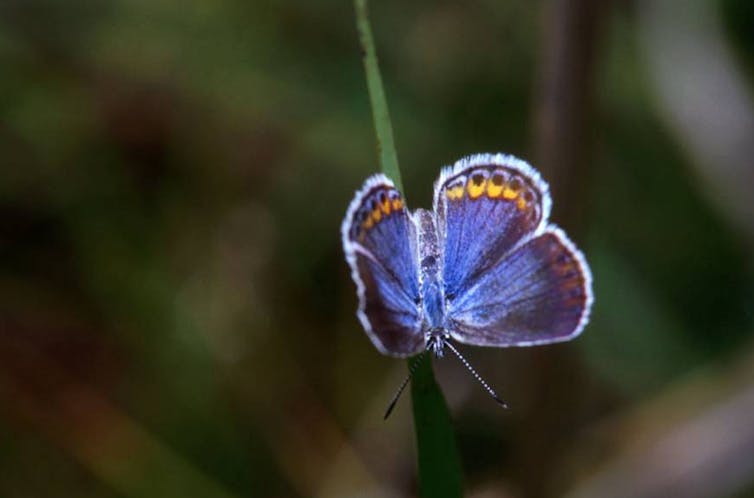
From 2000 to 2020, the number of butterflies fell by 22% across the continental United States. That’s 1 in 5 butterflies lost. The findings are from an analysis just published in the journal Science by the U.S. Geological Survey’s Powell Center Status of Butterflies of the United States Working Group, which I am involved in.
We found declines in just about every region of the continental U.S. and across almost all butterfly species.
 |
| West Coast lady butterflies range across the western U.S., but their numbers have dropped by 80% in two decades. Renee Las Vegas/Wikimedia Commons, CC BY |
.jpg)
Some species’ numbers are dropping faster than others. The West Coast lady, a fairly widespread species across the western U.S., dropped by 80% in 20 years. Given everything we know about its biology, it should be doing fine – it has a wide range and feeds on a variety of plants. Yet, its numbers are absolutely tanking across its range.
Subscribe to:
Posts (Atom)