Menu Bar

Home           Calendar           Topics          Just Charlestown          About Us

Friday, May 28, 2021

Republican governors were more likely to kill you

How America’s partisan divide over pandemic responses played out in the states

Julie VanDusky-AllenBoise State University and Olga ShvetsovaBinghamton University, State University of New York

Two of the worst: DiSantis of Florida and Noem of South Dakota
Throughout the COVID-19 pandemic, a partisan divide has existed over the appropriate government response to the public health crisis. 

Democrats have been more likely to favor stricter policies such as prolonged economic shutdowns, limits on gathering in groups and mask mandates. 

Republicans overall have favored less stringent policies.

As political scientists and public health scholars, we’ve been studying political responses to the pandemic and their impacts. In research published in the summer of 2020, we found that “sub-governments,” which in the U.S. means state governments, tended to have a bigger impact on the direction of pandemic policies than the federal government. 

Now, as data on last year’s case and death rates emerge, we’re looking at whether the political party in the governor’s office became a good predictor of public health outcomes as COVID-19 moved across the country.

Looking at states’ COVID-19 case and death rates, researchers are finding the more stringent policies typical of Democratic governors led to lower rates of infections and deaths, compared to the the pandemic responses of the average Republican governor. 

In preparation for future pandemics, it may be worth considering how to address the impact that a state government’s partisan leanings can have on the scope and severity of a public health crises.

Thursday, May 27, 2021

The draw—and deadlines—of American denial

From vaccines to elections to climate change, denial is doing lasting damage to the country.

Peter Dykstra for the Environmental Health News    

Americans have learned a lot about the concept of denial in recent years.

COVID-19 denialwhere the horrible facts of a global body count of three million, including an American COVID death toll that's nearly twice the U. S. combat toll from World War II. 

That fact hasn't impressed some who think the pandemic is a hoax;

For more cartoons by Ted Rall, CLICK HERE.

Vaccine denial
, an offshoot of the widespread anti-vaccine movement, runs the risk of the U.S. never achieving herd immunity

Many public health experts consider that the dividing line between COVID-19 being a rare disaster and a permanent one;

Mask denial, when a public health essential is outweighed by a perception that mask mandates are a violation of individual rights;

Election denial, where a mass delusion championed by former President Trump becomes a national distraction at the worst possible time;

Gun denial, now a hardy paranoidal in American politics, pits an outlandishly outsized proportion of U.S. gun deaths compared to the rest of the world—from suicides to mass murders;

Insurrection denial, on Wednesday, Congressman Andrew Clyde (R-GA) likened the January 6 Capitol riot to "a normal tourist visit" and his colleague Ralph Norman (R-SC) said he hadn't "seen a poll" proving that Trump supporters were among the rioters;

Fake News denial, when all of the above draw skeptical reviews, blame it all on the Mainstream Media.

It's so hard to get good help

For more cartoons by Ruben Bolling, CLICK HERE


Trumplican history


VIDEO: Students develop super-sensitive sensors that can detect explosives, viruses, dope

More sensitive than a dog’s nose and the sensors don’t get tired

Neil Nachbar

University of Rhode Island Professor Otto Gregory and URI doctoral student Peter Ricci demonstrate and explain how the sensors developed in the Thin Film Sensors Laboratory at URI can be used on drones to identify security and health threats at the molecular level.

We are frequently reminded of how vulnerable our health and safety are to threats from nature or those who wish to harm us.

New sensors developed by Professor Otto Gregory, of the College of Engineering at the University of Rhode Island, and chemical engineering doctoral student Peter Ricci, are so powerful that they can detect threats at the molecular level, whether it’s explosive materials, particles from a potentially deadly virus or illegal drugs entering the country.

“This is potentially life-saving technology,” said Gregory. “We have detected things at the part-per-quadrillion level. That’s really single molecule detection.”

Some Dog Owners Feed Their Pets Diets Similar to Their Own

What's good for you may not be good for them

By Science News Staff / Source

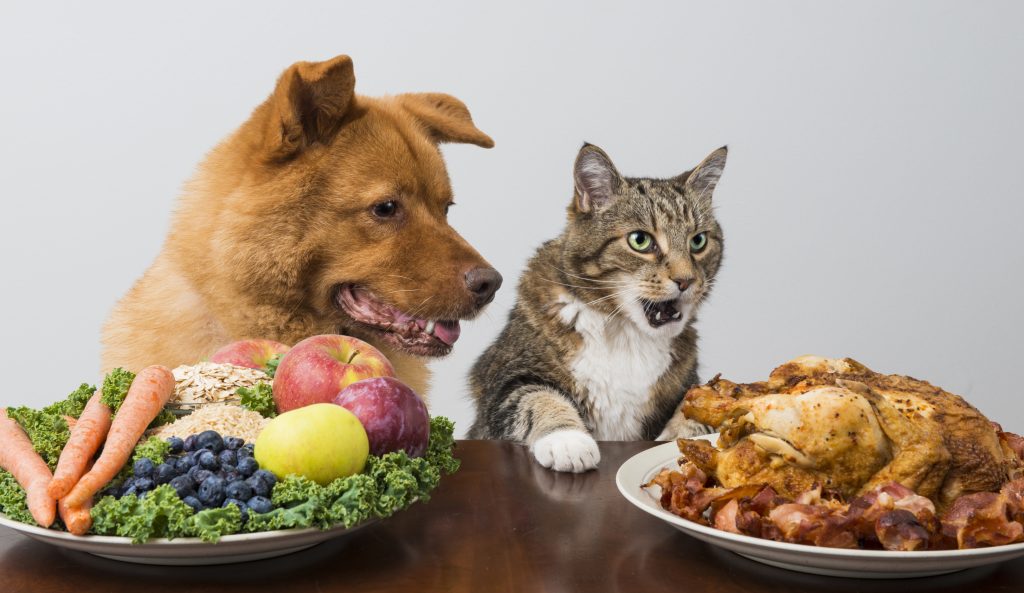
Many dog owners today treat their dogs like family members and consequently, they consider a wide range of important variables, other than price, when selecting a diet for their dog. 

Now a team of researchers at the University of Guelph has found that dog owners who are on gluten-free, organic or grain-free diets are likely to look for the same characteristics in the dry dog food they purchase.


Don’t Worry About Inflation … This Isn’t The 1980s

Scary Headlines Aside, We’re Seeing Pent-Up Demand After 15 Months of Covid Lockdowns

By David Cay Johnston, DCReport Editor-in-Chief

Lots of luck right now trying to find a bicycle for under a thousand dollars. And if you insist on building a new house right now the price of lumber will be dear, adding perhaps $4,000 to construction costs for a typical home.

But don’t assume that ruinous inflation is on the way. It’s not. These are just temporary bumps and those who just wait a bit will see prices fall back.

It may be hard to appreciate this given all the scary stories in the news about inflation, stories that often lack context and nuance. But don’t be scared.

And don’t pay attention to the brief ups and downs in the price of stocks because half of American stock trading is done not by investors but by traders whose computers move so fast they can be in and out of a stock in less than a second. Besides, stocks don’t make goods or services so they aren’t part of the economy that creates jobs and produces paychecks.

Yes, the news is full of unsettling stories about inflation, but if you read carefully, you’ll notice that the talk is about prices rising perhaps 4% this year. Not a big deal.

Indeed, the highest inflation rate ever in our country was 29.8% in 1778. Since 1913, the highest rate was 19.7% in 1917, according to Investopedia. In 1946, inflation was 18.1%

In 1979 and 1980 combined, prices rose by a quarter. Now that would be scary today, but that is not what is happening.

Wednesday, May 26, 2021

Corporate America Has Been Shoving Fascism Down Our Throats for Decades

American fascism

America does have a serious fascism problem, but it goes way beyond the kinds of authoritarianism displayed by people like Donald Trump, Rick Scott, Ted Cruz, or Tom Cotton.

By for Common Dreams

There’s been a lot of talk lately about fascism, generally in the context of Republicans denying people their right to vote or Donald Trump sending an armed mob to murder five people at the U.S. Capitol to try to install him as America’s first strongman dictator.

Indeed, authoritarian governance is a major aspect of fascism. But there’s another piece to the puzzle, and it is playing out right now across America, and getting almost no coverage whatsoever.

It’s when giant corporations are able to control government and thus stop things like a national healthcare system, rational gun control laws, free college, or even the tiniest tax on carbon. 

When they’re able to push through “criminal justice reform” that makes it nearly impossible to prosecute corporate CEOs when their companies kill workers, consumers, or even poison entire communities.

It’s when they don’t do it through presenting strong and defendable ideas in the public realm and before Congress, but by pouring cash into the pockets of individual politicians and their parties.

It’s when corporations and the very rich have seized control of the political process through the use of their considerable economic power, after having used that power to change laws so they can legally buy politicians.

By Bill BramhallNew York Daily News
When government gives corporations this core power to write laws, and, in exchange, corporations facilitate government power to suppress dissent and marginalize non-fascist political parties, a country finds itself on the edge of classical fascism.

The word fascism comes from the Roman fasces, a bundle of sticks with a rope around it, typically adorned with a hatchet on the top. There’s one carved into the podium in the United States Senate, an homage to the ancient Roman Republic which originated it and partly inspired our Constitution.

The idea is that a single stick can easily be broken, but a bundle of sticks is almost impossible to break. Similarly, a single state may be vulnerable, but a collection of states, united together, is unbreakable.

But the Roman fasces, although that symbol was used throughout history as a symbol of the ancient Roman Republic, took on a completely different meaning in the late 1920s when Italian dictator Benito Mussolini derived from it the word fascism.

To him, fascism met something quite different than just the strength of a united country. It meant the literal merger of corporate and state interests, ultimately facilitating a strongman authoritarian government. Corporations and the government becoming interpenetrated and intertwined, ruling the country together, with a “tough guy” in charge.

The “tough guy” or authoritarian leader would then shower his own beneficence on the corporations that funded his political power.

They don't care

By Joel PettLexington Herald Leader


How the free market works


A work of art?

‘Large Concretised Monument to the Twentieth Century’ installed on Brown’s College Green

Brown University


Passersby venturing across Brown’s College Green in recent days may likely have noticed a striking new addition to the University’s public art collection. Installed prominently near Friedman Hall on Friday, May 14, a 6-foot-tall bronze sculpture by distinguished contemporary sculptor Rebecca Warren now greets students, staff and faculty as they walk onto the green from George Street.

The British artist creates bronze, clay and steel sculptures that are not so much literal transcriptions of the human body, but rather seem to reflect the messy vigor and vitality of being alive, often with a sensual flair.

Dietrich Neumann, a professor of the history of art and architecture who chairs Brown’s Public Art Working Group, says that “Large Concretised Monument to the Twentieth Century” — with its exaggerated, knobby and vaguely humanoid figure — is no exception.

The artwork presents a visceral, boisterous comment on the roles of gender, identity and the male gaze in the 20th century, he said, and adds a dynamic and humorous counterpart to Henry Moore’s “Reclining Figure No. 2 — Bridge Prop” and Giuseppe Penone’s “Idee di Pietra,” two nearby installations on the College Green.

It’s also sure to provoke discussion, especially after a series of spirited events during the academic year about the role of monuments in public spaces.

“By calling the piece a ‘monument,’ Warren questions what we have habitually put on pedestals in public space,” Neumann said. “Her piece thus provides a provocative contribution to our intense debates about monuments on campus last year, which we hope to continue as students return.”

Eating more fruit and vegetables linked to less stress

Another reason why they're good for you

Edith Cowan University


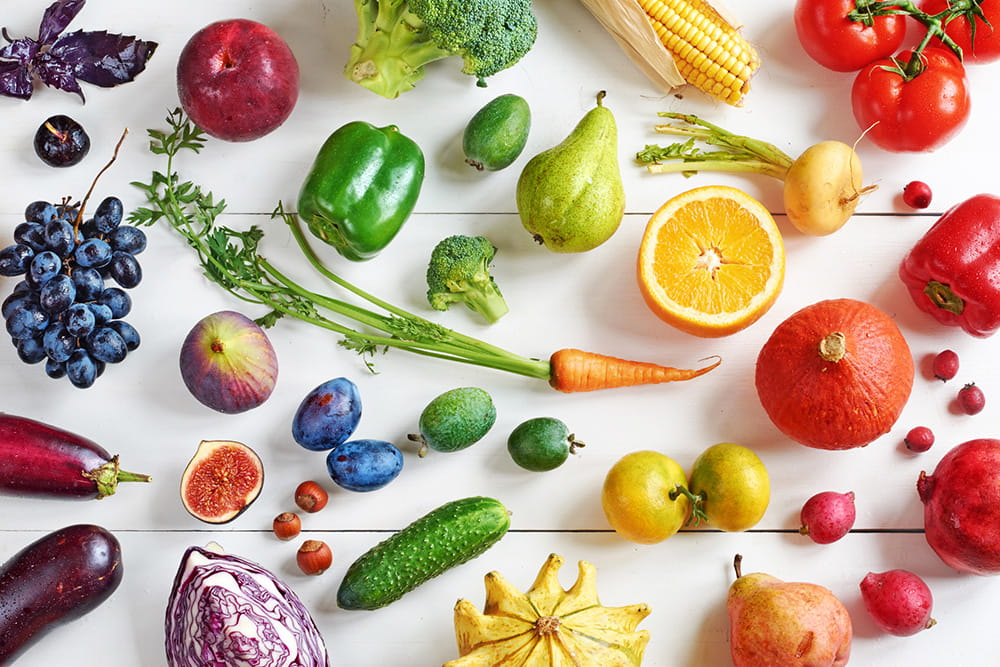
Eating a diet rich in fruit and vegetables is associated with less stress, according to new research from Edith Cowan University (ECU).

The study examined the link between fruit and vegetable intake and stress levels of more than 8,600 Australians aged between 25 and 91 participating in the Australian Diabetes, Obesity and Lifestyle (AusDiab) Study from Baker Heart and Diabetes Institute.

The findings revealed people who ate at least 470 grams of fruit and vegetables daily had 10 per cent lower stress levels than those who consumed less than 230 grams. The World Health Organization (WHO) recommends eating at least 400 grams of fruit and vegetables per day.

Lead researcher, PhD candidate Simone Radavelli-Bagatini from ECU’s Institute for Nutrition Research, said the study strengthens the link between diets rich in fruit and vegetables and mental wellbeing.

“We found that people who have higher fruit and veggie intakes are less stressed than those with lower intakes, which suggests diet plays a key role in mental wellbeing,” said Ms Radavelli-Bagatini.

Brown research debunks J&J vaccine fear

Rare blood clots more likely AFTER COVID-19 infection than from vaccine

Brown University

iLexx / iStock
The rare blood clot disorder reported by some Johnson & Johnson coronavirus vaccine recipients is also a risk of COVID-19 infection, according to a new report by the American Heart Association/American Stroke Association Stroke Council Leadership.

Dr. Karen L. Furie, chair of the Department of Neurology at Brown’s Warren Alpert Medical School, served as lead author of the report, which synthesized existing data from more than 81 million patients and found that risk of developing CVST blood clots is eight to 10 times higher following a COVID-19 infection as compared to the risk associated with receipt of a COVID-19 vaccine.

While national news coverage has focused on reports of the CVST blood clot/stroke condition — cerebral venous sinus thrombosis — following vaccination, the report, published in the journal Stroke, puts the risk in perspective.

Tuesday, May 25, 2021

Compounding the Tribe's losses

Rising Seas, Coastal Development Endanger Indigenous Culture

By CELIA HACK/ecoRI News contributor

Relentless development has boxed out access to shorelines that sustained members of local tribes for
thousands of years. (Joanna Detz/ecoRI News)

Though conversations about sea-level rise largely focus on the loss of colonial and post-colonial development, which pushed Indigenous people from the coastline, Native people in Rhode Island maintain a visceral connection to the coast that is, too, threatened by rising waters.

Lorén Spears, 54, remembered a time when sand dunes lined the beaches of South County. The coast was different when she was growing up, she said. Fewer houses bordered the water’s edge, certainly fewer on stilts. No one had to pay to go to the beach. Spears and her cousins could dig up shellfish in brackish salt ponds to make oyster stew and quahog chowder.
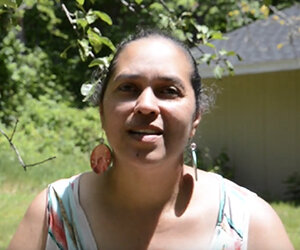
Lorén Spears of the Narragansett Indian Tribe. (ecoRI News)
“We have the salt waters, marshes, estuaries, salt ponds, the bay, the ocean,” said Spears, executive director of the Tomaquag Museum in Exeter and a member of the Narragansett Indian Tribe

“All of those things have special resources that were important to our ancestors, for not only survival, but thriving. We were thriving in this ecosystem prior to European contact.”

For centuries, development has crept closer to the shoreline at the expense of Indigenous people. 

Prior to 17th-century colonization, the Narragansetts, who have inhabited the area along Narragansett Bay from present-day Warwick to South Kingstown for 30,000 years and were the largest of a number of tribes living in southern New England, would migrate to the coasts during the summer to harvest from the fertile land and gather resources from coastal waters.

But when English colonizers bought much of the Narragansett Indian Tribe’s land between 1657 and 1661, including what is today South Kingstown, Narragansett, and parts of North Kingstown and Exeter, they paid a paltry sum that Spears interprets as an act of stealing, and privatized “choice tracts along the water.”

Now, as the Ocean State’s marine waters creep up because of sea-level rise, with projections of up to 9.6 feet by 2100, the Coastal Resources Management Council (CRMC) in recent years has thrown itself into creating resources for resilient development along the coastline, such as its coastal hazard application worksheet and asking property owners and developers to keep sea-level rise in mind as they build.

At the local level, Rhode Island’s 21 coastal municipalities are scrambling ever faster to protect public and private investments. In South Kingstown, the town fought for and won the extension of a sheet-pile seawall to protect, at least in the short term, Matunuck Beach Road, which provides access to some 240 homes. 

Newer coastal developments, such as The Pointe beach houses in South Kingstown, have first floors 16 feet off the ground.

But Indigenous people in the state — Narragansetts, Pocassets, Pokanokets — maintain a connection to the coast that isn’t being as well protected. Though Indigenous people are only 0.4 percent of the coastal population that would be impacted by 7 feet of sea-level rise, likely a relic of both colonization and the high cost of coastal living, many are connected to the shoreline in other ways: quahogging, hunting, cultural monuments and spiritual gatherings.

Their stories of coastal importance and what they have to lose run thousands of years deeper than the developments of the past 350 years.

Crazy is as crazy does