
Thursday, January 18, 2024
How often should you wash your sheets and towels?
The debate of the ages
Rietie Venter, University of South Australia
 |
While many people might wonder whether days or weeks is best, in one survey from the United Kingdom, almost half of single men reported not washing their sheets for up to four months at a time.
It’s fairly clear that four months is too long to leave it, but what is the ideal frequency?
Bed linen and towels are quite different and so should be washed at different intervals. While every week or two will generally suffice for sheets, towels are best washed every few days.
Anyway, who doesn’t love the feeling of a fresh set of sheets or the smell of a newly laundered towel?


Whitehouse Bill Would Tighten, Clarify Process of Approving Offshore Wind Projects
Whitehouse attempts to make ocean wind power process more rational
By Mary Lhowe / ecoRI News contributor

The idea comes none too soon. For the past few years, and
longer in some cases, Rhode Island fishers, shoreline residents, and
preservationists have argued their concerns about offshore wind have gotten
overlooked, ignored, or sidelined during the long sequence of federal and state
reviews and permits required to build wind turbines off the coast of New
England.
Within the past year, a citizens group and a
preservationist group have filed civil lawsuits in state and federal courts,
accusing various government bodies of pushing wind projects through the
permitting process without adequate studies, even as wind developers and
governments insist that all reviewing and permitting was legal and exhaustive.
Also, members of Rhode Island’s Fishermen’s Advisory
Board, which advises the Coastal Resources Management Council, resigned en
masse last summer, saying CRMC ignored their concerns.
Whitehouse’s proposed COLLABORATE Act (an
acronym for Create Offshore Leadership and Livelihood Alignment By Operating
Responsibly And Together for the Environment) would “improve permitting,
coordination, and cooperation between agencies and with developers and
stakeholders; establish a holistic process for offshore wind transmission; and
boost support for fisheries and other potentially affected stakeholders,
including the establishment of a compensation fund for eligible recipients.”
‘Forever chemicals’ are flowing between the Arctic and Atlantic oceans
URI researchers lead new study
The coldest days of winter are here for
many, making the frigid Arctic Ocean feel closer. Despite its distance from
most people, “forever chemicals” have reached this region. 
A sampler is deployed into the Arctic Ocean.
(Photo: Alfred Wegener Institute)
But research led by URI Graduate School of Oceanography Professor Rainer Lohmann suggests that per- and polyfluoroalkyl substances (PFAS) won’t stay there indefinitely.
In a new study published in Environmental Science & Technology Letters, Lohmann
and his co-authors report the Arctic Ocean potentially exports as many PFAS to
the North Atlantic Ocean as enters it, circulating the compounds around the
world.
PFAS are chemicals that have been used in such products as popcorn bags, carpets, and fire extinguishing equipment at airports and on military bases. They’re sometimes called “forever chemicals,” since there is no effective, natural way for them to break down once they’re released into the environment.
Wednesday, January 17, 2024
Rhode Island's state and local taxes hit low-income people the hardest
Data shows RI's rich pay the least and the poorest pay the most
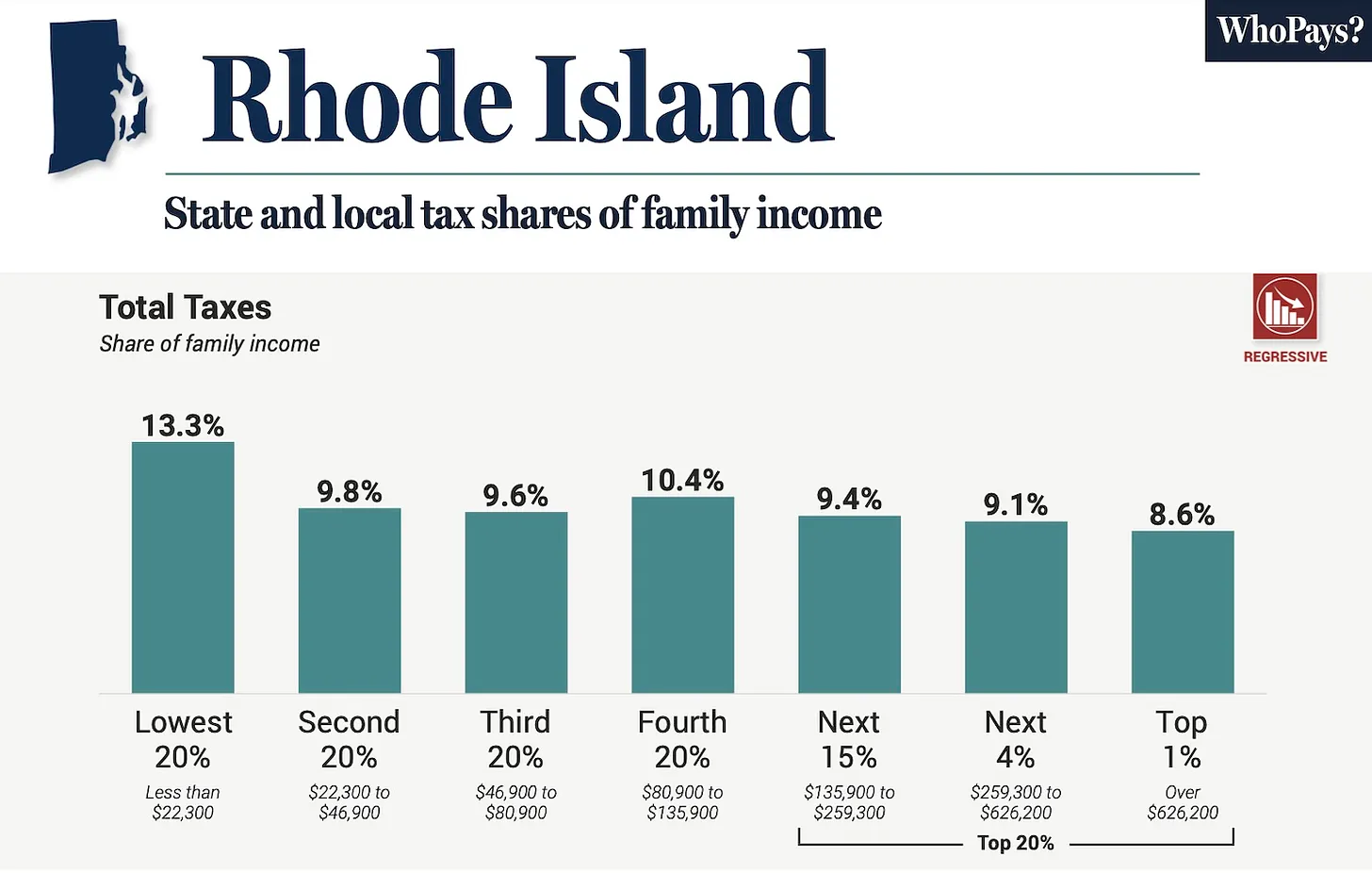
The Institute on Taxation and Economic Policy [ITEP] released a report on January 9 entitled Who Pays? a comprehensive report that “assesses the progressivity and regressivity of state tax systems by measuring effective state and local tax rates paid by all income groups.” In other words, the report assesses the fairness of our state and local tax system.
In national rankings featuring all 50 states and the
District of Columbia, Rhode Island ranks #31 out of 51 in terms of having a
regressive tax structure, meaning that the top one percent, those earning more
than $626,200 a year, are paying 8.6% of their income in taxes while those in
the lowest 20%, earning less than $22,300, are paying 13.3% of their income in
taxes.
I spoke to Alan Krinsky, Director of Research and
Fiscal Policy at the Economic Progress Institute [EPI]
to dig into the report with me. EPI is a “nonpartisan research and policy
organization dedicated to improving the economic well-being of low- and
modest-income Rhode Islanders.”
Steve Ahlquist: Rhode Island has the country's 31st
most regressive state and local tax system. One thing that jumped out at me is
that income disparity in Rhode Island grows larger after state and local taxes
are collected. Does this mean that the state's tax policies exasperate the
problem of income disparity?
Alan Krinsky: Yes. In other words, before we involve
state and local income taxes, there are disparities, [but] once we add in state
and local taxes, the disparities are somewhat worse. We want to get to where
the state isn't making things worse.


Apparently, Republicans love the dead as much as the uneducated
‘Return of the Living Dead’? Elections officials probe another signature scandal
By Nancy Lavin, Rhode Island Current
.webp)
The news comes on the final day for presidential candidates to turn in signature forms to local boards of canvassers, with at least 1,000 names needed to secure a spot in Rhode Island’s April 2 primary ballot. Ramaswamy appears to have cleared the hurdle, according to preliminary counts reported by the Rhode Island Secretary of State, but his campaign is under the microscope for suspected signature fraud.
In Coventry, the Board of Canvassers reported “an unusually high number of signatures” in Ramaswamy’s nomination papers had been tossed out, while Warwick’s canvassing board found several dead residents’ names on Ramaswamy’s signature lists, Miguel Nunez, the deputy state elections director, wrote in an email to local boards of canvassers on Wednesday. A copy of the email was obtained by Rhode Island Current.
Nunez declined to share further details, referring to local canvassing boards for the nomination papers in question.
The Hopkinton and Providence boards of canvassers subsequently reported a high number of invalid signatures on Ramaswamy’s papers to the Rhode Island Board of Elections on Thursday, according to Ben Smith, a board spokesman. The Providence board also found at least six names of dead people, Josh Estrella, a spokesman for Providence Mayor Brett Smiley, said in an email.
Starting today, DEM is stocking Watchaug and 10 other ponds with more trout and salmon
Getcher hooks ready
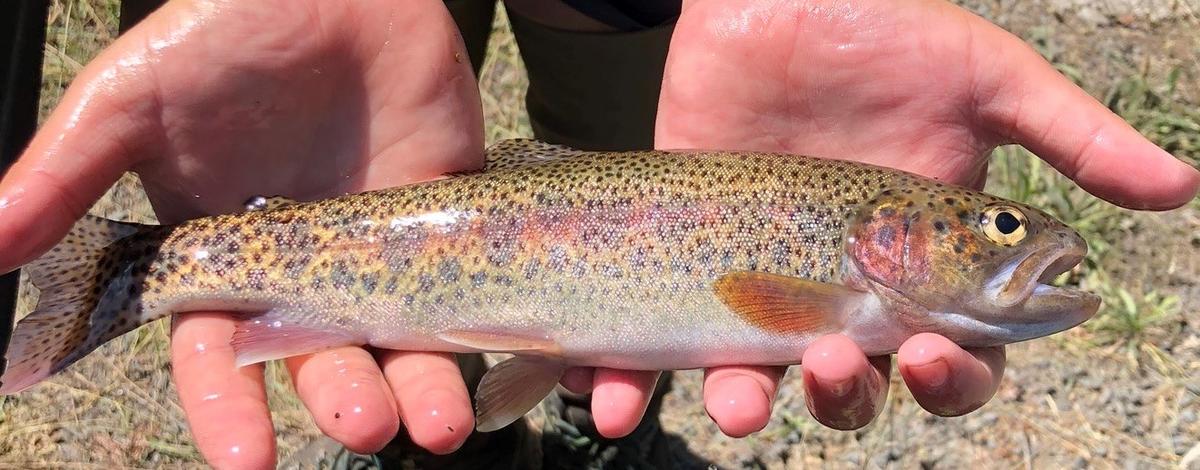
DEM will be stocking the following waterbodies:
·
Melville Ponds, Portsmouth
·
Simmons Mill Pond, Little Compton
·
Stafford Pond, Tiverton
·
Willett Pond, East Providence
·
Barbers Pond, South Kingstown
·
Wyoming Pond, Hopkinton
·
Silver Spring Lake, North Kingstown
·
Meadowbrook Pond, Richmond
·
Watchaug Pond, Charlestown
·
Round Top Ponds, Burrillville
·
Peck Pond, Burrillville
Daily stocking updates will be available each afternoon. Please visit DEM's Division of Fish and Wildlife's Facebook Page, visit www.dem.ri.gov/fishing for more information on stocking.
Magaziner Announces Bill to Train Students for Clean Energy Jobs
Good jobs, good for the environment

This legislation is supported by union leaders, environmental
advocates, and career and technical education program coordinators across Rhode
Island.
This bipartisan legislation will help develop training pipelines for good-paying jobs in clean energy and accelerate the transition to a clean energy economy by investing in CTE programs.
CTE programs provide students with invaluable skills-based learning for success in the jobs of tomorrow, and can help ensure that people from all backgrounds can join the industry powering America with affordable clean energy produced here at home.
Tuesday, January 16, 2024
What Would a Second Trump Presidency Look Like for Health Care?
In his first term, his COVID policies killed almost a million Americans. Can he top that?
 |
| Trump might appoint someone like this to head Health and Human Services |
“We’re going to fight for much better health care than Obamacare. Obamacare is a catastrophe,” Trump said at a campaign stop in Iowa on Jan. 6.
The perplexing revival of one of Trump’s most politically damaging crusades comes at a time when the Obama-era health law is even more popular and widely used than it was in 2017, when Trump and congressional Republicans proved unable to pass their own plan to replace it. That failed effort was a big part of why Republicans lost control of the House of Representatives in the 2018 midterms.
Despite repeated promises, Trump never presented his own Obamacare replacement. And much of what Trump’s administration actually accomplished in health care has been reversed by the Biden administration.
Still, Trump secured some significant policy changes that remain in place today, including efforts to bring more transparency to prices charged by hospitals and paid by health insurers.
Trying to predict Trump’s priorities in a second term is even more difficult given that he frequently changes his positions on issues, sometimes multiple times.
The Trump campaign did not respond to a request for comment.
Perhaps Trump’s biggest achievement is something he rarely talks about on the campaign trail. His administration’s “Operation Warp Speed” managed to create, test, and bring to market a covid-19 vaccine in less than a year, far faster than even the most optimistic predictions.
Many of Trump’s supporters, though, don’t support — and some even vehemently oppose — covid vaccines.
Here is a recap of Trump’s health care record:


Air Cleaners Fail To Prevent Sickness, Study Finds
Reconsidering the value of air cleaners
By UNIVERSITY OF EAST ANGLIA
.webp)
Air filtration systems are not effective in lowering the
risk of viral infections, as revealed by recent research from the University of East Anglia.
A new study highlights that technologies aimed at
enhancing safety during social interactions indoors may not be successful in
practical settings. The research team examined various technologies such as air
filtration systems, germicidal lights, and ionizers.
They looked at all the available evidence but found
little to support hopes that these technologies can make air safe from
respiratory or gastrointestinal infections.
B.Y.O.B. (bring your own bag)
RI’s plastic bag ban took effect Jan. 1
By Bonnie Phillips / ecoRI News
staff
.webp)
In some municipalities, this will be nothing new.
Eighteen of Rhode Island’s 39 cities and towns have plastic bag bans.
Those who violate the law will be
fined $100 for the first violation, $200 for the second, and $500 for the third
and any subsequent violations. Municipalities will be allowed to keep all
penalties they collect, and the Rhode Island Department of Environmental
Management will oversee enforcement.
Subscribe to:
Posts (Atom)