Menu Bar

Home           Calendar           Topics          Just Charlestown          About Us

Monday, May 20, 2024

Firefly populations at risk due to climate change, urban development

Another climate crisis casualty?

Penn State University

Catching fireflies is an iconic summer experience for many people living in North America, but the flickering beetles are on the decline. New research has identified factors that may be contributing to declining populations.

The study, which is available online now and will be published in the June 15 issue of Science of the Total Environment, suggests that fireflies are sensitive to various environmental factors, from short-term weather conditions to longer climatic trends.

The team — including researchers from Penn State, the University of Kentucky, Bucknell University and the U.S. Department of Agriculture Agricultural Research Service — used advanced artificial intelligence-based machine learning techniques to analyze more than 24,000 surveys conducted through the citizen science initiative Firefly Watch, now called Firefly Atlas, to arrive at their conclusions.

The Sun Isn’t Enough

New Study Revolutionizes Vitamin D Guidelines

By TRINITY COLLEGE DUBLIN  

A recent study by researchers from Trinity College Dublin, published in the journal Clinical Nutrition, explores the challenges in maintaining adequate vitamin D levels among various populations. 

The research highlights the ongoing issue of high vitamin D deficiency rates, despite extensive studies on the factors influencing vitamin D status.

Dr Margaret M. Brennan, Research Assistant, Department of Public Health and Primary Care, School of Medicine, Trinity College and first author, said:

“We hope this work can highlight the significant differences in vitamin D levels among different ethnic groups at northern latitudes and contribute to efforts to address the long-standing population health issue of vitamin D deficiency.”

La Niña is coming, raising the chances of a dangerous Atlantic hurricane season

Increased risk from Atlantic hurricanes

Pedro DiNezio, University of Colorado Boulder


One of the big contributors to the record-breaking global temperatures over the past year – El Niño – is nearly gone, and its opposite, La Niña, is on the way.

Whether that’s a relief or not depends in part on where you live. Above-normal temperatures are still forecast across the U.S. in summer 2024. And if you live along the U.S. Atlantic or Gulf coasts, La Niña can contribute to the worst possible combination of climate conditions for fueling hurricanes.

Pedro DiNezio, an atmosphere and ocean scientist at the University of Colorado who studies El Niño and La Niña, explains why and what’s ahead.

What is La Niña?

La Niña and El Niño are the two extremes of a recurring climate pattern that can affect weather around the world.

Forecasters know La Niña has arrived when temperatures in the eastern Pacific Ocean along the equator west of South America cool by at least half a degree Celsius (0.9 Fahrenheit) below normal. During El Niño, the same region warms instead.

Those temperature fluctuations might seem small, but they can affect the atmosphere in ways that ripple across the planet.

Sunday, May 19, 2024

What happened to the middle class in the United States? The rich ate it.

The income inequality gap grew larger as the middle class shriveled up

FRANCES MOORE LAPPÉ in Common Dreams

Almost 90 percent of us think of ourselves as being “middle class,” but we’re way off. In 1970, 62 percent of Americans did qualify; but by 2021, our shrinking middle class was down to 42 percent. By 2022, the value of our minimum wage has fallen by 40 percent since the late 60s.

And our poverty rate? Today, at 12.4 percent, it’s the highest among almost all 38 OECD nations. Only the newest member, Costa Rica, suffers a higher poverty rate.

So, how did our view of ourselves become so distorted?

We were once indeed primarily middle class because we had stepped up to tackle poverty. In the late 1950s, our official poverty rate was about 22 percent, but Lyndon Johnson’s War on Poverty cut that rate in half, hitting a low of 11 percent in 1973. Then Reaganism struck, and by 1983 poverty had spread to nearly 15 percent.

And now?

While our official rate is indeed lower, it is still high and misses millions struggling to meet essential needs.

Our path to this sad outcome began in the 1980s. Reversing the War on Poverty, Reagan began dismantling welfare protections while slashing taxes on the ultrarich. Capturing the tenor of the time, in the 1987 film “Wall Street”, Gordon Gekko declared “greed is good.”

Reaganomics paved the way for today’s shocking inequality.

Trump always said he "only hires the best"

Long-term ocean sampling in Narragansett Bay reveals plummeting plankton levels

Impact uncertain for local food web

Kristen Curry

URI’s R/V Cap’n Bert motors out of Wickford Harbor weekly to collect samples of Narragansett Bay with Abby Baskind and other graduate students. Over 60 years, all that weekly data adds up. (URI Photo / Capt. Steve Barber)

URI researchers estimate that in Narragansett Bay, the level of tiny plantlike creatures called phytoplankton has dropped by half in the last half century, based on new analysis of a long-term time series study of the bay.

That’s what a new paper published by the University of Rhode Island’s Graduate School of Oceanography (GSO) reports — news, recently uncovered, that is both surprising and concerning.

Analyzing the full time series of the bay, the research team found that phytoplankton biomass in Narragansett Bay declined by a stunning 49% from 1968 to 2019. The intensity of the winter-spring bloom, which starts the annual cycle of productivity in the Bay, decreased over time and is also occurring earlier each year.

URI’s new study in PNAS (Proceedings of the National Academy of Sciences) shares information from one of the longest plankton time series in the world. The subject of study is not only a destination for generations of Rhode Islanders and tourists but a fruitful site of research for oceanographers at URI’s Narragansett Bay Campus.

Synthetic Biology Breakthrough Paves the Way for Cheaper Vaccines

We've gotten so much more creative with new vaccines

By  

Vaccines save lives, as proven during the recent pandemic, but one component of most vaccines — including the Novavax COVID-19 vaccine — goes unheralded: a molecule or other compound that primes the immune system to mount a more robust defense against infection.

These so-called adjuvants are added in small quantities but have a big protective effect, particularly in infants with immature immune systems and older people with a declining immune response.

Yet, one of the strongest adjuvants, an extract of the Chilean soap bark plant, is so difficult to produce that it costs several hundred million dollars per kilogram (2.2 pounds).

TWO ARTICLES: First case of bird flu jumping from cow to human, first finding of H5N1 in New York City birds

FIRST ARTICLE: First case of highly pathogenic avian influenza transmitted from cow to human confirmed

Texas Tech University

Texas Tech University's Biological Threat Research Laboratory (BTRL) played a key role in detecting the first case of highly pathogenic avian influenza (HPAI) A (H5N1) transmitted from a mammal (dairy cow) to a human.

The case was made public in an article published in the New England Journal of Medicine. Steve Presley, the director of The Institute of Environmental and Human Health (TIEHH) and the BTRL, and Cynthia Reinoso Webb, the biological threat coordinator at TIEHH, were co-authors on the journal publication.

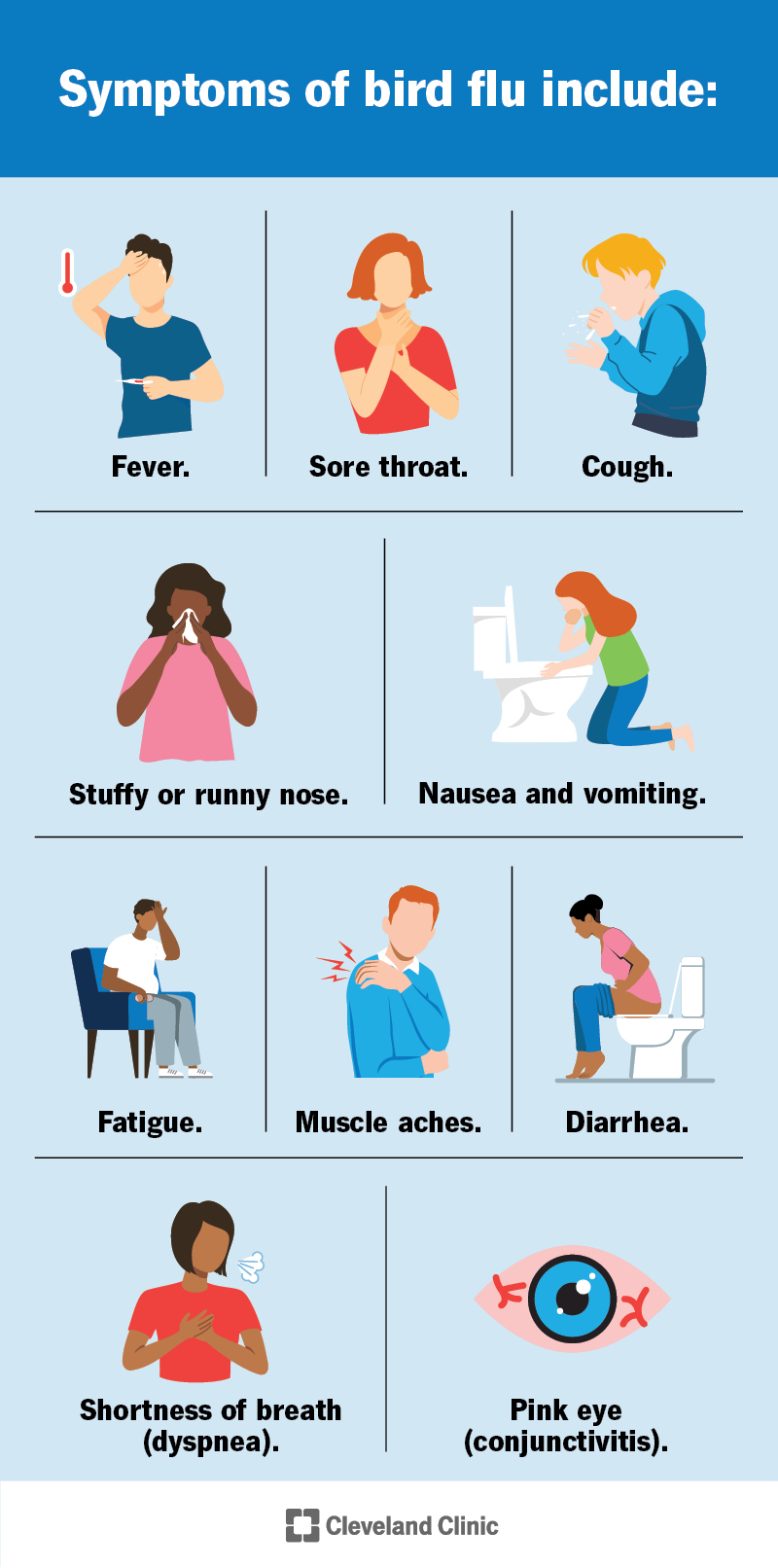
The journal article explains that in March a farm worker who reported no contact with sick or dead birds, but who was in contact with dairy cattle, began showing symptoms in the eye and samples were collected by the regional health department to test for potential influenza A.

Initial testing of the samples was performed at the BTRL, which is a component of the Centers for Disease Control and Prevention (CDC) Laboratory Response Network-Biological (LRN-B) located at TIEHH.

"It's a huge thing that the virus has jumped from birds to mammals, dairy cows in this case, and then to humans," Presley said. "That's why this paper in the New England Journal of Medicine is very significant. It's going to lay the foundation, I believe, for a lot of research in the future of how the virus is evolving."

The involvement of Texas Tech's BTRL is a continuation of the partnership between regional, state and federal public health partners.

"Being part of the CDC LRN-B, we have the standing capability to test for a lot of biological threats and some that are considered emergent," Reinoso Webb explained.

The lab's standby status allowed Reinoso Webb and the Texas Tech BTRL team to respond quickly to the needs of the regional public health authority. Knowing the potential dangers of the virus, Reinoso Webb pushed the testing into the safest laboratory available, and the team went to work.

Having received the samples in the early evening, results were being reported to regional, state and federal levels within hours. By the next day the samples were on their way to the CDC for further testing and confirmation.

"We were on the phone with the CDC until around midnight discussing different scenarios and follow up requirements," Reinoso Webb said. "There is a lot of federal reporting. It was a very complicated case, even though it was two samples and one patient.

"But we had this wonderful communication with the CDC and made sure we did everything by the book. This is how it's been structured, and this is how the communication was supposed to happen."

Materials provided by Texas Tech UniversityNote: Content may be edited for style and length.

Continue to second article....

Saturday, May 18, 2024

Attacks on Social Security, Medicare Shows Who Wants Americans to Work Longer, Die Sooner

What ever happened to the idea of retiring with dignity and security?

LYNN PARRAMORE, Institute For New Economic Thinking

Shameful fact: the plight of U.S. retirees is a global exception. In their pursuit of lower taxes, America’s wealthiest individuals support policies that make it extremely difficult for seniors to manage the increasing costs of healthcare, housing, and basic necessities.

Not so in other rich countries like Germany, France, and Canada, where robust public pensions and healthcare systems offer retirees stability and dignity. After a lifetime of hard work, older citizens in the U.S. find their reward is merely scraping by, as savings diminish under the weight of soaring medical costs in the most expensive healthcare system in the developed world.

The solution from America’s elites? Suck it up and work longer.

An example of this mindset appeared in a New York Times op-ed by C. Eugene Steuerle of the Urban-Brookings Tax Policy Center and Glenn Kramon, a Stanford Business School lecturer. The two accused older folks of robbing economic resources from the young through Social Security and Medicare—never mind that workers fund these programs with their own lifelong payroll contributions.

They paint a picture of 65-year-old Americans jauntily playing “pickleball daily” and jet-setting “far and wide,” proposing to increase the age to collect Social Security and Medicare benefits, essentially forcing future retirees to work longer. (Curiously, they overlook how this move robs young people—too young to vote—of future retirement years. This echoes 1983, when the Reagan administration and Congress pushed the Social Security age from 65 to 67, impacting Gen X before they could even vote on it).

If he wins...

Trump's new hero. Seriously.

Don't Remove Fawns And Other Baby Animals From The Wild

Leave baby animals alone!

The Rhode Island Department of Environmental Management (DEM) is again cautioning the public not to assume that finding a baby animal means it needs to be rescued. A fawn (baby deer) lying on the ground hidden in grass or brush should not be considered abandoned – it should be left alone by people and pets because moving or handling it may permanently separate it from its mother and jeopardize its life.

White-tailed deer give birth to fawns in May and June. Each year, DEM receives many calls about fawns mistaken to have been abandoned by their mother. This is almost never the case.

“In nature, a doe gives birth and for the next five to seven days, the fawn is incapable of following the doe, so it is natural for the fawn to lie in a curled ‘freeze’ position on the ground hidden in grass or sparse brush,” said Dylan Ferreira, a wildlife biologist in DEM's Division of Fish and Wildlife (DFW). 

Revolutionary mRNA Cancer Vaccine Shows Immense Promise in First-Ever Human Clinical Trial

Cancer cure? Something else for RFK Jr. and the anti-vaxxers to rant about

By UNIVERSITY OF FLORIDA 

In a first-ever human clinical trial of four adult patients, an mRNA cancer vaccine created at the University of Florida rapidly reprogrammed the immune system to target glioblastoma, the deadliest and most aggressive form of brain tumor.

The results mirror those in 10 pet dog patients suffering from naturally occurring brain tumors whose owners approved of their participation, as they had no other treatment options, as well as results from preclinical mouse models. The breakthrough now will be tested in a Phase 1 pediatric clinical trial for brain cancer.

Reported May 1 in the journal Cell, the discovery represents a potential new way to recruit the immune system to fight notoriously treatment-resistant cancers using an iteration of mRNA technology and lipid nanoparticles, similar to COVID-19 vaccines, but with two key differences: useFlorida, of a patient’s own tumor cells to create a personalized vaccine, and a newly engineered complex delivery mechanism within the vaccine.

Charlestown's MAGA state senator pushes the limits of stupid in hearing for new RI Health Department director

Morgan asks Dr. Jerome Larkin if he would order closures, masking when we are hit by another pandemic

By Alexander Castro, Rhode Island Current

Morgan, left, with ex-Charlestown state rep Blake "Flip" Filippi
After a small clinic’s worth of physicians showed up to testify in support of Gov. Dan McKee’s choice for the next director of the Rhode Island Department of Health, the Senate Committee on Health and Human Services affirmed its support for Dr. Jerome “Jerry” Larkin at a hearing Thursday.

The committee voted 5-1 in favor of Larkin’s nomination, with Sen. Elaine Morgan, a Hopkinton/Charlestown Republican, serving the only nay vote. EDITOR'S NOTE: See Morgan's MAGA questions for Larkin below.

Greg Paré, spokesperson for the Rhode Island Senate, said in an email Thursday that Larkin’s appointment will hit the Senate floor on Tuesday, May 19.

The clinicians, many of them colleagues and former protégés of Larkin, came to say nice things about the doctor who serves as medical director of inpatient infectious diseases consultation services at Rhode Island Hospital and teaches clinical medicine as a professor at Brown University. The committee’s mailbox had also been stuffed with written testimonies.    

“We got many, many letters,” said Sen. Joshua Miller, who chairs the committee. “I don’t remember seeing a letter that was not in support.”

But the most memorable affirmation may have been from Dr. Sabina Holland, medical director of the pediatric HIV clinic at Hasbro Children’s Hospital. 

“The highest compliment that a pediatrician can give another pediatrician is to entrust them with the care of their children,” Holland said. “He could have my children.” 

Friday, May 17, 2024

IRS Audit of Trump Could Cost Former President More Than $100 Million

Here's why Trump has refused to release his tax returns = he's a cheat (big surprise)

By Paul Kiel, ProPublica, and Russ Buettner, The New York Times

By Dave Whamond
A massive trove of tax information obtained by ProPublica, covering thousands of America’s wealthiest individuals, reveals what’s inside the billionaires’ bag of tricks for minimizing their personal tax bills — sometimes to nothing.

Former President Donald Trump used a dubious accounting maneuver to claim improper tax breaks from his troubled Chicago tower, according to an IRS inquiry uncovered by ProPublica and The New York Times. Losing a years-long audit battle over the claim could mean a tax bill of more than $100 million.

The 92-story, glass-sheathed skyscraper along the Chicago River is the tallest and, at least for now, the last major construction project by Trump. Through a combination of cost overruns and the bad luck of opening in the teeth of the Great Recession, it was also a vast money loser.

But when Trump sought to reap tax benefits from his losses, the IRS has argued, he went too far and in effect wrote off the same losses twice.