Menu Bar

Home           Calendar           Topics          Just Charlestown          About Us

Sunday, September 10, 2023

Hurricane Lee: An Ominous Storm Even If It Doesn't Come to Land

 "This is your hurricane on fossil fueled climate change."

JON QUEALLY


Hurricane Lee, which became a monster Category 5 before weakening over the weekend and which may or may not ever make landfall, is being treated as a warning by meteorologists and climate experts who say the storm's behavior over recent days could have dire future implications.

The National Hurricane Center said Saturday that Lee would move well north of Puerto Rico and the Virgin Islands but that dangerous beach conditions may be seen along the Atlantic coastline of the United States. 

On Thursday, the hurricane jumped from a Category 3 storm to a Category 5 in less than 24 hours at a pace faster than what is called "rapid intensification"—when sustained winds increase by 35 mph over the course of a day.

Anemia afflicts nearly 1 in 4 people worldwide

There are practical strategies for reducing it

William Gardner, University of Washington; Nicholas Kassebaum, University of Washington, and Theresa A McHugh, University of Washington

Anemia symptoms include shortness of breath, dizziness and
 fatigue. Peter Dazeley/The Image Bank via Getty Images
Anemia is a major health problem, with nearly 2 billion people affected globally. It afflicts more people worldwide than low back pain or diabetes – or even anxiety and depression combined.

Despite this, investments in reducing anemia have failed to substantially reduce the massive burden of anemia globally over the last few decades.

People become anemic when their blood lacks enough healthy red blood cells to carry oxygen throughout the body. This decreased oxygen delivery causes many of the most common symptoms of anemia, including fatigue, shortness of breath, lightheadedness, difficulty concentrating and challenges with work and daily life tasks.

In addition to its direct health effects, anemia can inhibit brain development and fine motor skills in children and heighten the risk of stroke, cardiovascular disease, dementia and other chronic illnesses in older adults. 

Anemia during pregnancy can lead to increased rates of anxiety and depression, early labor, postpartum hemorrhage, stillbirth and low birth weight. Infections for both mother and baby are also more likely when the mother is anemic.

We are global health researchers with expertise in epidemiological modeling of anemia alongside other maternal, neonatal and nutritional disorders.

Our work is part of the Global Burden of Disease Study, a large research study comprehensively estimating health loss due to hundreds of diseases, injuries and risk factors around the globe. 

Through our analysis, we have produced annual estimates of anemia prevalence by underlying cause for 204 countries and territories, by age and sex, from 1990 to the present. We have collected thousands of data points across hundreds of sources to produce the most comprehensive picture of anemia burden.

Sizing up the atheist vote

The ‘nones’ are a powerful force in politics – but not yet a coalition


Politicians all over the spectrum have long tried to
appeal to religious voters. What about atheists, agnostics and
nothing-in-particulars? 
Y.Gurevich/iStock via Getty Images Plus
Nearly 30% of Americans say they have no religious affiliation. Today the so-called “nones” represent about 30% of Democrats and 12% of Republicans – and they are making their voices heard.

Organizations lobby on behalf of atheists, agnostics, secular humanists and other nonreligious people.

As more people leave religious institutions, or never join them in the first place, it’s easy to assume this demographic will command more influence. But as a sociologist who studies politics and religion, I wanted to know whether there was evidence that this religious change could actually make a strong political impact.

There are reasons to be skeptical of unaffiliated Americans’ power at the ballot box. Religious institutions have long been key for mobilizing voters, both on the left and the right. 

Religiously unaffiliated people tend to be younger, and younger people tend to vote less often. What’s more, exit polls from recent elections show the religiously unaffiliated may be a smaller percentage of voters than of the general population.

Most importantly, it’s hard to put the “unaffiliated” in a box. Only a third of them identify as atheists or agnostics. While there is a smaller core of secular activists, they tend to hold different views from the larger group of people who are religiously unaffiliated, such as being more concerned about the separation of church and state.

By combining all unaffiliated people as “the nones,” researchers and political analysts risk missing key details about this large and diverse constituency.

Saturday, September 9, 2023

Fed policy on marijuana is evolving - but not fast enough

We shouldn’t treat cannabis like heroin. 

By Paul Armentano 

From "Reefer Madness" (1936)
Nearly a year ago, the Biden administration asked the Department of Health and Human Services to reconsider how marijuana is scheduled under federal law.

Under the Controlled Substances Act (CSA) of 1970, different drugs are regulated or prohibited according to their placement in five different “schedules.”

The federal government currently puts marijuana in Schedule 1 — the most restrictive level, which it shares with heroin, ecstasy, and other drugs. By definition, substances in this category must possess “no currently accepted medical use” or “accepted safety for use… under medical supervision.”

After a long internal process, the Department of Health and Human Services now recommends removing the drug from Schedule 1. While the explicit details of the recommendation aren’t public, Bloomberg reports that the agency is suggesting moving marijuana to Schedule III.

The HHS recommendation now goes to the Drug Enforcement Administration (DEA), which will conduct its own scientific review. In the past, most recently in 2016, the agency has categorically refused to reschedule the drug. We likely won’t know how the DEA will respond for some time.

In the meantime, some observers have lauded the proposed change as a giant step forward. But my own reaction is more restrained.

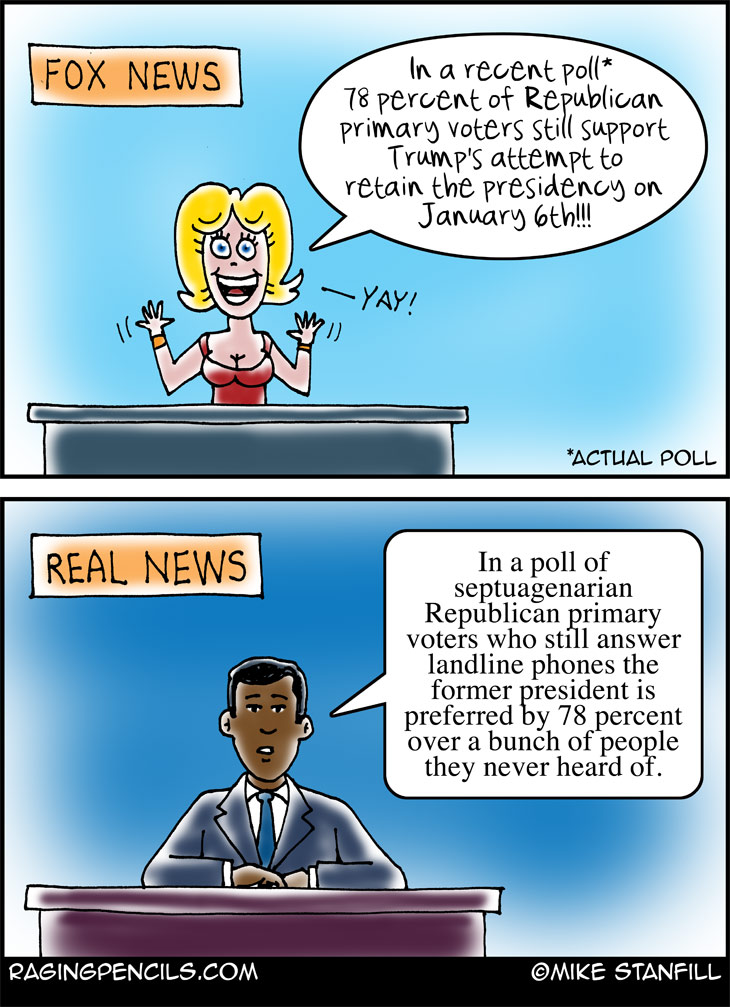
Polling, Fox style


Collect them all!

A cartoon by Jeff Danziger


Megan Cotter's forest study commission meets Tuesday

Two new legislative study commissions to hold first meetings Sept. 12

By Christopher Shea, Rhode Island Current

Wildfire in Exeter last April

The legislative session may have ended in June, but that doesn’t mean the State House is remaining quiet, as two new House commissions are scheduled to convene for the first time on Tuesday, Sept. 12.

One, started by Rep. Megan Cotter, an Exeter Democrat, will examine how to prevent or manage forest fires in Rhode Island.

The 12-member Special Legislative Commission to Evaluate and Provide Recommendations on Proper Forest Management for Fire Prevention was formed in the wake of an April wildfire that scorched 400 acres of forest in Exeter and forced local residents to evacuate their homes — the largest forest fire in Rhode Island since 1942.

“Considering more than half of Rhode Island is forested, we should be doing more to protect woodlands,” Cotter said in a statement. “They are a valuable resource that directly reduces carbon dioxide from our atmosphere and also plays a role in filtering pollution from our groundwater. Keeping our forests healthy and encouraging the conservation of forested land should be a high priority for Rhode Island.” 

Joining Cotter on the commission are the following members:

House Minority Leader Michael Chippendale, Tee Jay Boudreau of the Department of Environmental Management, Marc R. Pappas of the Rhode Island Emergency Management Agency, Armand Niquette of the Rhode Island State Association of Firefighters, Scott Millar of the Forest Conservation Commission, Kate Sayles of the Rhode Island Land Trust Council, William Fortune of the Forest Conservators Organization, Chief Scott Kettelle of the Rhode Island Association of Fire Chiefs,  Former Rhode Island Chief of Forestry Catherine Sparks, Dick Went of the Rhode Island Association of Conservation Districts, John Torgan of The Nature Conservancy

The commission will meet at 3 p.m. in Room 135 of the State House.

Helping seniors

The other commission, formed by Newport Democrat Rep. Lauren Carson, will consider how to streamline and improve state services for older adults. 

Over the next several months, commissioners will assess the current state, federal and local services currently available for older Rhode Islanders, as well as any duplication of services including education and job opportunities, how they can continue to live independently, and centers to connect with other seniors.

RELATED: Legislative study commissions used to be where bills went to die. Not anymore.

Social factors influence who gets clean water

Water-quality risks linked more to social factors than money

University of Texas at Austin

When we determine which communities are more likely to get their water from contaminated supplies, median household income is not the best measure.

That's according to a recent study led by researchers at The University of Texas at Austin that found social factors -- such as low population density, high housing vacancy, disability and race -- can have a stronger influence than median household income on whether a community's municipal water supply is more likely to have health-based water-quality violations. In general, rural communities and communities that grew up around large industries that have since left are most likely to face water-quality issues.

About 10% of community water systems in the contiguous United States have a reported health-based violation. The study's findings are important because many state and federal agencies use median household income as the primary factor when deciding how to distribute funding meant to assist disadvantaged communities.

The US broke global trade rules to try to fix climate change

To finish the job, it has to fix the trade system

Noah Kaufman, Columbia University; Chris Bataille, Columbia University; Gautam Jain, Columbia University, and Sagatom Saha, Columbia University

U.S. President Joe Biden signed the Inflation Reduction Act
on Aug. 16, 2022, including electric vehicle subsidies with
‘buy American’ rules. Mandel Ngan/AFP via Getty
The 2022 Inflation Reduction Act, President Joe Biden’s landmark climate law, is now expected to prompt a trillion dollars in government spending to fight climate change and trillions more in private investment. 

But the law and Biden’s broader “buy American” agenda include measures that discriminate against imports.

One year in, these policies, such as the law’s electric vehicle subsidies, appear to be succeeding at growing domestic clean energy industries – consider the US$100 billion in newly announced battery supply chain investments. But we believe the law also clearly violates international trade rules.

The problem is not the crime but the cover-up. Today’s trade rules are ill-suited for the climate crisis. However, simply tearing them down could hinder economic growth and climate progress alike.

If U.S. leaders instead take responsibility for forging an improved international trade system – rather than denying the violations of trade rules or pointing fingers at similar transgressions by trade partners – they could help put the global economy in a better position to weather increasing climate-related trade tensions.

Friday, September 8, 2023

The Other Wage Theft

Being called a "manager" doesn't make up for paying less

By Philip Mattera, director of the Corporate Research Project in the Dirt Diggers Digest


When we hear references to wage theft, there is a tendency to think of low-paid workers being cheated by fly-by-night employers. That is only part of the story.

Wage and hour violations affecting better-paid white-collar workers are also common, and the employers involved are often household names. Their abuses typically consist of practices such as denying overtime pay to low-level supervisors by erroneously classifying them as managers.

The federal law governing workplace pay practices, the Fair Labor Standards Act, provides exemptions for bona fide executive, administrative and professional employees, who are typically paid a salary. Yet in order for the exemption to apply, the person must be paid above a certain level.

Unfortunately, that threshold has not been adequately updated and is today only $35,000 annually. As a result, many first-line supervisors and similar employees with quite modest salaries end up working many extra hours without additional compensation.

A new proposal from the U.S. Labor Department would alleviate the situation by raising the threshold to about $55,000 a year. Yet this would not completely solve the problem.

Some employers will flout the new standard the way they did with the old one. In fact, the higher threshold will probably tempt even more companies to cheat. Along with the new threshold, the Labor Department needs to put more emphasis on enforcement, especially at larger corporations.

In 2018 I wrote a report called Grand Theft Paycheck that analyzed the prevalence of wage theft in big business by looking both at DOL enforcement actions and private collective action lawsuits brought on behalf of groups of workers. The latter accounted for most of the penalties collected from large corporations.

What a mug!

For more cartoons by Ruben Bolling, CLICK HERE

Actually, he gave that up a while ago

By Bill Bramhall


Bad bugs abound

State Announces First Case of EEE in a Mammal in 2023

Third Westerly finding of West Nile

The Department of Environmental Management (DEM) and Rhode Island Department of Health (RIDOH) are announcing that a donkey in Glocester tested presumptive positive for Eastern Equine Encephalitis (EEE). 

It is the first case of a mammal contracting the EEE virus in the state in 2023. 

A University of Connecticut lab conducted the test on Sept. 5. The lab’s positive finding is expected to be confirmed by the national reference lab by the end of the week. EEE cannot be transmitted from a mammal to a human. Humans can only contract the disease through a bite from an infected mosquito.

DEM and RIDOH also announce that two mosquito samples collected Aug. 28 from a trap in Glocester tested positive for EEE and a sample taken from a trap in Westerly tested positive for WNV. 

One of the two samples in Glocester contained a species of mosquito known to bite mammals. This is in addition to the first EEE detection in mosquitoes that the state announced last week. On Aug. 28 DEM collected 149 samples of mosquitoes from 31 traps set statewide.

To date, the Commonwealth of Massachusetts reports five EEE findings in mosquitoes, 99 WNV findings, and two human cases of WNV. The State of Connecticut reports one EEE-positive mosquito sample, in nearby Thompson, along with 105 WNV findings in mosquitoes and one human case of WNV. 

Year to date, Rhode Island reports three positive EEE mosquito samples, one mammal case of EEE, and six WNV findings in mosquitoes. 

WNV and EEE findings in mosquitoes are expected because mosquito-borne diseases become more prevalent in Southern New England as the season progresses.

Resistant starch

Supplement Reduces Liver Triglycerides in People With Fatty Liver Disease

By CELL PRESS 

A 4-month study on people with non-alcoholic fatty liver disease (NAFLD) has shown that daily intake of resistant starch can modify gut bacteria and significantly reduce liver triglycerides and enzymes tied to liver damage. The study also revealed that these positive effects are independent of body weight changes.

Resistant starch, a type of indigestible fiber that undergoes fermentation in the large intestine, has previously demonstrated promising effects on metabolism in studies conducted on animals. Now, a four-month-long randomized controlled study involving individuals with non-alcoholic fatty liver disease (NAFLD) revealed that consuming resistant starch daily can positively influence gut microbiota dynamics and decrease levels of liver triglycerides and enzymes that are typically linked to liver damage and inflammation.

The findings of this study were recently published in the journal Cell Metabolism.

IRS looks to better tech to catch tax cheats

IRS is using $60B funding boost to ramp up use of technology to collect taxes 

Erica Neuman, University of Dayton

The IRS has relied on technology for decades, as this
1965 photo taken in its Philadelphia office shows. 
US News & World Report Collection/Marion S Trikosko/
PhotoQuest via Getty Images
The Internal Revenue Service is getting a funding boost thanks to the Inflation Reduction Act, which President Joe Biden signed into law in 2022.

That legislative package originally included about US$80 billion to expand the tax collection agency’s budget over the next 10 years.

Congress and the White House have since agreed to pare this total by about $20 billion, but $60 billion is still a big chunk of change for an agency that until recently had about $14 billion in annual funding.

I’m a tax researcher who studies how the IRS uses technology and how taxpayers respond to the agency’s growing reliance on it. While the number of IRS enforcement personnel will surely grow as a result of additional funding, I think that the agency can get more mileage out of emphasizing technological improvements.