Menu Bar

Home           Calendar           Topics          Just Charlestown          About Us

Saturday, October 7, 2023

Here's a shocker

Corporations Are Not Saving the Planet After All

By Philip Mattera, director of the Corporate Research Project  Dirt Diggers Digest

It used to be that you had to go to the websites of groups such as Greenpeace to learn how large corporations are failing to live up to their promises to help solve the climate crisis. Now that fact can be found on the front page of the Wall Street Journal.

The business-friendly newspaper just published an article detailing the ways in which the decarbonization efforts of the world’s largest companies are fizzling out. 

A big part of the problem is that most companies never developed meaningful climate transition plans and instead relied on dubious carbon offsets instead. The Journal quotes the environmental non-profit CDP as saying that of the nearly 19,000 companies using its disclosure platform, fewer than 100 have credible plans.

Some companies don’t bother to develop any plans—or they keep them to themselves. The Journal cites data showing the percentages of larger publicly traded companies that do not disclose specific plans to meet long-term climate targets. Among those in the coal, oilfield services, and midstream oil sectors the portion is 100 percent. Among integrated oil companies, 93 percent fail to do so.

Big Oil’s detrimental role in dealing with the climate was highlighted in another recent Journal article. It’s well known that Exxon Mobil worked for years to downplay the harmful effects of greenhouse gas emissions. 

She's the one

By Matt Davies


Senator Whitehouse to discuss U.S. Supreme Court, climate change in Oct. 10 talk at URI

Whitehouse to discuss pervasive damage done by dark money

Tony LaRoche

U.S. Sen. Sheldon Whitehouse will come to the University of Rhode Island on Tuesday, Oct. 10, to address students and the community during a discussion on the U.S. Supreme Court and climate protections.

The talk, “The intersection of dark money, climate change, and the corporate capture of the Supreme Court,” will be held at 11 a.m. in Edwards Hall. The free lecture is open to the public and will also be streamed live.

“What’s wrong with our politics, and what’s wrong with our climate policies, and what’s wrong with our court, all converge, and they converge around dark money,” said Senator Whitehouse.  

“The good news from all this mess is that we can get rid of dark money and make a new morning in American politics; we have the policy tools to steer the world towards climate safety once politics permits that; and when people better understand what went wrong at the Supreme Court, the aperture for reforms will open.”

Whitehouse, who has represented Rhode Island in the U.S. Senate for 16 years, has played a key role in crafting policies to address climate change, among other environmental issues, and has given nearly 300 speeches on the Senate floor raising the alarm about climate change.

New positive findings of New West Nile, EEE in mosquito samples revealed Friday

Still peak period in especially active mosquito season

By Nancy Lavin, Rhode Island Current


State agencies are warning Rhode Island residents to stay on high alert for mosquito-borne diseases, with new mosquito samples in Exeter and Barrington testing positive for Eastern Equine Encephalitis (EEE) and West Nile virus, respectively.

The new positive tests reflect samples collected and tested in late September, and announced by the Rhode Island Department of Environmental Management and Department of Health Friday. 

The latest findings come two days after the state revealed the first detected human case of West Nile virus this year, identified in a person in their late 70s who lives in Newport County.

Positive tests for West Nile and EEE across southern New England this summer have created “significant” risk because of elevated levels of both mosquito-borne diseases, according to the state agencies. 

Lost in the coffee aisle?

Navigating the complex buzzwords behind an ‘ethical’ bag of beans is easier said than done


The text on a single bag of coffee can feel like information
overload. d3sign/Moment via Getty Images
You’re shopping for a bag of coffee beans at the grocery store. After reading about the effects of climate change and how little farmers make – typically $0.40 per cup – you figure it might be time to change your usual beans and buy something more ethical. 

Perusing the shelves in the coffee aisle, though, you see too many choices.

First up is the red tub of Folgers “100% Colombian,” a kitchen staple – “lively with a roasted and rich finish.” On the side of the tub, you see the icon of Juan Valdez with his donkey, Conchita – a fictional mascot representing the Colombian Coffee Growers Federation.

Next might be Starbucks “Single-Origin Colombia.” One side of the green bag tells “the story” of the beans, describing “treacherous dirt roads” to “6,500 feet of elevation” that are “worth the journey every time.” The other shows a QR code and promises Starbucks is “Committed to 100% Ethical Coffee Sourcing in partnership with Conservation International.”

Then again, you’ve heard that a “better” choice would be to buy from local cafes. The bag from your local roaster introduces you to La Familia Vieira of Huila, Colombia, who have worked as coffee farmers for four generations at 1,600 meters above sea level – about a mile. 

But then there’s a flood of unfamiliar lingo: the 88-point anerobic-processed coffee was sourced directly from an importer who has a six-year relationship with the family, paid $3.70 per pound at farmgate, and $6.10 per pound FOB at a time when the C-market price was $1.60 per pound.

A man in a straw hat and pink shirt pours brightly colored berries through an open-air processor.
Coffee farmer Julian Pinilla uses a coffee grinder during
an interview with AFP in Valle del Cauca, Colombia.
 Juan Restrepo/AFP via Getty Images

If you’re about ready to toss in the towel, you’re hardly alone. Consumers are often asked to make more responsible choices. 

Yet when it comes to commodity goods like coffee, the complex production chain can turn an uncomplicated habit into a complicated decision.

As a coffee enthusiast and marketing professor who researches marketplace justice, I’ve long been fascinated with how ethics and coffee consumption are intertwined. 

Tell the truth about slavery

Why separating fact from fiction is critical in teaching US slavery

Eric Gable, University of Mary Washington and Richard Handler, University of Virginia

A Black actor in 1974 impersonating an enslaved man in
Colonial Williamsburg in Virginia.
 George Bryant/Toronto Star via Getty Images
Of all the debate over teaching U.S. slavery, it is one sentence of Florida’s revised academic standards that has provoked particular ire: “Instruction includes how slaves developed skills which, in some instances, could be applied for their personal benefit.”

Does this sentence constitute “propaganda,” as Vice President Kamala Harris proclaimed, “an attempt to gaslight us?”

Or is it a reasonable claim in a discussion of a difficult topic?

Whatever it is, the sentence is of a sort not unique to the teaching of enslavement in Florida. It is, instead, an example of how some Americans transform the racist history of this country into an uplifting – and sanitized – moral lesson.

Truth or fiction?

In our view as cultural anthropologists, the disputed sentence is true as historians define facts – tiny nuggets of truth one can find in archives, artifacts and diaries.

It is a fact that small numbers of the enslaved acquired skills that allowed them to earn money, to save it and to buy their freedom and the freedom of family members.

It is also a fact that freed Black people in the antebellum era helped other Black people to also acquire skills and became part of a segregated Black middle class in many Southern cities.

One might argue that such a sentence, because it is true, should not give rise to protest. But as scholars who have studied how history is taught in America, we learned that this particular nugget is neither trivial nor insignificant.

Instead, the one sentence in Florida’s new standards allows Americans to transform a story about what we today call structural racism into an apocryphal story about Horatio Alger and America’s rags-to-riches melting pot.

As this line of thinking goes, enslaved ancestors of contemporary African Americans labored just as most contemporary Americans’ ancestors labored: at the bottom, but able to climb up the social ladder with hard work and discipline.

And this is the problem: To portray enslaved people as laborers like free laborers is exactly how not to teach about slavery.

But it is a commonly used method that is called a “switching mechanism.” In this example, the story about the horrors of the slave system is transformed into a story about opportunity, success and the American dream.

Friday, October 6, 2023

Spyware can infect your phone or computer via the ads you see online

The scary world of cyberspying on individuals 

 Claire Seungeun Lee, UMass Lowell

A new type of spyware means those online ads could go
 from annoying to menacing. AP Photo/Julio Cortez
Each day, you leave digital traces of what you did, where you went, who you communicated with, what you bought, what you’re thinking of buying, and much more. 

This mass of data serves as a library of clues for personalized ads, which are sent to you by a sophisticated network – an automated marketplace of advertisers, publishers and ad brokers that operates at lightning speed.

The ad networks are designed to shield your identity, but companies and governments are able to combine that information with other data, particularly phone location, to identify you and track your movements and online activity. 

More invasive yet is spyware – malicious software that a government agent, private investigator or criminal installs on someone’s phone or computer without their knowledge or consent. 

Spyware lets the user see the contents of the target’s device, including calls, texts, email and voicemail. Some forms of spyware can take control of a phone, including turning on its microphone and camera.

Now, according to an investigative report by the Israeli newspaper Haaretz, an Israeli technology company called Insanet has developed the means of delivering spyware via online ad networks, turning some targeted ads into Trojan horses. 

According to the report, there’s no defense against the spyware, and the Israeli government has given Insanet approval to sell the technology.

Looking forward to Trump's testimony?


He looks fabulous

Top off your topiary

31st Landscape Architecture Lecture Series to focus on resilience and remediation, starts Oct. 12

Tony LaRoche

The University of Rhode Island’s Landscape Architecture Lecture Series returns this fall for its 31st year with four professionals in landscape architecture and urban design focusing on issues of resilience and remediation.

“In this lecture series, our guest speakers will discuss and present projects illustrating how new approaches to complex issues in urban and residential settings can remediate disturbed and brown field sites and lead to greater resiliency,” said Professor Emeritus William Green, founder and organizer of the series.

Lectures will be held Thursdays at 7 p.m. in Room 105 of the Beaupre Center for Chemical and Forensic Sciences. The series is free and open to the public.

The series opens Oct. 12 with New York City-based architect and urban designer Gabriel Vergara, who will speak on “Spatial Practice: Working with/in the Social and Climate Crisis.”

Tomorrow!


When CEOs cheat

Deceit pays dividends

Steven J. Hyde, Boise State University

Everyone is vulnerable to the ‘truth bias’ − even people paid
to know better. Stephanie Phillips/E+ via Getty Images
The multibillion-dollar collapse of FTX – the high-profile cryptocurrency exchange whose founder now awaits trial on fraud charges – serves as a stark reminder of the perils of deception in the financial world.

The lies from FTX founder Sam Bankman-Fried date back to the company’s very beginning, prosecutors say. He lied to customers and investors alike, it is claimed, as part of what U.S. Attorney Damian Williams has called “one of the biggest financial frauds in American history.”

How were so many people apparently fooled?

A new study in the Strategic Management Journal sheds some light on the issue. In it, my colleagues and I found that even professional financial analysts fall for CEO lies – and that the best-respected analysts might be the most gullible.

Financial analysts give expert advice to help companies and investors make money. They predict how much a company will earn and suggest whether to buy or sell its stock. By guiding money into good investments, they help not just individual businesses but the entire economy grow.

But while financial analysts are paid for their advice, they aren’t oracles. As a management professor, I wondered how often they get duped by lying executives – so my colleagues and I used machine learning to find out. 

Thursday, October 5, 2023

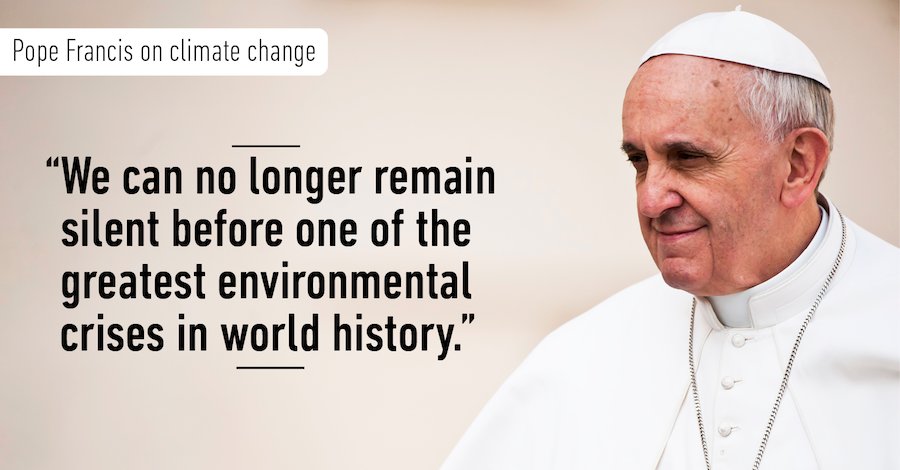
Pope Francis Urges Climate Action as World Nears 'Breaking Point'

"We must move beyond the mentality of appearing to be concerned but not having the courage needed to produce substantial changes"

OLIVIA ROSANE for Common Dreams

In his second major address on the climate crisis, Pope Francis called for urgent global action ahead of the COP28 United Nations climate conference.

The pontiff's remarks came in a papal exhortation published Wednesday morning titled "Laudate Deum" or "praise God."

"We must move beyond the mentality of appearing to be concerned but not having the courage needed to produce substantial changes," Francis said.

The pope made waves in 2015 when he published an encyclical on climate and the environment titled Laudato Si, shortly before world leaders negotiated the Paris agreement. An exhortation is a shorter, less prestigious document, according to The Washington Post. In Wednesday's document, the first he has published on the climate crisis in eight years, Francis reflected on how far the world hadn't come.

"With the passage of time, I have realized that our responses have not been adequate, while the world in which we live is collapsing and may be nearing the breaking point," he said.

On our own


Farmers: Oct. 20 deadline for energy efficiency grant applications

Energy Efficiency And Renewable Energy Programs For Farms

Agricultural Energy Grant Program

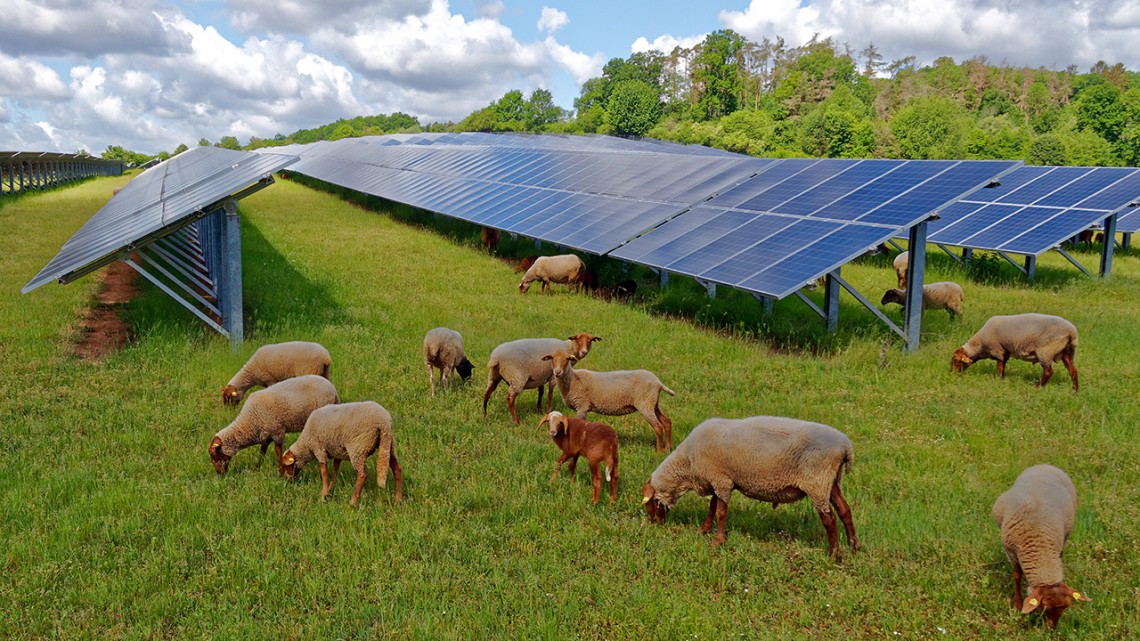
The Rhode Island Office of Energy Resources (OER) manages the Agricultural Energy Grant Program that provides grants of up to $20,000 for eligible energy efficiency and renewable energy projects located on farms throughout Rhode Island. 

Our goal is to support clean energy projects in the agricultural sector. Interested applicants should review the Program Guidance document and ensure applications comply with program terms & conditions. 

Applications should be sent via email to Abigail.Hasenfus@energy.ri.gov on or before the listed closing date of the funding round to be considered. Grant awards are subject to availability of funds and are awarded at the sole discretion of OER; submission of an application does not guarantee an award.

Applications for the Fall 2023 round are due by 5:00pm on Friday, October 20th, 2023.

Program Guidance Document - Updated August 2023PDF file, less than 1mbmegabytes

Renewable Energy Project ApplicationPDF file, less than 1mbmegabytes

Energy Efficiency Project ApplicationPDF file, less than 1mbmegabytes

Sign up for OER's Farm Energy Program Newsletter

To see examples of how several farmers have used this program to help implement clean energy projects, watch our two profiles below: