Menu Bar

Home           Calendar           Topics          Just Charlestown          About Us

Monday, January 1, 2024

Two more reasons why vulture capitalists should not own hospitals

Infections and falls more likely at private equity-owned hospitals

Patients at hospitals acquired by private equity firms saw a 25% increase in adverse events, new research shows.

JAKE JOHNSON for Common Dreams

 Roger Williams Medical Center in Providence is shown in June 2021. (Kenneth C. Zirkel/Creative Commons – https://creativecommons.org/licenses/by-sa/4.0/deed.en)

EDITOR'S NOTE: These types of problems are evident at 
Roger Williams Medical Center in Providence and Our Lady of Fatima Hospital in North Providence, operated by CharterCARE, which is owned by private equity company Prospect Medical Holdings.  They both were listed in the lowest ranking by safety watchdog Leapfrog. - Will Collette

A study published Tuesday in the Journal of the American Medical Association found that patients are more likely to fall or suffer infections at hospitals owned by private equity firms, whose role in the U.S. healthcare system has grown exponentially in recent years.

The study uses Medicare claims data from between 2009 and 2019 to compare patient complications at private equity-acquired hospitals and control facilities not owned by private equity. Dr. Sneha Kannan, a critical care physician and the study's lead author, told The New York Times that she was surprised by the extent of the difference between the two.

Patients at private equity-owned hospitals saw a 25.4% increase in adverse events such as falls and dangerous central-line bloodstream infections in the three years after the acquisition, according to the new study—even though the private equity hospitals analyzed in the paper tended to have younger and lower-risk patients.

Sunday, December 31, 2023

What progress in Charlestown looks like

Charlestown’s 2023 was busy but productive

By Deborah Carney, Charlestown Town Council President

Charlestown is a wonderful town with great people, beaches, parks, open spaces, businesses, and low taxes.

The Town Council and the town’s dedicated staff have had a busy and productive year!

We improved transparency and open government by holding two regular monthly meetings of reasonable length instead of one lengthy meeting, permitting more in-depth review of agenda items. 

We now require detailed minutes instead of a cursory reporting, to provide informed transparency and historical recording.

We returned a voice to the people of Charlestown by reinstating the Charter Revision Advisory Committee to a “standing committee,” providing a vehicle for residents to seek charter changes. 

The committee’s recommendations/suggestions for changes are due this spring. The council will then decide which recommendations should be placed on the ballot for the voters.

The council established an Ordinance Review Ad Hoc Committee to review and update Charlestown’s ordinances, some of which are outdated, unconstitutional or in violation of state law. 

This comprehensive review, with the assistance of General Code, is the first in approximately 20 years and was sorely overdue.

Through the Town Council Rules and Procedures, the council also guaranteed all councilors equal rights to place items on an agenda, without veto, reversing prior policy.

The Town Council contracted with Charlestown Ambulance Rescue Service, which, beginning in July of 2024, will provide critical funding for continued high-quality emergency services. 

This arrangement alleviates residents from paying directly for emergency services and ensures that CARS remains adequately staffed 24 hours a day, seven days a week.

The Town Council and town staff are collaboratively examining possible improvements to provide safer travel for pedestrians and bikers along Charlestown Beach Road. No decisions have yet been made and all suggestions will be considered.

Recent discussions in Charlestown have centered on the required Ninigret Park Master Plan Update, which is five years past due. Contrary to online postings, the Town Council has not yet received the updated plan from the design consultant. 

Further, the Town Council has not endorsed any construction plan for Ninigret Park, let alone one for $20 to $30 million, as has been rumored online. 

It is important to note that the Master Plan is simply a planning guideline for possible future park improvements. The Town Council’s review of the consultant’s suggestions is anticipated to begin early in 2024.

This upcoming year, the council will also discuss the possibility of Ninigret Park becoming the first stop on a newly created whimsical “Troll Trail,” an installation by internationally known artist Thomas Dambo, which would be sponsored by the South County Tourism Council. 

The trolls are proposed to be created by collaboration between the artist and local tradespersons and would provide a year-round attraction, at no cost to the town.

In 2023, the council hired a new town administrator, Jeffrey Allen, Charlestown’s former police chief. Mr. Allen brings with him a firsthand knowledge and understanding of Charlestown and a personal interest in working to make Charlestown an even better place to live.

In addition to Mr. Allen, the town also welcomed newcomers Patrick Gormley, Jill Cuddy, Kristen Hemphill, Jan Lombardo, Drew Perry, Shirell Perry and Jim Stepalavich to our staff. We said goodbye to retirees Don Black, Lt. Kevin Kidd, Michele Voislow and Kim Wheeler and thank them for their dedicated service.

Charlestown’s challenges for 2024 include filling its volunteer opportunities, particularly in its fire districts. For more information visit http://www.charlestownfd.org or send an email to chief@charlestownfd.org. 

Affordable workforce rental housing and homeownership for families, in the face of rising real estate valuations, will continue to be daunting, but must be addressed.

As always, the Town Council encourages residents to apply for positions on boards and committees, attend Town Council meetings and/or view them via the town’s website at www.Charlestownri.gov. 

We encourage our residents to reach out with comments, questions, and suggestions. By working together, we can accomplish many things in 2024.

Child abuse

A cartoon by Mike Luckovich

Let's do it now!

Shut off the damned phone

Switching off from work has never been harder, or more necessary

Jane Gifkins, Griffith University

Apple TV+
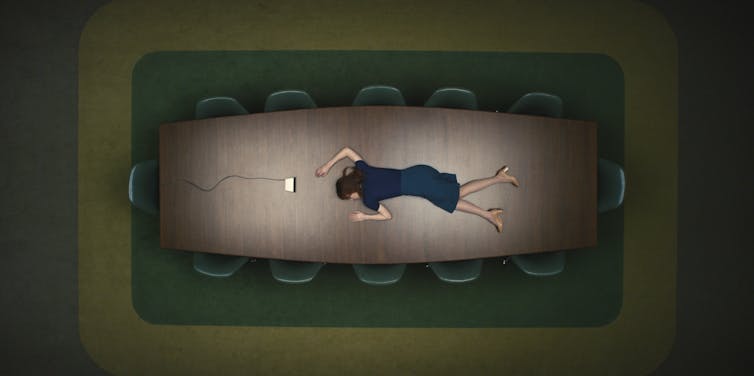
In the hit dystopian TV series Severance, employees at biotech corporation Lumon Industries find it easy to separate work and home life. A computer chip is inserted in their brains to act as a “mindwipe”. They leave all thoughts of home behind while at work, and completely forget about their work when at home.

While the show explores the pitfalls of such a split in consciousness, there’s no denying it’s a tantalizing prospect to be able to “flick the off switch” and forget about work whenever you’re not actually supposed to be working.

This is known as “psychological detachment”. People who can do it are happier and healthier, and experience less fatigue. But many of us struggle to detach and disconnect mentally from work, particularly when our jobs are demanding and stressful.

It may not be enough simply to be physically away from work, particularly in an era when so many of us work from home. We also have to stop thinking about work when we’re not there – whether it’s fretting over your to-do list while out at dinner, thinking about your unanswered emails while you’re at your daughter’s soccer game, or lying in bed pondering what you’ll say at tomorrow’s board meeting.

Why Aren’t More People Buying Over-The-Counter Hearing Aids?

Price, confidence, reliability and consumer education all need to be improved

By Esther Landhuis

When Frank Lin was in junior high, his grandma started wearing hearing aids. During dinner conversations, she was often painfully silent, and communicating by phone was nearly impossible. As a kid, Lin imagined “what her life would be like if she wasn’t always struggling to communicate.”

It was around that time that Lin became interested in otolaryngology, the study of the ears, nose, and throat. He would go on to study to be an ENT physician, which, he hoped, could equip him to help patients with similar age-related hardships.

Those aspirations sharpened during his residency at Johns Hopkins University School of Medicine in the late 2000s. Administering hearing tests in the clinic, Lin noticed that his colleagues had vastly different reactions to the same results in young versus old patients. 

If mild deficits showed up in a kid, “it would be like, ‘Oh, that hearing is critically important,’” said Lin, who today is the director of the Cochlear Center for Hearing and Public Health at Hopkins. But when they saw that same mild to moderate hearing loss in a 70-something patient, many would downplay the findings.

Yet today, research increasingly suggests that untreated hearing loss puts people at higher risk for cognitive decline and dementia. And, unlike during Lin’s early training, many patients can now do something about it: They can assess their own hearing using online tests or mobile phone apps, and purchase over-the-counter hearing aids, which are generally more affordable their predecessors and came under regulation by the Food and Drug Administration in October 2022.

Despite this expanded accessibility, interest in direct-to-consumer hearing devices has lagged thus far — in part, experts suggest, due to physician inattention to adult hearing health, inadequate insurance coverage for hearing aids, and lingering stigma around the issue. (As Lin put it: “There’s always been this notion that everyone has it as you get older, how can it be important?”) Even now, hearing tests aren’t necessarily recommended for individuals unless they report a problem.

Meanwhile, interest has surged in other consumer audio products that are less expensive than most hearing aids and have features that may help with mild hearing loss: wearable devices like Apple’s AirPods and Sony’s LinkBuds. And this fall, the Consumer Technology Association, a trade group representing the $505 billion U.S. consumer technology industry, released a standard metric for consumer electronics products to report a person’s hearing status. 

Saturday, December 30, 2023

What will it take to change Republicans’ minds about the climate crisis?

Nothing.

By MAX TAVES

Cartoon by Tom Toles from the Washington Post
Rome is burning. Republicans are twiddling their thumbs.

Scientists are loathe to give too much significance to one event, but we’re not talking about one event anymore.

“This is climate change,” Michael Mann, a geophysicist and professor of environmental science at the University of Pennsylvania, put it bluntly. 

“We’re seeing it now in all of its forms in…the wildfires in Canada, what happened in Maui, the flooding rains that we’re now seeing in California, you see greater extremes at both ends of the spectrum.”

Just don’t expect these recent disasters — or, for that matter, a consistent cascade of future precedent-setting fires, floods, snowstorms, hurricanes or droughts — to move Republicans’ minds about the role of climate change.

Consider an August analysis from the Pew Research Center.

While the percentage of Democrats describing climate change as a major threat to the country’s well-being rose from 58 percent to 78 percent over the last decade, the share of Republicans who consider climate change a major threat barely budged over the same time period, rising from 22 percent to 23 percent, per Pew.

The fact that Republicans’ opinions haven’t changed over the last 10 years is startling when you take stock of the objective signs of a changing climate during this same period.

Another Republican lie gets busted

Another congratulations to Wood River Health

Wood River Health earns gold in health care delivery

Wood River Health has been recognized by the Health Resources & Services Administration as a Health Center Quality Leader, which is awarded to only 10% of community health care centers in the United States. This credential demonstrates that Wood River Health is a model for excellence in health care delivery and a leader in the promotion of community well-being.

“This year, Wood River Health was awarded the 2023 Health Center Quality Leader (HCQL) Gold badge. Only 149 health centers in the country received this recognition in 2023,” stated Wood River Health’s President and CEO Alison L. Croke, MHA. 

“This accomplishment was achievable because all of our departments work as a team to provide the highest quality of care for the members of our community.  This team includes both the clinicians who work face-to-face with patients and families, as well as the clinical data analysts who work behind the scenes to ensure our data and reporting are accurate.” 

AI is already causing us harm

New research warns AI needs to be better understood and managed

By LANCASTER UNIVERSITY 

Artificial Intelligence (AI) and algorithms have the capability and are currently being utilized to exacerbate radicalization, enhance polarization, and disseminate racism and political instability, according to an academic from Lancaster University.

Joe Burton, a professor of International Security at Lancaster University, contends that AI and algorithms are more than mere tools used by national security agencies to thwart malicious online activities. He suggests that they can also fuel polarization, radicalism, and political violence, thereby becoming a threat to national security themselves.

Further to this, he says, securitization processes (presenting technology as an existential threat) have been instrumental in how AI has been designed, used and to the harmful outcomes it has generated.

Friday, December 29, 2023

Amen

Drew Panckeri 


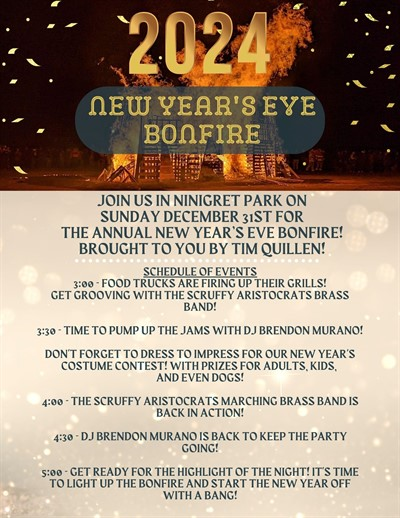
SUNDAY: Charlestown's famous New Year's Eve bonfire!

'Tis the Season to Recycle your Christmas Tree

DEM Collecting 'Trees for Trout' to Improve Wild Trout, Aquatic Habitats

The Rhode Island Department of Environmental Management (DEM) is again partnering with the Rhode Island Chapter of Trout Unlimited (TU) on a habitat restoration program called ‘Trees for Trout’, which collects donated conifer Christmas trees for future projects that improve habitat for wild brook trout and other aquatic organisms. 

The public is invited to drop off their Christmas tree at a collection event after the New Year.


What:                ‘Trees for Trout’ Christmas tree collection

When:               Saturday, Jan. 6, 9 AM-2 PM

Where:              Arcadia Check Station, Wood River Arcadia Management Area, 2224 Ten Rod Rd, Exeter

DEM is only accepting real trees, not fake ones or trees sprayed with fire-retardant chemicals. All decorations and lights, as well as the stand, must be removed before the tree is brought in. Only whole conifers will be accepted, please do not bring tree trimmings.

It's their job.

Senate panel can’t decide best way to reform R.I.’s voting system in primaries

By Nancy Lavin, Rhode Island Current

In a poetic twist, the Rhode Island Senate panel reviewing alternative voting methods to improve Rhode Island primary elections couldn’t choose a single winner.

The seven-member commission concluded its 10-month review without a clear consensus on which – if any – alternative was the best way to reform Rhode Island general office and legislative primaries, according to its final report published Tuesday. 

“If the commission had united around one reform, then it would have facilitated passage of legislation to deal with this problem,” Sen. Sam Zurier, a Providence Democrat and commission chairman, said in an interview on Wednesday. “This is not an easy issue to resolve and there are pros and cons to each of the alternatives.”

Zurier liked the following two of the four options considered for elections when no electoral candidate receives at least 50% of the vote.

A top-two, nonpartisan primary: The top two vote-getters, regardless of party, advance from the primary to a general election, ensuring one candidate wins with a majority of the vote.

Ranked-choice voting: Voters rank candidates in order of preference. If no one reaches 51% of the vote, the candidate with the fewest votes is eliminated from the race, and voters who picked that candidate have their second choices tallied instead. The process repeats until someone wins a majority.

Thursday, December 28, 2023

The AI-Robot Wars

Is Dystopian Science Fiction Becoming a Reality?

TOM VALOVIC for Common Dreams

Have you ever felt like you’re living in a badly produced B science fiction movie? I know I do. When I started writing about the dark side of emerging technologies 30 years ago in Digital Mythologies, I called out some of the “mad science” being done at MIT. 

This included the work of Marvin Minsky and Hans Moravec --- fringe thinking that, at the time, seemed fortunately contained in a fairly narrow segment of the scientific community. I never dreamed that their bizarre and unsettling ideas about merging humans with computers and creating hybrid humans would actually become widely accepted in technology circles or that powerful corporations would engage in making these ideas a reality. 

Alarmingly, this is now happening and it’s deeply disturbing.

It was the poet Allen Ginsberg who said that we’re “living in science fiction”. His statement was deeply prophetic. We’re now in the midst of a Technology Takeover, pointing toward a world of technocratic governance and complete dependency on tech giants and the systems they control. 

The corporations behind it are the most powerful ones on the planet. You know the names: Google, Amazon, Apple, Microsoft, Meta, Tesla/SpaceX and others. Among the individuals behind some of these companies are the four richest and most powerful people on the planet: Elon Musk, Jeff Bezos, Bill Gates, and Mark Zuckerberg. 

In a more generous frame of mind, we might call them the masters of the universe but perhaps a more apt description might be the four horsemen of the apocalypse.

There are a plethora of sanguine articles oozing out of the mainstream press about the “promise of AI.” Many of them follow the same basic template as if scripted from talking points. 

The semantic parsing is something like this: “AI has the potential to radically change our lives for the better but we have to be careful to use it well as it has some potential for negative use.” 

This is the self-same template that has been used for many other high-profile technology advances including the development of nuclear and genetic engineering capabilities.

Let’s be clear about what’s happening here as there’s no room for equivocation. Robots and AI are taking over our culture, our politics, our way of life and our relationships to each other as social beings. 

They’re becoming the front guard for a new and unprecedented technocratic form of governance which represents the apotheosis of Western scientific materialism. Further, these new forms of governance are being carried out by unelected officials operating behind the scenes and in the backrooms of a mediated society well out of public view. 

The reality is that technocratic governance is fundamentally anti-democratic and lays the groundwork for a kind of authoritarianism that many of our experts in political science are unequipped to recognize and explain.